Differin Gel Review 2026: Does 0.1% Adapalene Work?
Our Differin Gel review checks 0.1% adapalene against FDA labeling and clinical trials, including results, irritation, price, routine fit and FAQs.
Evidence-led score using Insider Beauty’s published 100-point editorial rubric. How we score
- Rank
- #1
- Current price
- $13.49
- Listed size
- 0.5 oz
- Updated

Reviewed bySarah ChenBeauty Editor ·
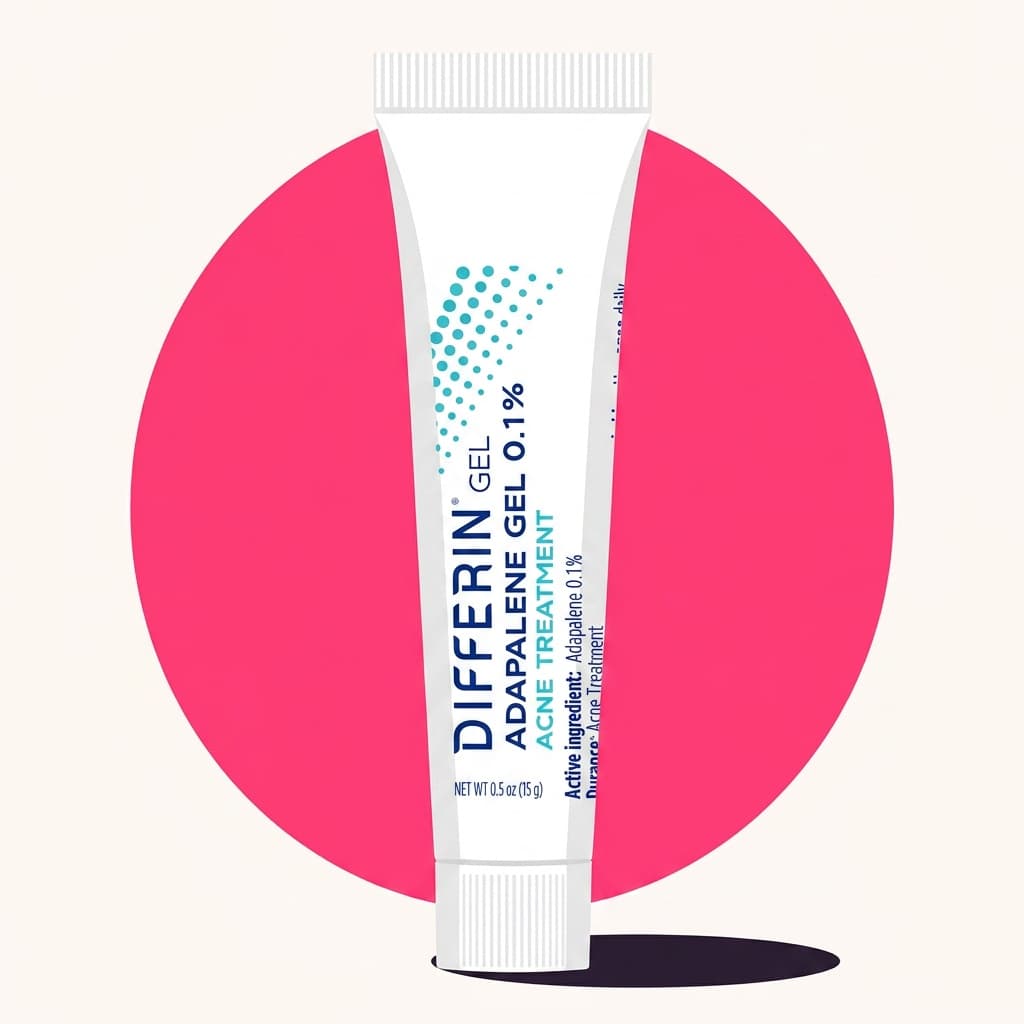
Editorial illustration based on current packaging; not an official product photograph.
Editor’s cut
At a glance
The 0.1% adapalene active is an FDA-approved over-the-counter acne drug, not a cosmetic retinol.
Direct clinical trials support acne treatment, while the label gives a realistic judgment point of up to three months.
Dryness, redness, stinging and peeling are common enough to shape the rest of the routine.
The 45 gram tube is about 41% cheaper per gram than the 15 gram tube at the prices checked.
It suits persistent clogged pores better than an overnight spot-treatment brief.
Community signal
Would you buy it again?
Verdict
Differin Gel earns its number-one place in the founding Beauty 100 because the product makes a narrow claim and has evidence that matches it. The tube contains adapalene 0.1%, an FDA-approved over-the-counter acne drug for adults and children aged 12 and older. This is different from a cosmetic retinol serum borrowing the reputation of prescription retinoids.
It is a sensible buy for persistent clogged pores and mild to moderate inflammatory acne. The strongest candidates are people who can apply one measured dose to the whole acne-prone area every day, simplify the rest of their routine, and wait long enough to judge the result. The label says improvement may take up to three months.
The inconvenience is part of the verdict. Dryness, redness, itching, stinging and peeling can appear during the first weeks. A product that costs less than many face serums may still demand a new cleanser, a more reliable moisturizer and daily sunscreen. Readers with active eczema, broken skin, frequent burning or pregnancy plans need medical advice rather than a more ambitious routine.
What Differin Gel is
The active ingredient is adapalene 0.1%, equal to 1 milligram per gram of gel. Adapalene is a topical retinoid. It affects processes involved in clogged pores and inflammation, which is why the approved use is acne rather than a general promise to improve every kind of texture.
The current DailyMed drug label lists carbomer 940, edetate disodium, methylparaben, poloxamer 182, propylene glycol, purified water and sodium hydroxide as inactive ingredients. Hydrochloric acid may be used to adjust pH. This is a light gel vehicle, not a moisturizing cream, and none of those supporting ingredients cancels the irritation potential of the active.
The approved label covers acne treatment in users aged 12 and older. It does not approve Differin Gel as a wrinkle treatment, scar remover or instant spot treatment. Those distinctions matter because search results often fold every retinoid benefit into one much broader promise.
Evidence for adapalene 0.1%
The 2024 American Academy of Dermatology acne guideline strongly recommends topical retinoids as a class. The AAD summary and the full guideline in the Journal of the American Academy of Dermatology place them among the main topical options, alongside benzoyl peroxide and combinations chosen for the patient and acne pattern.
A 12-week study of 323 people compared adapalene 0.1% gel with tretinoin 0.025% gel. Total lesion counts fell by 49% in the adapalene group and 37% in the tretinoin group, with better local tolerability for adapalene. The paper is old, published in 1996, and it does not prove that the branded tube beats every current generic. It does show that this active and strength have direct clinical evidence. The study is indexed at PubMed.
A separate 10-week trial involving 409 people found similar efficacy between adapalene 0.1% gel and tretinoin 0.05% cream, again with better local tolerability for adapalene. That result supports a relative tolerability advantage against one tretinoin formula. It does not mean that adapalene is gentle or irritation-free. See the trial record.
In a 16-week vehicle-controlled study of 253 previous responders, 75% of the adapalene group maintained at least half of their earlier improvement, compared with 54% of the vehicle group. These were selected responders who had already completed combination treatment, so the result does not predict what every first-time buyer will experience. The maintenance study still supports continued treatment after acne improves rather than stopping at the first clear week.
The first 12 weeks
The label gives a more honest timeline than most social posts. Acne may appear worse during the first weeks because previously unseen lesions are coming to the surface. Redness, dryness, itching and burning are also most likely early in treatment. Results may take up to three months.
The popular word "purging" can blur two different problems. A temporary increase in spots in an acne-prone area can fit the label's early-worsening description. Severe burning, swelling, hives, eye or facial swelling, or trouble breathing does not belong in a normal adjustment story. The FDA label tells users to stop and seek medical help for a serious allergic reaction.
A practical checkpoint is 8 to 12 weeks of consistent use. That does not guarantee clear skin by week 12, but it is long enough to judge more fairly than a few nights. Worsening that is severe, spreading or persistent deserves a clinician's input sooner.
How to use Differin Gel
Clean the skin gently and pat it dry. Apply a thin layer once daily across the entire affected area, not only on the spots visible that day. Differin describes a pea-sized amount for the full face. More gel does not make adapalene work faster and can increase irritation.
Avoid the eyes, lips, corners of the nose and mucous membranes. Do not apply it to cuts, abrasions, eczema or sunburn. The label also warns that waxing can damage skin treated with adapalene.
New users often do better when the rest of the routine is plain. A gentle cleanser such as Prequel Gleanser, rank number two, a moisturizer and a dependable sunscreen cover the basic support. Beauty of Joseon Relief Sun, rank number three is one current Beauty 100 option, although its global formula and U.S. availability need their own explanation.
The official label allows once-daily use. Someone who develops irritation should ask a clinician or pharmacist about reducing frequency or pausing, rather than piling on more active products. Starting salicylic acid, glycolic acid, scrubs and benzoyl peroxide at the same time makes it harder to identify the cause of a reaction.
Side effects and safety boundaries
Dryness, redness, scaling, stinging and burning are the routine drawbacks. Sun exposure, cold and wind may add irritation. Daily sun protection matters, as does avoiding tanning beds and minimizing unnecessary exposure.
Combination treatment needs more care than a simple banned-ingredient list. Benzoyl peroxide and adapalene can be used together, and fixed-dose combination medicines contain both. The issue is cumulative irritation and the need for a routine that the person can actually maintain. Other drying acne medicines deserve the same caution.
Pregnancy is a firm editorial boundary. The label tells users who are pregnant or planning pregnancy to consult a doctor. The American College of Obstetricians and Gynecologists says topical retinoids are generally avoided during pregnancy. Its patient guidance is available in Skin Conditions During Pregnancy. This review cannot replace advice from the clinician who knows the pregnancy and acne history.
People under 12 should not self-start based on this label. Active eczema, open skin, a recent peel or frequent facial waxing also changes the risk calculation.
Who it is best for
Differin Gel makes the most sense for recurring blackheads, whiteheads and smaller inflammatory breakouts across an acne-prone zone. Oily, combination and normal skin may find the gel format easy to layer. Dry skin can still use adapalene, but the supporting routine becomes more important.
Consistency matters more than enthusiasm. A person who can measure one dose, tolerate a gradual routine and keep using sunscreen is a better candidate than someone looking for a harsh overnight fix.
It is a difficult match for active eczema, frequently burning rosacea-prone skin, a damaged barrier or a routine already crowded with peels and leave-on acids. It is also the wrong purchase for someone whose main target is a deep acne scar or a rapid correction before an event.
Differin, generic adapalene, tretinoin and Epiduo
Generic 0.1% adapalene has the same active ingredient and strength. Target lists a 15 gram up&up adapalene gel for $9.99, compared with $13.49 for the 15 gram Differin tube on the date of this review. The inactive vehicle can differ, so identical strength does not guarantee identical feel. A lower-priced generic is still the most direct value comparison.
Tretinoin is prescription-only in the United States and comes in several strengths and vehicles. Some older head-to-head trials found adapalene 0.1% similarly effective and better tolerated than the tretinoin formula used in that study. It would be inaccurate to turn those results into a universal claim that Differin is stronger, weaker or better for every person.
The FDA's prescription-to-nonprescription switch list records a May 22, 2026 approval for OTC Differin Epiduo. That product contains adapalene 0.1% plus benzoyl peroxide 2.5%. Plain Differin Gel contains adapalene alone. The two should not share one review, price or irritation profile.
Price and value
Target listed the 15 gram tube at $13.49 and the 45 gram tube at $23.99 when this review was researched. That works out to about $0.90 per gram for the small tube and $0.53 per gram for the large one. The larger tube costs $10.50 more for three times the product, about 41% less per gram.
Differin estimates up to 30 days for 15 grams and up to 90 days for 45 grams. Those estimates put the cost at no more than about $0.45 per day for the small tube and $0.27 per day for the large one. Actual use varies with the treated area and the amount dispensed. Prices and size options were checked on the Differin product page and Target on August 29, 2026.
The 15 gram tube is a lower-commitment first purchase. The 45 gram tube is the clear value choice after tolerance and routine fit are established. Generic adapalene can reduce the entry price further.
Drawbacks and reasons to skip it
Differin asks for patience while creating problems that are visible before the benefit is. Flaking around the mouth and nose, makeup catching on dry patches and a suddenly fussy routine are ordinary reasons people stop. The gel also does not moisturize or protect from the sun, so its real routine cost is higher than the tube price.
The product is easy to misuse as a spot treatment or overapply in pursuit of faster results. It can also become the scapegoat when several acids and acne treatments were introduced at once.
Skip self-directed use during pregnancy or when planning pregnancy. Seek professional advice for severe acne, scarring acne, persistent painful nodules or a reaction that goes beyond mild local irritation. An inexpensive OTC tube is good value only when the diagnosis and routine fit are right.
Sources and methodology
This is an evidence-led editorial review, not a claim of staff wear testing. Insider Beauty checked the current drug label, FDA materials, independent clinical literature, current prices and the product's role in the founding Beauty 100. Brand statements are identified as brand statements. Trial results are reported with their comparator and limits.
Primary and official sources used for this review:
- DailyMed Differin adapalene gel 0.1% label
- FDA 2024 Differin label
- Differin Gel official product page
- Target Differin Gel listing
- American Academy of Dermatology acne guideline summary
- JAAD acne guideline
- Adapalene 0.1% versus tretinoin 0.025% trial
- Adapalene 0.1% versus tretinoin 0.05% cream trial
- Adapalene maintenance trial
- ACOG pregnancy skin guidance
- FDA prescription-to-nonprescription switch list
Useful details
Frequently asked questions
Does Differin Gel actually work?
Adapalene 0.1% has an FDA acne indication and direct clinical evidence. Trials found meaningful lesion-count reductions over roughly 10 to 12 weeks. Results still vary, and the branded gel has not been proved superior to every generic with the same active and strength.
How long does Differin take to work?
The drug label says improvement may take up to three months. An 8 to 12 week checkpoint is more useful than judging the gel after a few nights, although severe irritation or worsening should be discussed with a clinician sooner.
Can Differin be used as a spot treatment?
The label directs users to spread a thin layer over the entire affected area once daily. Differin describes a pea-sized amount for a full face. Applying more to one spot does not make adapalene work faster and can increase irritation.
Does Differin cause purging?
The label says acne can look worse during the first weeks as previously unseen lesions reach the surface. That does not make severe burning, swelling, hives or prolonged worsening a normal purge. Those symptoms need prompt medical advice.
Is generic adapalene as good as Differin?
A generic labeled adapalene 0.1% matches Differin's active ingredient and strength. Its inactive vehicle can differ, so texture and tolerability may not feel identical. For many shoppers, a reputable generic is the most direct lower-cost comparison.
Can Differin be used during pregnancy?
Do not self-start it during pregnancy or while planning pregnancy. The label directs users to ask a doctor, and ACOG says topical retinoids are generally avoided during pregnancy. A clinician can recommend an appropriate acne plan.
What is the difference between Differin Gel and Differin Epiduo?
Plain Differin Gel contains adapalene 0.1% alone. The OTC Differin Epiduo approved in 2026 combines adapalene 0.1% with benzoyl peroxide 2.5%. They should not share one price, irritation profile or review.
Can Differin be used with acids or benzoyl peroxide?
Adapalene can appear in routines with other acne medicines, and combination adapalene plus benzoyl peroxide products exist. The practical risk is cumulative irritation. Introduce changes carefully and ask a clinician or pharmacist when the routine is already active-heavy.