Olaplex N°.3PLUS Review 2026: Is It Worth $34?
Our Olaplex N°.3PLUS review examines its three-minute protocol, repair claims, formula, price, best uses, drawbacks and the evidence behind its rank.
Evidence-led score using Insider Beauty’s published 100-point editorial rubric. How we score
- Rank
- #9
- Current price
- $34.00
- Listed size
- 3.3 oz
- Updated

Reviewed bySarah ChenBeauty Editor ·
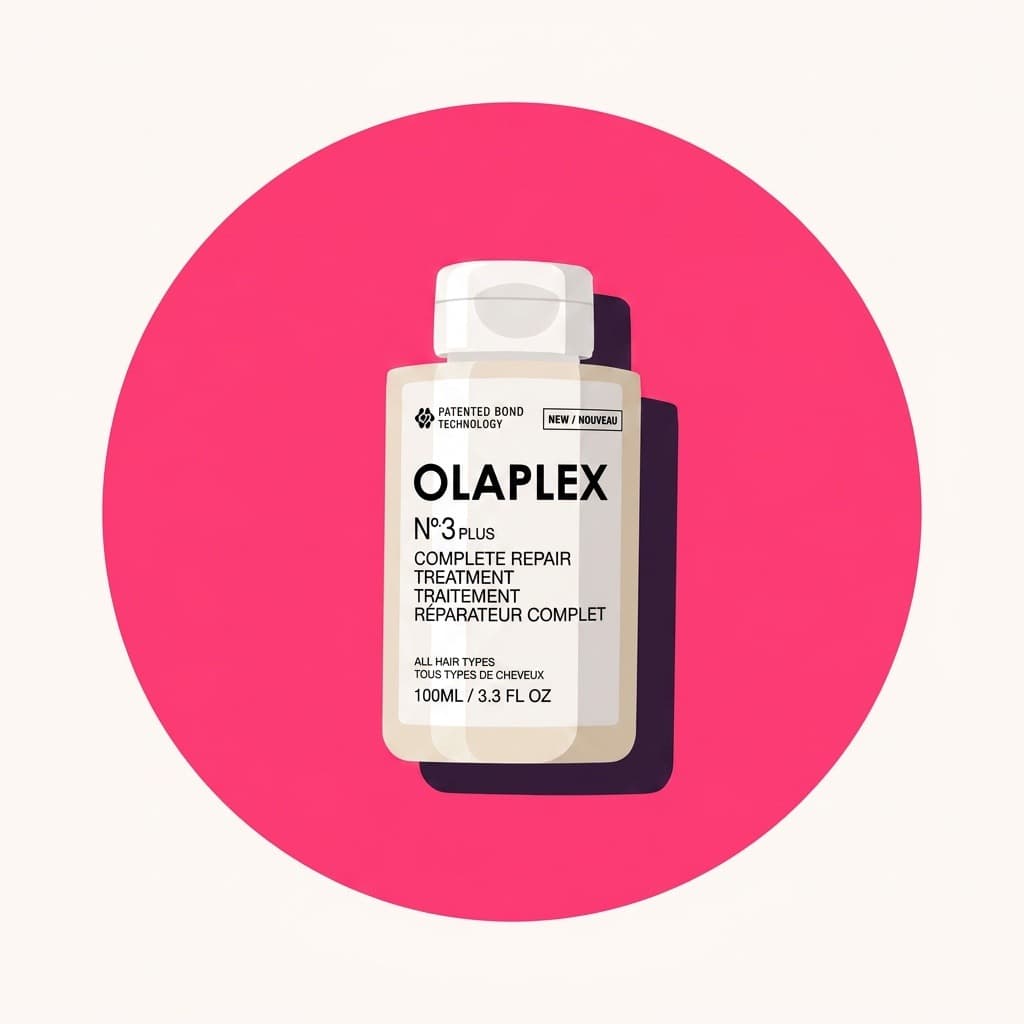
Editorial illustration based on current packaging; not an official product photograph.
Editor’s cut
At a glance
N°.3PLUS is the current three-minute, 100 milliliter pre-shampoo treatment, not the older N°.3 Hair Perfector formula.
Olaplex reports three times stronger hair after four uses and three times softer hair versus bleached hair, but it does not publish a full study protocol.
The formula combines bis-aminopropyl diglycol dimaleate with fatty alcohols, cationic conditioners, humectants and plant oils.
Independent hair science supports its conditioning logic and the reality of bleach damage, but does not independently validate this finished product.
At $34 for 100 milliliters, it makes most sense for visibly damaged hair and shoppers who will use it consistently before shampooing.
Community signal
Would you buy it again?
Verdict
Olaplex N°.3PLUS Complete Repair Treatment earns its number-nine Beauty 100 rank because it turns a vague hair-repair promise into a clear routine: wet the hair, apply from roots to ends before shampoo, wait three minutes, rinse, then shampoo and condition. That is easier to fit into a wash day than the longer ritual associated with the original N°.3 Hair Perfector. The formula also has a credible conditioning base alongside the ingredient Olaplex built its name around, bis-aminopropyl diglycol dimaleate.
The evidence needs careful wording. Olaplex reports hair that is three times stronger after four uses, three times softer than bleached hair, and 75% stronger internal hair structure over time. Those are product-specific brand results, but the consumer page does not publish sample sizes, raw results or a complete test protocol. Its visible before-and-after examples also use N°.3PLUS with Olaplex shampoo and conditioner, so they cannot show what this treatment contributed on its own.
Independent research supports two parts of the story. Bleaching can damage both the cuticle and cortex, and cationic conditioners can reduce combing force, static and friction on damaged hair. It does not independently prove the finished N°.3PLUS formula or the broad claim that it repairs all three types of hair bond.
The practical verdict is positive but narrower than the marketing. This is a well-designed premium pre-shampoo treatment for hair exposed to bleach, color, chemical processing, frequent heat or repeated mechanical stress. It is less persuasive for relatively undamaged hair, anyone satisfied with a regular conditioner, or a fragrance-sensitive shopper. At $34 for 100 milliliters, the quick protocol is part of what makes the price defensible.
The exact version ranked here
This review covers the 100 milliliter, or 3.3 fluid ounce, N°.3PLUS Complete Repair Treatment sold for $34. The founding Beauty 100 edition froze product ID 507, product version 1 and the slug olaplex-n-3plus-complete-repair-treatment on August 29, 2026. It received an editorial score of 90 and a final score of 90.5.
N°.3PLUS is a pre-shampoo treatment, not a shampoo, conditioner, leave-in mask or overnight treatment. It is also not the old N°.3 Hair Perfector under a slightly different label. Olaplex describes N°.3PLUS as the next version, with a three-minute application time and expanded claims covering the inside and outside of the hair fibre. The brand's N°.3 and N°.3PLUS comparison lists a three to ten minute window for the original and a fixed three minutes for the current treatment.
That distinction matters when reading reviews or shopping through a marketplace. A useful review should name N°.3PLUS, show the current white bottle with the pink label and identify 100 milliliters as the ranked size. Evidence about the previous formula should not be silently transferred to this one. The Sephora listing for the current 100 milliliter bottle independently matched the $34 standard price when this review was researched.
What the formula can plausibly do
The current ingredient list starts with water, cetearyl alcohol, behentrimonium methosulfate and bis-aminopropyl diglycol dimaleate. Ingredient order does not disclose exact percentages, but it shows that the proprietary Olaplex ingredient sits inside a substantial conditioning base rather than acting alone.
That base includes distearyldimonium chloride, behentrimonium chloride, cetyl alcohol, stearyl alcohol, glycerin, panthenol, shea butter and several plant oils. In plain terms, it combines positively charged conditioning agents with fatty alcohols, humectants and emollients. Those ingredients can affect softness, slip, static and the force needed to comb damaged hair.
The mechanism is not mere marketing. A review of hair-care physicochemistry explains that damaged hair carries more negative charge and attracts cationic conditioners. Their deposited film can help flatten lifted cuticle scales and reduce friction. An earlier clinical overview of hair cosmetics likewise describes conditioners as tools for detangling, lowering friction, controlling frizz and improving combability.
More recent evidence sharpens the distinction between conditioning and structural repair. A study of common cationic conditioner ingredients, published online in 2025 and assigned to a 2026 journal issue, tested behentrimonium chloride and behentrimonium methosulfate, both present in N°.3PLUS. Behentrimonium chloride significantly reduced wet-combing force, but the conditioners did not reverse the measured marker of oxidative damage. That study did not test the whole Olaplex formula or its proprietary ingredient. It shows why softer, easier-to-comb hair is a meaningful benefit without being proof that underlying oxidative damage has been reversed.
Olaplex labels the formula protein-free, and the displayed ingredient list does not contain a hydrolyzed protein treatment. It does contain fragrance, linalyl acetate, linalool, hydroxycitronellal, alpha-isomethyl ionone and citronellol. The list also includes Yellow 5 and Yellow 6. These do not make the formula unsuitable for most users, but they matter to shoppers avoiding fragrance or added colorants.
How to read the three-bond claim
Olaplex says its patented Bond Building Technology and Damage Defense Cationic Complex repair three types of hair bond from cortex to cuticle. The three categories generally discussed in hair science are disulfide, hydrogen and ionic bonds. That is a useful shorthand, but the chemistry inside a hair fibre is more complicated than three identical switches that can be turned back on.
A 2024 review of chemical bonds and hair behaviour found that disulfide, hydrogen and ionic bonds all contribute to hair properties. It also challenged the assumption that each bond category behaves uniformly. Bond location, surrounding structures, water, heat and chemical exposure can change the way a fibre responds. The authors concluded that hair bonding is heterogeneous and that aspects of ionic and hydrophobic interactions still need more study.
That paper neither tests nor disproves N°.3PLUS. It does set the right evidentiary standard. A broad claim about all three bond types needs direct finished-product data that identifies what was measured, how much hair was tested and what comparator was used. The product page gives outcome claims but not that complete public record.
There is no doubt that cosmetic processing can damage hair. A transmission electron microscopy and proteomics study found progressive protein loss and oxidation as bleaching severity increased, with damage in both cuticle and cortex. An earlier study of permed and bleached cuticles reported cuticle delamination and oxidative cleavage of disulfide bonds in cuticle proteins. These studies explain why processed hair is a sensible target for repair products. They do not identify N°.3PLUS as the solution.
What the strength and softness results tell us
The official N°.3PLUS product page makes three numerical claims. It reports three times stronger hair after four uses, three times softer hair compared with bleached hair, and 75% stronger internal hair structure over time. The page also says the treatment works in three minutes and can make hair feel softer immediately.
Those results are more useful than an unmeasured claim such as "healthier-looking," but the public presentation leaves important questions unanswered. It does not show sample size, hair source, dose per tress, number of replicates, full comparator details, statistical uncertainty or raw measurements. The phrase "over time" is not defined beside the 75% result. Without those details, a reader cannot judge how closely the test resembles a home routine or how variable the result was.
The distinction between strength and softness matters too. Strength can refer to tensile force, breakage under combing, elasticity or another instrumental endpoint. Softness can come from reduced friction and a smoother conditioned surface. Both are valuable, but they are not interchangeable evidence of internal bond repair.
The page's hairstyle before-and-after images include an important disclosure: the photographed routines used N°.3PLUS, then an Olaplex shampoo and conditioner. Curl examples also involved curl-specific Olaplex cleansing and conditioning followed by diffuser drying. Those images may represent a realistic routine, but they cannot isolate this bottle.
Insider Beauty did not find an independent, peer-reviewed trial of the current N°.3PLUS finished formula in the sources reviewed. We therefore treat the numerical outcomes as brand testing, not independent confirmation. That is the main reason the verdict stops short of calling every repair claim proved.
How to use N°.3PLUS
Use N°.3PLUS before shampooing. In the shower, wet the hair fully, apply the treatment generously from roots to ends and leave it on for three minutes. Rinse, then shampoo and condition. Olaplex recommends using it every one to three washes and says daily use is permitted, although its FAQ says once or twice a week can provide the same benefits.
The sequence is more important than extending the clock. Olaplex specifically says there is no need to leave N°.3PLUS on overnight. A longer application is not backed by the current directions and turns a quick treatment into an inconvenient one without published evidence of extra benefit.
For dense, long or highly porous hair, work in sections so the lengths receive even coverage. "Generously" is the brand's instruction, but it does not supply a standard dose. That makes bottle yield personal and prevents a responsible per-use cost calculation. Start with enough to coat the hair rather than saturating it to the point of runoff.
The directions include the roots. Anyone whose scalp reacts to fragranced products can try a small, cautious application before committing to a full roots-to-ends treatment. Rinse promptly if irritation develops. N°.3PLUS is color-safe according to Olaplex, but freshly performed chemical services may come with stylist-specific aftercare instructions that take priority.
Who it is best for
The clearest audience is hair with an actual damage burden: repeated bleaching, permanent color, relaxing, perming, frequent high heat or persistent mechanical breakage. These exposures do not produce identical damage, but they give a repair step a more concrete job than it has on untreated, resilient hair.
People who abandoned the original N°.3 because of the wait may also prefer this version. Three minutes is short enough to run while showering, and the treatment goes directly into a normal shampoo-and-condition sequence. A product that is used regularly has more practical value than a technically impressive mask that stays on the shelf.
All curl patterns can use the formula. Hair type alone does not predict need, though. A healthy curl pattern does not automatically require repair, while straight hair can be extensively bleached and fragile. Damage history, strand behaviour and routine fit are more informative than the shape of the fibre.
N°.3PLUS is less compelling for fragrance-sensitive scalps, very short untreated hair, or shoppers mainly seeking detangling and softness at the lowest price. A regular conditioner can provide those surface benefits more economically. Anyone experiencing sudden hair loss, scalp pain or breakage close to the scalp needs an appropriate professional assessment rather than a cosmetic repair claim.
Price and value
The ranked 100 milliliter bottle costs $34, equal to $0.34 per milliliter or about $10.30 per labeled fluid ounce. That is a premium price for a rinse-off product. The bottle's value depends on hair length, density, porosity and how literally "apply generously" is interpreted, so a universal number of uses would be guesswork.
There are two rational ways to judge it. Compare the price with other optional wash-day treatments, then ask whether the three-minute format makes consistent use more likely. Someone with bleached, waist-length hair may empty the bottle quickly but have a clear reason to use it. Someone with a short, undamaged style could make it last longer while gaining less.
The 250 milliliter size may change the per-milliliter calculation, but it is not the product version frozen for this ranking. Promotions and auto-replenishment discounts also change checkout totals. The Beauty 100 uses the standard $34 one-time price for the 100 milliliter bottle so the score remains reproducible.
N°.3PLUS compared with the obvious alternatives
Against the original N°.3 Hair Perfector, the current treatment wins on time. Olaplex's own comparison gives N°.3PLUS a three-minute protocol and broader inside-and-outside repair positioning, while the old treatment had a three to ten minute application. That does not mean every positive review of the original applies to the new formula. They are separate material versions.
Against a rich rinse-out conditioner, N°.3PLUS has a different place in the routine and includes bis-aminopropyl diglycol dimaleate. Still, much of its ingredient list has recognizable conditioning work to do. If the desired result is simply softer, easier-to-comb hair, a less expensive conditioner may be sufficient. If the brief is a dedicated pre-shampoo step for repeatedly processed hair, N°.3PLUS is the more relevant product.
Against peptide or acid-based bond treatments, the public evidence is not standardized enough for a clean winner. Brands use different damage models, comparators, endpoints and treatment sequences. A "three times" claim from one page cannot be compared directly with a percentage claim from another unless the test methods match.
The sensible trial is therefore routine-based. Keep shampoo, conditioner, heat settings and styling habits reasonably stable while introducing one repair treatment. Judge reduced breakage during washing and styling, combability and whether the hair remains manageable over several uses. A single unusually soft wash does not establish structural repair.
Drawbacks and reasons to skip it
Price is the first drawback. One hundred milliliters is a modest amount for a product directed from roots to ends, especially on long or dense hair. The lack of a fixed dose also makes its real cost harder to compare.
The second is evidence transparency. Olaplex publishes attractive numerical results, but the consumer page does not provide enough method detail to reproduce or closely audit them. The before-and-after imagery often reflects a multi-product Olaplex routine. A cautious buyer should not read those images as proof of the treatment alone.
Fragrance and named fragrance components make it a poor first choice for someone who knows fragranced scalp products cause discomfort. Added yellow colorants are another avoidable feature for shoppers who prefer simpler-looking formulas, even though their presence does not establish a performance or safety problem.
The routine still adds a step. Three minutes is brief, but the product must go onto wet hair before shampoo. People who wash quickly at a sink, use protective styles for long periods or dislike handling hair twice may not use it consistently.
Finally, the broad language around reversing all damage can set an impossible expectation. Cosmetic products can improve fibre properties and reduce future handling stress, but they cannot make a weathered hair shaft biologically new. Continuing to bleach aggressively or use excessive heat can outpace any rinse-off treatment.
Sources and methodology
This is an evidence-led editorial review, not a staff use test. Insider Beauty verified the frozen rank-nine product against Olaplex's current product and comparison pages, cross-checked the 100 milliliter size and price at Sephora, examined the full displayed ingredient list and reviewed published research on bleaching, hair bonds and cationic conditioning. Research was completed on August 29, 2026.
Product-specific results are attributed to Olaplex. Independent papers establish mechanisms and context, not the performance of this finished formula. No source was used to invent a personal result, and customer ratings were not treated as clinical evidence.
Sources used for this review:
- Olaplex N°.3PLUS Complete Repair Treatment product page
- Olaplex comparison of N°.3 and N°.3PLUS
- Sephora N°.3PLUS 100 milliliter listing
- On Hair Care Physicochemistry review
- Hair Cosmetics: An Overview
- Electrokinetic analysis of common conditioner ingredients
- Chemical bonds and hair behaviour review
- Physical and chemical disruption of hair after bleaching
- Perming and bleaching effects on cuticles
Useful details
Frequently asked questions
Does Olaplex N°.3PLUS actually repair damaged hair?
Olaplex reports stronger and softer hair in brand testing, and the formula has ingredients that can condition damaged fibres. The public product page does not provide a complete test protocol, and independent studies have not validated the current finished formula. The strongest conclusion is improved cosmetic and mechanical properties, not a return to biologically new hair.
Is N°.3PLUS the same as N°.3 Hair Perfector?
No. N°.3PLUS is the current three-minute pre-shampoo treatment with an updated formula and broader cortex-to-cuticle claims. The original N°.3 Hair Perfector used a three to ten minute application window. Reviews, prices and ingredient lists for the original should not be treated as evidence for N°.3PLUS.
How often should N°.3PLUS be used?
Olaplex recommends every one to three washes and says it can be used daily. Its product FAQ says once or twice a week can provide the same benefits. Frequency should reflect the amount of damage, wash schedule, bottle cost and how the hair responds rather than an assumption that more is always better.
Should hair be wet before applying N°.3PLUS?
Yes. The official directions say to apply it generously to wet hair from roots to ends, wait three minutes and rinse. It then goes before shampoo and conditioner. The current instructions do not call for towel-dried hair, an overnight application or a longer processing time.
Do you shampoo before or after N°.3PLUS?
Shampoo after it. N°.3PLUS is a pre-shampoo treatment: wet the hair, apply the treatment, leave it for three minutes, rinse, then shampoo and condition. Using it after shampoo would depart from the tested and labeled routine.
Is Olaplex N°.3PLUS protein-free?
Olaplex describes it as protein-free, and the current displayed ingredient list does not show a hydrolyzed protein treatment. The formula still contains a large conditioning system, plant oils, humectants and the brand's bis-aminopropyl diglycol dimaleate. Protein-free does not mean ingredient-free or automatically suitable for every scalp.
Can N°.3PLUS be used on color-treated or curly hair?
Olaplex says it is color-safe and suitable for all hair types. The better reason to choose it is damage history, such as bleaching, chemical processing, high heat or repeated breakage. Curl pattern alone does not determine whether a repair treatment is needed.
Is Olaplex N°.3PLUS worth $34?
It can be for repeatedly processed hair if the three-minute format leads to regular use. The 100 milliliter bottle costs $0.34 per milliliter and has no fixed number of applications. It is harder to justify for relatively undamaged hair or for someone who only wants the softness a regular conditioner can provide.