serum
Lucent-C 15% Ascorbic Acid Serum
$23.00
Choose where you shop. See who qualifies before you copy a code.
We’ll list an offer here once we can confirm its terms for shoppers in the United States. An empty list doesn’t mean the brand has no offers.
Check the country selector and delivery options on the brand’s website before shopping.
Visit the official website ↗Clear about what we’ve checked. “Listed by the brand” means we found the offer on its official site. “Accepted in our test basket” means we also saw it apply to the basket described in the details. We recheck sources daily and hide expired offers or any we haven’t reconfirmed within 48 hours.
Check the store country, sign-in requirement, minimum spend and excluded products. Remove any other promotion, then check the saving appears in your order total before paying. Welcome offers usually require a first purchase or a new rewards membership.
Tell us about an offer that didn’t workPrequel makes a persuasive case for giving everyday skincare more attention. Its best introduction is Gleanser, a generously sized face-and-body wash built around glycerin. The bottle belongs beside a bathroom sink or in a shower, and its $18 price makes the dermatologist-founder story feel accessible. This is skincare for someone who wants thoughtful formulas without treating every purchase as a luxury investment.
The appeal goes beyond value. Prequel puts considerable effort into texture: a slippery cleanser, a lighter cream, a balmier version of that cream. Its most convincing idea is that practical skincare should still be enjoyable to use. The range now includes more ambitious serums and exfoliants, but the large-format basics explain the brand better than a list of active ingredients does.
Dr Samantha Ellis launched Prequel in July 2023 with beauty company The Center. The original announcement described a three-product debut and an ambition to occupy the space between basic pharmacy skincare and more expensive doctor-office brands. Ellis's current practice biography confirms that she is a board-certified dermatologist practising in Danville, California.
The name has a more personal explanation than the clinical-looking bottles suggest. On the brand's About page, Ellis connects “Prequel” to the history she asks about when meeting a patient: what happened to their skin before the appointment. That interest in everyday habits runs through the range. Cleansing and moisturising receive as much attention as the more conspicuous treatment steps.
Prequel calls its formulation philosophy “Basic +.” It is an apt description of products that use familiar dermatological ingredients while paying attention to consistency, packaging and price. Glycerin is an especially good emblem for this approach. It is a familiar humectant, yet here it supplies both a product name and an unusually prominent part of the formula.
Prequel is also easier to find in stores. Target's January 2026 beauty announcement included an expanded Prequel assortment. The brand now sits in the same shopping trip as ordinary household purchases. That placement suits its generously sized face-and-body products particularly well.
The name combines glycerin and cleanser, and the current original formula contains 50% glycerin. It is fragrance-free and intended for the face and body. The 13.5 fl oz pack is one of the clearest reasons to consider Prequel if you dislike paying facial-skincare prices for a product that disappears quickly in the shower.
The brand's cleanser family has grown around that idea. Gleanser + SA adds 1% salicylic acid, while Gleanser + Glycolic uses 5% glycolic acid. Both retain the stated 50% glycerin base. Their names make the distinction fairly plain, although the similar bottles mean it is worth recognising which one an earlier recommendation referred to.
For a first purchase, the original is the clearest expression of the brand. The acid versions add a particular exfoliating purpose; they are separate choices rather than successive upgrades. Our Gleanser review looks more closely at the original formula, and our cleanser guide puts it alongside other formats.
The large bottle takes up space and is less convenient for travel. The generous pack that makes sense at home can be a poor fit for a small washbag; the brand also sells a travel Gleanser.
In her August 2026 review for Who What Wear UK, Grace Lindsay praised Gleanser's hydrated after-feel while noting the bulky packaging. Her favourite product was Half & Half Fluid Moisturizer: she liked its light consistency and dewy finish on her combination skin. She also found AM/PM Modern Moisturizer lighter and silkier than she had expected, although potentially insufficiently rich for very dry skin.
That is a useful account of Prequel's attraction. A moisturiser can have a reassuringly functional name and still be chosen because of how it sits on the face. The interesting differences within this range are often differences in richness and finish, rather than a procession of increasingly impressive ingredient names.
It also explains why Prequel can appeal to people who already like straightforward pharmacy skincare but want more choice of texture. The company has a recognisable point of view without requiring every product to feel the same. Someone drawn to a fluid moisturiser may have little interest in a heavier protectant cream; both preferences fit the brand.
Barrier Therapy is a face-and-body skin protectant cream with 1% colloidal oatmeal and a formula that also includes ceramides, shea butter and dimethicone. The standard 10 fl oz tube costs $18. Its scale is part of its identity: this is a cream intended to make sense beyond a small area of the face.
The current Barrier Therapy Rich costs $20 for the same listed pack size. Prequel describes the difference as a denser, balmier texture and says it adjusted the emulsifier and glycerin levels. Both declare 1% colloidal oatmeal. Rich therefore means a different consistency, rather than a higher percentage of that labelled active.
This is a particularly useful expansion because it gives shoppers a concrete choice. The question is how substantial a cream you want to spread, not whether the more expensive name must be better. For another brand whose identity centres on barrier care, our Skinfix profile offers a useful comparison of approach and price positioning.
There is also a specific episode in Prequel's history worth knowing. In an August 2024 statement, the company voluntarily recalled four Barrier Therapy lots because of possible bacterial contamination. The notice identifies lots X4054A, X4136A, X4137A and X4138A; it explicitly excludes other lots and products. Anyone checking an older tube should use that notice's lot details and instructions. This was a defined batch recall, rather than a recall of the Prequel range.
For smaller facial-moisturizer formats, our BYOMA guide compares its gel and richer creams, with current sizes and prices.
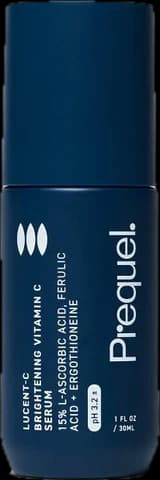
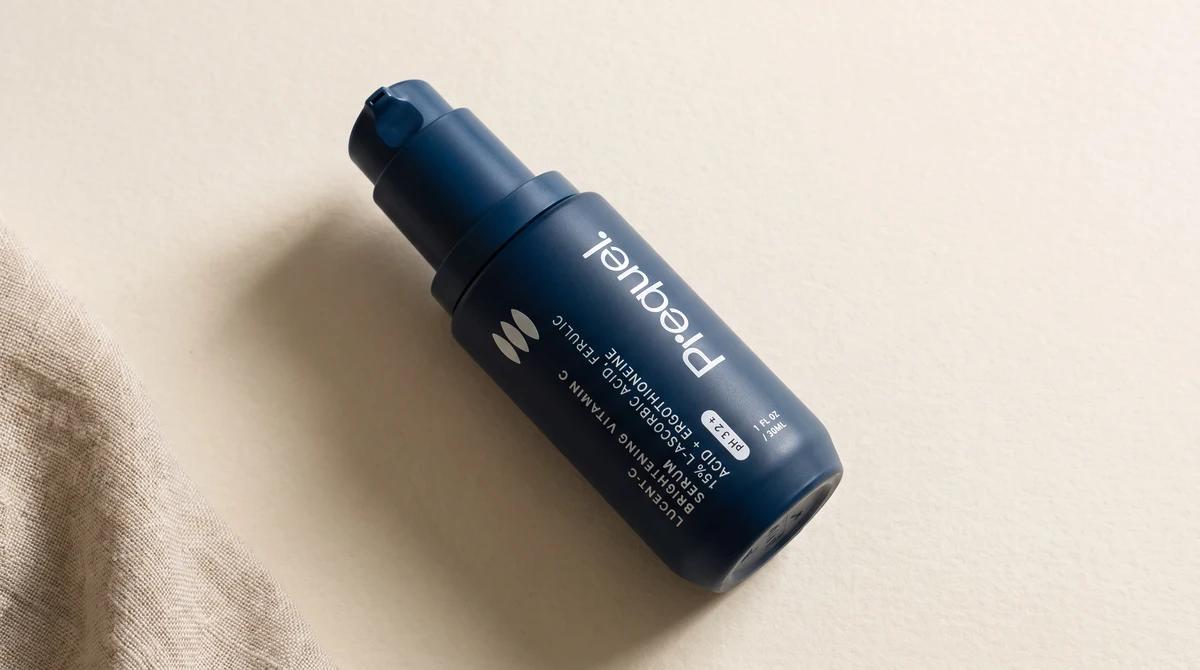
Lucent-C gives Prequel an accessible vitamin C serum: $23 for 1 fl oz, with L-ascorbic acid, ferulic acid and ergothioneine in the current ingredient list. The small pump bottle belongs to a more targeted side of the range than Gleanser or Barrier Therapy. Prequel explicitly says this high-potency formula is not designed for sensitive skin, an important qualification to its otherwise reassuring brand presentation.
Retinal Renew makes another deliberate distinction. It is a retinaldehyde gel sold in 0.1% and 0.2% strengths, priced at $29 and $35 respectively. The lower-strength selection appears in the table below. Its fragrance-free formula includes glycerin, dimethicone, jojoba oil, ectoin and retinal; the brand markets it for the appearance of texture and fine lines.
These products show how far Prequel has developed beyond its initial basics. They also make the range more demanding to shop. A dermatologist founder can provide a coherent formulation philosophy, but the products still have different purposes and tolerances. Prequel is easiest to understand when its wash, moisturiser and targeted serum categories remain distinct.
These are regular one-time US prices from Prequel, checked 16 October 2026, before tax and shipping. Pack sizes were cross-checked against Target's current Prequel listings. The Gleanser selection is one bottle; Retinal Renew is the 0.1% version.
The review cards below may show prices from earlier checks. Use the dated prices and sizes in this table for the current comparison.
| Product | US price and size | Buying view |
|---|---|---|
| Gleanser | $18 / 13.5 fl oz | Original face/body wash |
| Barrier Therapy | $18 / 10 fl oz | Standard cream texture |
| Therapy Rich | $20 / 10 fl oz | Denser, balmier cream |
| Lucent-C | $23 / 1 fl oz | Targeted vitamin C serum |
| Retinal 0.1% | $29 / 1.7 fl oz | Lower of two strengths |
Gleanser is the most natural starting point for the brand's combination of price, pack size and considered texture. Barrier Therapy makes a similarly clear proposition for someone wanting a substantial face-and-body cream. The more targeted formulas deserve attention on their own terms, but Prequel's distinctive achievement is making the unglamorous daily products interesting enough to choose deliberately.
Sources, current US product versions and prices checked 16 October 2026.
Prequel was founded by Dr Samantha Ellis, a board-certified dermatologist, and launched in July 2023 with beauty company The Center. Her interest in the skin history behind each patient inspired the brand's name.
Gleanser is a signature introduction: a glycerin-rich cleanser sold in a generous face-and-body format. Barrier Therapy creams and Lucent-C illustrate the wider range, which combines practical daily care with more targeted formulas.
No. The range includes different types of products, and Prequel explicitly says Lucent-C is not designed for sensitive skin. Original Gleanser, its acid-containing variations and the two Retinal Renew strengths also serve different purposes. Check the specific formula's guidance.
Its core products sit at accessible skincare prices, particularly in the larger formats. Current US selections include Gleanser at $18 for 13.5 fl oz and Barrier Therapy at $18 for 10 fl oz. Targeted serums cost more per pack volume, so compare the specific category rather than the brand name alone.
