Mario Badescu has an unusually recognizable pair of calling cards: a bottle with pink sediment at the bottom, and a pink facial mist with a green-and-white label. Drying Lotion and Facial Spray with Aloe, Herbs and Rosewater explain much of the brand's appeal. They are easy to recognize, affordable enough to try individually, and far more memorable than another anonymous bottle of serum.
The range behind them is a New York salon collection with a long history and some decidedly old-fashioned habits. Product names describe a texture, plant or job: Enzyme Cleansing Gel, Seaweed Night Cream, Drying Lotion. That plainness is appealing. It also disguises how different the formulas are. Mario Badescu makes more sense as a source of particular favorites than as a brand whose entire range shares one formulation philosophy.
A facialist's brand that found a second audience online
According to Mario Badescu's account of its beginnings, its Romanian founder moved to New York in 1966 and began his facial practice and skincare business in a Manhattan apartment in 1967. The company dates Drying Lotion to that first year, the rosewater facial spray to the 1980s, and Enzyme Cleansing Gel to the 1990s.
That history explains the range better than its association with social media does. The products grew out of a facialist's approach: many narrowly named creams, cleansers and masks, with different recommendations for different clients. There is little of the deliberately tiny assortment that newer skincare brands use to make shopping feel effortless. Mario Badescu expects you to find your particular bottle among plenty of others.
The packaging reinforces that character. The green lettering and practical containers look more like products taken home after a facial than decorative objects designed around a bathroom shelf. For someone who likes that salon feeling, the lack of elaborate presentation is part of the attraction. It also helps explain why the small, visually odd Drying Lotion became such an effective introduction to the company.
Its online moment is documented, rather than something we need to infer from today's packaging. In Willamette Week's December 2017 review, Lauren Yoshiko described renewed attention around the drying lotion and rose spray. She liked Drying Lotion and the cleansing gel, but was less impressed by several other formulas and preferred another brand's rose mist. Even during that period of enthusiasm, the interesting story was selective loyalty to particular products.
The two bottles explain the brand's strengths
Drying Lotion is a useful example of memorable design coming from the formula itself. The pink material settles, and the directions specifically tell you not to shake the bottle. A cotton swab goes through the liquid into the sediment; the product is dabbed onto a surface blemish and rinsed off in the morning. This is a visible, localized application, with none of the discretion of a clear serum.
The current ingredient list begins with isopropyl alcohol and includes calamine, sulfur, zinc oxide and salicylic acid. The distinctive format is the reason to consider it. Someone wanting an invisible daytime product, or an alcohol-free formula, should look elsewhere. The manufacturer's directions also exclude broken skin. At US$18 for 1 oz, it is a relatively accessible way to try the product most closely associated with the brand.
The rosewater facial spray offers a different kind of appeal: a pleasant, inexpensive beauty extra. The current brand listing includes aloe juice, rose flower water and botanical extracts, along with fragrance and colorants. Its purpose is a refreshing mist and dewy finish. The 4 oz bottle costs US$8, which makes more sense for that modest role than an elaborate claim about transforming skin.
The rose scent is central to the product's personality. If you like fragranced beauty rituals, that can be the whole reason to buy it. If you prefer everything unscented, there is little reason to work around the feature that makes it recognizable. Calling it a rose spray is more informative than treating it as a universal skincare essential.
Botanical names, varied formulas
Mario Badescu's plant names can create the impression of a uniform botanical range. Reading across the selection gives a more complicated picture. The rose spray is labeled vegan; Seaweed Night Cream contains soluble collagen and hydrolyzed elastin. Fragrance appears in both, as well as in Enzyme Cleansing Gel. A preference satisfied by one bottle may not carry across to the next.
Enzyme Cleansing Gel illustrates the approachable side of the range. Papaya and grapefruit are its featured extracts, and the official page positions it for combination and oily skin. At US$16 for the selected 8 oz bottle, it is an accessible cleanser with the botanical presentation that runs through the collection.
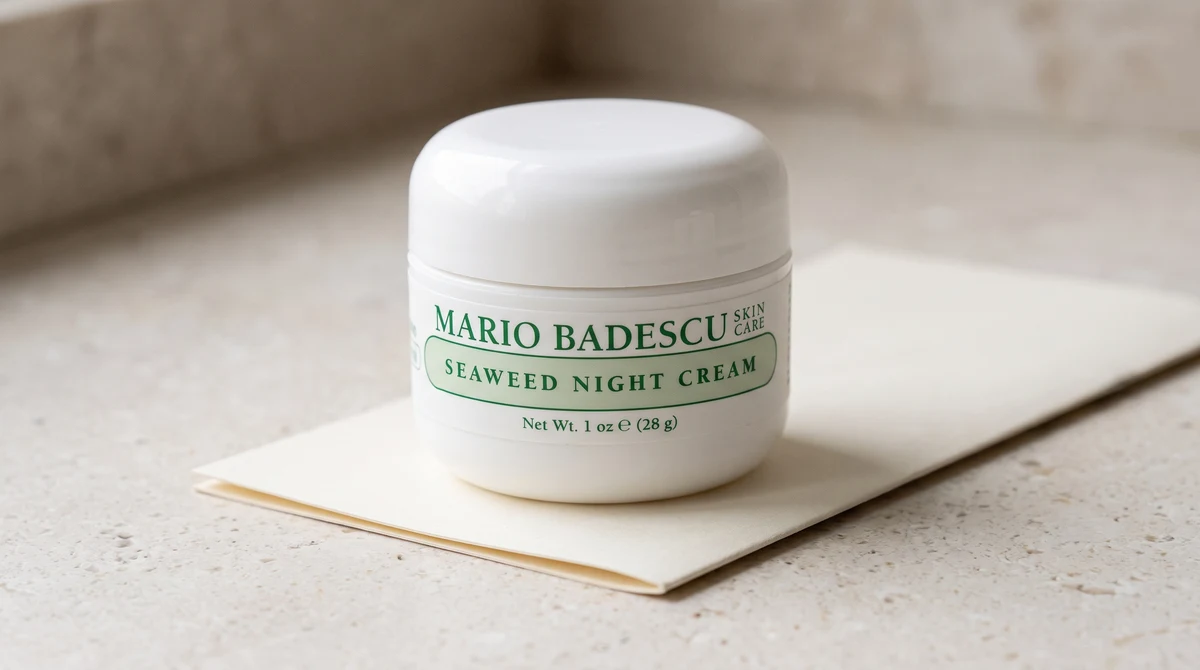
Seaweed Night Cream is the other side of that naming habit. Bladderwrack provides the seaweed connection, but this is a conventional fragranced cream that also contains collagen and elastin. It costs US$22 for 1 oz. The old salon character is evident here, including ingredients that make it unsuitable for someone choosing vegan skincare.
This variety is a useful reason to resist an all-or-nothing verdict on Mario Badescu. The relevant question changes with the product: scent and format for the spray, application style for Drying Lotion, or texture and ingredient preferences for a cream. Our cleanser guide gives a broader comparison if the face wash is your main interest.
The historical controversy belongs in its reputation
Mario Badescu's history also includes a serious ingredient-labeling dispute. The California appellate opinion in Choi v. Mario Badescu Skin Care, Inc. describes litigation over allegations that Healing Cream and Control Cream contained undisclosed corticosteroids. The trial court approved a consumer settlement in May 2014; the final appellate decision in June 2016 affirmed the judgment.
The settlement concerned economic claims. It expressly preserved personal-injury claims rather than settling them. That distinction matters when assessing accounts of how the case ended. It was a historical dispute involving those two named creams, not a finding about the four current products compared here.
Ingredient disclosure is part of the trust a skincare company asks for, so this is a relevant reservation about the brand's record. It also deserves precise treatment. A court settlement from that case should neither disappear behind the brand's nostalgia nor become an unsupported claim about what is in every bottle sold today.
What the familiar products cost now
These are regular US one-time purchase prices checked on 15 October 2026, before tax and shipping. The selected sizes matter: the brand sells the mist and cleanser in several bottle sizes.
The review cards below may show prices from earlier checks. Use the dated prices and sizes in this table for the current comparison.
| Product |
US price and size |
Buying view |
| Drying Lotion |
US$18 / 1 oz |
Distinctive spot format; visible pink residue |
| Rosewater Spray |
US$8 / 4 oz |
Affordable refreshing mist; fragranced |
| Enzyme Gel |
US$16 / 8 oz |
Botanical cleanser; fragranced |
| Seaweed Cream |
US$22 / 1 oz |
Night cream; not vegan or unscented |
Those prices help explain why the brand can remain accessible even when the range feels specialized. A US$8 mist asks for a small discretionary purchase. A US$22 cream in a 1 oz jar is a different value calculation: it is a smaller amount than a large everyday moisturizer, even though the ticket price still looks moderate.
Seaweed Night Cream appears in our Crème de la Mer alternatives guide. Read that comparison for the different moisturizing options, rather than assuming that a seaweed connection makes two creams equivalent. A shared ingredient theme is only one part of a formula.
Mario Badescu is most appealing when a particular format suits you and the price feels proportionate to its job. The rose spray is the clearest inexpensive indulgence; Drying Lotion is the most distinctive introduction to its salon heritage. The brand is less compelling as a shortcut for shoppers who want every purchase to be fragrance-free, vegan or built around clearly stated active percentages. Its character lies in the individual bottles, and some of those bottles have a stronger reason to exist in your bathroom than others.
Research and US prices checked on 15 October 2026 using official product listings, retailer information, dated editorial coverage and the cited court record.
Frequently Asked Questions
What is Mario Badescu best known for?
Mario Badescu is best known for its pink-sediment Drying Lotion and Facial Spray with Aloe, Herbs and Rosewater. Enzyme Cleansing Gel is another longstanding product in its broader salon-style skincare range.
Where did Mario Badescu start?
The brand traces its beginnings to Romanian facialist Mario Badescu's Manhattan practice in 1967. Its original salon background explains the large selection of individually named cleansers, creams, masks and targeted products.
Is Mario Badescu fragrance-free and vegan?
That depends on the product. The rosewater facial spray is labeled vegan but contains fragrance. Seaweed Night Cream contains fragrance, soluble collagen and hydrolyzed elastin, so the range should not be treated as uniformly vegan or fragrance-free.
Is Mario Badescu worth the money?
Its strongest case is a specific product whose format you enjoy. The selected 4 oz rose spray costs US$8 and Drying Lotion costs US$18 for 1 oz. The broader range is less persuasive as an automatic choice when you have strict fragrance or ingredient preferences.