Davines makes salon haircare feel unusually personal. Its compact bottles, tubs and abbreviated names suggest a collection chosen by a hairdresser who knows your hair. Behind that appearance is an Italian formulation business with a long interest in where its ingredients come from. The attraction is a combination of touch, scent and considered design: haircare that promises an enjoyable daily ritual as well as a polished finish.
OI, with its fragranced oils and conditioning products, is the easiest expression of that appeal. Essential Haircare takes a more targeted approach to colour, curls, dryness and volume. The important 2026 development is that familiar Essential Haircare names now sit on updated formulas. If you are replacing an old favourite, the name alone no longer tells the whole story.
Research checked 16 October 2026, using current US listings, company and certification records, and named editorial reviews.
Parma explains more than the packaging does
The Bollati family founded Davines in Parma in 1983 as a laboratory making products for other cosmetics companies. Its official history dates the decision to concentrate on its own brand to 1992. That background matters: this is a formulation business that developed a salon identity, rather than a celebrity name attached to a ready-made range.
You can still see that salon connection in the way the products divide up the work. There are shampoos for particular hair concerns, leave-in milks for the drying and styling stage, and oils for a finishing touch. Davines expects someone to choose between textures and functions. The small-letter names can make that choice look more mysterious than it needs to be, especially when several bottles use the word “milk.”
Its environmental identity is also more developed than a leafy label. B Lab currently lists Davines Group as certified, with certification dating to 2016. That is a company assessment, covering business practices; it does not mean every formula is organic, fragrance-free or suitable for every scalp.
In 2026 the company changed its longstanding “Sustainable Beauty” tagline to “For a Good Life.” The broader language fits a brand that treats the pleasure of using a product as part of its purpose. Whether that appeals to you will depend partly on how much you enjoy scented haircare. Davines is often quite deliberate about leaving a fragrance behind.
The two faces of Davines
OI is the more indulgent family. The OI All In One Milk is a leave-in conditioning spray, while OI Oil is a concentrated finishing serum. Roucou, derived from the achiote plant, supplies the botanical story. Softness, shine and a lasting fragrance supply the everyday attraction.
The formulas are more conventional than that ingredient story might suggest. The current US OI Oil list starts with silicones including cyclopentasiloxane and disiloxane; it is not a bottle of pure plant oil. OI Milk also contains conditioning ingredients and silicones. Those choices are consistent with the smooth, polished finish the range is designed to give. People specifically seeking silicone-free haircare should look beyond OI’s botanical presentation.
The distinction between the oil and milk is useful. Milk fits the post-wash styling stage and is directed onto towel-dried hair. Oil can be used before drying or on dry lengths and ends; Davines suggests starting with one pump for fine hair. Our Kérastase Elixir Ultime comparison gives more context for this type of finishing oil.
Essential Haircare is organised around more specific needs. MINU is the colour-care family. LOVE SMOOTHING is aimed at frizz, and its Lightweight Milk is a leave-on option for fine to medium hair. A product called “milk” in this range is therefore not automatically interchangeable with OI Milk: the family name, formula and intended finish matter.
For someone new to Davines, the useful starting point is the result they want. OI is attractive when the appeal is softness, scent and gloss. Essential Haircare makes more sense when the purchase begins with a particular problem, such as maintaining a colour service or smoothing fine hair without a rich cream.
The 2026 change returning customers should know
Davines’ Essential Haircare history places the range’s launch in 2004, its Slow Food ingredient partnership in 2014, refill pouches in 2024 and a new formulation phase in 2026. The latest update introduces ingredients sourced from Regenerative Organic Certified farms, alongside revised fragrances and packaging. This is a change to the products, not simply a new design on the bottle.
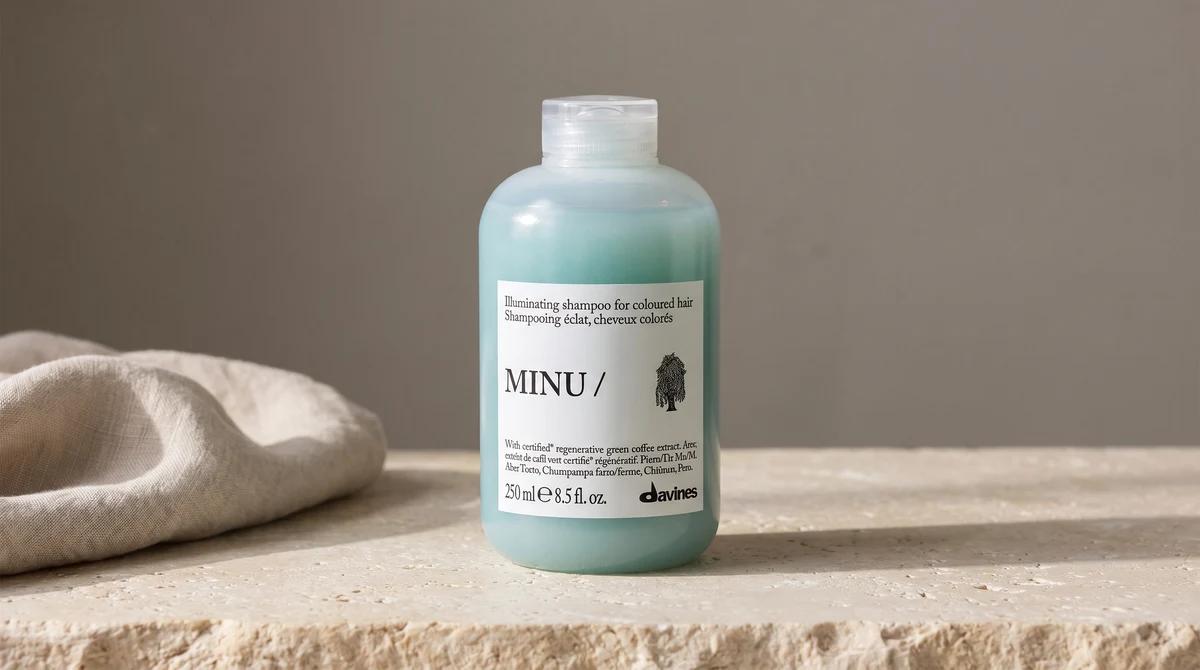
MINU provides a particularly clear example. An older Davines ingredient page connects it to Salina capers grown by Salvatore D’Amico in Sicily. The current US MINU Shampoo instead highlights green coffee extract from Peru and adds a chelating claim, intended to address dulling residues from metals and minerals in water. Its current ingredient list includes coffee seed extract.
That does not make the older caper story fictional. It means a familiar explanation of the brand has become historical. An old review can still tell you why someone liked their bottle, but it cannot settle how the current shampoo smells or feels. Davines describes the new MINU fragrance in citrus, floral, musk and patchouli terms.
For colour care, the practical benefit of this change is a more specific reason to examine the current formula. If you are comparing it with other options, start with the kind of colour service and cleansing you need; our guide to shampoos for colour-treated hair offers a broader comparison. The label’s ingredient provenance and the shampoo’s suitability for your routine answer different questions.
What its editorial reputation rests on
Davines has recent recognition beyond its salon following. In Allure’s September 2026 Best of Beauty awards, LOVE Smoothing Lightweight Milk won the straight-hair leave-in conditioner category. Beauty director Sarah Kinonen described using it on her fine, highlighted hair and waking up to softer, smoother lengths. She also liked its fresh laundry-like scent.
That recognition is especially useful because it points to a specific texture and hair type. It is not an award for every Davines milk, nor evidence that a heavier OI product will behave the same way.
OI has its own editorial supporters. In Who What Wear’s conditioner guide, beauty director Erin Jahns praised OI Conditioner for making her dry, coloured hair feel softer and look shinier. Her description captures the range’s central appeal: a noticeable cosmetic finish after washing.
The main reservations follow naturally from the same character. A lasting scent is a benefit only if you like it. Davines describes OI’s fragrance with thyme, pine, musk and amber notes, and both the milk and conditioner list fragrance. The OI Conditioner page also acknowledges that some people with ultra-fine hair may find it heavy. Richness and perfume are meaningful parts of this brand, not incidental details hidden behind the sustainability story.
A current US price guide
The review cards below may show prices from earlier checks. Use the dated prices and sizes in this table for the current comparison.
These are the listed prices for the selected sizes on Davines’ US store, checked 16 October 2026, before tax and shipping. All six selections were available at the check.
| Product |
US price / size |
Buying view |
| OI Shampoo |
$43 / 280 ml |
Softness and shine |
| OI Conditioner |
$50 / 250 ml |
Rich rinse-out care |
| OI Milk |
$45 / 135 ml |
Leave-in conditioning |
| OI Oil |
$57 / 135 ml |
Finishing serum |
| MINU Shampoo |
$38 / 250 ml |
Updated colour care |
| LOVE Milk |
$33 / 150 ml |
Lighter smoothing |
The table’s LOVE Milk is LOVE SMOOTHING Lightweight Milk, the award-winning leave-in, not LOVE Curl Milk or LOVE Smoothing Serum. OI Shampoo is the 280 ml bottle, rather than the 90 ml travel size that sometimes supplies a lower headline price.
At $93 for the standard OI shampoo and conditioner together, Davines is a considered salon purchase. The $33 LOVE Milk is a more accessible introduction if lightweight smoothing is your priority. OI Milk also comes in a 50 ml size at $22: more expensive per millilitre, but useful if you want to live with the fragrance before committing to the larger bottle.
Davines is most convincing when its particular pleasures matter to you. The compact packaging, perfumed finish and attention to ingredient sourcing give it a coherent personality. The new Essential formulas also show a company prepared to change longstanding products. That makes the brand interesting, but it gives loyal customers a reason to read the current bottle as carefully as a newcomer would.
Frequently Asked Questions
What is Davines known for?
Davines is an Italian salon haircare brand known for OI’s softening, shine-focused products and the targeted Essential Haircare families. Ingredient sourcing, compact packaging and distinctive fragrances are important parts of its identity.
Is Davines a natural or organic haircare brand?
Davines uses botanical ingredients and has a substantial environmental programme, but its products are not uniformly organic or made only from plant ingredients. For example, current OI Oil and OI Milk contain silicones. B Corp certification assesses the company rather than declaring every formula organic.
Has Davines changed its Essential Haircare formulas?
Yes. Davines identifies 2026 as a new formulation phase for Essential Haircare. Current US MINU Shampoo highlights green coffee extract, while older brand material describes Salina caper. Returning customers should compare the current formula with the bottle they previously used.
Who is Davines likely to suit?
Davines is a good brand to explore if you enjoy salon haircare with distinctive scents and a choice of targeted textures. OI emphasises softness and gloss, while families such as MINU and LOVE SMOOTHING address more specific needs. Several signature products contain fragrance, and richer formulas may feel heavy on ultra-fine hair.