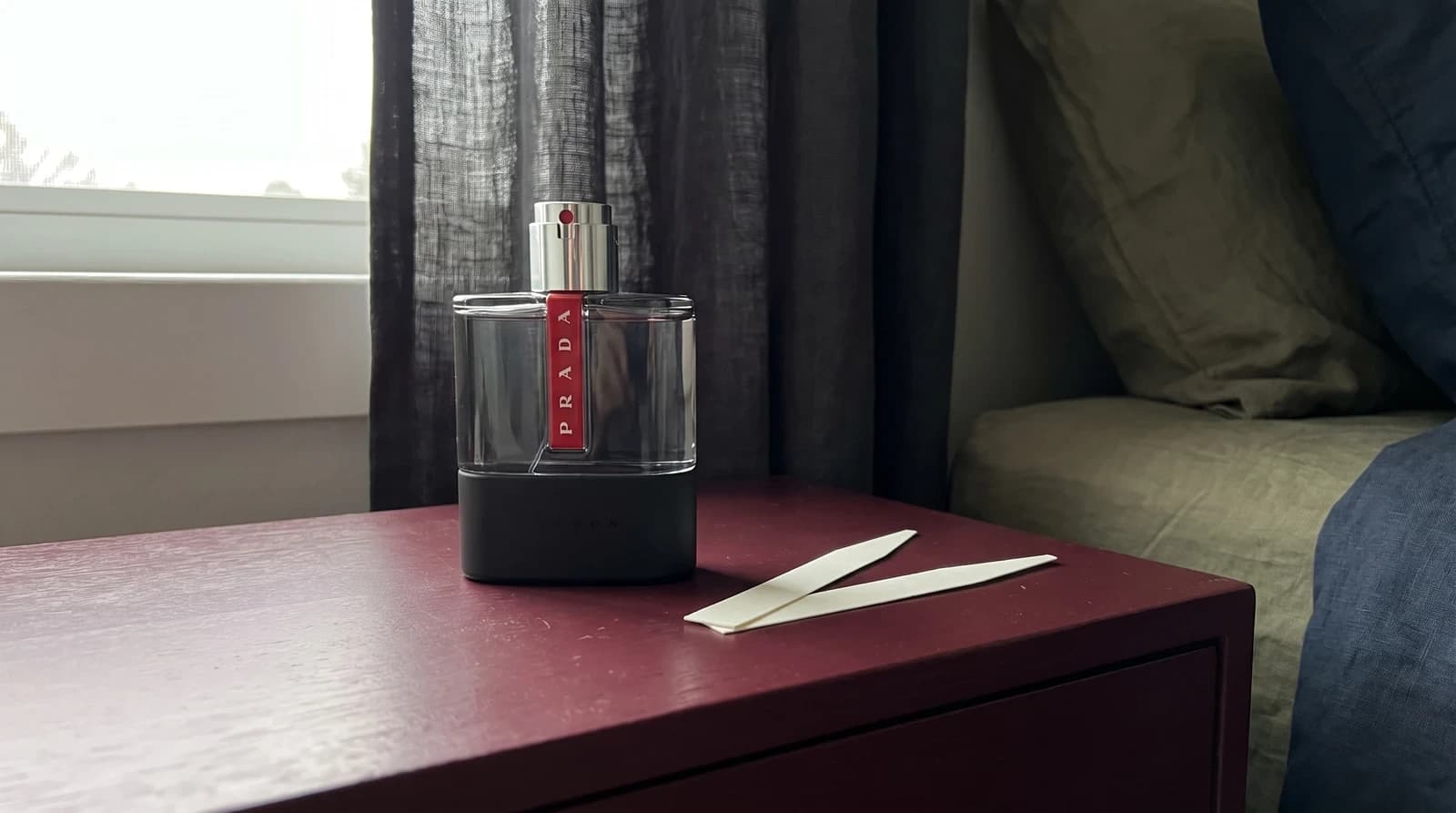
This review concerns Carbon Eau de Toilette. Carbon Eau de Parfum, Luna Rossa Black and Luna Rossa Ocean need their own comparisons.
What the official description tells us
Prada identifies lavender, geranium and mineral ambroxan as Carbon's key notes and places it in the fougère woody family. A fougère is a fragrance family, not a promise that the bottle smells literally like a fern. For shopping purposes, I'd use those named notes to decide what to smell at the counter. Prada's Carbon description.
I'd be interested in how prominent the lavender feels to me and whether I still enjoy the woody character later. Neither question can be settled by reading the note list. Notes describe a scent impression; they aren't an ingredient recipe or a reliable forecast of your favourite part of the fragrance.
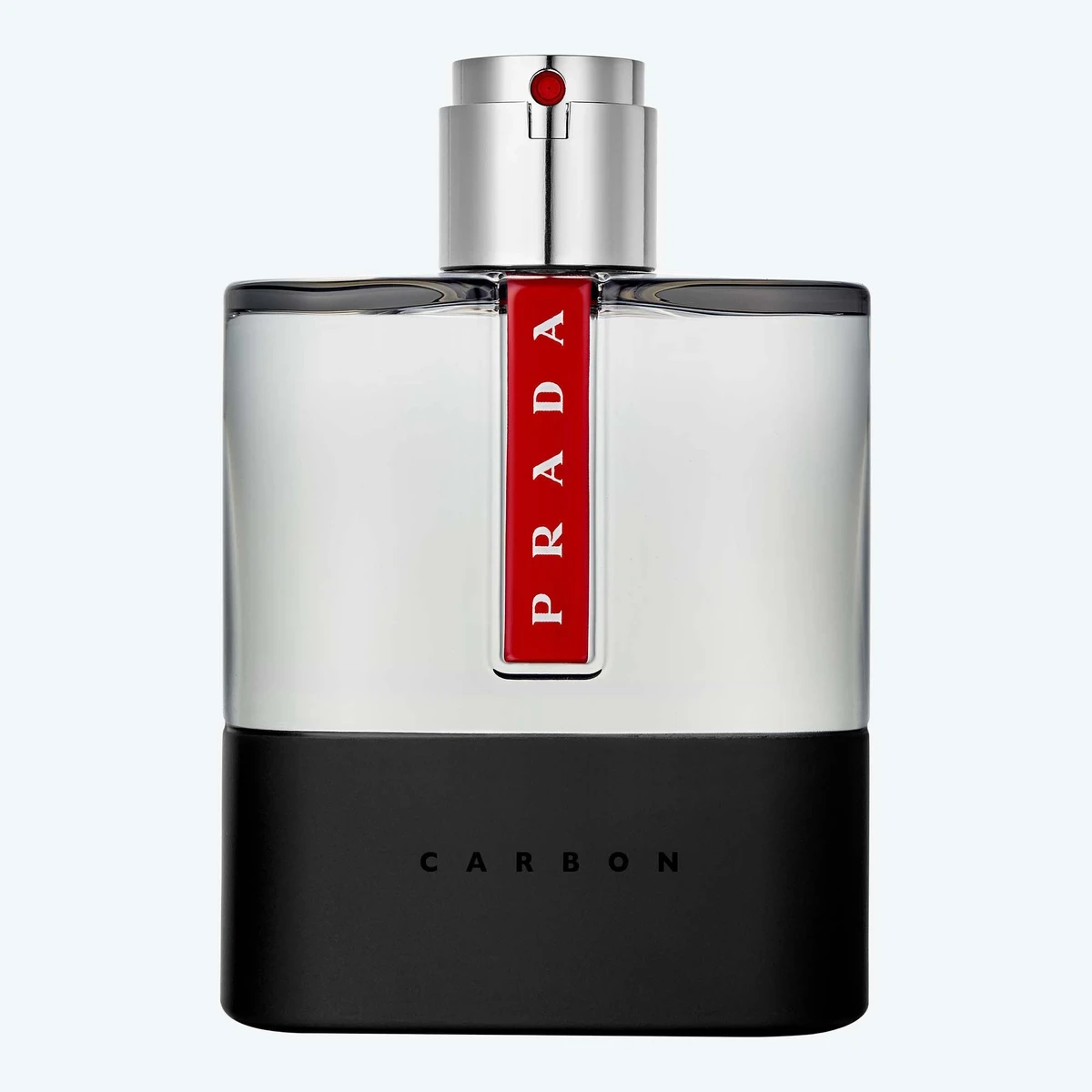
Carbon EDT and Carbon EDP are different buying decisions
The Carbon Eau de Parfum page names lavender, a liquorice accord and cypress, and places that fragrance in the gourmand family. That is different from the lavender, geranium and mineral-ambroxan description of the EDT reviewed here. I wouldn't treat the EDP as an automatic upgrade to the same scent.
This is a useful example of why concentration names need context. Someone who enjoyed a sample of the EDT could order an EDP expecting simply more of the same and end up with a different perfume brief. My advice is to write down the full name while sampling and compare the exact version when shopping. In this case the three letters at the end are part of the product identity.
It also changes how I read older reviews. A comment about Carbon's scent or wear needs to identify which Carbon the writer means. I wouldn't carry a verdict from an EDT review across to the EDP, even if both reviews used the same dark-bottle photograph.
What an independent reviewer adds to the description
In his School of Scent review of Luna Rossa Carbon, Omar Mansour describes citrus, metallic and lavender impressions and compares the effect with a soapier take on Dior Sauvage. That is a specific reviewer's sensory judgment, rather than a claim made by Prada or a smell test performed for this article.
I find the comparison useful as a prompt at the fragrance counter. If the clean, aromatic direction sounds appealing, Carbon has a reason to be tried. If the aim is something far removed from familiar fresh designer fragrances, I'd broaden the search. I wouldn't buy Carbon purely to recreate another fragrance that I already liked.
The comparison is also disputed in useful ways. In his review discussing the newer Carbon EDP, fragrance writer Eddie Bulliqi says he did not consider the older EDT and Sauvage identical. That reinforces my preference for sampling the actual bottle. A resemblance can help explain the conversation around a scent without proving interchangeability.
I'd leave reviewers' hour counts as their own results. The question for me is whether Carbon is enjoyable to wear, and whether its particular character gives me a reason to choose it over alternatives at the price. A long-lasting scent I don't enjoy is not a better purchase.
The price jump I'd think about
Scentstore's UK listing showed these prices when checked on 29 October 2026. They are retailer prices before delivery, not a market-wide lowest-price claim. Scentstore's size options.
| Size | Listed price | Price per 10ml |
|---|---|---|
| 50ml | £75 | £15.00 |
| 100ml | £97 | £9.70 |
| 150ml | £122 | £8.13 |
The 100ml bottle doubles the quantity for another £22. That looks attractive if Carbon is already a fragrance you wear often. For an untested purchase, it is still £22 more committed to the same uncertainty. The 150ml option was marked out of stock in the listing accessed; its unit price doesn't make it an available bargain.
I wouldn't estimate a cost per day from those figures. A person who wears one fragrance every morning and someone who rotates six bottles are buying different amounts of use. The clean comparison is price per millilitre, followed by whether you expect to want that much.
Two other scents I'd smell alongside it
Montblanc Explorer would be my comparison for a citrus, woody and leathery direction. Versace Dylan Blue would be the comparison for an aromatic scent with aquatic notes. Those descriptions give you two useful alternatives to Carbon's lavender. Montblanc Explorer and Versace Dylan Blue.
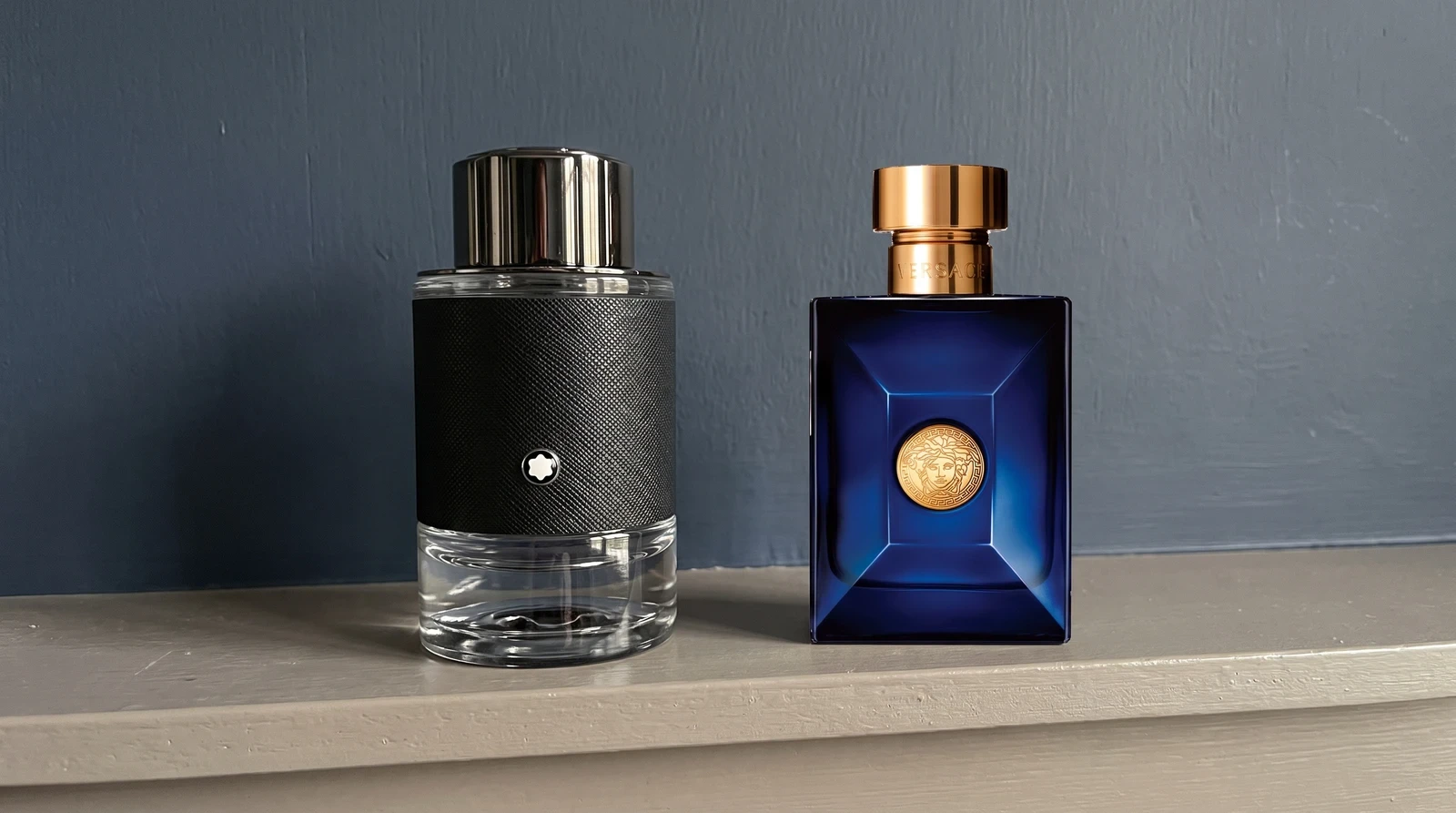
I'd try Carbon and one of those alternatives on separate ordinary days if samples were available. Wearing several together makes it harder to remember which part you liked. At a shop, write the complete name on each blotter and photograph the bottle before leaving. “The dark Prada one” is not enough information for a later online order.
What I'd notice during a sample day
My first note would be whether I actually want to keep smelling it. I'd then return to it later, after the first impression has passed. I'd pay attention to the settings I intend to wear it in, including a commute or time at a shared desk, rather than judging it only in a busy fragrance department.
Keep the application modest and follow the product directions. If I want feedback, I'd ask someone nearby rather than assuming that losing awareness of a fragrance means it has disappeared for everyone. There is no universal number of sprays that this review can responsibly assign to every person and room.
Prada's displayed customer rating includes incentivised reviews. That doesn't make each opinion worthless, but it does make the headline score a poor substitute for trying the scent. I wouldn't use it to promise compliments, a set wear time or suitability for every workplace.
Who I'd put it in front of
I'd suggest the EDT to someone who wants to explore aromatic lavender but still likes the idea of a familiar fresh fragrance. I'd compare it with Explorer for a more explicitly woody-leathery brief, and with the original L'Eau d'Issey Pour Homme if a citrus-led alternative sounded more interesting. Those comparisons give the sampling session a purpose.
I'd be less inclined to choose it as a surprise gift for a person whose taste I didn't know. Prada's name and an attractive bottle don't tell me whether they enjoy lavender or mineral-woody impressions. A sample-led gift or a shopping trip together would answer more than a large bottle selected from a bestseller list.
For an existing fragrance collection, I'd ask what role Carbon was meant to fill. If I already owned a fresh aromatic scent I enjoyed, I'd want the sample to make a persuasive case for another one. I don't consider a different brand name a sufficient reason to duplicate a purchase.
At the higher bottle sizes, that question becomes more consequential. The lower price per millilitre is useful for a favourite you regularly wear. It is less persuasive when you are still deciding whether the perfume adds anything you want to your routine.
A refill needs its own check
Read the exact concentration, bottle and refill listing before planning a refill purchase. Prada's EDP refill information does not establish compatibility with an EDT bottle. The Scentstore description accessed says the pictured bottle design is not refillable, while the same page also links a Carbon refill product. That is not enough to establish that every Carbon bottle accepts that refill.
I'd ask the seller to confirm the compatibility of the specific bottle being supplied. I wouldn't unscrew a bottle or order a refill on the assumption that the fragrance name alone makes the parts compatible.
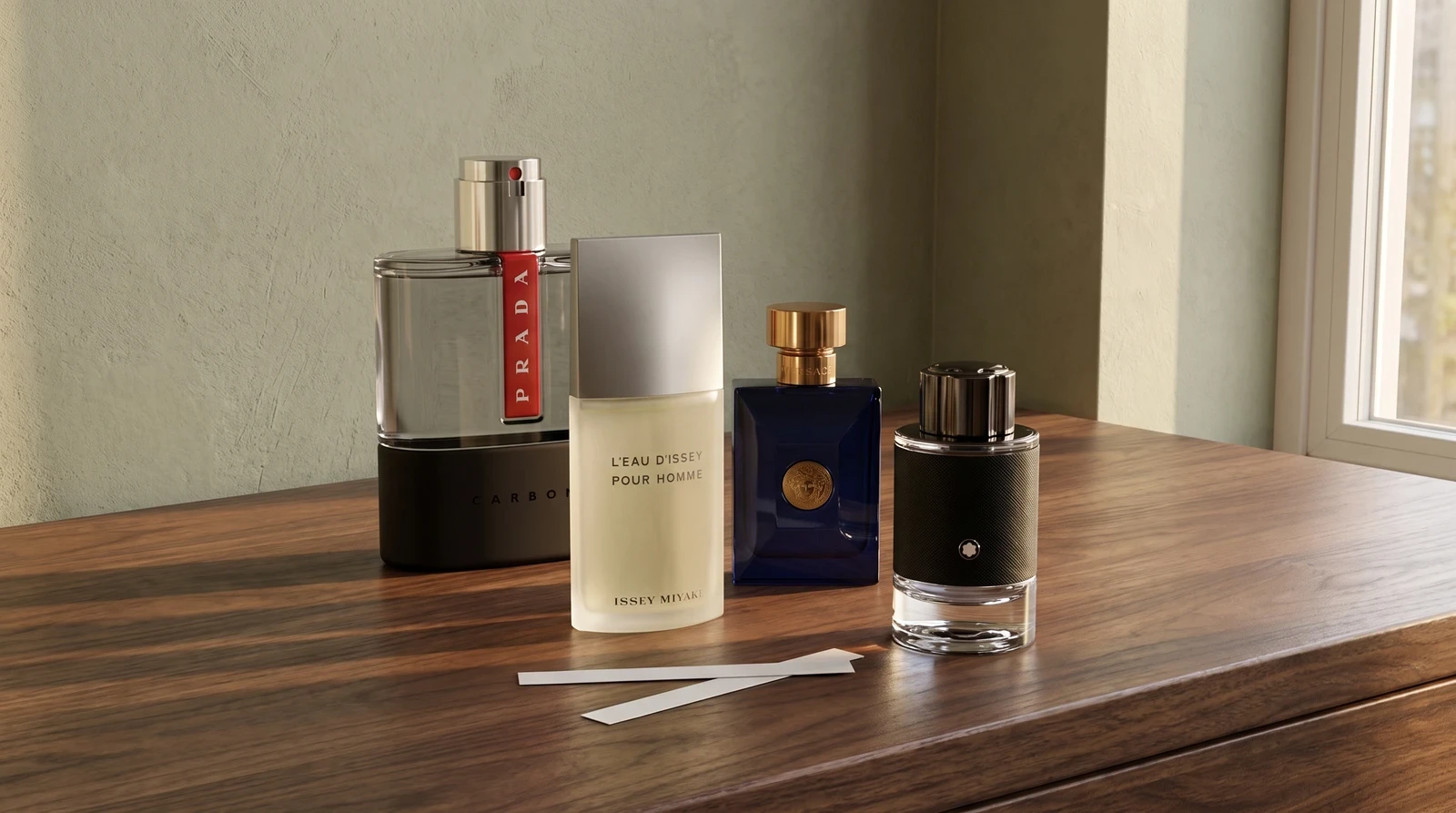
Carbon remains a sensible sample for someone interested in its lavender-led description. Once you've worn it, the 50ml versus 100ml decision becomes much easier: buy the amount you expect to enjoy, and compare the full delivered price for that exact size.
How this review was assessed
We compared Prada's description, its review disclosures, UK retailer size options and alternative brands' note lists. We haven't performed a skin or longevity test. Our four-fragrance sampling shortlist gives the alternatives more room.