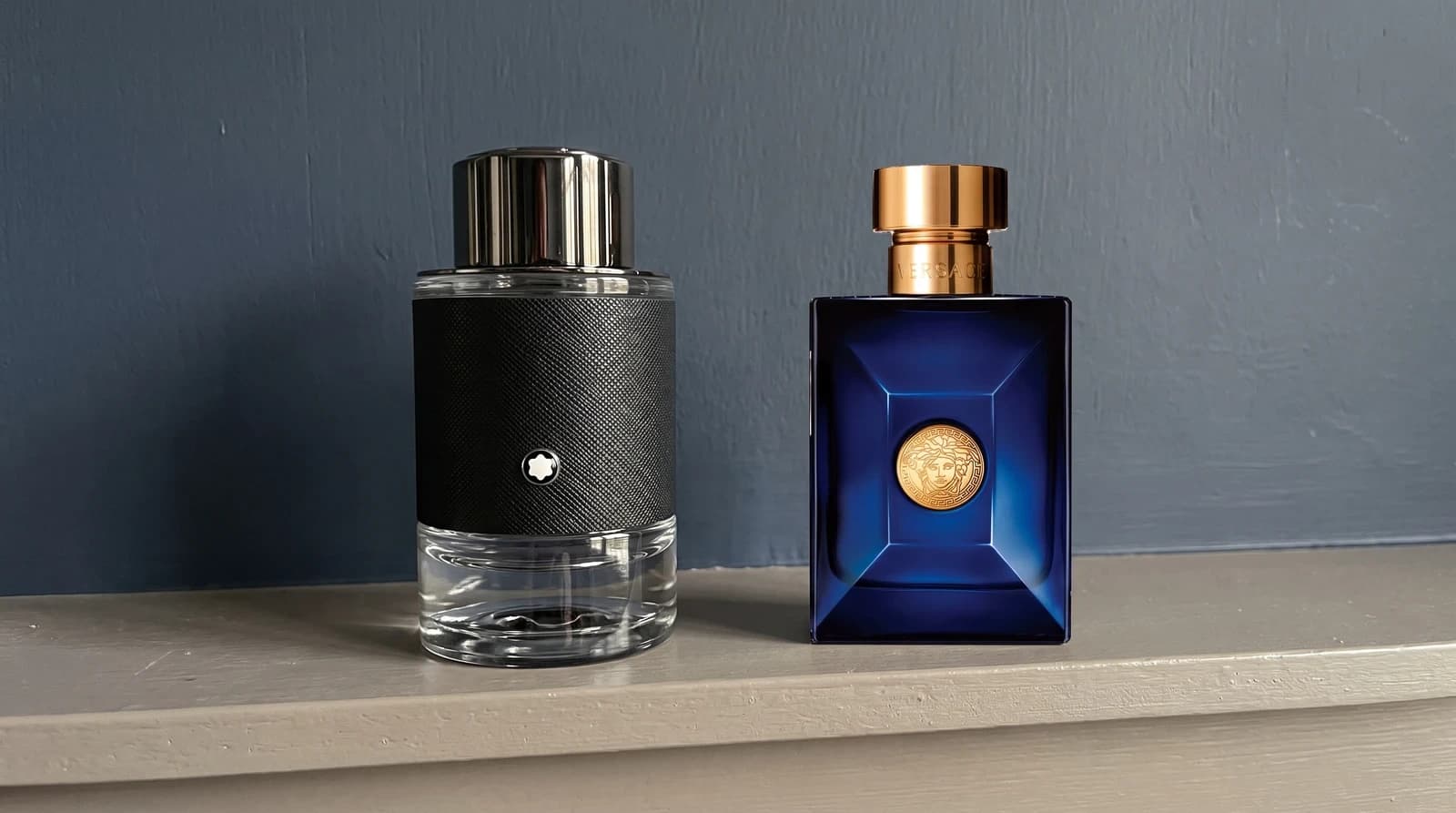
We're comparing original Explorer Eau de Parfum with Dylan Blue Pour Homme Eau de Toilette. Explorer Ultra Blue, Platinum and Extreme are not interchangeable listings for the original.
What is actually being compared
| Montblanc Explorer | Versace Dylan Blue Pour Homme | |
|---|---|---|
| Concentration on label | Eau de parfum | Eau de toilette |
| Size used for value comparison | 60ml | 50ml |
| Official UK list price | £65 | £74 |
| Price per 10ml | £10.83 | £14.80 |
| Brand's broad direction | Woody, aromatic, leathery | Aromatic with aquatic notes |
Prices were checked on 29 October 2026, before delivery. These are the brands' listed prices, not the cheapest offers in the UK. Sources: Montblanc's 60ml Explorer and Versace's 50ml Dylan Blue.
Where I'd start with Explorer
Montblanc names bergamot, patchouli, vetiver and leathery elements in its description. I'd use that combination to decide whether the scent belongs on my shortlist. Someone who has already worked out that they enjoy that broad direction has a more useful reason to try it than a claim that it is the universally correct first fragrance.
I'd be particularly careful with comparisons that turn shared notes into a dupe verdict. A bergamot-and-woods description doesn't establish that two perfumes smell the same, develop the same way or deserve the same price. This article doesn't claim Explorer replicates Creed Aventus.
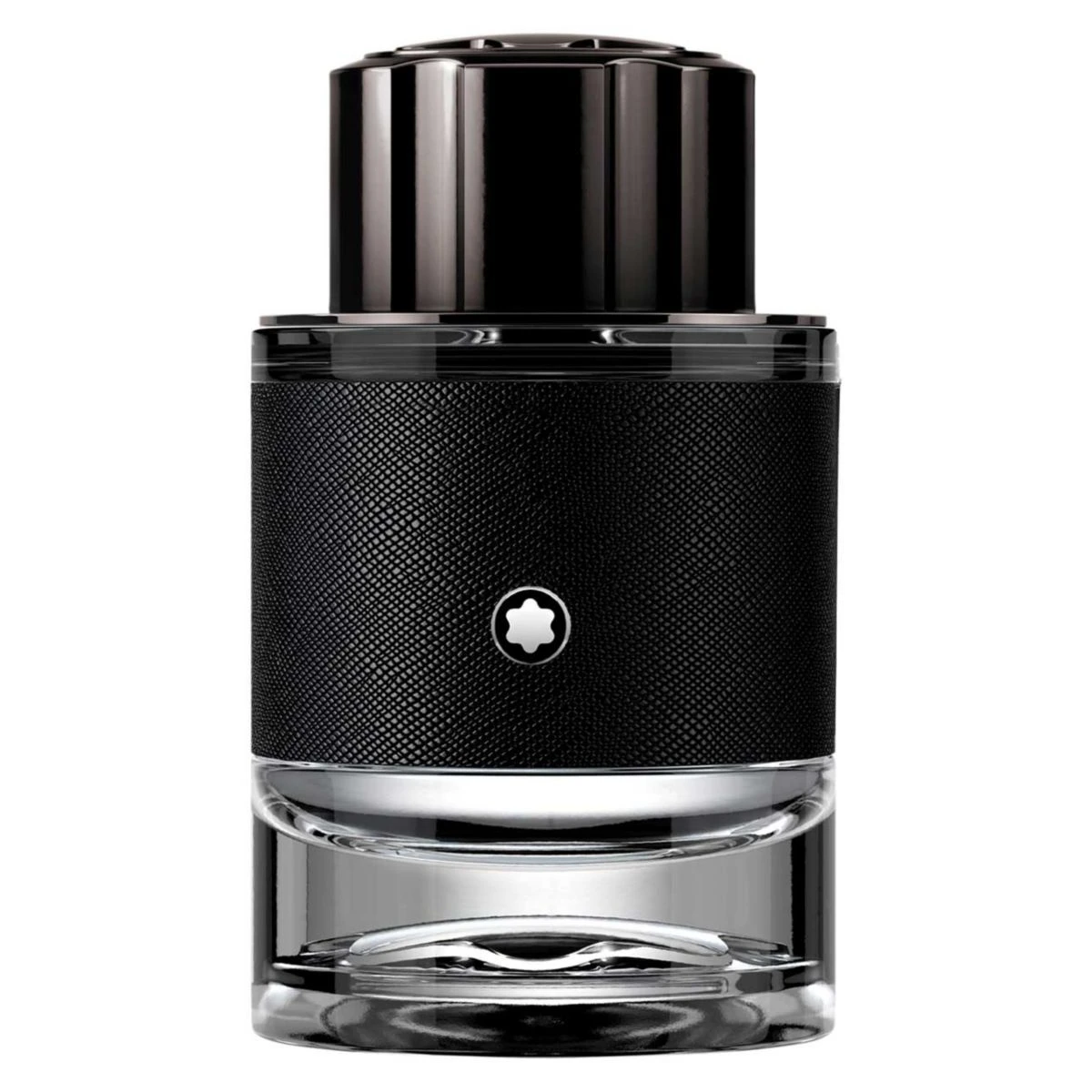
Even the published Explorer note lists are not perfectly consistent. Montblanc and Boots arrange and name some notes differently. I'd keep the useful broad description and avoid treating a note pyramid as a precise formula. Boots' original Explorer listing.
Where Dylan Blue offers a different direction
Versace's official notes include water notes, bergamot and grapefruit, with black pepper and ambroxan in the heart and musk, tonka and frankincense in the base. That is the reason I'd suggest sampling it alongside Explorer: there is a concrete difference in the descriptions to explore.
I'd pay attention to the aquatic impression and whether I preferred the fragrance once the first spray had settled. “Fresh” is too broad a word to settle the contest. Both can be described with fresh elements, yet that doesn't tell us which you want to smell on yourself through an ordinary day.
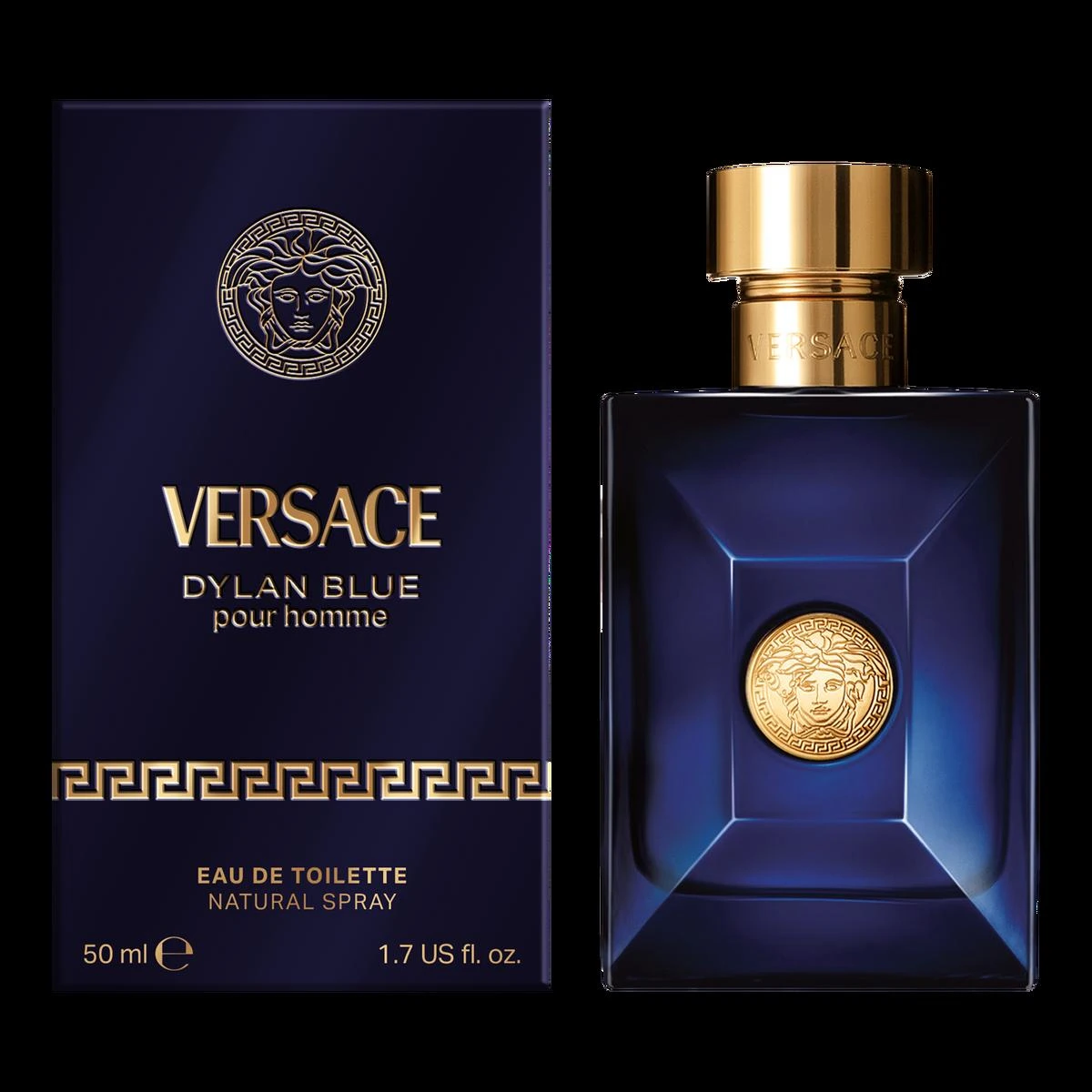
The more expensive bottle doesn't need to be declared better or worse on principle. If Dylan Blue is the one you enjoy wearing, the relevant next question is whether that enjoyment is worth the verified price difference to you.
The distinction I'd try to smell
Fresh is an unhelpfully broad label for this decision. Both descriptions contain citrus and aromatic elements, so I'd look beyond the first impression. With Explorer, I'd pay attention to the woody and leathery direction. With Dylan Blue, I'd ask whether the aquatic impression and the advertised base were what I wanted to keep smelling later.
That is my reading of the brands' descriptions, not a claim that I have worn these bottles side by side. It gives the sampling exercise a more useful purpose than asking which smells more expensive. I'd rather come away knowing that I prefer a particular character than having awarded one brand a vague luxury score.
There is also no reason to force either scent into a single occasion. I'd assess the place I intended to wear it and how noticeable I wanted it to be there. A shared office, a long drive and an evening outside are different settings. I wouldn't use an online label such as office-safe to promise that every application will suit everyone nearby.
If I liked both, I'd initially choose one for the use I had in mind most often. Owning two similar-purpose bottles may be enjoyable, but it is not the only sensible result of a comparison. A first fragrance purchase should answer an actual preference before it becomes a collection.
What a note list can and cannot establish
The official lists tell us how the brands describe their perfumes. They are useful for choosing contrasting samples, but they are not full recipes with the proportions exposed. Seeing bergamot or patchouli in two descriptions does not tell us how similar the finished scents are.
This is particularly relevant to Explorer's frequent association with Creed Aventus. I wouldn't make that the central reason to buy it without comparing the scents themselves. Someone who simply wants a citrus-and-woods fragrance can assess Explorer on its own terms. Someone who specifically wants the experience of a different perfume has a more demanding comparison to make.
I'd also separate the note description from the ingredient list used for labelling. The latter matters for an ingredient you need to avoid. It does not give an amateur perfumer enough information to reconstruct the fragrance, and the marketing note pyramid does not replace it.
EDP doesn't settle the wear-time argument
The labels identify different concentrations, but they do not supply a controlled longevity comparison between these two fragrances. I'd avoid choosing Explorer solely because “eau de parfum” sounds like a guarantee of more hours than “eau de toilette”.
Neither manufacturer page gives us a matched wear study that would justify an exact performance ranking here. To compare that part of the purchase, you'll need to wear the samples.
Try each on a separate day using the way you normally expect to wear a fragrance. Check your first impression and how you feel about it later. If you want another person's view, ask them directly instead of substituting an online promise of compliments.
The value calculation favours Explorer at list price
Explorer is £9 cheaper while supplying another 10ml in the sizes checked. Its price per millilitre is approximately 26.8% lower. That is a comparison of £65/60ml with £74/50ml; it is not a claim that every Explorer offer beats every Dylan Blue offer.
A retailer promotion can narrow or reverse the gap. Compare the exact bottle sizes and the delivered totals on the day you buy. A 100ml offer for one fragrance and a 50ml full-price bottle of the other need their own calculation.
I'd keep availability separate from price, too. The Versace page accessed displayed an out-of-stock notice. A brand's list price remains a useful reference, but it doesn't prove that you can order that bottle directly today.
How much more would I pay for a preference?
In the checked sizes, the cash difference is £9. I'd be comfortable paying that if Dylan Blue was clearly the scent I wanted and the delivered prices still matched the comparison. Spending £65 on the alternative merely because its unit price is lower would be a false economy if I then kept wishing I had bought the other fragrance.
If my preference was slight, Explorer's lower price and extra volume would carry more weight. I'd still compare actual retailer offers before deciding. A discount on a larger Dylan Blue bottle could change the value calculation, while increasing the amount of money committed. Both numbers matter.
For a gift, I'd give the recipient's existing preferences far more weight than either calculation. If you know they wear one of these, replacing the exact bottle is more useful than choosing the other as an editorial winner. If you don't know, a chance to sample is a better starting point than guessing from the colour of the packaging.
If neither is convincing
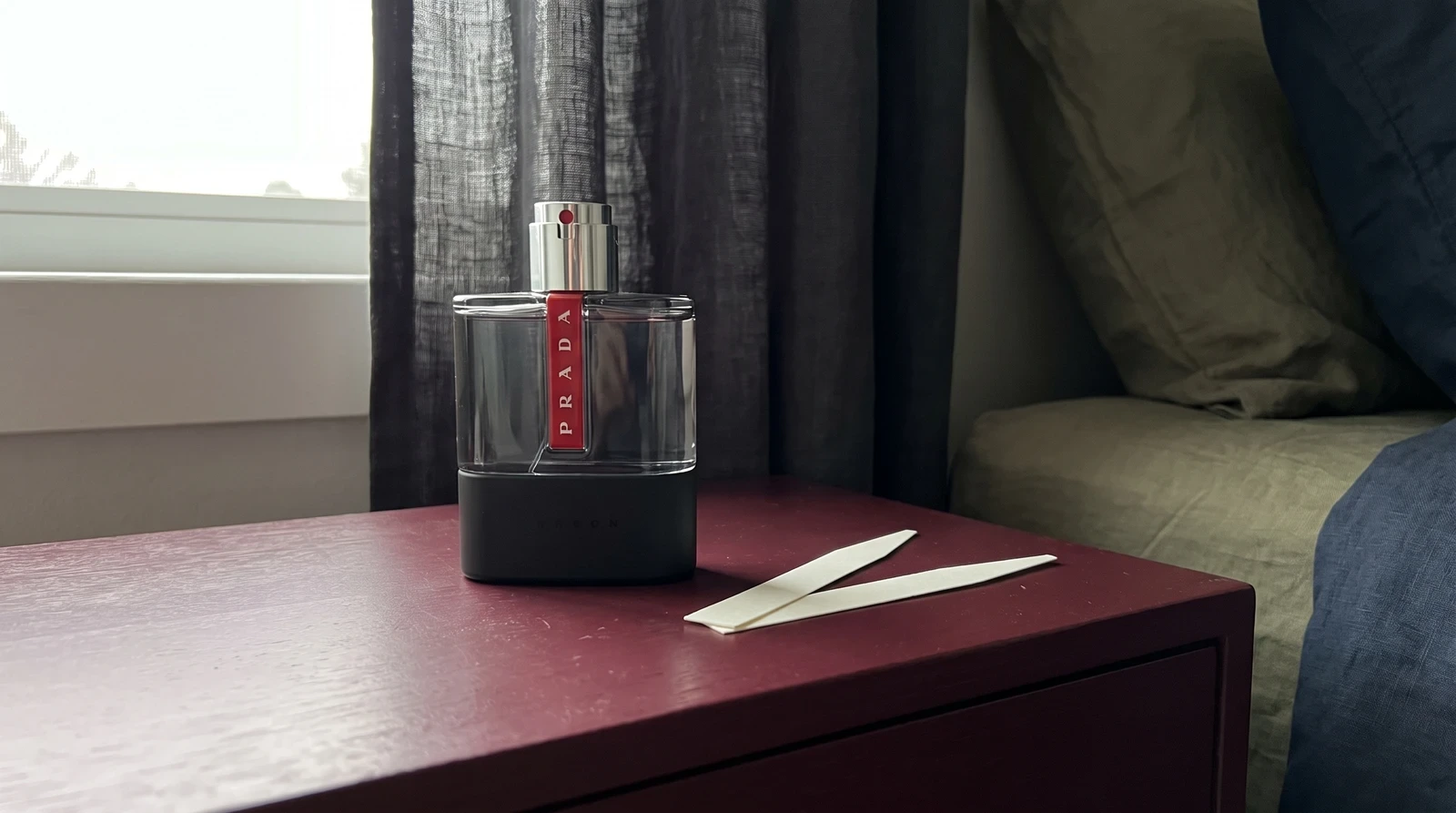
I'd try a different scent direction rather than keep switching between two bottles I only half like. Prada Luna Rossa Carbon is the lavender-led option in our broader sampling shortlist. Original L'Eau d'Issey Pour Homme provides a yuzu-focused alternative.
Two well-chosen samples can be more useful than a shelf of blind purchases. Photograph the full name and concentration of the one you like; that small detail prevents an expensive mix-up later.
How we compared
We used manufacturer descriptions, exact product identities and dated UK list prices. The recommendations are sampling judgments, not personal wear-test results, dupe-equivalence findings or guarantees of longevity.