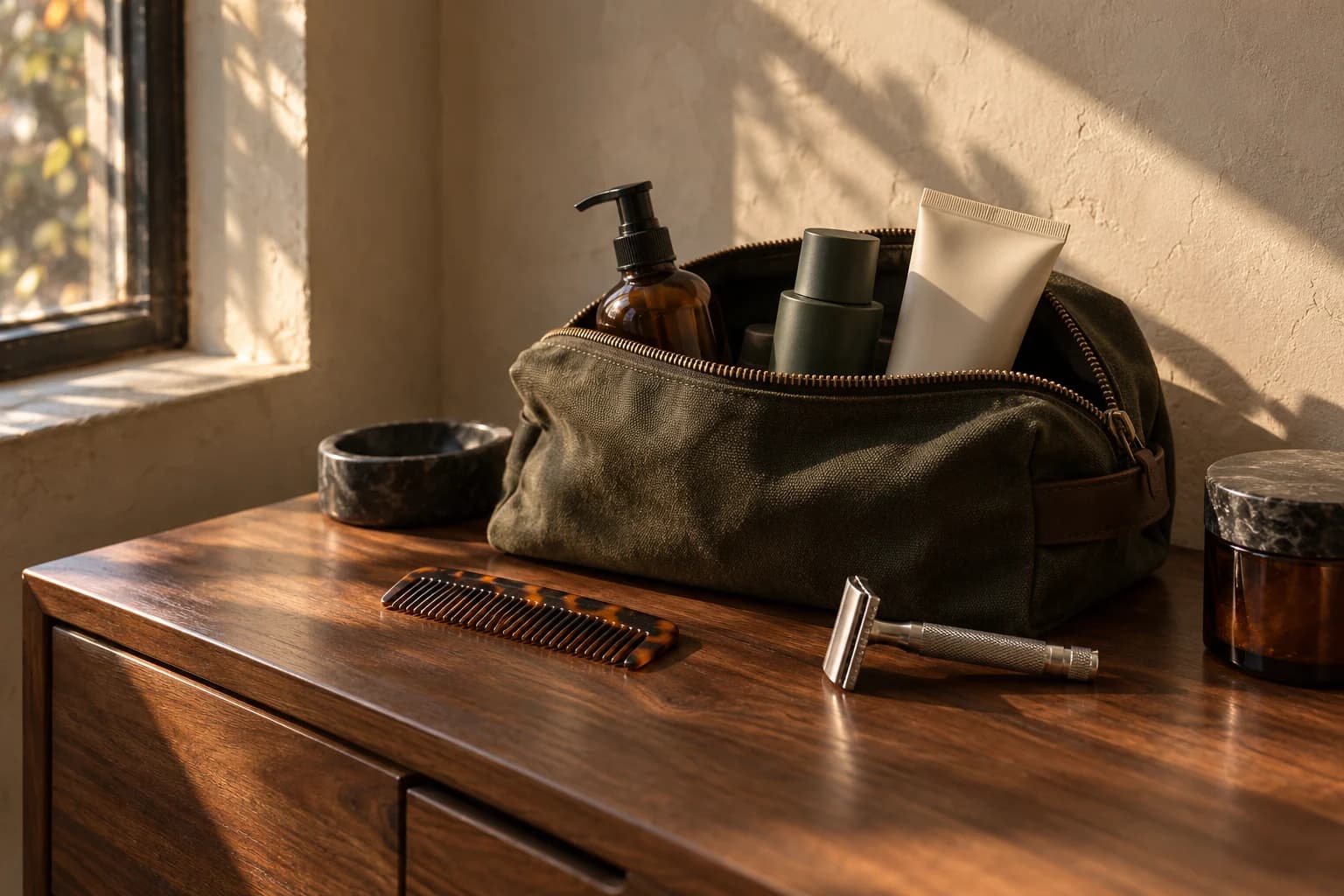
Where we’d start
Start with a gentle cleanser, a suitable moisturiser and sunscreen. Add another product only when you can name the job it needs to do.
Start with the problem you can actually describe
Before shopping, describe what feels wrong. Tightness after washing is a different complaint from an oily forehead by lunchtime. Stinging after a new product is different again. Those observations give a product choice a purpose; the broad label men's skincare does not.
The AAD's guidance distinguishes dry, oily, combination and sensitive skin, and recommends choosing accordingly. It advises mild, fragrance-free products for sensitive skin and looking for non-comedogenic or oil-free labels when acne is a concern. Those are useful filters, rather than promises that every product with the right label will suit everyone.
Keep what is already working. If you own a cleanser you like, it does not need replacing just because you are improving the moisturising step. Starting a routine can mean adding one missing product, rather than discarding everything and buying a set.
Choose a cleanser you do not have to recover from
My first purchase would be a mild face wash. Use lukewarm water and your fingertips, then rinse and pat dry. The AAD recommends that approach and advises against scrubbing. I'd look at technique as well as formula if washing left the face uncomfortable.
A large foam is not my measure of success. For a normal-to-dry face, CeraVe Hydrating is a candidate with a non-foaming texture; for normal-to-oily skin, its Foaming Cleanser has a different brief. The point is to choose for the skin and washing experience, rather than assume every man needs an oil-control product.
One cleanser is enough for the first purchase. A separate morning wash, evening wash and scrub is a lot of purchasing before you know which texture you enjoy. If a particular sunscreen or other product needs a different removal routine, assess that requirement specifically instead of making extra cleansing compulsory for everyone.
Source: AAD: face washing 101 (opens in a new tab)
Give the moisturiser one clear job
I want this step to leave the skin comfortable. I'd choose the texture and fragrance preference first, then compare prices. A face cream does not need to promise age reversal or contain every fashionable ingredient to be useful.
Bulldog Sensitive is one example I'd examine for an inexpensive fragrance-free option. Original is a different choice for someone who likes its scent. Neither plain moisturiser has labelled SPF. Buying one does not complete the sun-protection step, and buying both is unlikely to make a beginner's routine easier.
If the skin still felt dry, I'd consider a richer moisturiser before automatically adding several serums underneath. If the finish felt too heavy, I'd look for a lighter texture. The useful adjustment is the one that answers the complaint, rather than the one that adds the most products.
Source: Bulldog UK: Sensitive Moisturiser (opens in a new tab)
Make sunscreen part of the purchase plan
For UK shopping, the NHS recommends at least SPF 30 and at least four-star UVA protection, and also explains the UVA-in-a-circle symbol. Check the protection label before looking at whether the bottle is marketed specifically to men.
Then I'd consider the practical finish. Can I apply it as directed around stubble? Do I like wearing it enough to reapply outdoors? Does the bottle fit where I will need it? An elegant face cream is poor compensation for a sunscreen left at home because its texture is unpleasant.
Sun protection also includes clothing and shade. I'd avoid treating a high SPF as permission to remain in the sun longer or as an all-day application. Our separate sunscreen guide covers reapplication and the label in more detail; the first routine simply needs to make room for this step and its directions.
Fit shaving into the routine you already have
On shaving mornings, I'd give preparation and technique enough time. A face wash is not automatically a shaving cream, and a moisturiser is not a remedy for every consequence of a very close shave. Each product should be used for the job its directions support.
The AAD advises wetting skin and hair before shaving, using shaving cream or gel and following the direction of growth. I'd make those basics consistent before buying an expensive aftershave. If the moisturiser I already used felt comfortable afterwards, I wouldn't assume a separate balm was compulsory.
Repeated raised bumps or persistent irritation need more attention than a new cream. Note the pattern and seek advice if it continues. It is easier to discuss a short, familiar routine than a collection of new products all introduced on the same day.
Add products slowly enough to learn something
I'd keep the first routine stable while deciding whether I liked it. That does not mean persevering with a product that causes a reaction. It means avoiding the confusion of changing the cleanser, cream and sunscreen together, then being unable to identify what improved or worsened the result.
The AAD recommends a small-area trial when introducing skincare, with the normal contact time for the kind of product involved. Its guidance gives a more useful starting point than relying on a label such as natural or sensitive as a guarantee.
If the routine felt comfortable, I'd ask what problem remained before adding anything. There may be a specific reason to consider acne treatment or another targeted product. There may also be no reason to add a fourth bottle. A routine that already meets your needs is a good result.
Source: AAD: testing a new skincare product (opens in a new tab)
Where I'd spend the budget
I'd put money into products I liked using consistently, especially sunscreen, before matching packaging. Compare the actual sizes and delivered prices, and be wary of a bundle whose apparent saving depends on buying an unneeded scrub or serum.
The first routine should also be affordable to replace. A discounted luxury cream can be enjoyable, but I'd consider the normal replacement cost before making it the centre of the routine. A simple product that suits you is easier to keep using when its price remains manageable.
My minimum shopping list stays short: one cleanser, one moisturiser where needed and a suitable sunscreen. Persistent skin problems belong in a separate conversation with a pharmacist or clinician. They should not become a reason to keep expanding an ordinary cosmetic routine without understanding the cause.
Research behind this guide
The routine draws on current AAD and NHS guidance, with product examples used to explain the choices. The recommendations are editorial judgments, not a diagnosis or a claim that the same routine suits every skin condition. Sources were reviewed on 29 October 2026.
Sources checked 29 October 2026.