skincare
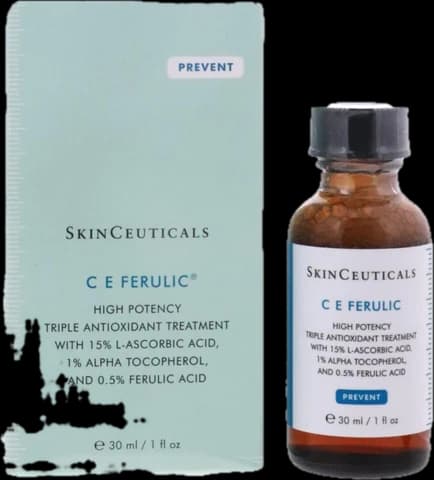
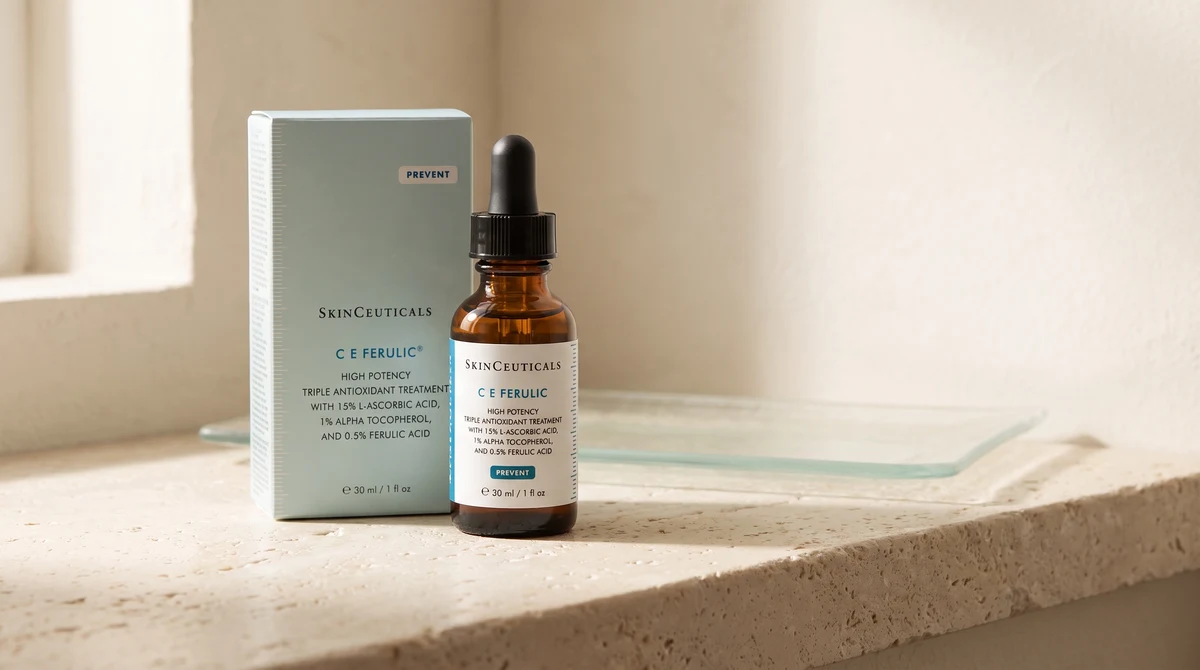
C E Ferulic (with 15% L-Ascorbic Acid)
$185.00
Choose where you shop. See who qualifies before you copy a code.
We’ll list an offer here once we can confirm its terms for shoppers in the United States. An empty list doesn’t mean the brand has no offers.
Check the country selector and delivery options on the brand’s website before shopping.
Visit the official website ↗Clear about what we’ve checked. “Listed by the brand” means we found the offer on its official site. “Accepted in our test basket” means we also saw it apply to the basket described in the details. We recheck sources daily and hide expired offers or any we haven’t reconfirmed within 48 hours.
Check the store country, sign-in requirement, minimum spend and excluded products. Remove any other promotion, then check the saving appears in your order total before paying. Welcome offers usually require a first purchase or a new rewards membership.
Tell us about an offer that didn’t workSkinCeuticals asks a luxury price for skincare that looks almost deliberately plain. Its most recognizable product, C E Ferulic, is an amber dropper bottle costing US$185 for 30 mL. There is no ornate jar to explain the price. The proposition is the formula, its research history and the professional skincare setting around it.
That makes SkinCeuticals an interesting premium brand rather than an automatic recommendation. It has more to discuss than a fashionable ingredient and a persuasive product name. It also requires a substantial budget, and the fame of one serum cannot make every product in the range the best choice for every buyer. Its strongest audience is someone who values an established formula enough to pay for the original brand behind it.
C E Ferulic remains the natural place to understand SkinCeuticals. Triple Lipid Restore 2:4:2 shows how the same identity extends into moisturizer, while P-TIOX connects it with the current interest in peptides and visible skin smoothness. Across these products, percentages and technical names do much of the work that scent or decoration does for other prestige brands.
The company's historical timeline places Serum 10's launch in 1997 and C E Ferulic's in 2005. It also records the introduction of a professional back-bar range in 2004. These details explain why SkinCeuticals is associated with vitamin C and clinical skincare settings: both were part of the business long before today's interest in individual skincare ingredients.
Dr. Sheldon Pinnell's research is central to that story. There are actual published papers to read, including a 2008 study in the Journal of the American Academy of Dermatology by John C. Murray, Pinnell and colleagues. It examined a combination of 15% L-ascorbic acid, 1% alpha-tocopherol and 0.5% ferulic acid on patches of human skin, applied for four days before controlled ultraviolet exposure. The researchers reported protection against the measured effects of that exposure and identified the small number of participants as a limitation.
This gives the brand a specific scientific history. The experiment examined a defined combination under defined conditions; it was not a comparison proving that a complete SkinCeuticals routine outperforms every cheaper one. For a buyer, the distinction is useful. Published research can make a premium product more interesting without making price a direct measure of how well it will work for you.
The clinical presentation also shapes the shopping experience. The current US site organizes products around antioxidants, correction and protection, alongside professional consultations and in-office care. It is a convincing identity for someone who likes detailed formula explanations. A buyer who mainly wants a beautifully scented cream may find its language much less inviting.
The current US C E Ferulic page describes an updated formula. The familiar 15% vitamin C, 1% vitamin E and 0.5% ferulic acid remain, with 0.3% carnosine and 1% Endophytol added. The company describes Endophytol as a dandelion-root extract. Bluemercury's current ingredient list also lists carnosine and Taraxacum officinale root extract.
That is a meaningful development for such a recognizable product. Someone returning after years away is buying a revised formula under the familiar name. SkinCeuticals says the sensory experience remains similar, but older reviews still describe the version those reviewers used. The updated listing was checked on 15 October 2026; it should not be confused with a newly published independent wear test.
The company's language now includes visible skin longevity. Our reason to pay attention is more concrete: it has changed the ingredients while retaining the combination on which the serum built its reputation. That makes the current label more useful than assuming an old bottle, an old review and the current US listing are identical.
The brand's reputation has a practical side that ingredient percentages alone do not capture. In her Who What Wear review, updated in October 2026, Lindy Segal described C E Ferulic as watery and easy to dispense, with a strong medicinal, smoky smell that faded after application. She also reported a more even-looking complexion. The article describes the familiar antioxidant trio and does not identify a test of the newly updated formula.
The smell is an especially revealing detail. This is an expensive serum whose appeal survives a distinctly un-luxurious sensory trait. A buyer choosing it is prioritizing the product's purpose and reputation over the expectation that premium skincare should smell beautiful.
SkinCeuticals also attracts attention beyond its original vitamin C story. In Allure's April 2026 brand guide, Marci Robin praised P-TIOX for its light texture, easy layering and immediate glassy finish. Those are useful reasons to be interested in a serum, separate from the more ambitious language surrounding expression lines. They explain why a technically presented brand can still appeal to people who care about how skincare looks under the rest of their products.
SkinCeuticals has a habit of putting the formulation concept directly into the name. Triple Lipid Restore 2:4:2 refers to the manufacturer's stated 2% ceramides, 4% cholesterol and 2% fatty acids. The cream brings the brand's technical presentation into a familiar moisturizing job. At US$155 for 48 mL, it is a substantial upgrade in spending from a basic moisturizer.
There is a sensory detail worth knowing here too. The official page lists a blend of lavender, rosemary and peppermint oils. A clinical-looking jar therefore does not mean an entirely unscented formula. The cream is most interesting to someone who wants its particular moisturizing texture and accepts those oils, rather than someone choosing solely by the scientific-looking name.
Silymarin CF shows that the vitamin C range is divided by intended fit. SkinCeuticals positions it for oily and blemish-prone skin. Its stated combination is 15% L-ascorbic acid with 0.5% each of silymarin, ferulic acid and salicylic acid. It costs the same US$185 for 30 mL as C E Ferulic, so the decision is about the formula rather than moving up or down a price tier.
The retail ingredient list places denatured alcohol second. That is a concrete reason for someone avoiding alcohol in leave-on skincare to choose differently. The brand's segmentation gives buyers a choice; it does not make the whole vitamin C family interchangeable.
P-TIOX Anti-Wrinkle Serum extends the same technical naming into peptides. It combines a peptide complex with polyhydroxy acid, niacinamide and laminaria extract, and the brand labels it fragrance-free. SkinCeuticals markets it with reference to expression lines and professional aesthetic treatments. The buying case is a cosmetic serum for smoother-looking skin and a light finish, not an expectation that a bottle provides the result of a procedure.
These differences are part of the brand's character. The bottles can look as though they belong to one uniform system, while the formulas make quite different compromises. Some contain aromatic oils; some contain alcohol; some emphasize a rich cream texture and others a thin serum. The technical labels reward a little attention.
These regular US one-time purchase prices were checked on 15 October 2026, before tax and shipping. P-TIOX here is the 30 mL serum, not the separate cream with a similar name.
The review cards below may show prices from earlier checks. Use the dated prices and sizes in this table for the current comparison.
| Product | US price and size | Buying view |
|---|---|---|
| C E Ferulic | US$185 / 30 mL | Signature vitamin C; updated formula |
| Silymarin CF | US$185 / 30 mL | Oily-skin focus; contains alcohol |
| Triple Lipid Restore | US$155 / 48 mL | Premium cream; aromatic oils |
| P-TIOX Serum | US$150 / 30 mL | Peptides and light texture |
A rational reason to spend this much is that you want the specific SkinCeuticals formula and value its background. A less convincing reason is that a higher price must produce proportionately better skin. The published history makes a case for taking the brand seriously; the current prices make a case for being selective.
The alternatives question is especially relevant because the two most recognizable products have become reference points in shopping comparisons. Our C E Ferulic alternatives guide and Triple Lipid Restore comparison examine less expensive options. Treat those as comparisons of composition and purpose, particularly now that C E Ferulic's US formula has changed. A list of similar ingredients does not establish identical performance.
SkinCeuticals is most persuasive when you can name the product you want and explain why its particular formula appeals. Its research history is substantial enough to deserve attention, and its recognizable originals remain a clear part of its appeal. The cost is harder to justify when you only need a pleasant moisturizer or a first experiment with vitamin C and have no preference for the brand's specific approach.
Research and US prices checked on 15 October 2026 using official product pages, retailer ingredient lists, published research and named editorial reviews.
SkinCeuticals is best known for premium vitamin C serums, especially C E Ferulic, and its connection with published antioxidant research and professional skincare. Triple Lipid Restore 2:4:2 and P-TIOX extend that technical identity into moisturizers and peptide skincare.
SkinCeuticals positions its products around specific formulas, research and professional skincare, with premium pricing to match. That background helps explain its appeal, but does not prove every product is better value than a cheaper alternative. The selected C E Ferulic bottle costs US$185 for 30 mL.
No. The brand labels products such as P-TIOX Serum fragrance-free, while Triple Lipid Restore contains lavender, rosemary and peppermint oils. The clinical presentation does not mean every formula is unscented or free of aromatic oils.
SkinCeuticals most strongly suits shoppers who value a specific established formula and are comfortable with premium prices. It is less compelling as an automatic choice for an entire routine, or for someone who needs only a basic cleanser or moisturizer without a preference for the brand.

