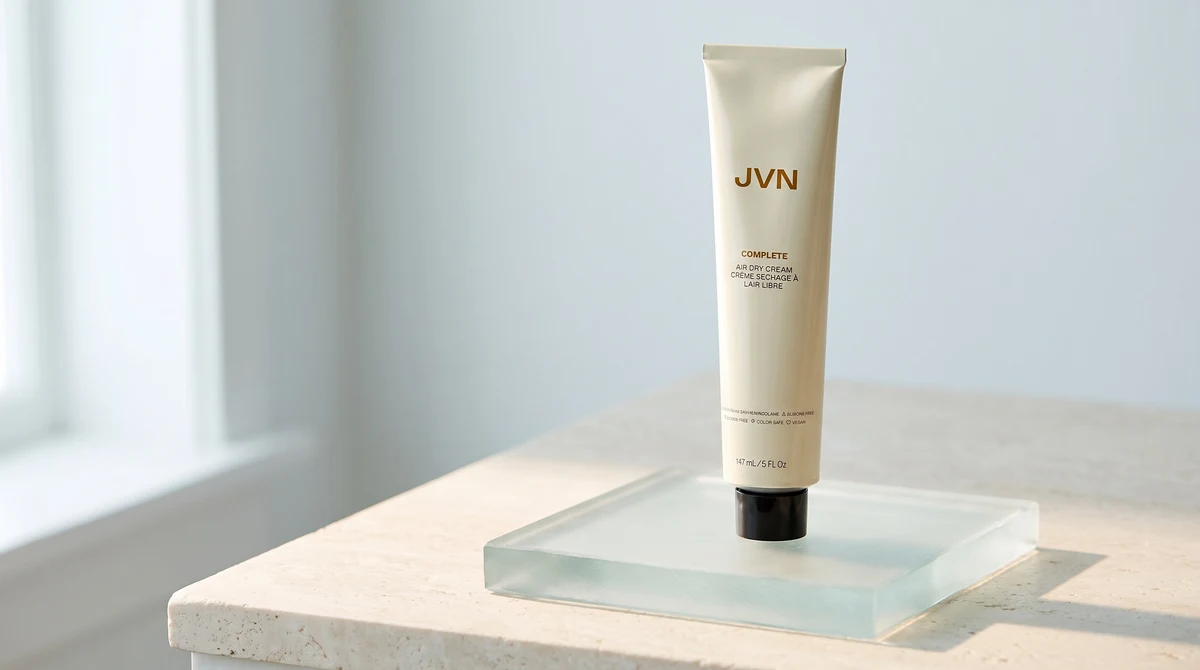
JVN is easiest to shop when you start with how you want to dry your hair. Air drying, a polished blowout and a pre-shampoo treatment are different jobs, and this brand has made the distinctions unusually visible. I’d begin with the styling step that frustrates you most. Buying the shampoo first simply because it matches the cream would miss the most interesting part of the range.
Jonathan Van Ness worked as a hairstylist in Los Angeles and New York before becoming a television personality, author and podcaster. That professional background is central to JVN’s identity: the range is organised around hair goals, with options for different textures rather than a gendered split. The cheerful presentation is inviting, but the useful question is still practical: what will this bottle add to your morning?
The styling choice that matters most
The Complete Air Dry Cream is the clearest introduction. It is a soft-hold styling cream for working with your natural texture, not a promise to turn every wave into a uniform ringlet. JVN recommends applying it to damp hair, concentrating on the lengths and ends. Fine hair gets a small starting amount; more product builds more hold. Its formula includes squalane, glycerin and a styling polymer, PVP.
I’d put this ahead of a rich treatment oil if the problem is deciding what to do with hair after washing. A product with a defined styling purpose is easier to assess: do you prefer the shape, feel and finish enough to use it again? That is more useful than looking for a vague improvement in “hair health.”
There is also a substantial catch. JVN explicitly says Air Dry Cream has no built-in heat protection. It belongs with air drying or the brand’s suggested low-heat diffusing approach. If your usual finish is a hot blowout, choose your heat-protection step separately.
What other editors actually liked
In her 26 August 2021 Allure launch review, Elizabeth Siegel singled out Air Dry Cream as one of her favourites in the initial range.
Mica Ricketts offered a more specific account in Who What Wear’s curly-hair guide, published 9 November 2025. She described soft, bouncy curls after air drying, while acknowledging that some fluff and flyaways remained. I find that qualification helpful. A relaxed finish can look good without becoming completely uniform, and someone seeking rigid definition may want a different style of product.
Those accounts help explain its appeal: it suits someone who wants their own texture to look more deliberate without committing to a full blowout. Decide whether that is your goal before treating its popularity as a reason to buy.
Blowout Milk is a different purchase
Complete Blowout Styling Milk is the heat-activated option. The directions begin with one or two pumps on damp mid-lengths and ends, followed by blow drying. JVN claims heat protection up to 450°F. That is a product claim, not an instruction to turn your tool to its hottest setting.
The current formula includes glycerin, conditioning fatty alcohols, hydrogenated farnesene and squalane. It also lists fragrance. The promise is a shaped, smoother blowout, so this is where I’d look if you actually enjoy the brush-and-dryer stage. It is less compelling as an expensive leave-in for someone who seldom uses either.
At $32 for 3 fl oz, it costs more and comes in a smaller bottle than Air Dry Cream. Their names can make them sound like interchangeable versions of the same thing. They are easier to choose between when you think about the finish you want, rather than which texture sounds lighter.
For a broader look at styling-led haircare, our Verb guide is a useful comparison. Compare the purpose and application of a specific product before trying to match entire brands.
Current US prices
These are JVN’s listed US prices and sizes checked on 21 October 2026, before tax, shipping or promotional codes. The small treatment bottles and larger wash bottle are deliberately kept separate; a lower shelf price does not necessarily mean more product for your money.
| Product |
Size |
USD |
| Air Dry Cream |
5 fl oz |
$28 |
| Blowout Milk |
3 fl oz |
$32 |
| Pre-Wash Scalp Oil |
1.7 fl oz |
$32 |
| Nurture Shampoo |
10 fl oz |
$24 |
The review cards below may show prices from earlier checks. Use the dated prices and sizes in this table for the current comparison.
For occasional styling, I would weigh how often a product will earn its place rather than calculating value from bottle size alone. A cream used every wash may be a better purchase than a larger bottle bought for an imagined routine. The treatment oil is a poor use of $32 if you already know you dislike adding a step before shampoo.
The scalp oil needs its own ten minutes
The current Complete Pre-Wash Scalp Oil is labelled a new and improved formula. Its ingredient list includes squalane, rosemary leaf extract and bisabolol, alongside other oils and fragrance. Rosemary extract appearing in a cosmetic formula is not a reason to describe the bottle as a hair-regrowth treatment.
JVN directs users to apply one to three droppers before washing, leave it for 10–15 minutes and use it up to twice weekly. The brand says a second shampoo may be needed to rinse it out. Those details matter more to my buying decision than the idea of making wash day feel indulgent.
I’d consider it if a planned pre-wash step sounds appealing and you are comfortable spending longer in the bathroom. I would skip it for a rushed shower routine. This is not an oil you buy on the assumption that it will replace a finishing serum: it is designed to come back off.
Nurture is the wash option for dry hair
Nurture Hydrating Shampoo is the $24, 10 fl oz bottle to consider when the washing step is your priority. JVN positions it for dry hair. The current ingredient list combines several cleansing agents with aloe, glycerin, panthenol, squalane and hydrogenated farnesene; it also includes fragrance and tangerine peel oil.
I would not choose it solely because “sulfate-free” sounds gentler. The whole wash experience, including how clean the scalp feels and how the lengths behave afterward, is the relevant test for your routine. It is also worth separating dryness from styling: a shampoo purchase does not resolve whether you need soft hold, a blowout product or neither.
If you prefer to compare washing ranges first, our Biolage profile explains another way to choose by hair concern. Matching a shampoo and a leave-in is convenient, but their names do not need to match for the routine to make sense.
Hemisqualane explains the brand, not every result
JVN builds much of its identity around hemisqualane, which it describes as made through sugarcane fermentation. The brand associates the ingredient with softness, slip and shine. It is a useful thread through the range, but one ingredient cannot tell you how much hold a cream provides or how an entire formula will feel.
The individual product’s directions still decide how to use it. An ingredient story cannot substitute for them.
My preference is for the styling products as the starting point: they give you a clear job to judge. The oil and shampoo make more sense once you have identified a separate reason for adding them.
Frequently Asked Questions
Does JVN Air Dry Cream protect hair from heat?
No. JVN says Air Dry Cream has no built-in heat protection. If you plan to blow dry with heat, choose a separate product intended for that job, such as its Blowout Styling Milk.
Is JVN just for curly hair?
No. JVN organises its range around hair goals and different textures. Choose by the finish you want and the product’s directions rather than assuming every bottle is a curl treatment.
Does JVN use silicones?
JVN describes its range as silicone-free. That is a formulation choice, not a reason to assume every product will suit your hair or that another brand’s silicone-containing product is inferior.
Do you wash out JVN Pre-Wash Scalp Oil?
Yes. It is a pre-shampoo treatment. JVN recommends leaving it on for 10–15 minutes before washing and notes that a second shampoo may be needed to remove it.