tools
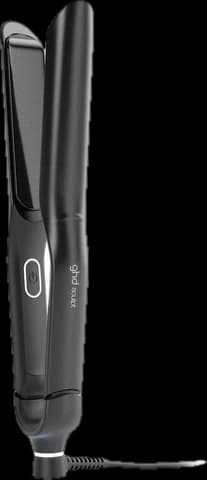
Sculpt
$449.00
Choose where you shop. See who qualifies before you copy a code.
We’ll list an offer here once we can confirm its terms for shoppers in the United States. An empty list doesn’t mean the brand has no offers.
We haven’t confirmed an official store for this country yet.
Clear about what we’ve checked. “Listed by the brand” means we found the offer on its official site. “Accepted in our test basket” means we also saw it apply to the basket described in the details. We recheck sources daily and hide expired offers or any we haven’t reconfirmed within 48 hours.
Check the store country, sign-in requirement, minimum spend and excluded products. Remove any other promotion, then check the saving appears in your order total before paying. Welcome offers usually require a first purchase or a new rewards membership.
Tell us about an offer that didn’t work
ghd is easiest to understand as a brand for people who want the tool to handle the temperature while they concentrate on the hairstyle. That is its appeal, and its limitation. If you like choosing a precise heat setting yourself, its main straighteners offer less control than you might expect from the price.
My starting point would be Gold for a straightforward everyday straightener, Chronos Max for wider plates, and Sculpt for someone who will actually use its more responsive design. The newest model is interesting, but it does not make every older ghd a bad purchase. Plate width, the styles you wear and the price on the day matter more than collecting the latest name.
The brand places its salon relationships and Cambridge research centre at the heart of its identity. That professional positioning runs through the range: relatively restrained designs, substantial prices and several tools that look similar until you examine how they work. Here is where those differences become useful.
First decide whether your hair will already be dry. The main flat-iron range is designed around styling dry hair. A conventional straightener is a finishing tool; it does not replace drying after a wash. Duet Style is a separate wet-to-dry format with airflow, and Duet Blowdry is a dryer brush.
That division makes the range less confusing. Someone who air-dries overnight and smooths a few sections in the morning has a different shopping list from someone who wants to dry and style after every wash. Paying for wet-to-dry functionality is difficult to justify if you already have a drying routine you enjoy.
For a broader comparison of airflow-led tools, our Dyson guide separates its dryer, straightener and multi-styler families. Our Shark guide covers another approach to drying and styling. Neither comparison makes every tool interchangeable: start with the result you want, then compare machines that do that job.
These are the black US models on ghd's own site, checked 21 October 2026, in USD, before tax. The table shows the displayed price, with the regular price in parentheses where discounted. Temporary offers and availability can change.
| Tool | Format | US price |
|---|---|---|
| Original | 1-inch iron | $179 ($239) |
| Gold | 1-inch iron | $194.99 ($279) |
| Chronos | 1-inch iron | $269 ($359) |
| Chronos Max | 2-inch iron | $284 ($379) |
| Sculpt | Slim iron | $449 |
| Duet Style | Wet-to-dry | $210 ($429) |
Original and the standard black Chronos showed Notify Me rather than an active purchase button when checked. Their displayed discounts are useful price context, not confirmation that those versions are immediately available. Gold, Chronos Max, Sculpt and Duet Style had active basket buttons.
The review cards below may show prices from earlier checks. Use the dated prices and sizes in this table for the current comparison.
The current Original is an updated one-inch ceramic model, rather than an assurance that you are buying the exact tool you remember from years ago. It uses single-zone heating at 365°F, has a rounded barrel for waves as well as straight styles, and switches off after 30 minutes of inactivity. It is the simplest place to start if you want ghd's familiar approach without the higher-tier technology.
Gold adds two heat sensors, one across each plate, while retaining a 365°F setting and rounded shape. Both are dry-hair tools. The practical attraction of Gold at this particular check is the small price gap: $15.99 above Original's displayed offer, with Gold available to add to the basket.
I would lean towards Gold at those prices. At regular prices the difference is $40, so the decision is less automatic. A sale can rearrange the range more dramatically than the product names suggest. There is little reason to treat the cheapest model's position in the hierarchy as permanent.
Chronos uses motion-responsive heating to maintain 365°F. Its one-inch plates and rounded body allow straight styles, waves and curls, and its automatic shutoff comes after ten minutes of inactivity. It sits above Gold for someone who wants ghd's more responsive straightening platform without moving to Sculpt.
Chronos Max puts that motion-responsive approach into a wider, two-inch format aimed at long, thick and curly hair. The two names are easy to mix up, but the width is a reason to choose one over the other. A broad plate is attractive for working through long lengths; a narrower tool gives you more room to manoeuvre around short sections and deliberate bends.
At the checked offers, Max costs $15 more than the standard Chronos. I would decide on shape before that small difference. Buying a wide tool purely because it looks like more hardware for the money misses the point if most of your styling happens around a fringe or short bob.
The older Platinum+ remains another one-inch option. It monitors heat 250 times a second and maintains 365°F; the black version displayed $222.99 against a $319 regular price, but also showed Notify Me. It is worth considering when available at a useful discount, rather than assuming its place between Gold and Chronos settles the choice.
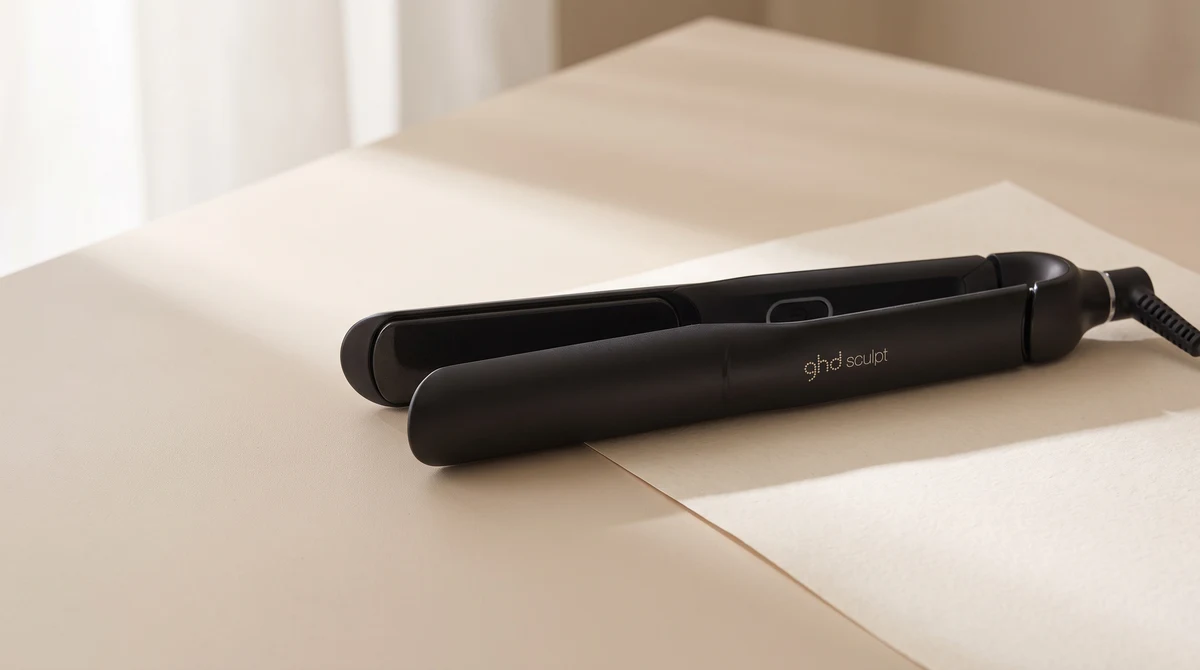
Sculpt changes the emphasis from maintaining plate temperature to adapting heat delivery around the hair and the styling movement. ghd says its system considers whether hair is loaded, the amount of hair, movement speed and angle. The slim plates have curved edges, and the tool has a two-year warranty.
The most persuasive independent accounts describe handling. In her 4 October 2026 Who What Wear review, Jamie Chevron found it particularly easy to smooth and shape her dense, wavy-curly hair during 40 days of use. She preferred it to her Chronos Max. That is one editor's experience, not proof that everyone needs to replace an existing iron.
Millie Fender's 7 August 2026 Tom's Guide assessment adds a useful qualification: she liked its root access and smooth straightening, but needed smaller sections and practice when attempting curls. A responsive tool can still have a learning curve.
I would put Sculpt on the shortlist if precision and switching between straightening and waves are central to your routine. At $449, it is a considered upgrade. The brand's zero-heat-damage wording is qualified to the hair's natural structure; I would not turn that into a promise that frequent styling is consequence-free for every head of hair.
Duet Style combines airflow with heated plates. Its instructions begin with towel-dried hair. The optional Shine Shot mode stops the airflow and raises the plates to 365°F, and must only be used once the hair is completely dry. That distinction matters more than the attractive $210 offer.
Duet Blowdry is the brush-shaped alternative, aimed at a blow-dried finish. The black US version displayed $365, reduced from $429. I would compare these by whether you want a smoother straightened result or the shaping action of a brush, rather than treating Blowdry as a newer edition of Style.
Travel also separates the products: Sculpt is listed as universal voltage, while the US Duet Style explicitly is not. A familiar brand name does not mean its appliances share the same electrical requirements.
The US warranty guidance gives Platinum+ and the one-inch Chronos three years, while Original, Gold and Chronos Max receive two. Sculpt's own page also specifies two years. A higher purchase price does not automatically buy a longer warranty.
Keep the proof of purchase from an authorized retailer and the cable tag: ghd says registration alone does not establish warranty eligibility. Its US process uses replacement for qualifying defective tools, and customers pay to send a warranty claim back. Those are useful differences to weigh alongside a discount, especially when choosing between sellers.
My strongest recommendation is to buy for the hairstyle you repeat most often. Gold has a clear everyday role; Chronos Max makes sense when width helps; Sculpt earns consideration through precision. Duet belongs on the list when drying is part of the job. You do not need the entire ghd range to get the part of it that suits you.
Gold is a sensible starting point for a straightforward one-inch tool. Chronos Max offers wider plates for long lengths, while Sculpt is the more expensive choice for responsive styling and precision. Choose by plate shape and routine before price tier.
The conventional flat irons are for dry hair. Duet Style is a separate wet-to-dry tool used first on towel-dried hair; its Shine Shot mode is only for completely dry hair.
The standard Chronos has one-inch plates, while Chronos Max has two-inch plates aimed at long, thick and curly hair. Both use motion-responsive heating. Their US warranties also differ: three years for Chronos and two for Chronos Max.
No. Sculpt is listed as universal voltage, but the US Duet Style is not. Check the exact model and market version before travelling, and use the appropriate plug adapter where the tool supports the local voltage.