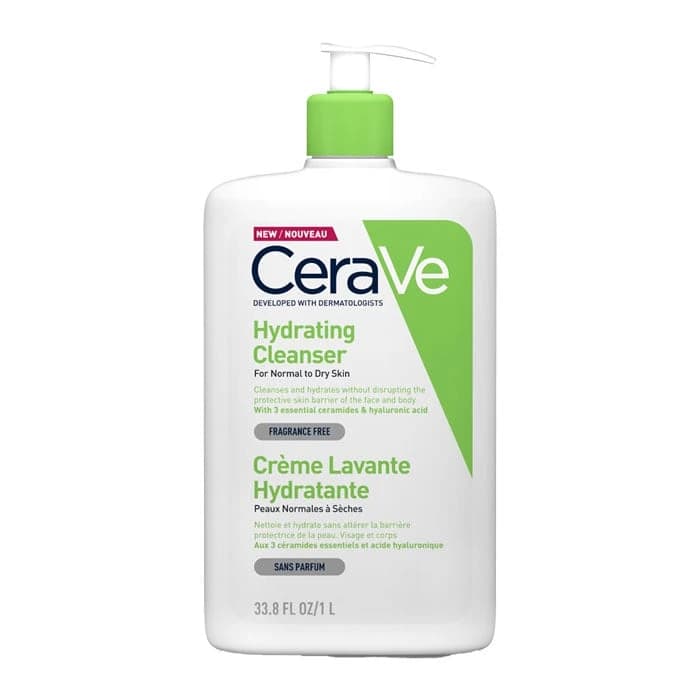
These are two different cleanser formulas with a shared brand name. The choice is not a verdict on whether men need a stronger wash. It is a question of which texture and cleansing approach fit your skin. I'd happily choose a less foamy product if that made washing comfortable, and just as happily choose the gel if I preferred it and my skin felt good afterwards.
Compare the exact two products
| Detail | Hydrating Cleanser | Foaming Cleanser |
|---|---|---|
| Brand's intended skin type | Normal to dry | Normal to oily |
| Format | Non-foaming cleanser | Foaming gel |
| Glycerin | Listed | Listed |
| Ceramides NP, AP and EOP | Listed | Listed |
| Niacinamide | Not in the UK list checked | Listed |
| Added fragrance | None in the list checked | Brand describes it as fragrance-free |
| My first trial | Dry or uncomfortable after washing | Oily, with a preference for a gel |
This comparison uses the UK Hydrating Cleanser and UK Foaming Cleanser pages checked on 29 October 2026. Hydrating Cream-to-Foam, Hydrating Foaming Oil and the exfoliating cleansers are separate products.
Why I'd start with Hydrating for tight skin
If someone described their face as uncomfortable immediately after washing, my first question would be about the current wash and water temperature. I wouldn't begin by adding an expensive serum to compensate. The AAD recommends a gentle, non-abrasive cleanser, lukewarm water and fingertips rather than scrubbing. Those are inexpensive changes to examine before adding another product.
Hydrating's non-foaming format makes it a sensible candidate for that reader. CeraVe positions it for normal to dry skin, and it offers a deliberately different washing experience from a foaming gel. I'd choose it because that brief fits, rather than because the word Hydrating proves that it can never irritate anyone.
There is a preference to acknowledge here. Some people want the sensation of lather and will find a non-foaming wash less satisfying. That does not make them bad at skincare. It does mean I'd suggest trying a smaller bottle before committing to a litre because the unit price looks attractive.
What Foaming does differently
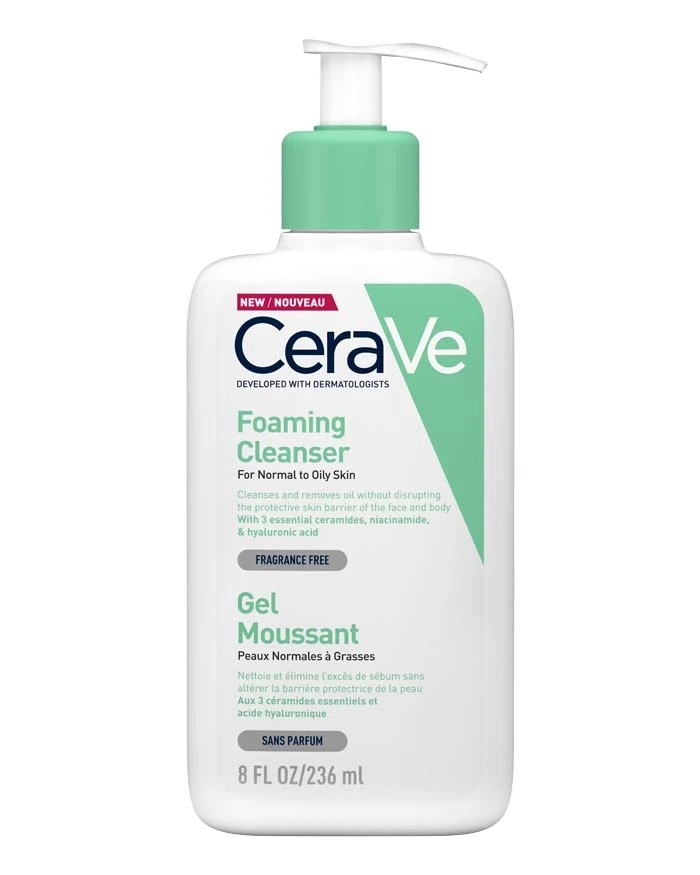
Foaming is the one I'd investigate for a normal-to-oily face and a preference for a gel that lathers. Its formula uses a different blend of cleansing ingredients and includes niacinamide. That is a concrete difference, but it isn't a reason to buy the product solely to collect another skincare active.
I'd assess a cleanser as a cleanser. Does it fit the washing routine, rinse in a way I like and leave the skin comfortable? A niacinamide ingredient listing does not tell us the concentration or make this rinse-off product equivalent to a particular leave-on serum. Nor does the normal-to-oily recommendation turn it into an acne treatment.
The opposite shortcut is unhelpful too: a foaming product is not automatically harsh. Formulation matters. I wouldn't reject this one simply because it produces foam while accepting any product with Hydrating in the name. The label helps choose a trial; your experience of the finished formula decides whether to continue.
If my forehead was oily but my cheeks were consistently sore after shaving, I'd first try the gentler-feeling overall routine and watch both areas. I wouldn't buy two large cleansers on day one and turn washing into a complicated map of the face. The most useful first change is usually the one you can evaluate clearly.
Reading the ingredients without overreading them
The Hydrating list includes cetearyl, stearyl and cetyl alcohol. Those names should not be casually lumped together with ethanol in an alcohol-based splash. The US National Library of Medicine classifies cetearyl alcohol among fatty alcohols and notes its use in creams and emulsifying agents. The full ingredient name matters more than the word alcohol on its own.
Both products list three ceramides. That is relevant to CeraVe's formula approach, but counting them gives neither cleanser an advantage here. I'd also avoid promising that either product repairs an individual's skin barrier simply because those ingredients appear on the label. The performance of the finished cleanser is a separate question.
For me, the useful comparison is much shorter: intended skin type, wash texture and comfort afterwards. The ingredient lists help explain why the formulas differ and identify anything you already know you avoid. They cannot provide a complete wear report before the bottle has been opened.
How I'd use either around shaving
I'd keep the water lukewarm and use my fingertips, then rinse and pat dry. CeraVe gives those directions for both products. Scrubbing harder would not be my answer to a cleanser that did not feel foamy enough.
Neither product is the shaving gel in this comparison. If I were wet shaving, I'd use the appropriate shaving preparation rather than assume that a face wash with a slippery texture could replace it. Our shaving-gel and cream shortlist examines that separate purchase.
The same distinction applies afterwards. I'd choose a moisturiser for the skin's needs rather than assume a hydrating cleanser has already done the whole job. The simple skincare routine gives washing, moisturising and sunscreen their own roles. There is no requirement for all three to carry CeraVe's name.
The bottle-size trap
The photographs here show 1 litre of Hydrating and 236ml of Foaming. That difference is large enough to make a casual price comparison meaningless. I'd match sizes where possible, or divide the actual selling price by the volume and compare the cost per 100ml.
No current UK price winner is claimed here. The manufacturer pages establish product identity and formula, but they do not provide a reliable matched retail-price comparison for these pictured sizes. A retailer's promotion could reverse the apparent value order without changing which cleanser suits your skin.
For a first purchase, I'd set the cash budget before chasing the lowest unit price. A smaller bottle can be the sensible choice when you are unsure about a non-foaming texture. Once you know you want to keep using it, a larger pump becomes an easier decision. Buying a litre first is a commitment to the texture as well as a calculation about millilitres.
The choice I'd make in practice
For dryness, I'd start with Hydrating and simplify the washing technique at the same time. For comfortable but oily skin, I'd start with Foaming. For a mixture of oiliness and irritation, I'd prioritise comfort and avoid treating every shiny area as a reason for a more vigorous wash.
I'd change one product, keep the rest of the routine familiar and note what improved. Persistent irritation or troublesome acne deserves advice about that problem, rather than repeated changes between two basic cleansers. The winning bottle is the one that lets washing become an unremarkable part of the day.
Research behind the comparison
We checked current UK product descriptions, ingredients and directions, with dermatology guidance on cleansing. This article does not claim a laboratory cleansing test, an acne comparison or personal testing of either formula. Ingredient lists on supplied packs take precedence if a formula changes.