

When comparing skin purging vs breakout, how to tell comes down to four clues: the product's active ingredients, where spots appear, when they started, and how they feel. Purging usually follows a cell-turnover ingredient and affects your usual breakout zones, while a regular breakout may appear in new areas, keep worsening, or come with significant itching and burning. If you have swelling, hives, blistering, or trouble breathing, stop the product and seek medical care.
I punti essenziali
- Purging needs a trigger: Retinoids, salicylic acid, glycolic acid, and lactic acid can accelerate skin-cell turnover and temporarily bring existing clogs to the surface.
- Location offers a clue: Purging tends to happen where you already get clogged pores, while new pimples in unusual areas point more toward a breakout or irritation.
- Timing matters: Purging often begins within the first few weeks and gradually improves within about 4 to 8 weeks, though retinoid adjustment can take longer.
- Sensation matters too: Mild dryness can happen during adjustment, but intense itching, burning, swelling, or a spreading rash isn't normal purging.
- You don't need more products: A gentle cleanser, fragrance-free moisturizer, and broad-spectrum sunscreen are usually the best supporting routine.
What Is Skin Purging, and Why Does It Happen?
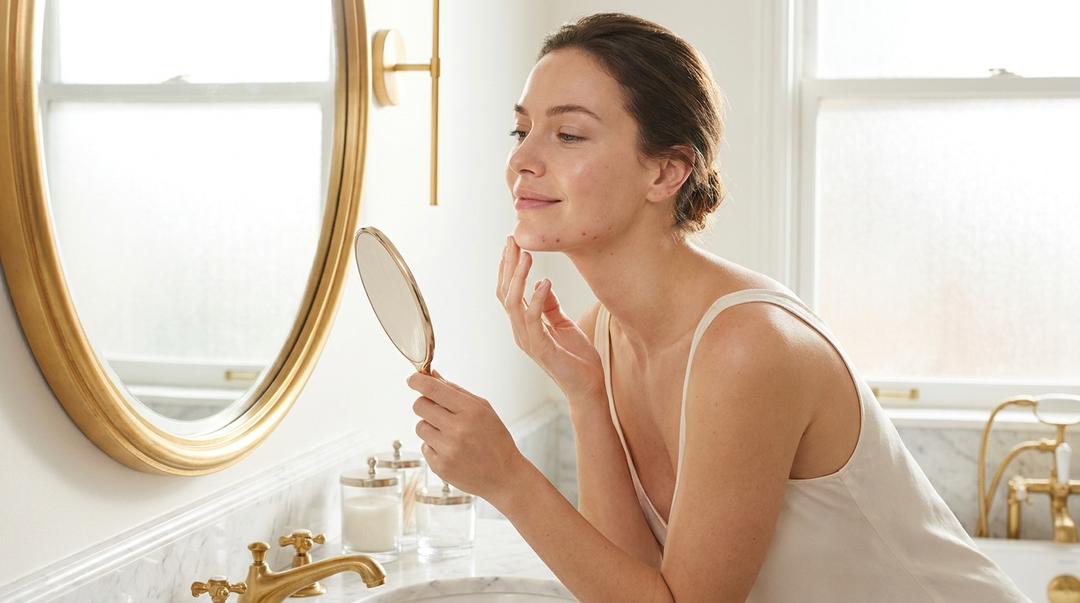
Skin purging is a temporary increase in visible blemishes after starting an ingredient that speeds up cell turnover or clears material from inside pores. Microcomedones—tiny clogs already forming below the surface—may become visible sooner than they otherwise would.
Common signs include whiteheads, blackheads, small pimples, and occasionally more inflamed spots in familiar acne-prone areas. A chin that regularly breaks out may look busier for a few weeks, for example, but sudden bumps across a normally clear neck are less convincing as a purge.
Purging isn't proof that a product is detoxing your skin, and your pores aren't pushing out mysterious toxins. That's marketing language, not skin biology. It's also not something you need to tolerate indefinitely to earn better skin.
Honestly, I've found that people often label any bad reaction as purging because they don't want to waste a new product. I get it—beauty products cost money, and tossing half-used packaging isn't exactly eco-friendly. But protecting your skin barrier comes first, and a product that doesn't suit your skin can sometimes be repurposed carefully on the body if its ingredients are appropriate and it isn't causing an allergic reaction.
Skin Purging vs Breakout: How Can You Tell?
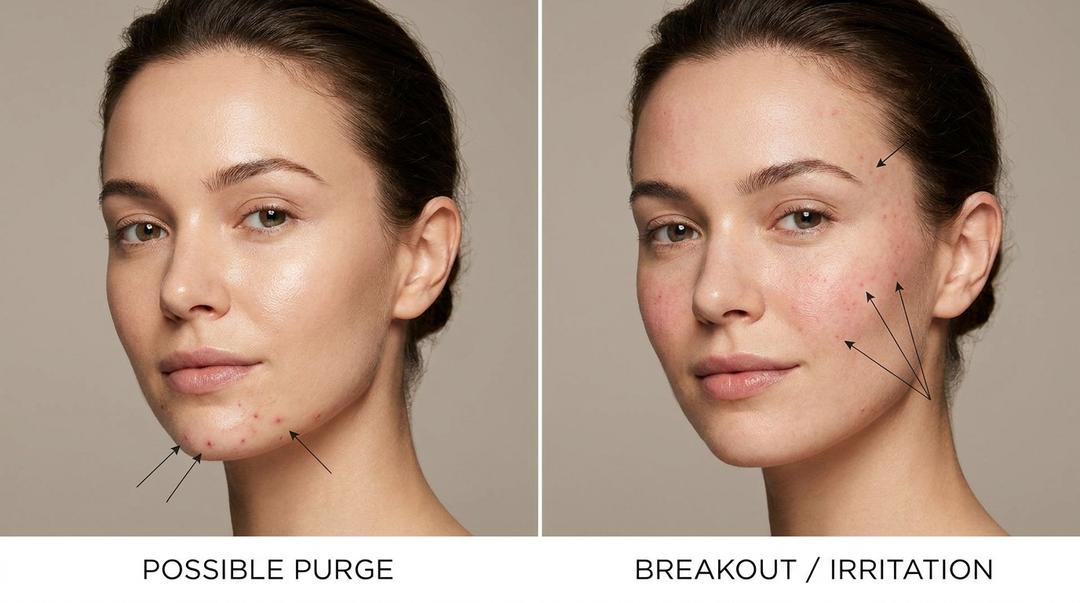
Use this skin purging vs breakout how to tell checklist before deciding whether to continue a new treatment:
- Check the ingredient list. A retinoid or exfoliating acid could cause purging. A basic moisturizer without turnover-accelerating actives is much more likely to be clogging or irritating your skin than causing a true purge.
- Map the location. Spots in your typical acne zones may be purging. Breakouts in completely new places—such as the hairline after adding a rich face cream—suggest pore-clogging residue or irritation.
- Review the timeline. Purging usually starts after introducing a relevant active and should show an overall trend toward improvement. A breakout that gets steadily worse beyond 6 to 8 weeks deserves a rethink.
- Notice the type of blemish. Purging often resembles your usual acne. Uniform itchy bumps, a scaly rash, or widespread redness may be irritant or allergic contact dermatitis instead.
- Assess how it feels. Some dryness or mild tenderness can occur while adjusting to an active. Strong burning, persistent stinging, heat, swelling, or severe pain means you should stop and address the reaction.
- Consider other changes. Hair products, makeup, menstrual shifts, stress, medication, sweaty workout gear, and pillowcase habits can all affect acne. The newest serum isn't automatically the only suspect.
One tricky detail: acne can naturally fluctuate, so no single clue gives a perfect answer. Take a clear photo once a week in similar lighting. Weekly photos are more useful than checking the mirror several times a day, and they'll help you see whether inflammation is truly improving.
Which Ingredients Can Cause Skin Purging?
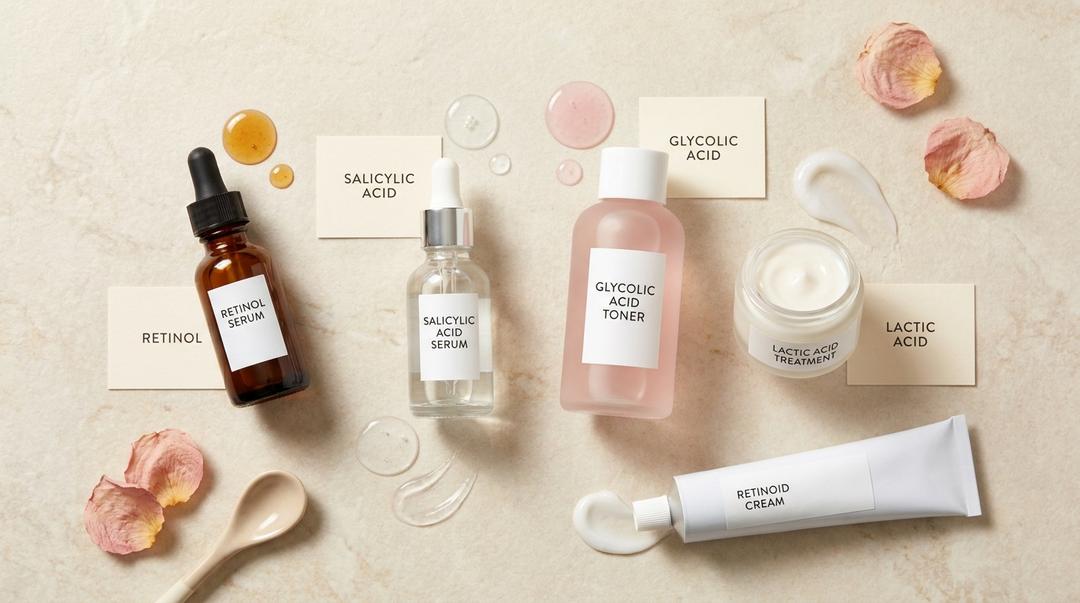
The ingredients most associated with purging affect cell turnover or help clear clogged pores. These include:
- Retinoids: Retinol, retinal, adapalene, tretinoin, and related vitamin A derivatives can expose developing clogs more quickly.
- Beta hydroxy acids: Salicylic acid is oil-soluble and works within pores, making a temporary increase in blemishes possible.
- Alpha hydroxy acids: Glycolic acid and lactic acid loosen dead surface cells and may reveal existing congestion.
- Combination acne treatments: Formulas pairing several active ingredients may trigger both purging and irritation, especially when introduced too quickly.
By contrast, ingredients such as fragrance, essential oils, drying alcohols, rich butters, or certain heavy emollients don't cause purging just because they cause bumps. They may irritate sensitive skin or contribute to clogged pores, depending on the formula and your individual skin.
Look, botanical doesn't automatically mean gentle. Citrus oils, peppermint oil, and heavily fragranced plant extracts can be sensitizing even in products marketed as clean or natural. I prefer short, transparent ingredient lists when the skin barrier is already stressed—not because every synthetic ingredient is bad, but because fewer variables make reactions easier to trace.
How Long Does Skin Purging Last?
A mild purge often settles within 4 to 6 weeks, roughly one skin-renewal cycle for many adults. Some retinoid users may need 8 to 12 weeks to see meaningful improvement, particularly when using a prescription product under medical guidance.
The pattern matters more than an exact deadline. Spots should gradually become less frequent, less inflamed, or quicker to heal. If each week looks worse, you're developing acne in new areas, or your skin remains raw and uncomfortable, don't keep pushing through because a social media video told you to.
Deep, painful nodules can scar and aren't ideal for trial-and-error care. Contact a dermatologist sooner if you have cystic acne, pigment changes after every blemish, existing eczema or rosacea, or no improvement after a reasonable adjustment period.
What Should You Do During a Suspected Purge?
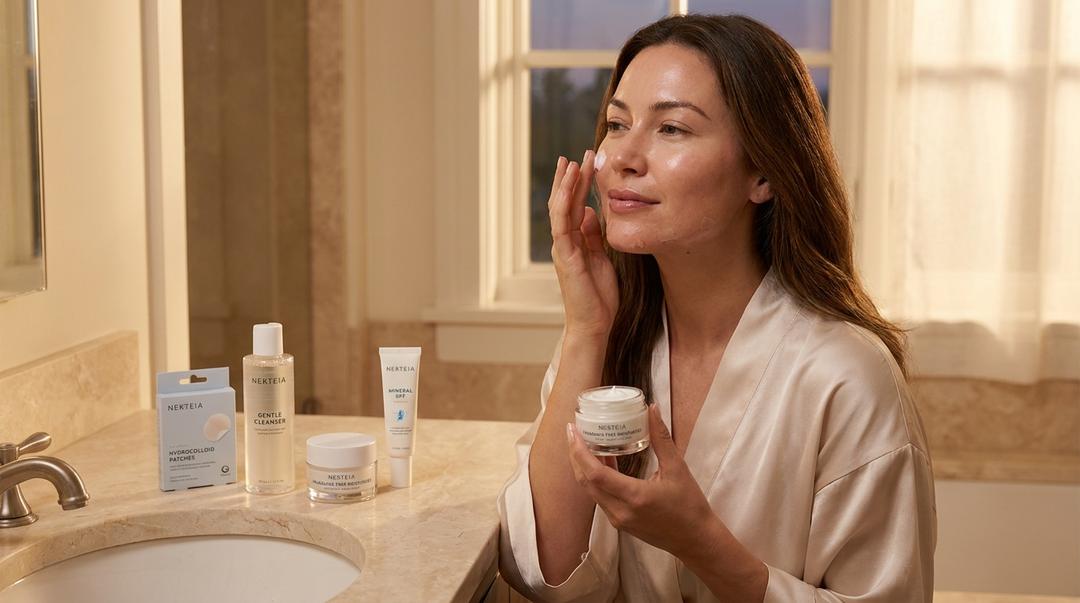
So, resist the urge to stack exfoliants. Using a retinoid, acid toner, scrub, and spot treatment together can damage the skin barrier and turn a manageable adjustment into weeks of irritation.
Try these practical steps today:
- Pause extra actives. Keep only the treatment most likely to help, preferably the one recommended by your dermatologist, and temporarily stop scrubs or additional acids.
- Reduce frequency. If the directions allow, use the active two or three nights per week instead of nightly. Prescription instructions should be changed only with your clinician's guidance.
- Use a gentle cream cleanser. Choose a low-foam, fragrance-free formula and wash with lukewarm rather than hot water.
- Support your barrier. Apply a fragrance-free moisturizer containing ingredients such as glycerin, ceramides, squalane, or colloidal oatmeal.
- Protect against UV exposure. Wear a broad-spectrum sunscreen of SPF 30 or higher every morning. A mineral sunscreen with zinc oxide can be a comfortable option for some reactive complexions.
- Avoid picking. Hydrocolloid patches can protect individual whiteheads, but they won't treat deep cysts or prevent every mark.
- Reassess weekly. Track the number, location, and severity of blemishes instead of focusing on day-to-day fluctuations.
Patch testing a product for several days can reveal some irritation or allergy risk, although it can't reliably predict purging because a small test area may not contain clogged pores. Introduce only one new treatment at a time and give your routine breathing room. This approach is kinder to your skin, your budget, and the pile of half-used packaging under the sink.
Il nostro consiglio
For skin purging vs breakout, how to tell is mostly about ingredient type, location, timing, and symptoms. A genuine purge follows a turnover-accelerating active, appears mainly in familiar acne zones, and gradually improves; a breakout or irritation may occur anywhere, persist, or cause pronounced itching, burning, and redness.
When you're uncertain, simplify your routine rather than buying another corrective product. Stop immediately and seek help for swelling, hives, blistering, breathing difficulty, severe pain, or a rapidly spreading rash. A dermatologist can also help if breakouts are deep, scarring, or still worsening after 6 to 8 weeks.
Want thoughtful beauty picks without the endless product clutter? Sign up for Insider Beauty's weekly deals for ingredient-conscious finds, practical tips, and savings delivered to your inbox.
Vuoi altri consigli e offerte beauty esclusive nella tua casella di posta? Inserisci l’e-mail qui sotto e unisciti alle migliaia di lettori che ogni settimana trovano occasioni per risparmiare.