

A skin cycling routine explained for beginners is a four-night schedule: exfoliate on night one, use a retinoid on night two, then spend nights three and four moisturizing and letting your skin recover. This rotation can make active ingredients easier to tolerate because you’re not applying exfoliants or retinoids every night. Here’s how to start safely and adjust the routine for your skin.
I punti essenziali
- Follow a four-night cycle: Exfoliation, retinoid, recovery, recovery, then repeat.
- Keep the rest of your routine simple: Use a gentle cleanser, barrier-supporting moisturizer, and daily sunscreen.
- Start with mild active ingredients: Low-strength formulas are usually kinder to first-time users.
- Don’t stack strong treatments: Using acids and retinoids on the same night can increase dryness and irritation.
- Adjust as needed: Sensitive or very dry skin may need extra recovery nights between active treatments.
What Is Skin Cycling and How Does It Work?

Skin cycling is a way of scheduling skincare ingredients across several nights instead of using every treatment at once. The classic routine lasts four nights and separates two active-treatment nights with two recovery nights.
The approach was popularized by dermatologist Dr. Whitney Bowe, though dermatologists have long recommended alternating potentially irritating ingredients. The logic is pretty straightforward: exfoliating acids loosen dead cells at the skin’s surface, while retinoids encourage cell turnover. Both can be useful, but applying too much too often may weaken the skin barrier and lead to stinging, flaking, or redness.
Recovery nights give your skin time to replenish moisture and barrier lipids. They’re not wasted nights, either. Honestly, I’ve found that treating moisturizer as an actual step rather than an afterthought often makes active products much easier to use consistently.
Skin cycling may be especially helpful if you’re new to retinoids, prone to overdoing exfoliation, or staring at a crowded bathroom shelf without knowing which treatment goes where. It won’t suit everyone perfectly, but it provides a clear starting framework.
How Do Beginners Follow the Four-Night Routine?
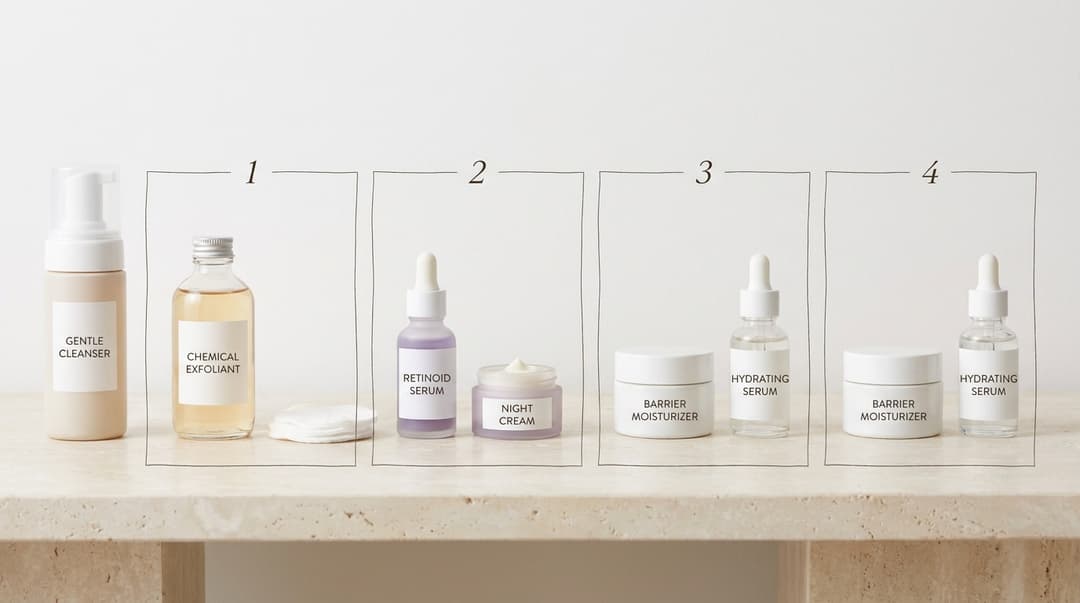
Use the cycle at night after cleansing. Apply products to dry skin unless the product directions tell you otherwise, since damp skin can increase penetration and make some active ingredients more irritating.
- Night one: Exfoliate. Cleanse, pat your skin fully dry, and apply a leave-on chemical exfoliant containing an alpha hydroxy acid, beta hydroxy acid, or polyhydroxy acid. Pick one exfoliating product rather than layering several. Follow with moisturizer.
- Night two: Apply a retinoid. Cleanse and let your face dry before applying a pea-size amount of retinoid to your entire face. Avoid the eyelids, corners of the nose, and lips. Finish with moisturizer.
- Night three: Focus on recovery. Skip exfoliants and retinoids. Use a gentle cleanser followed by a nourishing moisturizer that supports the skin barrier.
- Night four: Continue recovery. Repeat the simple cleanse-and-moisturize routine. If your skin feels tight, you can add a hydrating serum before moisturizer, but keep the lineup soothing and uncomplicated.
After night four, return to exfoliation night. Beginners don’t have to repeat the cycle immediately, though. If your skin still feels dry or tender, add one or two more recovery nights.
So, pay attention to how your face feels rather than treating the schedule like a strict calendar. Mild temporary dryness can happen when starting a retinoid, but burning, swelling, cracking, or persistent redness means it’s time to stop the active products and let your skin recover.
Which Products Do You Need for Skin Cycling?

You don’t need a dozen products. A beginner skin cycling routine can work with four basics: a gentle cleanser, one exfoliant, one retinoid, and a moisturizer. You’ll also need broad-spectrum sunscreen for daytime use.
- Gentle cleanser: Choose a non-scrubbing formula that removes sunscreen and makeup without leaving skin squeaky or tight.
- Chemical exfoliant: Look for one leave-on AHA, BHA, or PHA product. Lactic acid and PHAs are often gentler options, while salicylic acid may appeal to oily or congestion-prone skin.
- Retinoid serum or cream: Over-the-counter retinol or retinal products are common beginner choices. Start with a lower-strength formula and follow its directions.
- Barrier moisturizer: A fragrance-free cream containing ingredients such as ceramides, glycerin, or squalane can help reduce moisture loss.
- Broad-spectrum sunscreen: Wear SPF 30 or higher every morning. Exfoliating acids and retinoids can make skin more sensitive to the sun, and UV exposure can undermine the results you’re trying to achieve.
Look, more potent doesn’t automatically mean more effective for your skin. The best strength is one you can use without repeatedly triggering irritation. A mild product used consistently usually makes more sense than an intense formula that leaves you peeling for a week.
Before using a new active all over your face, patch-test it on a small area according to the label instructions. Introduce only one new treatment at a time so you can identify what’s causing a reaction if one occurs.
How Should You Adjust Skin Cycling for Your Skin?
The four-night schedule is a template, not a rule. Your skin type, climate, current routine, and experience with active ingredients should guide how quickly you move through it.
For dry or sensitive skin, try one active night followed by two or three recovery nights. You can also apply moisturizer before and after your retinoid, a technique commonly called the moisturizer sandwich. This may buffer the product and reduce dryness.
For oily or acne-prone skin, don’t assume you need stronger products or more exfoliation. Over-exfoliating can irritate skin without resolving breakouts. A salicylic acid exfoliant may help with clogged pores, but it should still be used according to its label.
For experienced retinoid users, the standard cycle may feel too infrequent. Some people eventually shorten the recovery period, but increase frequency gradually and change only one part of the routine at a time.
Common beginner mistakes include:
- Applying exfoliating acids and retinoids during the same evening
- Using a scrub, exfoliating cleanser, and leave-on acid together
- Applying more than a pea-size amount of retinoid
- Skipping moisturizer because skin is oily
- Forgetting sunscreen the following morning
- Continuing through significant burning or inflammation
If you have eczema, rosacea, cystic acne, or another ongoing skin condition, check with a board-certified dermatologist before adding strong active ingredients. Retinoids are generally avoided during pregnancy, and you should ask your healthcare professional which products are appropriate while pregnant or breastfeeding.
When Will You See Results From Skin Cycling?
Hydration and smoother-feeling skin may improve within a few weeks, but concerns such as fine lines, uneven tone, and acne usually take longer. Retinoids commonly require 8 to 12 weeks or more of consistent use before visible changes become noticeable.
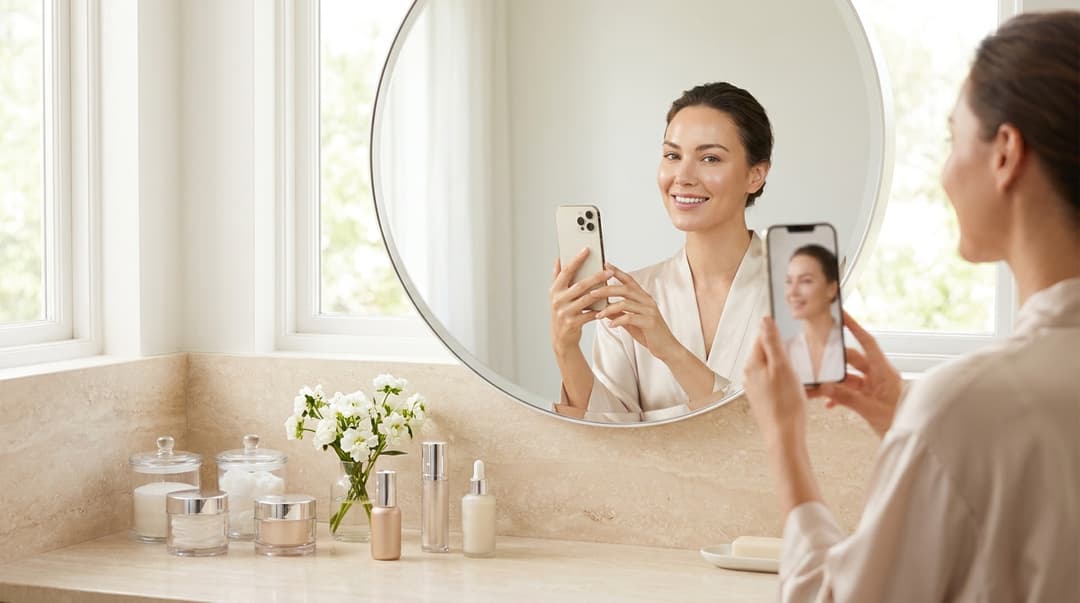
Take a photo in the same lighting before you begin, then compare it with another photo after eight weeks. Daily mirror checks can make progress nearly impossible to spot. I’ve also found that tracking dryness, breakouts, and product use in a notes app is surprisingly helpful when deciding whether to add recovery nights.
Skin cycling isn’t guaranteed to prevent every side effect, and it doesn’t make incompatible or overly strong products safe. Results depend on the ingredients, their concentrations, your consistency, and your skin’s needs. If irritation doesn’t improve after stopping the active products, contact a dermatologist.
Il nostro consiglio
This skin cycling routine explained for beginners keeps things manageable: exfoliate on night one, use a retinoid on night two, and moisturize on nights three and four. Start with gentle formulas, use only one active product per treatment night, and extend the recovery phase whenever your skin feels dry or uncomfortable.
The real goal isn’t following a trendy schedule perfectly. It’s building a routine you can maintain without making your skin angry. And, yep, daily SPF still matters just as much as what you do at night.
Want more practical skincare tips and well-priced product finds? Sign up for Insider Beauty’s weekly deals and we’ll send our latest picks straight to your inbox.
Vuoi altri consigli e offerte beauty esclusive nella tua casella di posta? Inserisci l’e-mail qui sotto e unisciti alle migliaia di lettori che ogni settimana trovano occasioni per risparmiare.