

To learn how to find your skin type at home, wash with a gentle cleanser, apply nothing, and observe your bare skin after 30 to 60 minutes. Shine, tightness, and flaking can help identify oily, dry, combination, or normal skin, while a blotting paper check can confirm how much oil different areas produce.
Les points essentiels
- Start with clean, bare skin: Makeup, moisturizer, sunscreen, and active ingredients can alter the results.
- Wait 30 to 60 minutes: This gives your skin time to return closer to its usual oil-production pattern after cleansing.
- Check separate facial zones: Your forehead and nose may behave differently from your cheeks.
- Don't confuse dehydration with dryness: Dehydrated skin lacks water, while dry skin produces less oil.
- Retest when your routine or environment changes: Weather, hormones, medications, and over-exfoliation can temporarily shift how your skin behaves.
How Do You Test Your Skin Type at Home?

The easiest method is the bare-face test. Do it on a fairly typical day, not right after a facial, sunburn, long flight, or night of strong exfoliating products. Those factors can make skin unusually dry, oily, or irritated.
Here's how to find your skin type at home step by step:
- Wash your face with lukewarm water and a gentle cleanser that doesn't contain exfoliating acids, scrubbing particles, or strong fragrance.
- Pat your face dry with a clean towel rather than rubbing it.
- Leave your skin completely bare, with no toner, serum, moisturizer, sunscreen, or spot treatment.
- Wait 30 to 60 minutes in a comfortable indoor environment.
- Examine your forehead, nose, chin, and cheeks in natural light.
- Note any shine, tightness, roughness, flaking, redness, or discomfort.
Try not to wash with very hot water because heat can remove surface oils and increase redness. A harsh, squeaky-clean cleanser can also make oily skin feel temporarily tight, which may lead you to misclassify it as dry.
Honestly, I've found that this is the most common home-testing mistake: people assess their face immediately after a hot shower. Give your skin that waiting period. It produces a much more useful snapshot of its everyday behavior.
What Do Your Bare-Skin Results Mean?
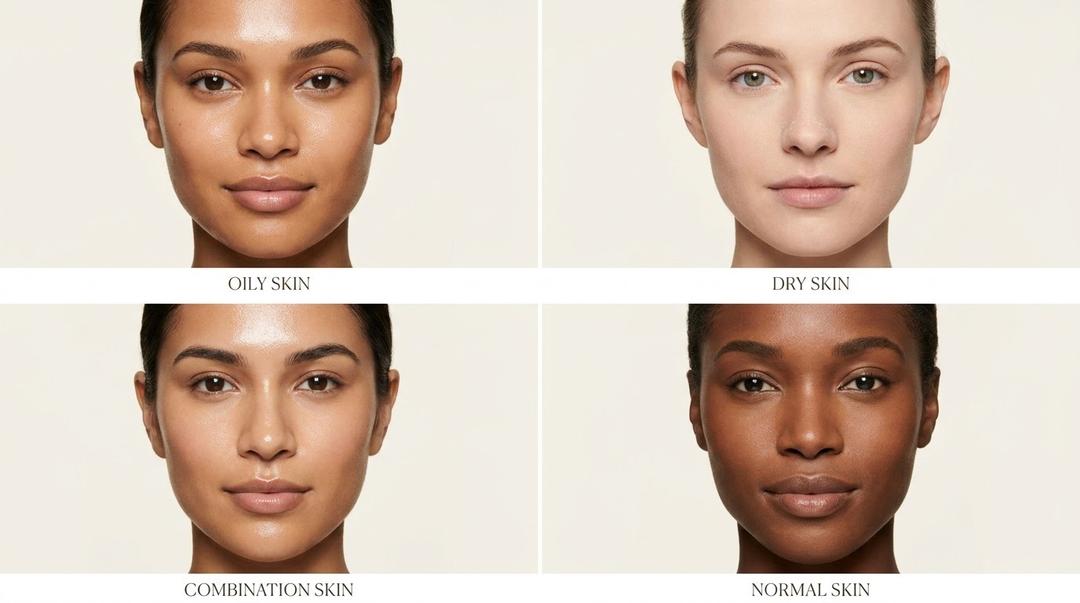
Once the waiting period is over, look at the overall pattern rather than focusing on one pore or blemish. Pore size alone doesn't determine skin type, and a breakout doesn't automatically mean your skin is oily.
- Oily skin: Most of the face looks shiny or feels greasy, particularly across the forehead, nose, and chin. Makeup may slide or separate during the day, and pores can appear more noticeable where oil production is highest.
- Dry skin: The face feels tight, rough, itchy, or uncomfortable. You may see fine flakes, dullness, or more visible lines caused by low surface moisture and reduced sebum.
- Combination skin: The T-zone becomes oily, but the cheeks remain normal or dry. This is extremely common, and the contrast may become stronger in humid or cold weather.
- Normal skin: The face feels comfortable and balanced, with little obvious shine, tightness, or flaking. Normal doesn't mean poreless or blemish-free; it simply means oil and moisture feel relatively balanced.
Sebaceous glands produce sebum, an oily substance that helps support the skin barrier and reduce water loss. Oily skin generally produces more sebum, while dry skin produces less. Genetics plays a major role, although climate, age, hormones, and skincare habits can change what you see on a given day.
Can Blotting Paper Confirm Your Skin Type?
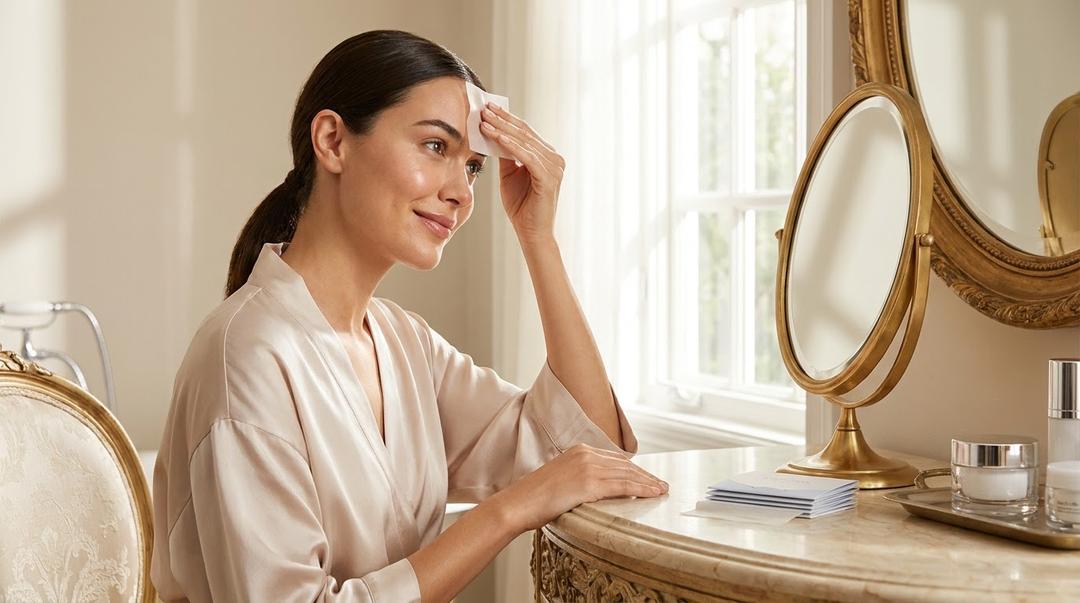
Blotting paper offers a quick second check, especially when shine is subtle. About one hour after washing, gently press a clean sheet against your forehead, nose, chin, and each cheek. Press rather than rub, since friction can irritate the skin and spread oil across the paper.
Your results may look like this:
- Oil from nearly every area: Your skin is likely oily.
- Oil mainly from the forehead, nose, and chin: Your skin is probably combination.
- Little or no visible oil with tightness or flakes: Your skin is likely dry.
- A small, fairly even amount of oil without discomfort: Your skin may be normal.
Do this test indoors and before exercise. Heat, humidity, sweating, and heavy sunscreen can make the paper look oilier than your skin's natural baseline. For a clearer answer, repeat the test two or three times on different days.
The blotting method is useful when you're working out how to find your skin type at home, but it isn't a medical diagnostic test. It measures surface oil at one moment, not barrier health, hydration, or the cause of irritation.
Is Sensitive or Dehydrated Skin a Skin Type?
Sensitive and dehydrated skin are better thought of as traits or temporary states that can occur alongside any skin type. You can have oily, sensitive skin or dry, dehydrated skin, for example.
Sensitive skin may sting, burn, itch, or turn red after exposure to certain products, weather conditions, or heat. Common triggers include fragrance, aggressive scrubs, frequent exfoliation, and high-strength active ingredients. Persistent sensitivity may also be related to eczema, rosacea, or allergic contact dermatitis, which need a more specific evaluation.
Dehydrated skin lacks water rather than oil. It may feel tight yet look shiny, and fine lines can appear more obvious. Over-cleansing, dry air, illness, travel, and excessive exfoliation can all contribute. So, yes, oily skin can still be dehydrated.
Acne is also not a skin type. People with dry, normal, combination, or oily skin can develop acne. Treating every breakout-prone face as extremely oily often leads to harsh cleansing, barrier damage, and even more irritation.
Which Products Should You Use for Your Skin Type?
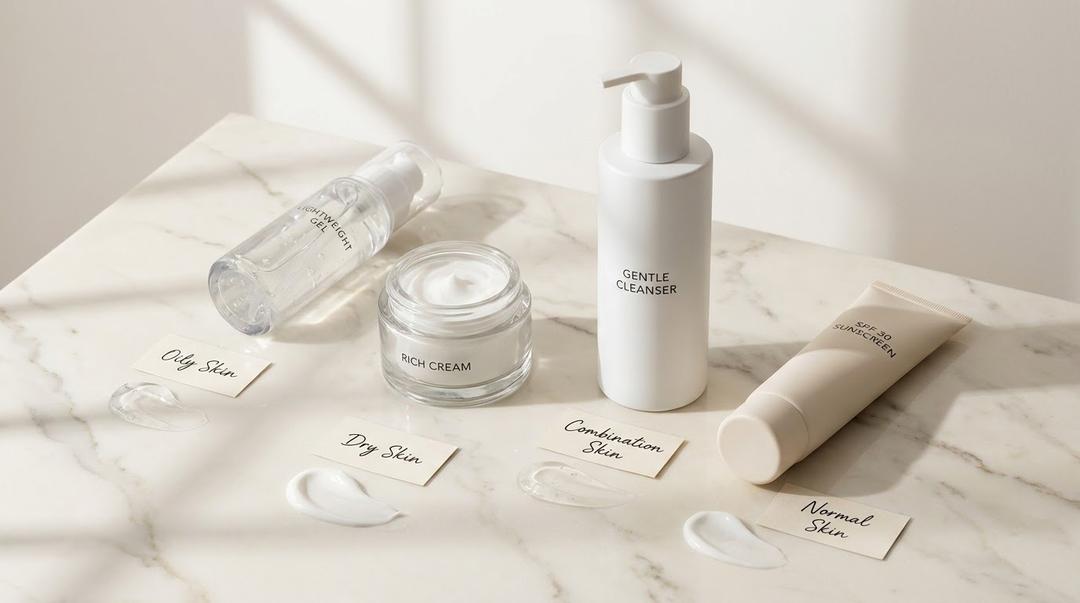
Once you have a likely answer, keep the routine simple for a couple of weeks and watch how your skin responds. A basic routine needs only three core product types: a gentle cleanser, a moisturizer, and a broad-spectrum sunscreen with SPF 30 or higher.
- For oily skin: Choose a foaming or gel cleanser that removes excess oil without leaving the face tight. A lightweight gel moisturizer can hydrate without feeling heavy.
- For dry skin: Try a creamy, low-lather cleanser and a richer moisturizer containing barrier-supporting ingredients such as ceramides, glycerin, or petrolatum.
- For combination skin: Use a gentle cleanser and a medium-weight moisturizer. You can apply a little more moisturizer to dry cheeks and less to the T-zone.
- For normal skin: Stick with comfortable textures you'll use consistently. There's no need to chase an ultra-matte finish or add complicated treatments when your barrier is doing well.
- For sensitive skin: Favor fragrance-free formulas and introduce one new product at a time. Patch test it on a small area for several days before applying it across your face.
Sunscreen matters for every category. Daily UV exposure contributes to uneven pigmentation, premature skin aging, and skin cancer risk, regardless of whether your face is oily or dry. The best texture is the one you're comfortable applying generously and regularly.
Retest your skin every few months or after a significant change in climate, hormones, medication, or routine. Skin commonly becomes drier with age as sebum production declines. I've also seen people assume their type has permanently changed when the real issue is a new cleanser or too many exfoliating steps.
See a board-certified dermatologist if you have ongoing burning, severe redness, painful acne, cracking, a persistent rash, or flaking that doesn't improve with gentle care. Those signs may point to a skin condition rather than a simple type mismatch.
Notre conclusion
The most practical way to determine how to find your skin type at home is to cleanse gently, wait 30 to 60 minutes, and compare oil, tightness, and flaking across different facial zones. Use blotting paper as a second check, then repeat the process on another day before changing your entire routine.
Look, skin types aren't rigid labels. They're useful guides for choosing product textures and avoiding unnecessary irritation, but your skin can shift with seasons, age, hormones, and habits. Start with a gentle cleanser, suitable moisturizer, and daily SPF, then adjust based on what your skin actually does.
For more dermatologist-informed skincare advice and product savings, sign up for Insider Beauty's weekly deals.
Vous souhaitez recevoir d’autres conseils et des offres beauté exclusives ? Saisissez votre adresse e-mail ci-dessous et rejoignez les milliers d’Insiders qui économisent chaque semaine.