
A pregnancy safe skincare routine explained simply comes down to gentle cleansing, targeted ingredients with reassuring safety profiles, consistent moisturizing, and broad-spectrum SPF 30 or higher. Avoid retinoids and hydroquinone, and check acne treatments, botanical extracts, and prescription products with your prenatal clinician before using them.
Das Wichtigste auf einen Blick
- Keep your routine simple: A gentle cleanser, fragrance-free moisturizer, and broad-spectrum sunscreen cover the essentials.
- Avoid retinoids and hydroquinone: This includes prescription retinoids and over-the-counter retinol products.
- Use proven alternatives: Azelaic acid, niacinamide, vitamin C, and glycolic acid can address common pregnancy skin changes.
- Treat acne carefully: Limited topical benzoyl peroxide or salicylic acid may be acceptable, but confirm use with your clinician.
- Patch test everything: Pregnancy can make previously reliable skin suddenly sensitive or reactive.
This pregnancy safe skincare routine explained below gives you practical morning and evening steps without turning your bathroom shelf into a chemistry lab.
Which skincare ingredients are safe during pregnancy?
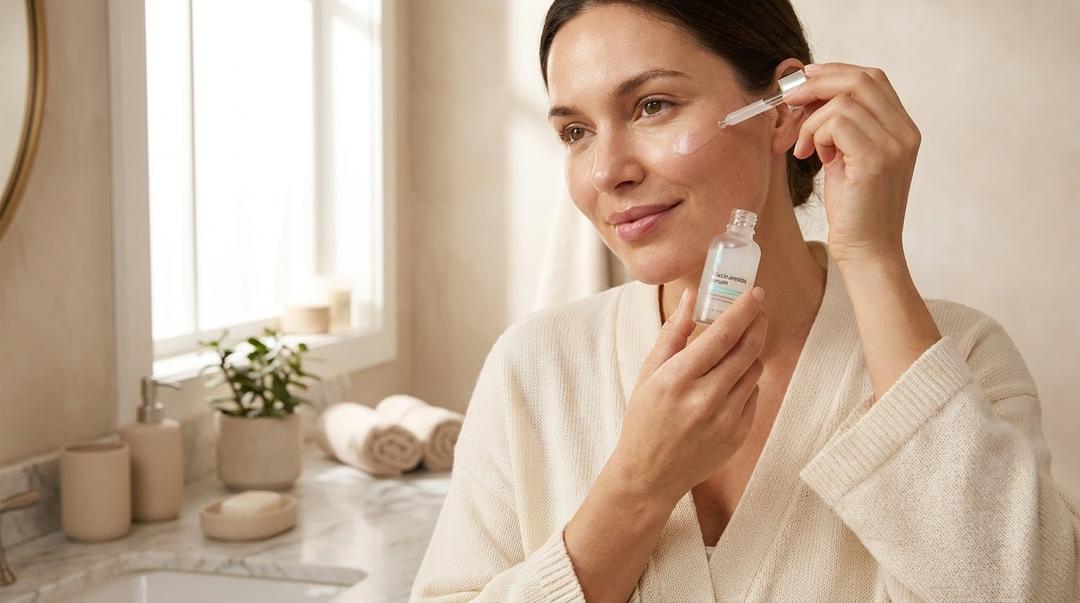
Several familiar skincare ingredients are generally considered compatible with pregnancy when used topically as directed. Your personal medical history still matters, so bring your full product list to your obstetrician, midwife, or dermatologist, especially if you use prescriptions.
- Azelaic acid: Helps manage clogged pores, redness, post-acne marks, and melasma. Concentrations commonly range from 10% in cosmetic products to 15% or 20% in prescriptions.
- Niacinamide: Supports the skin barrier and may reduce redness, excess oil, and uneven tone. A 2% to 5% formula is often enough for sensitive skin.
- Vitamin C: An antioxidant that can help brighten discoloration and support your sunscreen. Look for an opaque or tinted container because light can degrade many vitamin C formulas.
- Glycolic acid: A type of alpha hydroxy acid that gently exfoliates and may improve dullness or dark spots. Start with a low-strength leave-on formula once or twice weekly.
- Hyaluronic acid: A hydrating ingredient that attracts water to the skin. It works best when followed by moisturizer to reduce water loss.
- Ceramides, glycerin, and squalane: These barrier-supporting ingredients are useful when hormonal changes leave skin dry, tight, or flaky.
- Zinc oxide and titanium dioxide: These mineral sunscreen filters sit on the skin and provide UV protection. They're especially helpful when fragrance or chemical sunscreen filters feel irritating.
Honestly, I've found that lower percentages often work better during pregnancy. More concentrated doesn't automatically mean more effective, particularly when your skin barrier is already feeling temperamental.
Which skincare ingredients should you avoid while pregnant?
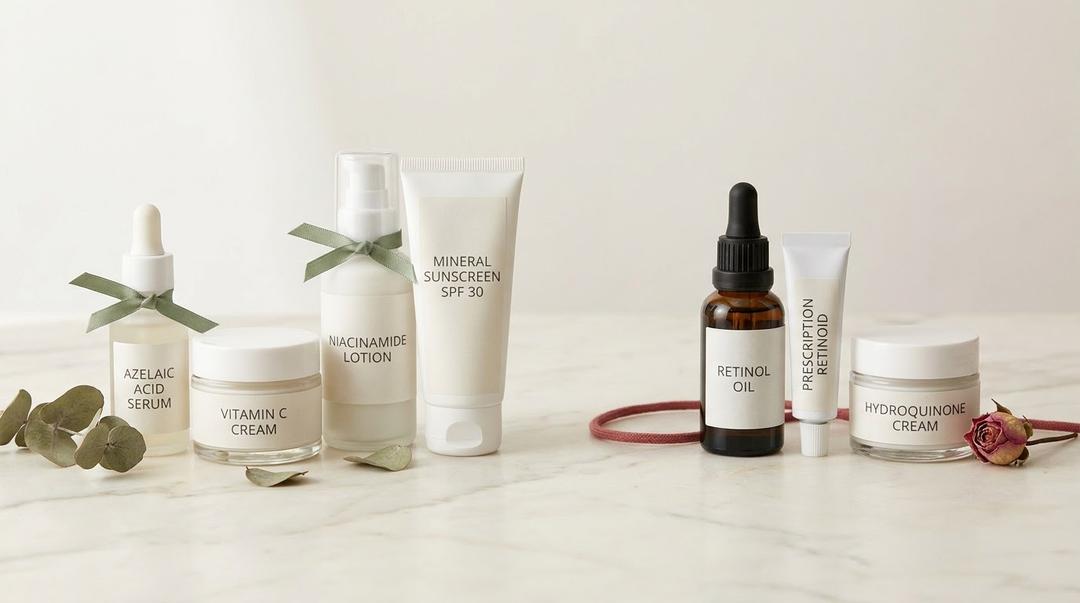
The clearest skincare ingredients to avoid during pregnancy are retinoids and hydroquinone. Some other products require medical guidance because safety depends on the concentration, application area, and frequency of use.
- Prescription and cosmetic retinoids: Avoid tretinoin, tazarotene, adapalene, retinol, retinaldehyde, and retinyl esters unless your physician specifically directs otherwise. Oral isotretinoin is known to cause severe birth defects, and topical retinoids are generally avoided as a precaution.
- Hydroquinone: This pigment-lightening ingredient has relatively high skin absorption and limited pregnancy safety data. Azelaic acid and vitamin C are better-studied alternatives for uneven tone.
- High-strength salicylic acid treatments: Small amounts of low-strength topical salicylic acid may be acceptable, but avoid large-area application and professional-strength peels unless approved by your clinician.
- Unreviewed prescription acne treatments: Oral spironolactone and certain antibiotics aren't suitable during pregnancy. Don't stop a prescribed medication without speaking to the prescriber, though.
- Strong professional peels: Pregnancy can increase sensitivity and the risk of irritation or post-inflammatory pigmentation. Ask both your prenatal clinician and treatment provider before booking one.
- Products with unclear essential-oil concentrations: Natural doesn't automatically mean pregnancy-safe. Concentrated essential oils can be irritating, and safety information varies by oil and dose.
Bakuchiol is often marketed as a natural retinol alternative, but pregnancy-specific human safety data remain limited. If you want to take the cautious route, use better-established options such as azelaic acid instead.
How do you build a pregnancy safe skincare routine?
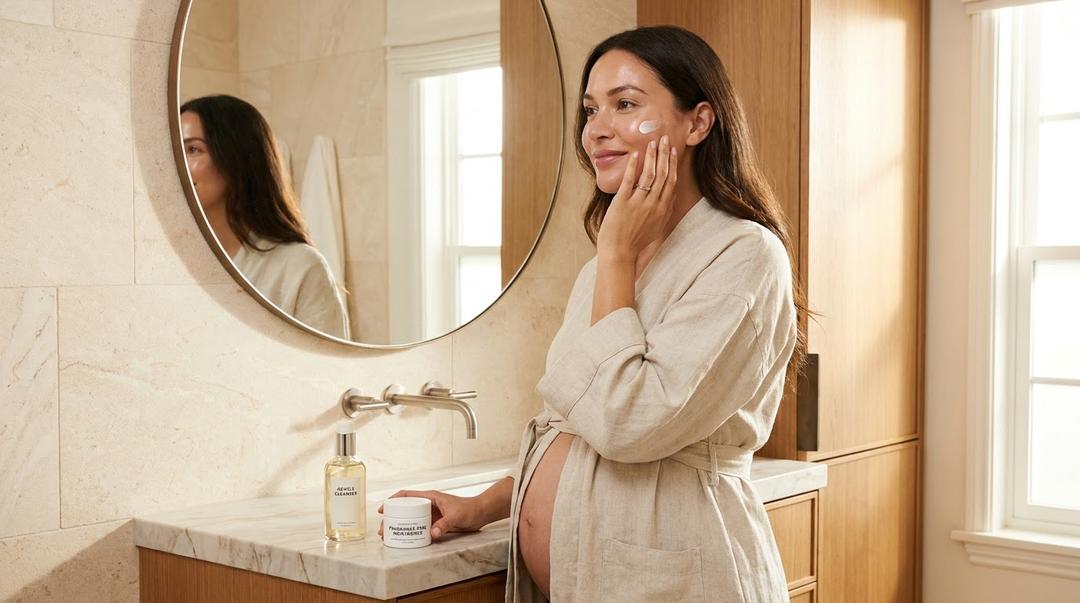
A practical routine doesn't need ten steps. Start with the three core product types: a gentle cleanser, fragrance-free moisturizer, and broad-spectrum mineral sunscreen. Add one targeted active only if your skin needs it.
- Cleanse gently in the morning. Use lukewarm water and a mild, low-foam cleanser. If your skin is very dry, rinsing with water may be enough.
- Apply one morning treatment. Choose niacinamide for barrier support or vitamin C for antioxidant protection and uneven tone. You don't need both immediately.
- Moisturize. Apply moisturizer while skin is slightly damp. Ceramides, glycerin, hyaluronic acid, and squalane can help relieve tightness without relying on heavy fragrance.
- Use broad-spectrum SPF 30 or higher. Apply it to your face, ears, neck, chest, and other exposed skin. Reapply about every two hours when outdoors, and sooner after sweating or swimming.
- Cleanse again at night. Remove sunscreen, makeup, sweat, and pollution without scrubbing. A soft washcloth is plenty; gritty facial scrubs can worsen irritation.
- Treat, then moisturize. Apply azelaic acid or another clinician-approved treatment, followed by moisturizer. Begin every other night and increase only if your skin stays comfortable.
So, don't introduce three new actives in the same week. Add one product at a time and wait several days before adding another. That makes it much easier to identify the cause if redness, itching, or breakouts appear.
How can you treat pregnancy acne and dark spots?
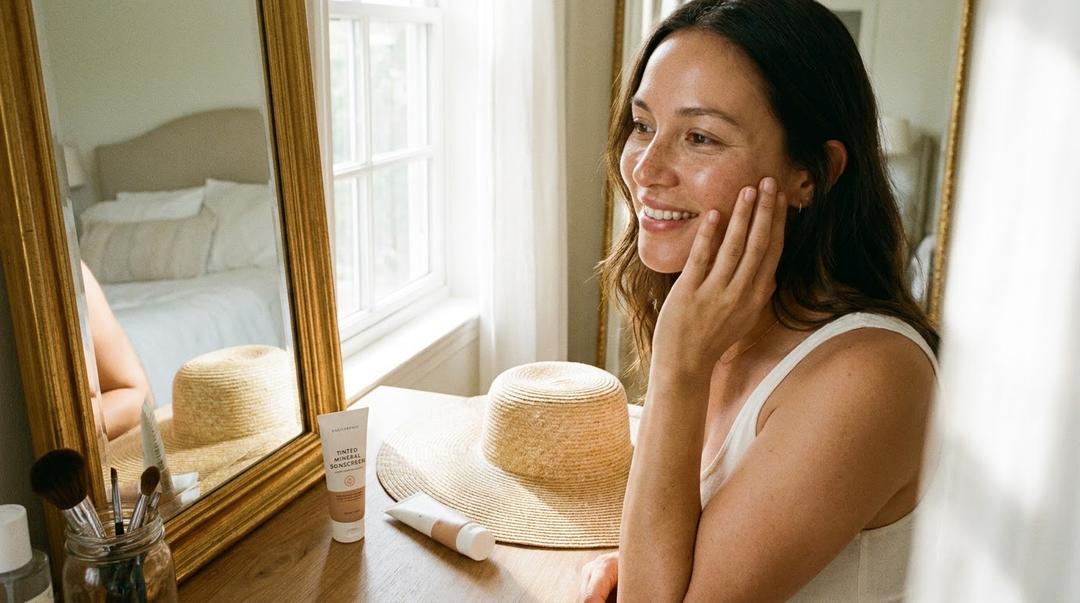
Pregnancy acne often responds to azelaic acid, which helps with both active blemishes and the marks they leave behind. Limited topical benzoyl peroxide is also commonly considered acceptable because the body rapidly converts it to benzoic acid, but it's still smart to confirm the concentration and application area with your clinician.
For salicylic acid, professional guidance is nuanced rather than a blanket yes or no. Small amounts in over-the-counter topical products are generally viewed differently from high-concentration peels or frequent use across large areas. Use the lowest effective strength and avoid layering it with other exfoliants.
For melasma or pregnancy-related dark patches, prioritize:
- Daily broad-spectrum sunscreen: UV exposure can deepen pigmentation, even on cloudy days.
- Tinted mineral SPF: Iron oxides in tinted formulas may offer extra protection from visible light, which can contribute to melasma.
- Azelaic acid: It can help fade uneven pigmentation while calming blemishes.
- Vitamin C or niacinamide: Either can support a brighter, more even appearance with consistent use.
- Hats and shade: Topical products work better when they're paired with practical sun protection.
Look, pigmentation takes time. Avoid aggressive exfoliation in an attempt to speed things up; inflammation can make dark spots look worse, particularly in deeper skin tones.
How do you choose cleaner pregnancy skincare?
Clean beauty labels aren't regulated pregnancy-safety certifications. A leaf logo, an organic claim, or a long free-from list doesn't tell you whether a formula is appropriate during pregnancy. The full ingredient list and actual concentration matter more.
I've found that shorter, fragrance-free formulas are often easier on sensitized skin, but a short ingredient list isn't automatically superior. Well-formulated preservatives help prevent microbial growth, which matters in any water-based product. Be wary of homemade creams or preservative-free jars that can become contaminated quickly.
Use these practical shopping checks:
- Read the full ingredient list rather than relying on front-label claims.
- Choose pumps, tubes, refill systems, or recyclable packaging when practical.
- Skip strong added fragrance if nausea, headaches, eczema, or sensitivity are concerns.
- Check the expiration symbol and store antioxidants away from heat and direct light.
- Ask your clinician about unfamiliar actives instead of relying only on retailer pregnancy filters.
- Patch test on the inner arm or behind the ear for several days before facial use.
Stop using a product and seek medical advice if you develop significant swelling, blistering, hives, breathing difficulty, or a persistent painful rash.
Das Fazit
A pregnancy safe skincare routine explained in its simplest form is cleanser, moisturizer, and broad-spectrum SPF, with carefully selected treatments such as azelaic acid, niacinamide, or vitamin C when needed. Avoid retinoids and hydroquinone, introduce products slowly, and have your prenatal clinician review prescriptions or high-strength acne treatments.
Simple really can be effective here. A calm, supported skin barrier usually handles hormonal changes better than skin that's being scrubbed, peeled, and treated every night.
For gentle skincare finds, ingredient-conscious picks, and price drops, sign up for Insider Beauty's weekly deals.
Möchtest du weitere Tipps und exklusive Beauty-Angebote per E-Mail? Trage unten deine Adresse ein und schließe dich Tausenden Insidern an, die jede Woche kräftig sparen.