e.l.f. Halo Glow Liquid Filter vs Skin Tint: Which to Buy?
 October 22, 2026
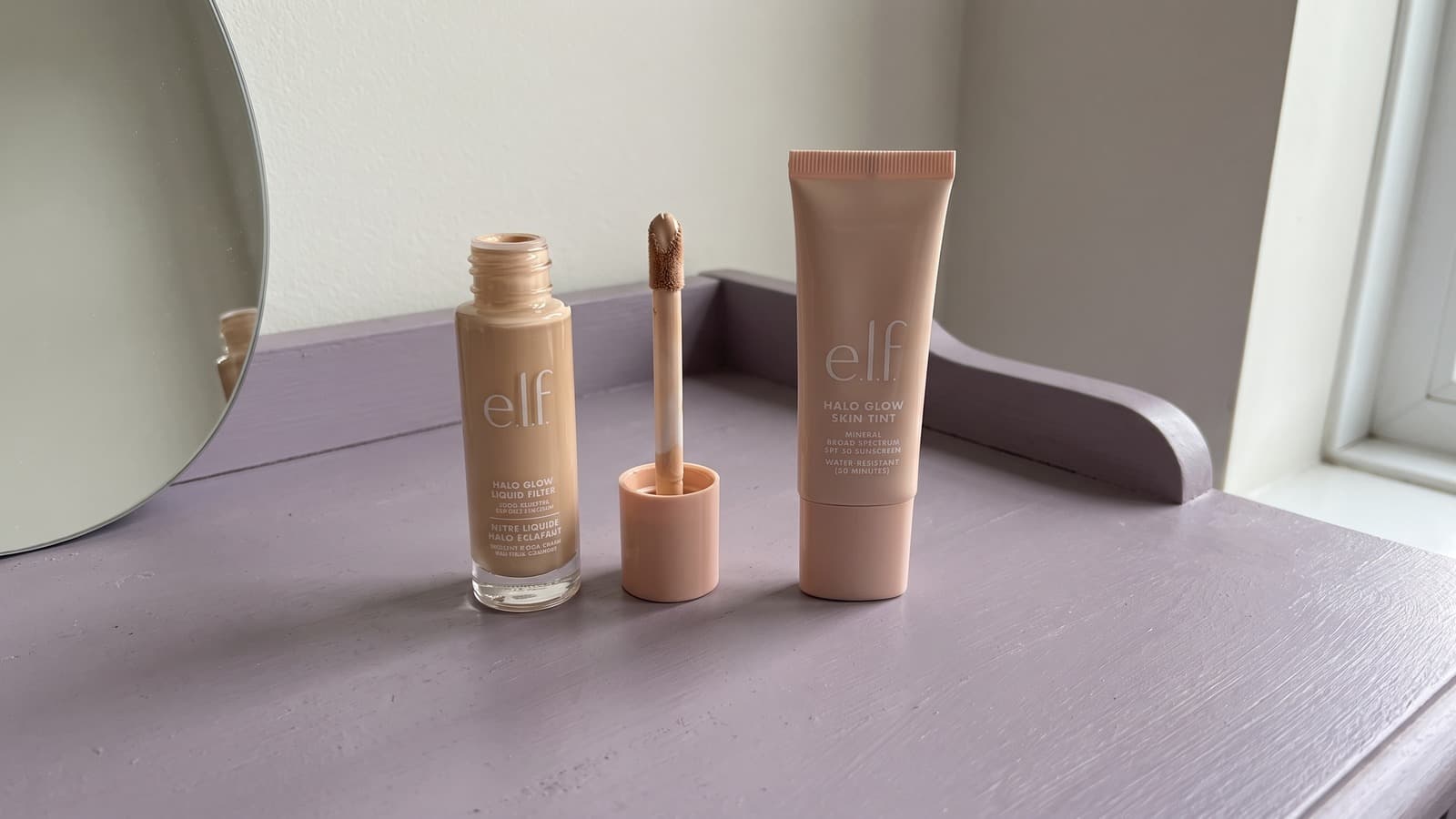
Key Takeaways
- Choose Liquid Filter to add illumination to makeup you already like, or Skin Tint for a light-coverage base.
- Current US prices are $15 for 31.5 ml of Liquid Filter and $14 for 30 ml of Skin Tint.
- Only Skin Tint carries SPF 50; application and reapplication directions still apply.
Insider Beauty may earn a commission on purchases made through links in this article. See our disclosure.
Buy Halo Glow Skin Tint SPF 50 if you want a light-coverage base; buy Halo Glow Liquid Filter if you already like your foundation and want to add glow. They share a name, but they solve different problems. At the current US prices, Skin Tint is also $1 cheaper. I would choose the job first and resist buying both simply because they appear together in a routine.
Liquid Filter vs Skin Tint at a glance
US prices checked on 22 October 2026, before tax and delivery. Older reviews may show different prices.
| Halo Glow Liquid Filter | Halo Glow Skin Tint SPF 50 | |
|---|---|---|
| Current US price and size | $15 / 31.5 ml | $14 / 30 ml |
| Approximate cost per ml | $0.48 | $0.47 |
| Intended role | Glow booster | Light-coverage complexion base |
| Finish | Luminous | Dewy |
| Current shade range | 15 flexible shades | 18 shades, with cool, neutral and warm options |
| Sun-protection label | No SPF claim | Broad-spectrum SPF 50; 80-minute water resistance |
| Best reason to buy | Adjust the glow in makeup you already own | Replace a heavier everyday base |
The current Liquid Filter and Skin Tint pages supply the US product details; the Skin Tint drug label supplies its sunscreen directions. The price difference is too small to make the decision for you. Buying the wrong type of base is the more expensive mistake.
Liquid Filter: the add-on for a foundation you already like
Liquid Filter makes the most sense when coverage is already sorted. If your usual foundation matches well but looks flatter than you want, an illuminating product gives you something to adjust without starting the whole shade hunt again.
e.l.f. allows Liquid Filter to be worn alone, beneath or over makeup, mixed with foundation, or applied to selected high points. Its ingredient list includes squalane and glycerin. None of that turns it into a sunscreen, and its glow-booster role is the reason I would buy it rather than those ingredient names.
Think about where you want reflection. If the answer is just the tops of your cheeks, you don’t necessarily need another all-over base. A product you can place selectively offers more control than changing everything under your blush and concealer.
The drawback is that added glow is not the same as the coverage you wanted from foundation. If you are buying Liquid Filter to replace concealer or to cover every uneven patch, I would reconsider the brief. Our Hollywood Flawless Filter alternatives guide covers that illuminating-product category; it is a different comparison from choosing your main base.
Skin Tint: the better starting point for an everyday base
Skin Tint is the one I would investigate if the problem is “my foundation feels like too much makeup.” e.l.f. describes light, buildable coverage and a dewy finish, with niacinamide, bisabolol and allantoin in the formula. Shake it before applying. Its sunscreen active is 12% zinc oxide, according to the label.
There is relevant independent wear evidence, with a useful limit. In her Who What Wear review, updated 26 June 2026, Alyssa Brascia describes having dry skin and reports that her makeup remained even and glowy after more than ten hours. That is her experience, not a ten-hour guarantee or evidence that an oily complexion will behave the same way.
I would pay attention to the dewy finish before the SPF number. If you spend your makeup routine trying to remove shine, a glow-focused tint deserves a careful trial. If you prefer visible skin to an opaque finish, its intended coverage is a more sensible starting point. Neither description tells us whether a particular blemish will need extra concealer.
For someone seeking substantially more coverage, I would compare actual foundations in our foundation guide before buying either Halo Glow product. Trying to turn an illuminating base into a different category can mean more layers and a purchase that never quite fits.
The shade numbers are not a conversion chart
Liquid Filter currently has 15 shades; Skin Tint has 18. Skin Tint separates its range into six depth groups with three undertones in each. Use the current shade descriptions rather than assuming that a familiar number in one product identifies the same colour in the other.
Start by deciding where the product will sit. Something used over the whole face needs to work with your neck and the rest of your makeup. A high-point illuminator has a different job. Buying a conspicuously lighter shade because it looks brightening in an isolated swatch can complicate an otherwise good base match.
Our foundation shade-matching guide explains how to compare colour beyond the bottle. For these two products, I would check the actual selected shade name at checkout. “Fair” and “light” are broad descriptions; they do not remove the need to choose an undertone.
What SPF 50 changes about application
Skin Tint’s SPF is a real sunscreen label with directions, not permission to apply a few cosmetic dots and assume you have used enough. The US label says to apply generously and evenly 15 minutes before sun exposure. Reapply at least every two hours, after 80 minutes of swimming or sweating, and immediately after towel drying.
That matters if you like a very sheer layer. Choose a separate sunscreen you are happy to apply properly if the amount of tinted product you want for appearance does not suit those directions. The American Academy of Dermatology recommends broad-spectrum, water-resistant SPF 30 or higher and reapplication outdoors; makeup should fit around that routine.
I would keep Liquid Filter separate from the sunscreen layer rather than mix it into Skin Tint and rely on the blend for SPF 50. The protection label belongs to the product as directed, not a home-made mixture. Our guide to reapplying sunscreen over makeup covers the awkward part that a morning application cannot solve.
Do you need both Halo Glow products?
They can be used together, but there is no reason to buy the pair before deciding what one product is missing. In her 20 July 2025 Marie Claire UK review, Jazzria Harris layered Skin Tint over Liquid Filter and reported no pilling, caking or streaking. That supports compatibility in her routine, not a guarantee over every moisturiser or sunscreen.
I’d start with Skin Tint if you need a base, then assess the finished look before adding anything else. If it already gives you enough glow, the second bottle has no job. If you already own a base you like and want illumination only in certain areas, start with Liquid Filter instead.
For a matte finish, I would choose a different starting point. You can adjust a look with powder, but buying two products for their glow and then trying to suppress all of it is an unnecessarily complicated routine.
Frequently Asked Questions
Is Halo Glow Liquid Filter a foundation?
It is sold as a glow booster, not a conventional foundation. It can be worn alone, but choose it for illumination rather than expecting it to replace the coverage of your usual base.
Does Halo Glow Liquid Filter have SPF?
No SPF protection is claimed for Liquid Filter. Halo Glow Skin Tint SPF 50 is the sunscreen-labelled product, and its protection depends on following the application and reapplication directions.
Which is better for dry skin?
For dry skin needing a light-coverage base, I would investigate Skin Tint first. Alyssa Brascia’s dry-skin review offers a relevant positive wear report, but neither that account nor the ingredient list guarantees how it will behave over your skincare.
Can you wear Liquid Filter and Skin Tint together?
Yes. Jazzria Harris reported successful layering of Skin Tint over Liquid Filter. Assess one first, keep sunscreen application intact, and add the other only if you want a visible change in the finished makeup.
Are the shades the same in both products?
Do not assume a direct number-for-number match. Liquid Filter has 15 shades and Skin Tint has 18, so use each product’s current shade guide and selected undertone rather than transferring a number.