
The best way to layer skincare products is to apply them from thinnest to thickest texture, with a few exceptions for prescription treatments and sunscreen. This order helps active ingredients absorb properly, reduces pilling, and lowers the chance of irritation. Here's exactly how to layer skincare products so your routine actually works.
Quick Takeaways
- Apply skincare from thin to thick: cleanser, toner or essence, serum, moisturizer, then sunscreen in the morning.
- Use water-based products before oils and creams so lighter formulas can penetrate the skin first.
- Sunscreen always goes last in your morning routine, while retinoids usually go before moisturizer at night unless you're buffering.
- Wait 30 to 60 seconds between most layers if products tend to pill or feel sticky.
- Don't stack too many strong actives at once, especially retinol, exfoliating acids, and benzoyl peroxide.
What is the correct order to layer skincare products?
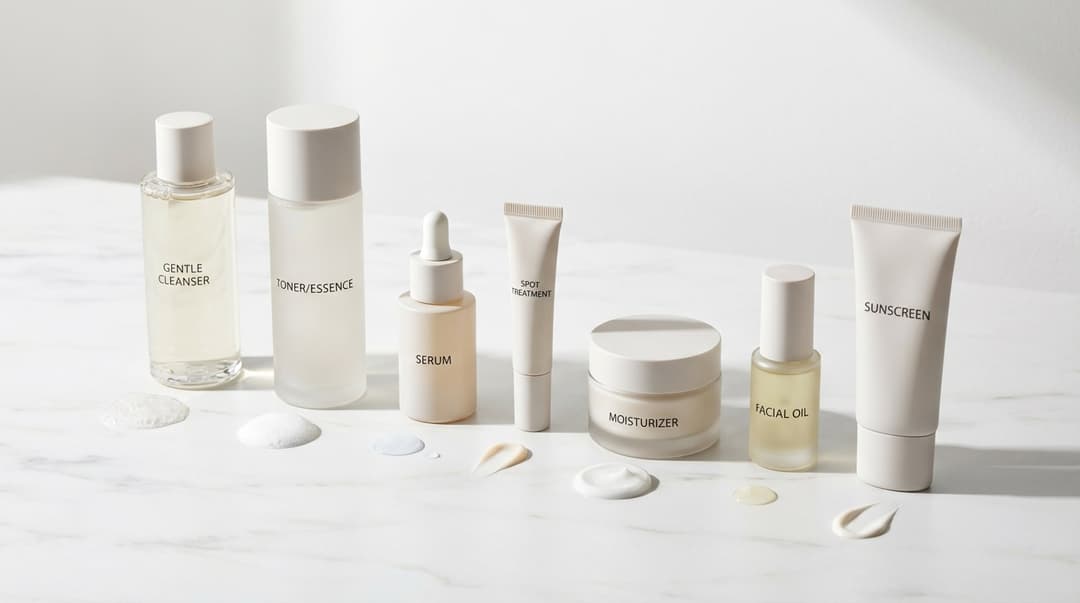
If you want the simple answer, the correct order is usually:
- Cleanser
- Toner or essence
- Serum
- Spot treatment
- Moisturizer
- Facial oil
- Sunscreen in the morning
That's the basic rule for how to layer skincare products, and honestly, it's the one I come back to most often with patients. The reason is pretty straightforward: lighter products absorb faster, while thicker ones form more of a seal on the skin. If you put a heavy cream on first, your watery serum may not get where it needs to go.
I've found that people often overcomplicate this. Your skin doesn't need 10 steps to look good. It needs the right products in the right order.
Why does skincare order matter?
Order matters because skincare isn't just about what you use. It's also about how well those ingredients can reach the skin.
Look, if you apply a rich moisturizer before a hydrating serum, you've basically created a barrier. That serum may sit on top, pill up, or just feel weird. Proper layering helps with:
- Absorption: Thin, water-based formulas get better access to the skin first.
- Performance: Active ingredients like vitamin C, niacinamide, and retinoids work best when applied correctly.
- Comfort: Good layering reduces heaviness, greasiness, and that annoying rolled-up product residue.
- Tolerability: Using strong treatments in the wrong order can increase stinging and irritation.
There's also a skin biology piece here. The outermost layer of skin, the stratum corneum, acts like a brick wall. Some ingredients can move through it more effectively than others, and your product order can either help or get in the way.
How to layer skincare products in the morning
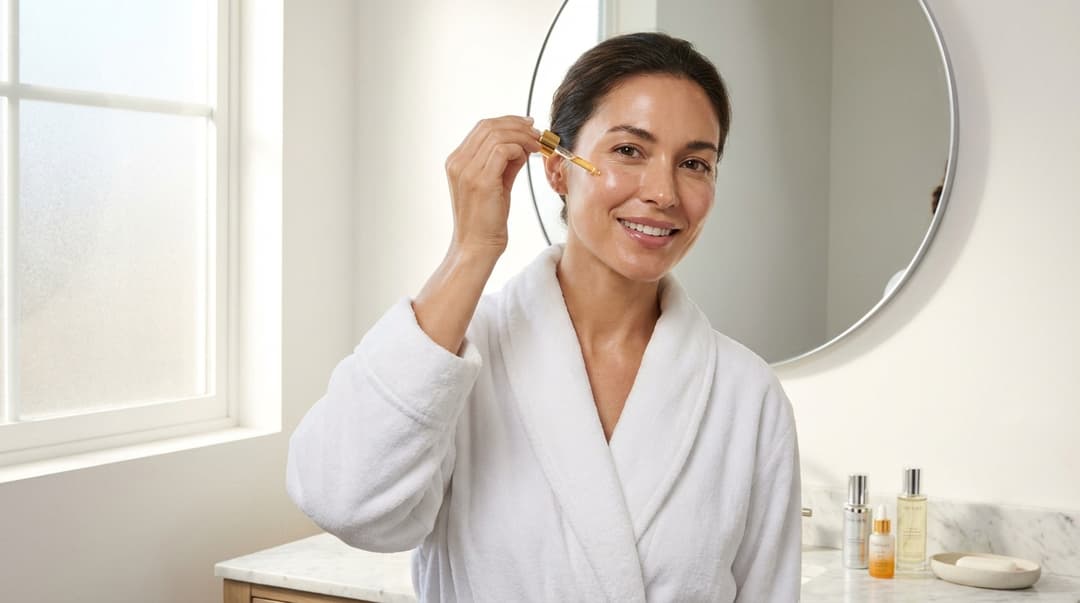
Morning skincare should focus on protection, hydration, and antioxidant support. You don't need your most intense treatment routine before 8 a.m.
Here is the ideal morning order:
- Cleanser
- Toner or essence
- Antioxidant serum like vitamin C
- Moisturizer
- Sunscreen
A few practical notes:
- If your skin is dry or sensitive, you may not need a foaming cleanser in the morning. A rinse with lukewarm water or a gentle cream cleanser can be enough.
- A vitamin C serum is a smart daytime step because it helps defend against free radical damage from UV light and pollution.
- Sunscreen is non-negotiable. It should be the last step in your morning skincare routine, applied generously. Most adults need about two finger lengths of sunscreen for the face and neck.
So, if you're wearing makeup, let sunscreen set for a minute or two first. That one little pause can really help prevent pilling.
How to layer skincare products at night

Nighttime is when most people use treatment products, so this is where layering gets a bit more nuanced. Your evening order usually looks like this:
- Cleanser
- Toner or essence
- Treatment serum
- Retinoid or spot treatment
- Moisturizer
- Facial oil, if needed
At night, your skin is in repair mode, and this is often the best time for ingredients like retinol, peptides, or exfoliating acids.
A few common examples:
- If you're using a hydrating serum with hyaluronic acid, apply it before moisturizer.
- If you're using retinol, apply it to dry skin after lighter serums and before moisturizer.
- If your skin gets irritated easily, try the sandwich method: moisturizer, retinoid, then another thin layer of moisturizer.
I've found that sensitive skin usually does better when you keep nighttime routines pretty boring. Boring is underrated in dermatology, honestly.
Which skincare ingredients should not be layered together?
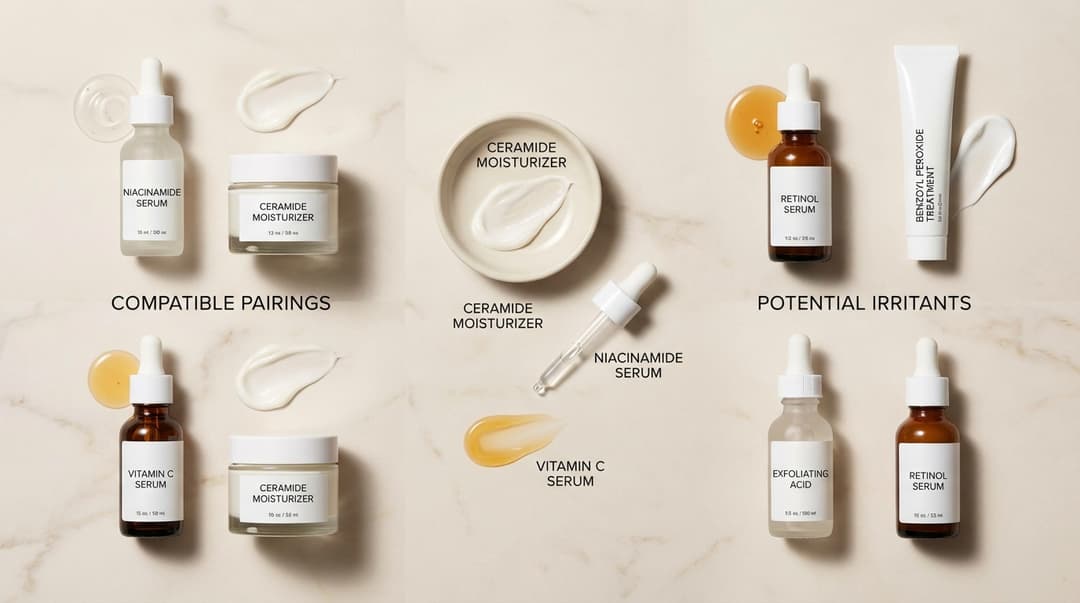
Some ingredients can be layered, but not always in the same routine, especially if your skin is reactive. The issue isn't that these combinations are universally forbidden. It's that they can be too irritating when stacked.
Be careful with these pairings:
- Retinol + exfoliating acids: This can lead to redness, peeling, and barrier disruption.
- Retinol + benzoyl peroxide: Benzoyl peroxide may deactivate some retinoids and can be very drying when paired.
- Multiple exfoliating acids together: Using glycolic acid, salicylic acid, and lactic acid in one routine is often overkill.
- Vitamin C + strong acids: Sometimes tolerated, sometimes not. It depends on the formula and your skin, but sensitive skin often hates this combo.
That said, some combinations work beautifully:
- Hyaluronic acid + pretty much anything
- Niacinamide + retinol
- Ceramides + active treatments
Honestly, the best rule is this: one strong active per routine is usually enough. If you're using retinol at night, save your exfoliating acid for another evening.
How long should you wait between skincare layers?
For most products, you don't need to wait 10 minutes between each step. That's one of the biggest myths I still hear.
A good general guideline:
- Wait about 30 seconds between lightweight layers if they absorb quickly.
- Wait 1 to 2 minutes before sunscreen or makeup if your products tend to pill.
- Apply retinoids to fully dry skin if you're prone to irritation.
The real goal is not the clock. It's the feel of the skin. If the last layer is still wet and slippery, give it a moment.
I've found that pilling usually happens for one of three reasons: you're using too much product, rubbing too hard, or layering formulas that don't play well together, like silicone-heavy products over tacky serums.
What are the biggest skincare layering mistakes?
Most layering mistakes are fixable, and thankfully, your skin usually tells you pretty quickly when something's off.
Here are the ones I see most:
- Applying products in the wrong order: Thick cream before serum is the classic one.
- Using too many actives at once: More isn't better when your barrier is irritated.
- Skipping sunscreen: Especially if you're using retinoids or exfoliating acids.
- Using too much product: A pea-size amount of retinoid and a few drops of serum are usually enough.
- Rubbing aggressively between layers: Pressing or smoothing gently is better.
- Ignoring your skin type: Oily skin may prefer gel moisturizer, while dry skin often needs a cream.
So, if your routine stings, pills, or suddenly stops working, simplify first. Strip it back to cleanser, moisturizer, and sunscreen, then add treatments one at a time.
How to build a simple routine that actually works
If you're still not sure how to layer skincare products without overthinking it, start here.
Simple morning routine:
- Gentle cleanser
- Vitamin C serum or hydrating serum
- Moisturizer
- Sunscreen
Simple night routine:
- Cleanser
- Retinoid or hydrating serum
- Moisturizer
That's it. You can always add extras later, but a simple routine done consistently beats a complicated one you abandon after four days.
Look, skincare should help your skin feel better, not turn your bathroom counter into a chemistry lab. If a product order feels confusing, go back to the core rule: thin to thick, sunscreen last in the morning.
The Bottom Line
When it comes to how to layer skincare products, the easiest rule is to apply formulas from lightest to heaviest, saving sunscreen for the final morning step. Keep potent actives separate when needed, give layers a few seconds to settle, and don't assume more products means better skin.
Honestly, the best routine is the one you'll actually stick with. Start simple, watch how your skin responds, and adjust from there.
If you want more practical skincare advice and smart product picks, sign up for Insider Beauty's weekly deals and updates.
Want more tips and exclusive beauty deals delivered to your inbox? Pop your email in the box below and join thousands of insiders who save big every week.