
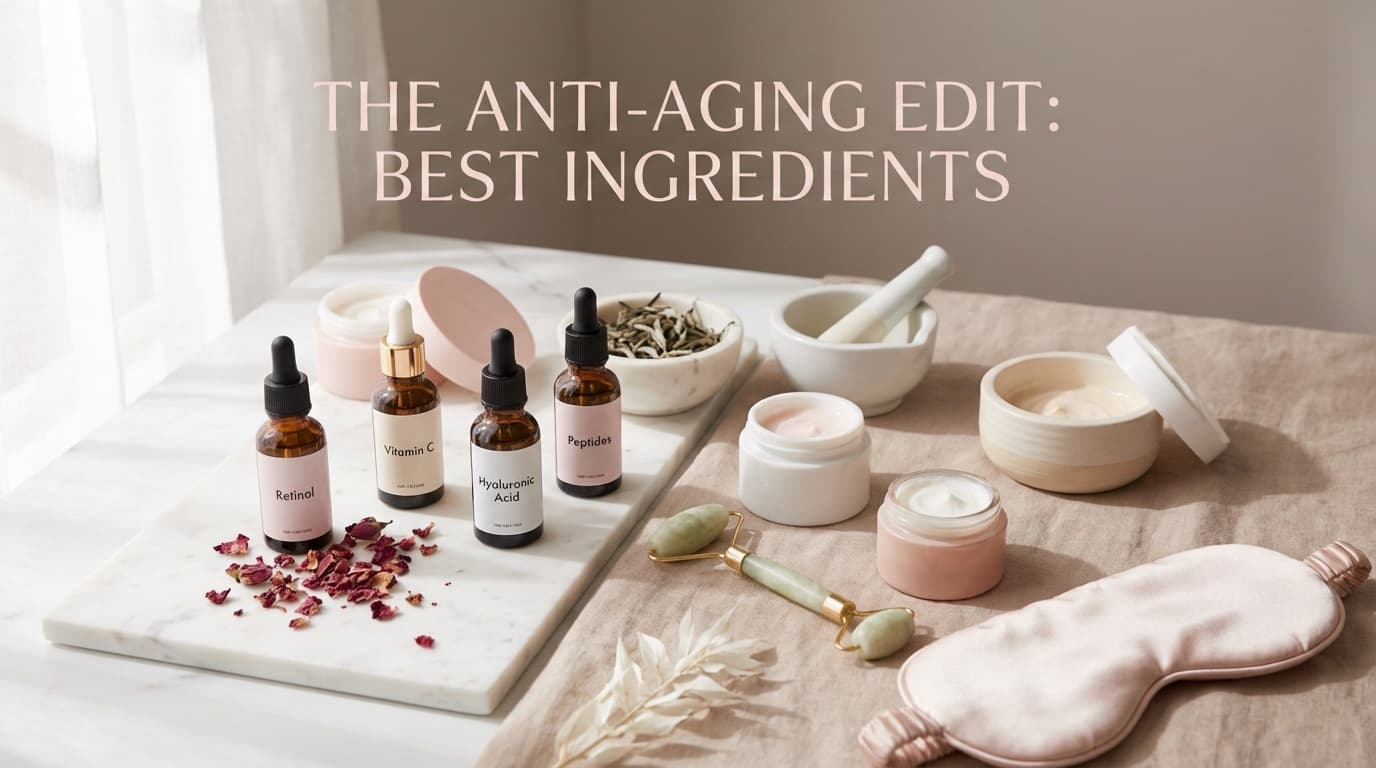
The best ingredients for anti-aging are retinoids, vitamin C, broad-spectrum sunscreen, niacinamide, peptides, and hyaluronic acid. These work because they target the big drivers of visible aging—collagen loss, UV damage, uneven pigment, dehydration, and slower cell turnover. Here's how each one helps and how to use them without irritating your skin.
Quick Takeaways
- Retinoids have the strongest evidence for improving fine lines, texture, and collagen production.
- Sunscreen is non-negotiable if you want to prevent wrinkles, dark spots, and loss of firmness.
- Vitamin C and niacinamide help brighten skin and support a more even tone.
- Peptides and hyaluronic acid can improve hydration and make skin look smoother and bouncier.
- The best ingredients for anti-aging work better when used consistently in a simple routine, not all at once.
What are the best ingredients for anti-aging?
If you want the short answer, these are the ingredients I recommend most often in clinic and in real life:
- Retinoids
- Broad-spectrum sunscreen
- Vitamin C
- Niacinamide
- Peptides
- Hyaluronic acid
- Alpha hydroxy acids
Look, not every ingredient has the same level of evidence. Some are stars, some are supportive players. I've found that people get the best results when they focus on a few proven options instead of layering 10 trendy serums and hoping for the best.
Why retinoids are still the gold standard
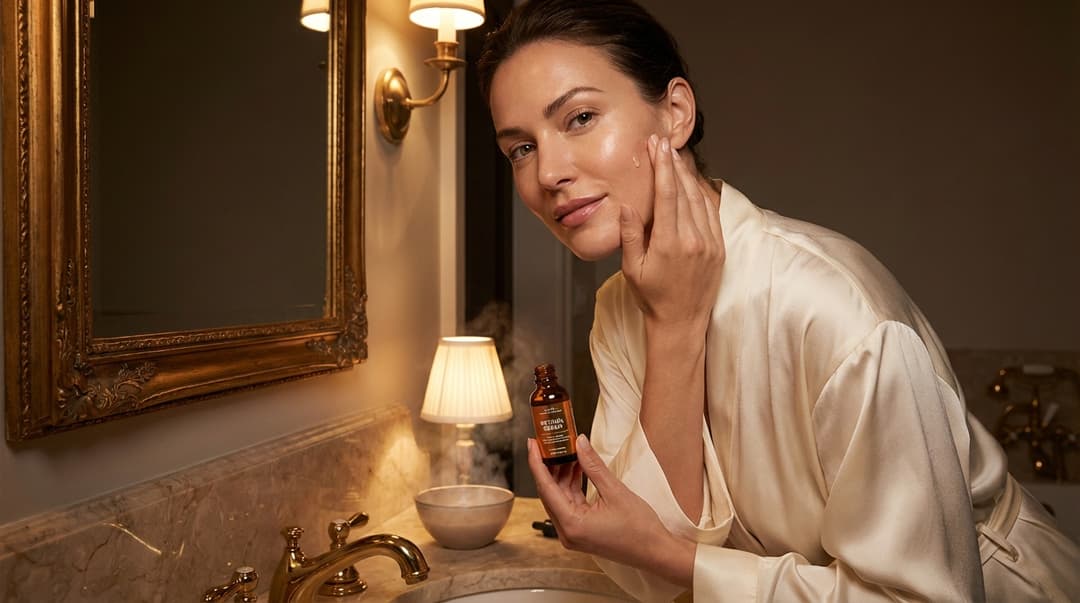
When people ask me about the best ingredients for anti-aging, retinoids are almost always at the top of the list. This group includes retinol, retinal, and prescription retinoic acid. They help speed up cell turnover, stimulate collagen production, and soften fine lines over time.
What retinoids can help with:
- Fine lines and wrinkles
- Rough texture
- Enlarged-looking pores
- Uneven tone
- Mild loss of firmness
- Breakouts at the same time, which is a nice bonus
Honestly, retinoids work, but they can be irritating if you rush them. Start with a retinol serum or cream 2 nights a week, then slowly build up. Use a pea-sized amount for the whole face. More is not better here.
A few practical tips:
- Apply retinoids to dry skin to reduce stinging.
- Follow with a moisturizer if you're prone to dryness.
- If your skin is sensitive, try the "sandwich" method: moisturizer, retinoid, moisturizer.
- Expect results in about 8 to 12 weeks, with collagen benefits building over months.
Why sunscreen is the most effective anti-aging product
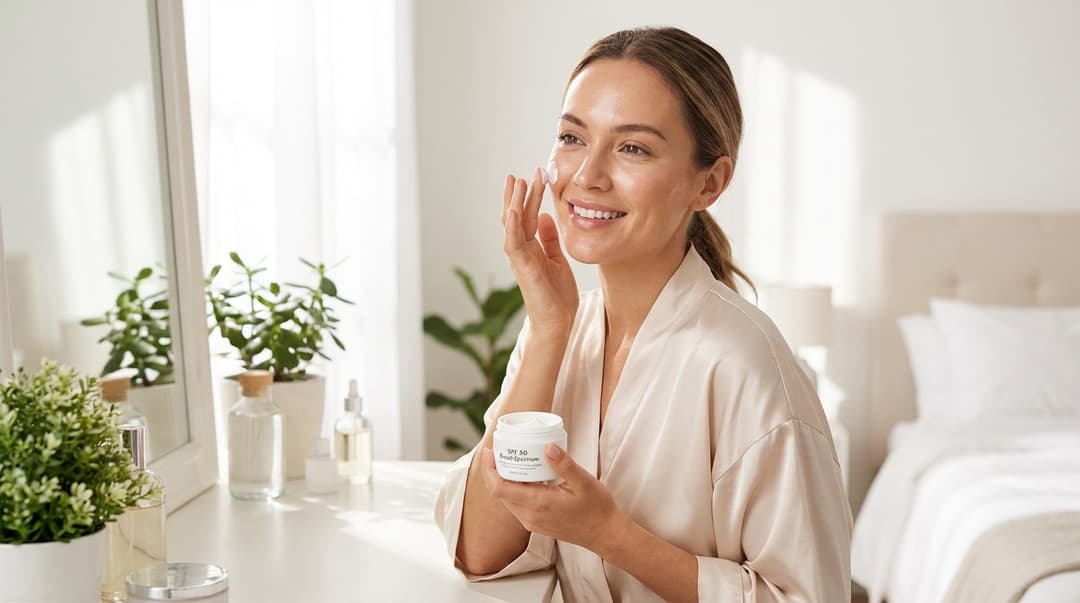
So, this is the part people don't always want to hear: the fanciest serum won't do much if you're skipping sunscreen. Up to 80% of visible facial aging is linked to UV exposure in lighter skin tones, and photoaging is still a major factor across all skin types.
A broad-spectrum SPF 30 or higher helps prevent:
- Fine lines
- Brown spots
- Redness from cumulative sun damage
- Sagging caused by collagen breakdown
- Worsening of melasma and post-acne marks
If you're serious about anti-aging, use sunscreen every morning, even when it's cloudy or you're mostly indoors near windows. I usually tell patients to think of SPF as their daily insurance policy for collagen.
Best product types to consider:
- Mineral sunscreen if your skin is sensitive
- Lightweight gel sunscreen if you hate heavy textures
- Moisturizer with SPF for convenience, though you still need enough product
How vitamin C helps with wrinkles and dark spots
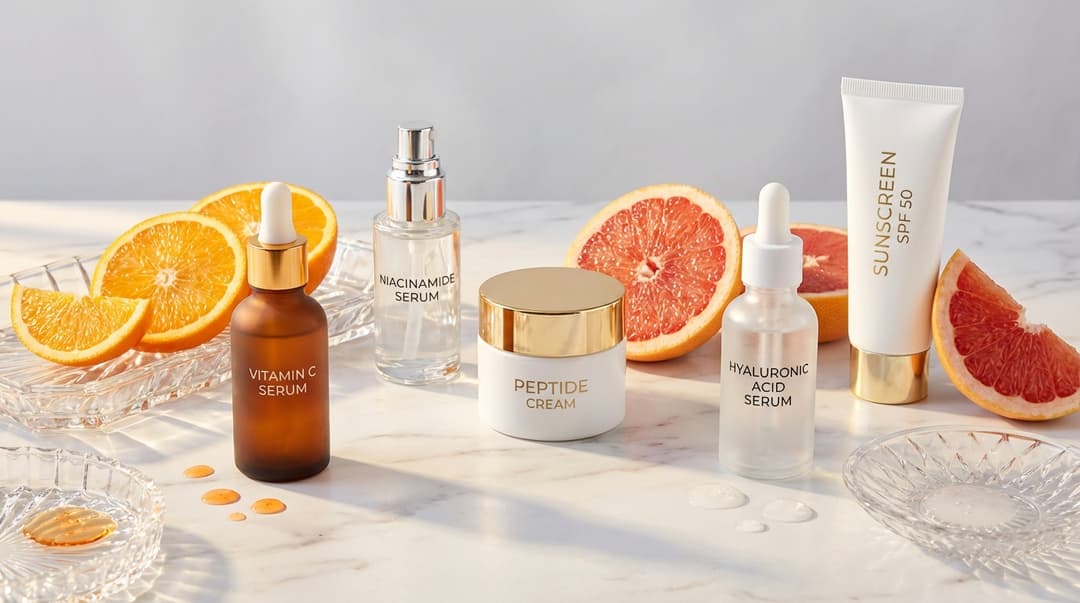
Vitamin C is one of my favorite morning ingredients because it pulls double duty. It helps defend against free radical damage from UV and pollution, and it can brighten uneven pigmentation. That's why it's often part of the best ingredients for anti-aging conversation.
The form matters. L-ascorbic acid is the most studied, typically used in concentrations around 10% to 20%. It can help improve dullness, support collagen formation, and fade post-inflammatory marks over time.
How to use it well:
- Apply vitamin C in the morning after cleansing.
- Follow with moisturizer if needed.
- Always finish with sunscreen.
- Store it away from heat and light, since it can oxidize.
If a vitamin C serum stings, don't force it. Some people do better with gentler derivatives or by using it every other morning. A little trial and error is normal.
Is niacinamide good for anti-aging?
Yes—niacinamide is one of the most versatile, well-tolerated ingredients out there. It's a form of vitamin B3, and it helps strengthen the skin barrier, reduce water loss, calm inflammation, and improve uneven tone. It can also soften the appearance of pores and fine lines.
What I like about niacinamide is that it plays well with almost everything. If you're new to active ingredients or your skin gets cranky fast, this is often a smart place to start.
Benefits of niacinamide:
- Supports the skin barrier
- Helps reduce blotchiness and discoloration
- Improves hydration indirectly by reducing water loss
- May help regulate oil in acne-prone skin
- Usually causes less irritation than stronger actives
A niacinamide serum in the 2% to 5% range is often enough. Higher percentages aren't always better and can sometimes trigger redness, weirdly enough.
Do peptides and hyaluronic acid actually work?
Yes, but with a little nuance. Peptides are short chains of amino acids that signal the skin to support repair processes. They're not as proven as retinoids, but they can be useful in a routine focused on firmness and hydration. Hyaluronic acid, meanwhile, is a humectant that draws water into the outer skin layers, making skin look plumper and less crepey.
These ingredients are especially helpful if your skin feels dry, tight, or a bit deflated.
Here's where they fit:
- Peptide cream or serum: Good for supporting smoother, more resilient-looking skin
- Hyaluronic acid serum: Best applied to slightly damp skin, then sealed in with moisturizer
- Barrier cream: Helpful when you're also using retinoids or acids
I've found that hyaluronic acid gets overhyped a bit, but when used correctly—on damp skin, under a cream—it really can make skin look fresher by the next morning.
Which exfoliating acids help with aging skin?
Alpha hydroxy acids, especially glycolic acid and lactic acid, can improve dullness, rough texture, and uneven tone by loosening dead skin cells on the surface. Used regularly, they can make fine lines look softer simply because skin reflects light better and feels smoother.
That said, more exfoliation is not more youthful. Overdoing acids can damage the barrier and leave skin red, flaky, and irritated.
A smart approach:
- Start with an AHA exfoliating toner or serum 1 to 2 nights per week
- Don't use it on the same night as a retinoid when you're just starting out
- Choose lactic acid if your skin is dry or sensitive
- Use glycolic acid if your skin is oilier and more resilient
If your skin burns, peels excessively, or stays red, back off. Anti-aging should make skin healthier-looking, not angry.
How to build an anti-aging routine that actually works
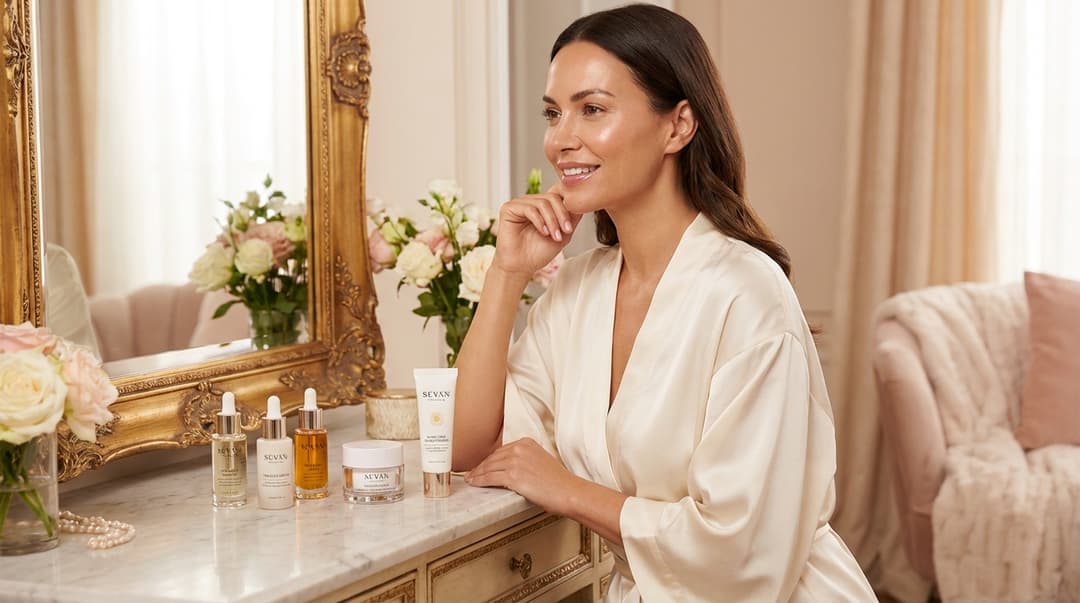
The best routine is the one you'll stick with. You do not need a 12-step lineup. For most people, a few evidence-based products used consistently beat a crowded shelf.
A simple routine you can start today:
- Cleanse with a gentle, non-stripping cleanser.
- In the morning, apply vitamin C or niacinamide.
- Use a moisturizer suited to your skin type.
- Finish every morning with broad-spectrum SPF 30 or higher.
- At night, use a retinoid 2 to 3 times weekly to start.
- Add hyaluronic acid or peptides if your skin needs extra hydration.
- Exfoliate with an AHA once weekly if texture or dullness is a concern.
A few mistakes I see all the time:
- Starting retinol, acids, and vitamin C all in the same week
- Using too much product
- Skipping sunscreen while using active ingredients
- Chasing irritation because you think it means the product is working
Look, healthy aging skin isn't about looking 22 forever. It's about protecting collagen, keeping the barrier strong, and choosing ingredients with real data behind them.
The Bottom Line
The best ingredients for anti-aging are the ones with strong evidence and consistent use behind them: retinoids, sunscreen, vitamin C, niacinamide, peptides, hyaluronic acid, and exfoliating acids. If you want the biggest payoff, start with sunscreen every morning and a retinoid at night, then build around that based on your skin's needs.
If you like practical skincare advice and want smart picks sent straight to your inbox, sign up for Insider Beauty's weekly deals.
Want more tips and exclusive beauty deals delivered to your inbox? Pop your email in the box below and join thousands of insiders who save big every week.