
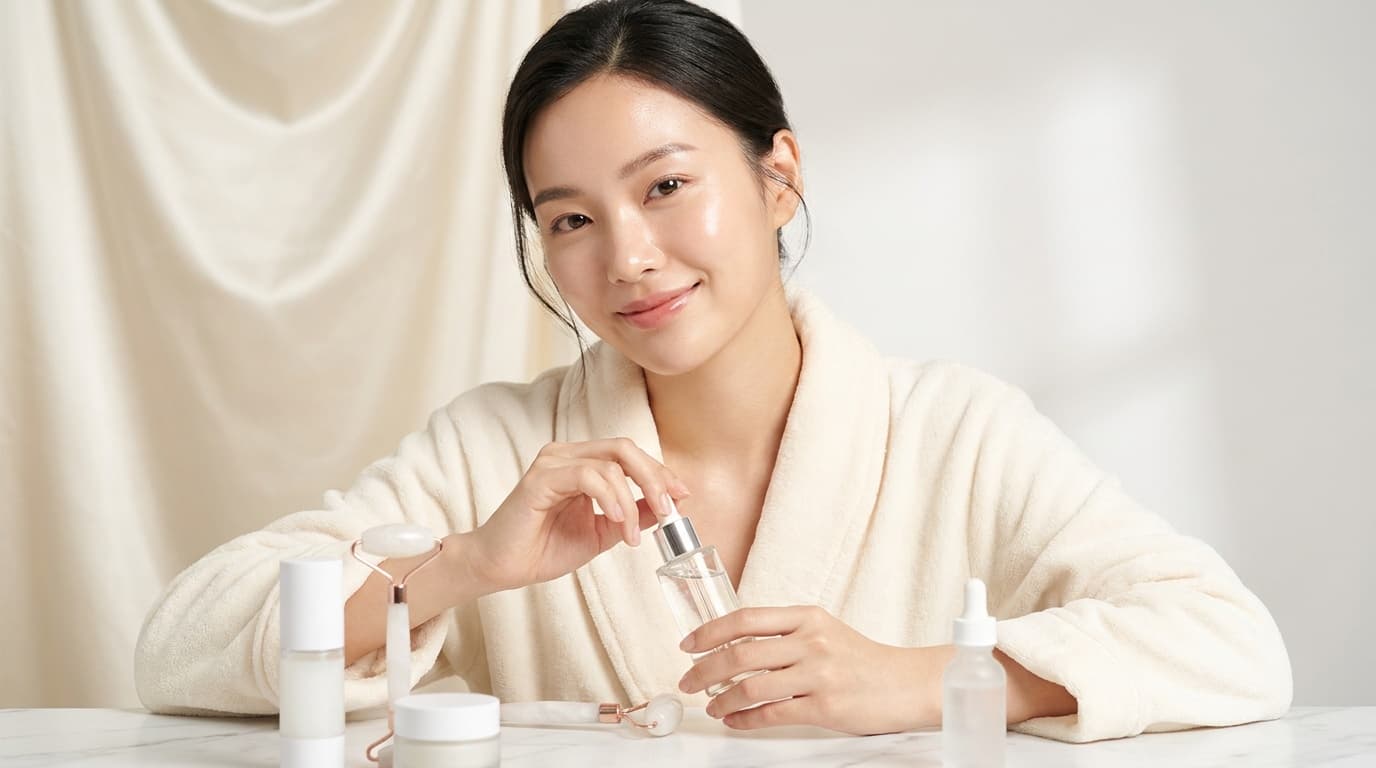
A korean skincare routine for beginners should start simple: cleanser, moisturizer, sunscreen, and one hydrating step. That approach works because Korean skincare is less about doing 10 steps every day and more about layering gentle, skin-supporting products in the right order.
Quick Takeaways
- Start with 4 core steps: cleanser, moisturizer, sunscreen, and a hydrating toner or essence
- Add one new product at a time so you can spot irritation fast
- Morning and night routines should be different: sunscreen in the morning, deeper cleansing at night
- Hydration matters more than complexity for most beginners
- Consistency beats quantity: a simple routine done daily works better than a shelf full of products
What is a korean skincare routine for beginners?

A korean skincare routine for beginners is a gentle, layered skincare method focused on hydration, barrier support, and prevention. Instead of relying on harsh scrubs or strong actives right away, it usually starts with lightweight products that help keep skin calm and balanced.
Honestly, this is where people get tripped up. They hear about the famous 10-step routine and assume they need a dozen products on day one. You don't. I've found that most beginners do best with 4 to 6 steps, not 10.
The usual order looks like this:
- Cleanser
- Toner or essence
- Serum or treatment
- Moisturizer
- Sunscreen in the morning
At night, some people also use an oil cleanser before their regular cleanser if they're wearing makeup, sunscreen, or live in a polluted area.
How many steps do beginners really need?
The sweet spot for a beginner Korean skincare routine is usually 4 steps in the morning and 4 to 5 at night. That's enough to cover the basics without overwhelming your skin.
Here's a practical starter routine:
- Gentle cleanser: Use a low-foaming or cream cleanser that doesn't leave skin tight.
- Hydrating toner or essence: This adds water back into the skin and helps the next steps spread more evenly.
- Moisturizer: Choose a gel-cream if you're oily or a richer cream if you're dry.
- Sunscreen: Use SPF 30 or higher every morning.
- Optional evening treatment: Add a serum with niacinamide, centella asiatica, or hyaluronic acid if your skin tolerates it.
So, yes, you can absolutely do Korean skincare without turning your bathroom into a mini lab.
What order should you apply Korean skincare?
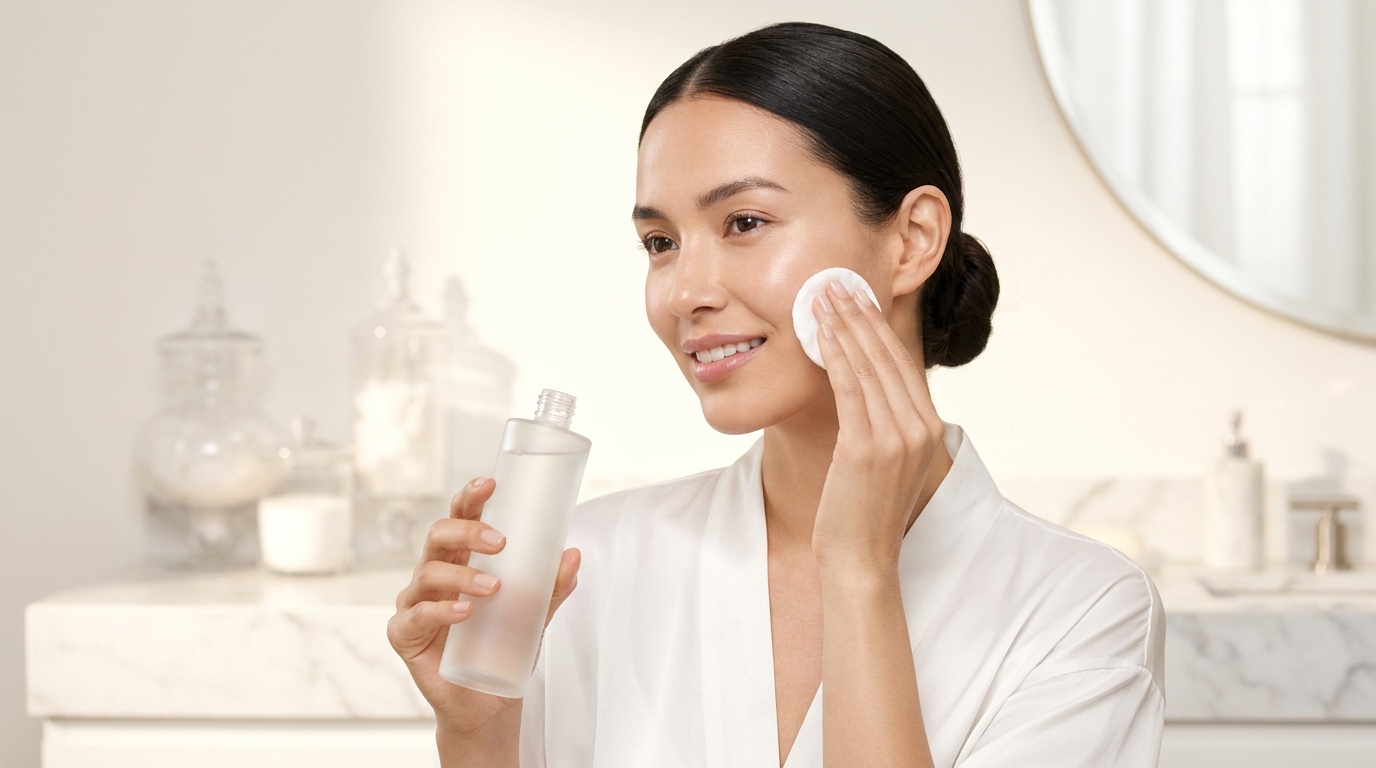
The general rule is thinnest to thickest texture. Lightweight liquids go on first, and heavier creams go last.
For morning:
- Cleanser
- Toner
- Essence or serum
- Moisturizer
- Sunscreen
For night:
- Oil cleanser
- Water-based cleanser
- Toner
- Essence or serum
- Moisturizer
Look, the order matters because it affects absorption. A lightweight essence won't do much if you slap it on over a thick cream. And sunscreen should always be the final step in the morning because it forms the protective layer.
A quick note on exfoliation: beginners should only exfoliate 1 to 2 times per week, max. Over-exfoliation is one of the most common reasons I see people end up with redness, stinging, and that weird shiny-but-dehydrated look.
Which products should beginners buy first?
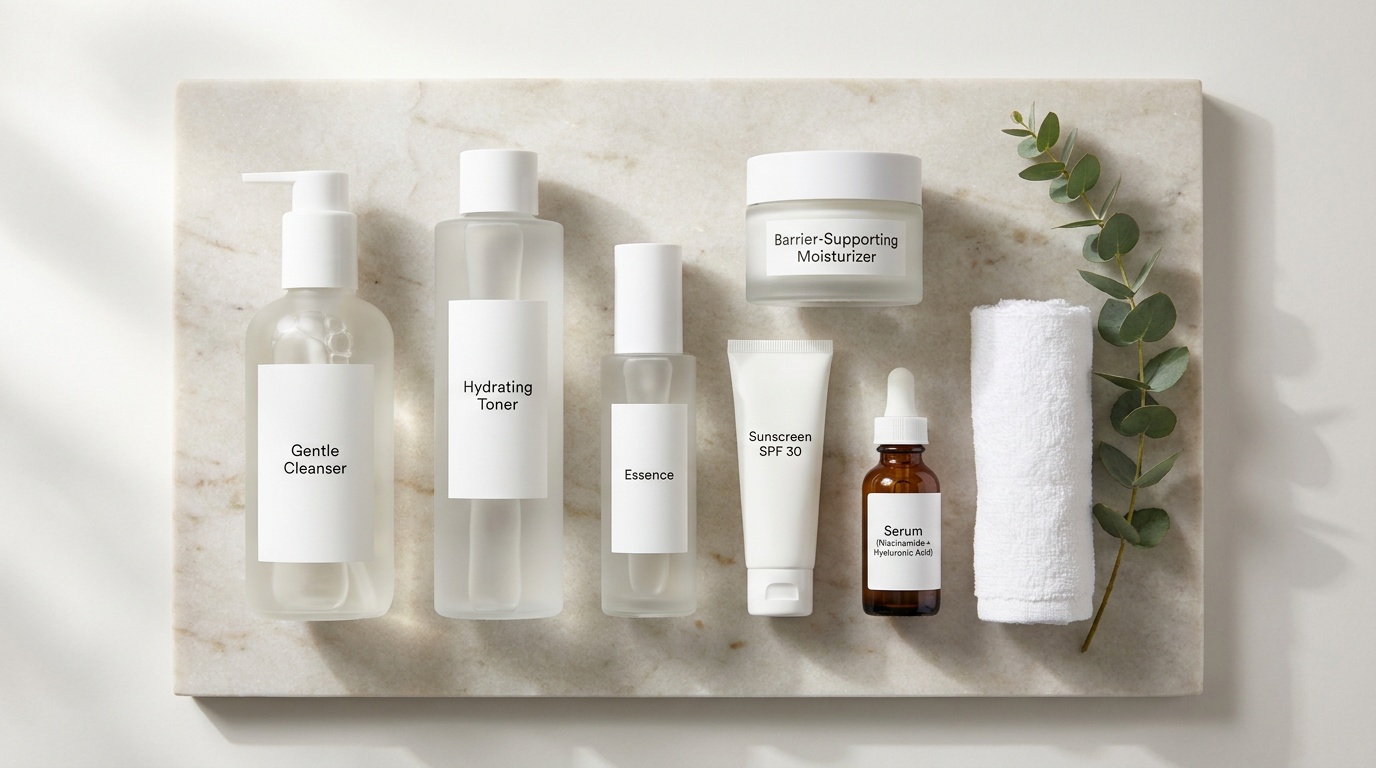
If you're building a korean skincare routine for beginners from scratch, buy the basics first. Don't start with trendy masks, peeling pads, or three different serums.
Focus on these product types:
- Gentle water-based cleanser: Best for removing sweat, oil, and overnight buildup
- Hydrating toner or essence: Great for adding moisture without heaviness
- Barrier-supporting moisturizer: Look for ingredients like ceramides, glycerin, and squalane
- Broad-spectrum sunscreen: SPF 30 or higher, every single morning
- Optional treatment serum: Niacinamide for oil control, hyaluronic acid for dehydration, or centella for sensitive skin
I've found that ingredients matter more than hype. A boring moisturizer with ceramides can do way more for your skin than a flashy product packed with fragrance and glittery marketing.
How do you choose products for your skin type?
A beginner Korean skincare routine works best when it's matched to your skin type, not someone else's TikTok shelf.
Here's a simple breakdown:
- Oily skin: Look for gel cleansers, lightweight toners, oil-free or gel moisturizers, and niacinamide-based serums
- Dry skin: Choose cream cleansers, richer essences, creams with ceramides, and hydrating ingredients like glycerin and hyaluronic acid
- Sensitive skin: Stick with fragrance-free formulas and soothing ingredients like centella asiatica, panthenol, and madecassoside
- Acne-prone skin: Use non-comedogenic moisturizers, gentle cleansers, and consider salicylic acid 1 to 2 times weekly if tolerated
- Combination skin: Use lightweight layers and adjust moisturizer amount based on drier or oilier areas
So if your skin feels tight after cleansing, that's usually not a sign your cleanser is working better. It's often a sign it's too harsh.
What mistakes should beginners avoid?
This is where a lot of routines go sideways. Korean skincare is known for being gentle, but beginners still make a few classic mistakes.
Avoid these:
- Starting too many products at once: If you react, you won't know what's causing it
- Using exfoliants too often: More isn't better, especially with acids
- Skipping sunscreen: This cancels out a lot of your progress, especially if you're using brightening or exfoliating products
- Chasing glass skin too fast: Healthy skin usually gets there through barrier repair and consistency, not aggressive routines
- Ignoring patch testing: Test a new product on your jawline or behind your ear for a few days first
Honestly, the skin barrier is the whole story more often than people realize. When your barrier is healthy, skin tends to look smoother, calmer, and more even. When it's irritated, everything feels harder.
How long does it take to see results?
Most people notice better hydration and softness within 1 to 2 weeks of a consistent routine. For brighter tone, smoother texture, or fewer breakouts, it often takes 4 to 8 weeks. Pigmentation and acne marks can take longer, sometimes 8 to 12 weeks or more.
That's normal. Skin turnover doesn't happen overnight.
A few signs your routine is working:
- Skin feels less tight after washing
- Makeup applies more smoothly
- Redness looks calmer
- Flaky patches improve
- Oil production may look more balanced over time
A few signs you should scale back:
- Burning or stinging that doesn't settle quickly
- New widespread redness
- Peeling that feels painful, not just mild dryness
- Breakouts that worsen after multiple new products
If that happens, go back to the basics: cleanser, moisturizer, sunscreen. Then rebuild slowly.
A simple 7-day beginner plan
If you want a no-stress way to start, try this:
- Days 1-3: Use cleanser, moisturizer, and sunscreen only.
- Days 4-5: Add a hydrating toner or essence once daily.
- Days 6-7: If skin feels good, use the hydrating step morning and night.
- Week 2: Introduce one serum if needed.
- Week 3 and beyond: Consider exfoliation once weekly only if your skin is stable.
I've found that easing in like this saves people a lot of drama. Less irritation, less guessing, better odds you'll actually stick with it.
The Bottom Line
A korean skincare routine for beginners doesn't need 10 steps to work. Start with gentle cleansing, hydration, moisturizer, and daily sunscreen, then add treatments slowly based on your skin type and goals.
So if you're new to Korean skincare, keep it boring at first. Really. That's usually the smartest move. Once your skin is calm and consistent, you can build from there without wrecking your barrier.
For more smart skincare tips and a few really good finds, sign up for Insider Beauty's weekly deals.
Want more tips and exclusive beauty deals delivered to your inbox? Pop your email in the box below and join thousands of insiders who save big every week.