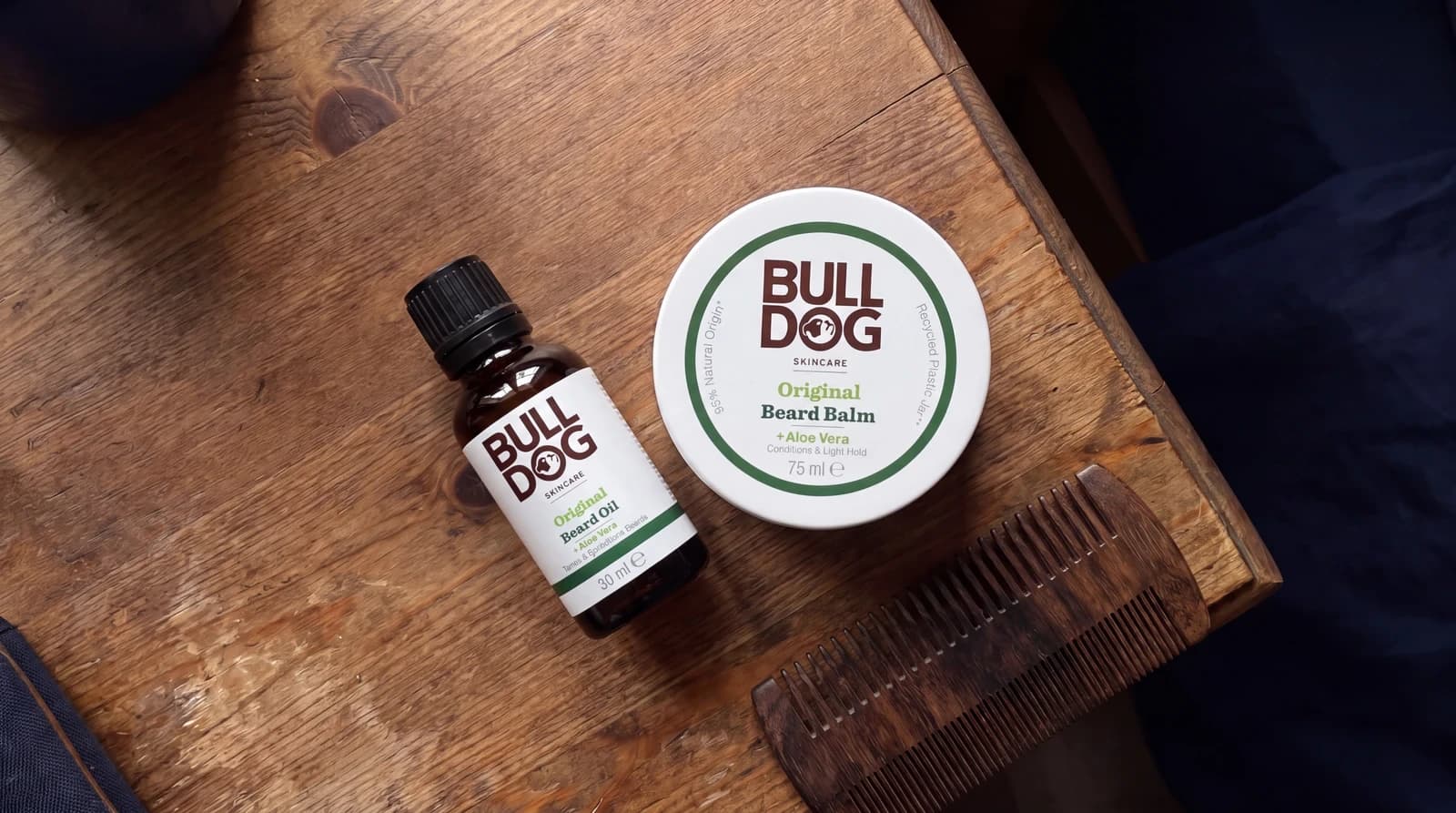
The catch is that “beard balm” isn't a precise formula description. Some are waxier styling products; Bulldog's Original is a water-based cream with a light-hold claim. Read the specific product, not just the category name.
Two real examples
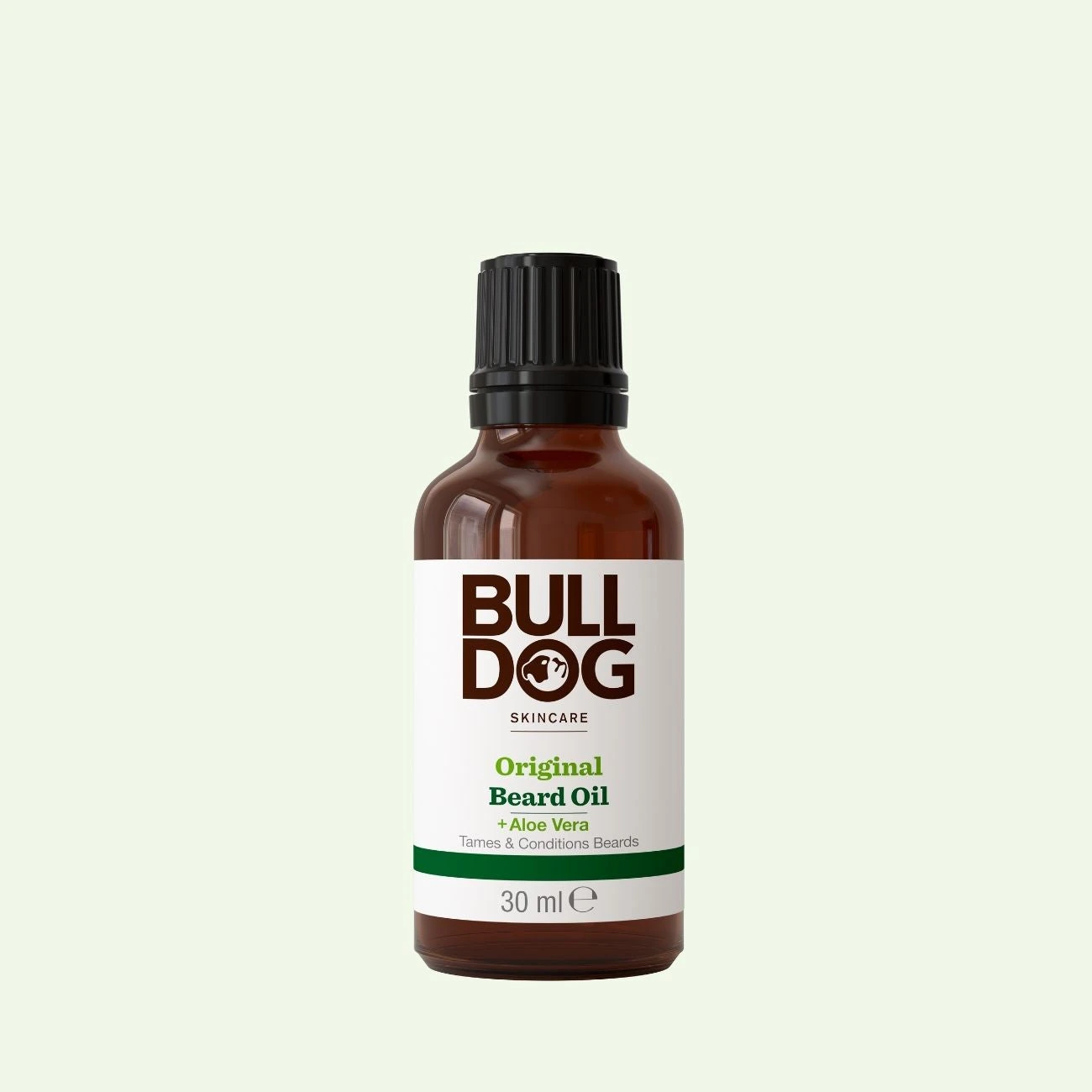
| Bulldog Original Beard Oil | Bulldog Original Beard Balm | |
|---|---|---|
| Size | 30ml | 75ml |
| UK price checked | £3.68 promotional; £5.50 crossed out | £8 |
| Cost per 10ml at selling price | £1.23 | £1.07 |
| Beginning of ingredient list | Sunflower oil, sweet almond oil | Water, glycerin |
| Brand's stated purpose | Conditioning, taming and shine | Conditioning and light hold |
| Fragrance | Present | Present |
Prices were checked on 29 October 2026, before delivery. Formula and price sources: Original Beard Oil and Original Beard Balm.
These make a useful example because the formulas differ clearly. They don't prove that every oil and every balm follow exactly the same pattern.
Decide whether you need conditioning or hold
I'd first separate rough-feeling beard hair from a beard that won't sit in the shape I want. Buying a stronger styling product to answer the first complaint may leave me with a firmer beard without answering why I wanted a new product.
The oil makes sense to consider for conditioning. The balm makes sense to consider if light control is also part of the brief. “Light” matters: I wouldn't buy this particular cream expecting the grip of a firm moustache wax.
There is no need to begin with both. Try the one that matches the main job, then decide whether anything is actually missing. An oil, balm and wax all bought together can leave you with three overlapping products and little idea which one you prefer.
Your skin gets a vote
The AAD's beard-care guidance distinguishes between skin types: beard oil for normal or dry skin, beard conditioner for acne-prone skin, and a fragrance-free, non-comedogenic moisturiser for sensitive skin. It also advises using oil or conditioner sparingly and distributing it through the beard. AAD beard-care guidance.
That is a more useful starting point than deciding that a longer beard automatically needs more oil. The skin underneath still has to get on with the product. If fragrance is a known problem, neither of these two Bulldog Original products would be my first recommendation.
I wouldn't assume that a moisturiser is non-comedogenic just because it is fragrance-free, either. Those are separate label checks. A favourite face cream might be suitable, but read the claims and ingredient list rather than transferring them from a different product.
Why the balm isn't simply thick oil
Bulldog's balm begins with water and glycerin, and includes ingredients such as cetearyl alcohol and shea butter. The oil begins with plant oils. That makes “use balm when you want the same oil but thicker” an inadequate description of this pair.
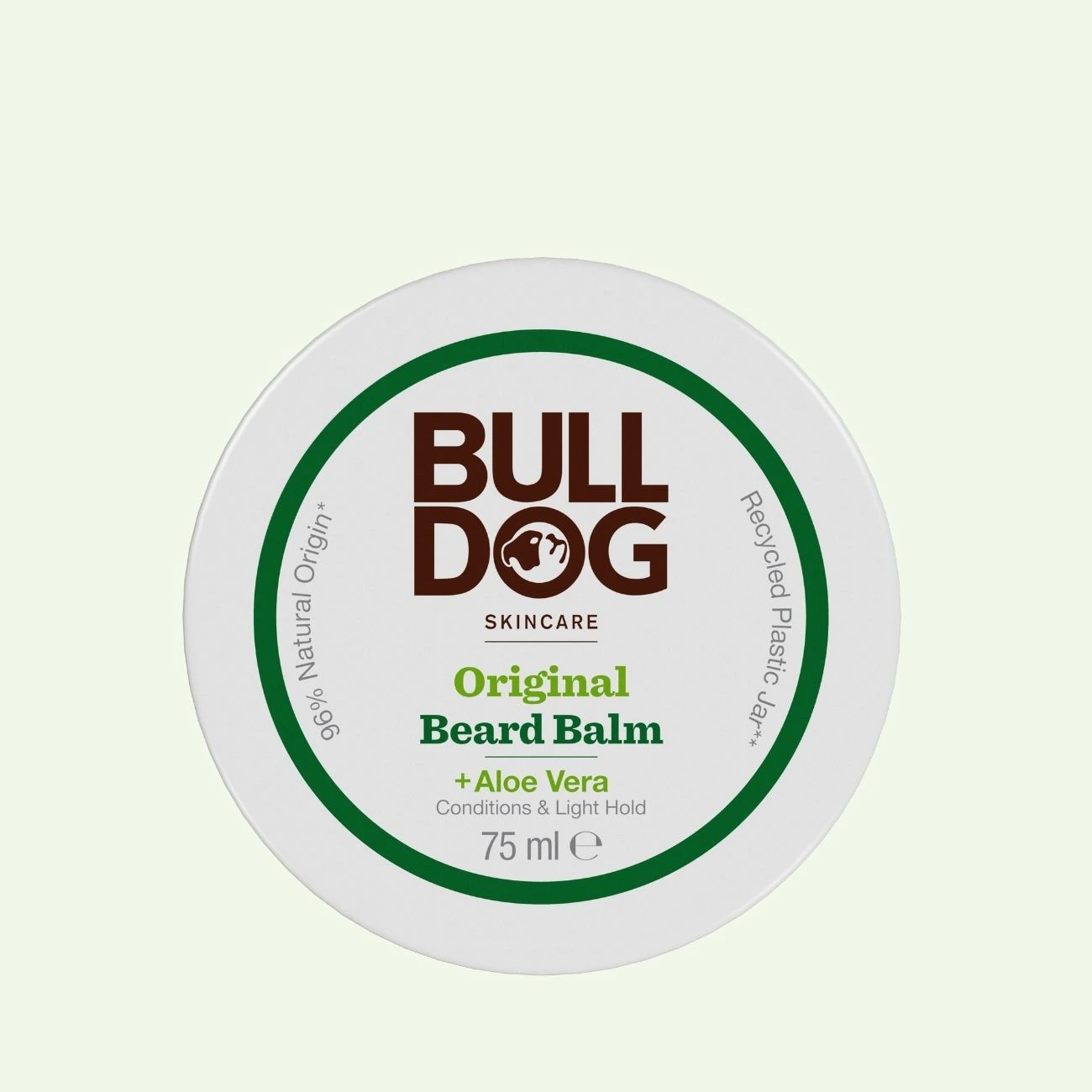
I'd choose the cream format if that was the texture I wanted to try and the light-hold claim matched the job. I'd choose oil if I specifically wanted an oil. After that, I'd judge how the beard feels and whether the finish gives me the control I wanted.
A small amount is a more useful starting point than a universal drop count. Beard length, density and the product's dispenser differ. Use the brand's directions, spread it through the beard and see whether more is needed before dispensing another generous amount.
The cheaper bottle isn't the cheaper quantity
The oil costs less at checkout but contains less than half as much product. At the checked promotion it is about £1.23 per 10ml, compared with £1.07 for the balm. At the oil's £5.50 crossed-out price, it is about £1.83 per 10ml.
Those figures describe pack value, not cost per application. A millilitre of oil and a millilitre of cream are not necessarily the amounts you would use for the same beard. I'd avoid declaring the balm the cheaper daily routine without measuring the actual dose.
When itch deserves a different answer
An itchy beard is not automatically asking for more oil. The AAD discusses several beard problems separately, including dandruff, ingrown hairs and acne. Persistent symptoms deserve that distinction rather than being grouped together under “dry beard”. AAD guide to common beard problems.
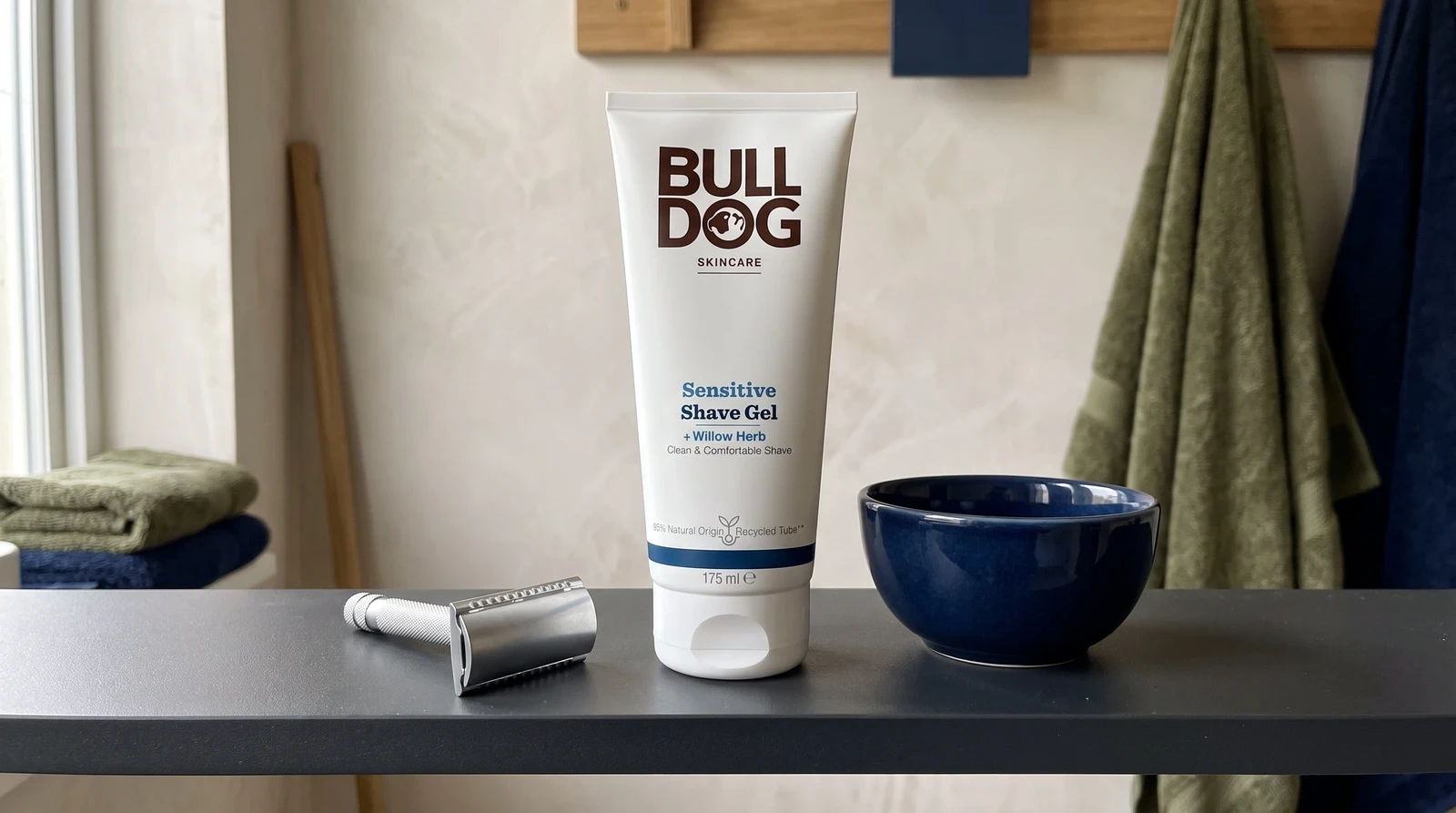
If the trouble is concentrated where you shave the neckline, the razor-bump guide is a better next read than another product comparison. Neither oil nor balm is being recommended here as a treatment for hair loss, patchy growth or infection.
How this guide was researched
We compared two current UK formulas, their stated uses and dated prices, alongside AAD advice. No growth test, application test or universal category ranking is claimed. The examples explain the choice; they don't require a two-product purchase.