
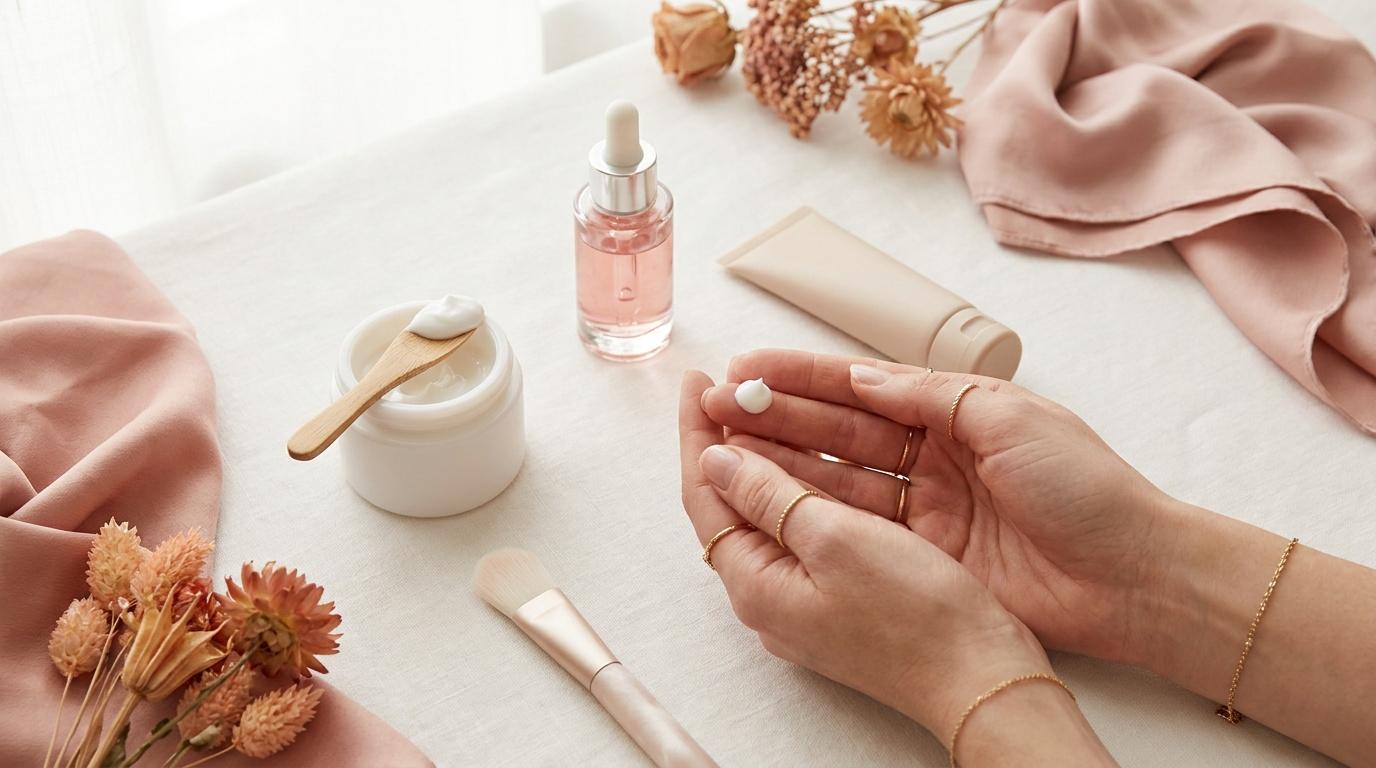
How much sunscreen to use on face: apply about 1/4 teaspoon for your face alone, or roughly 1/2 teaspoon for your face, neck, and ears together. That amount helps create the even film used during SPF testing, while applying less can leave you with significantly less protection than the number on the label.
I punti essenziali
- Face only: Use approximately 1/4 teaspoon of sunscreen.
- Face, neck, and ears: Plan on roughly 1/2 teaspoon total.
- Daily protection: Choose broad-spectrum SPF 30 or higher.
- Outdoor reapplication: Reapply at least every two hours and after swimming, sweating, or towel-drying.
- Even coverage matters: Apply sunscreen in two thin layers if one generous layer feels difficult to blend.
How Much Sunscreen to Use on Face Each Day?
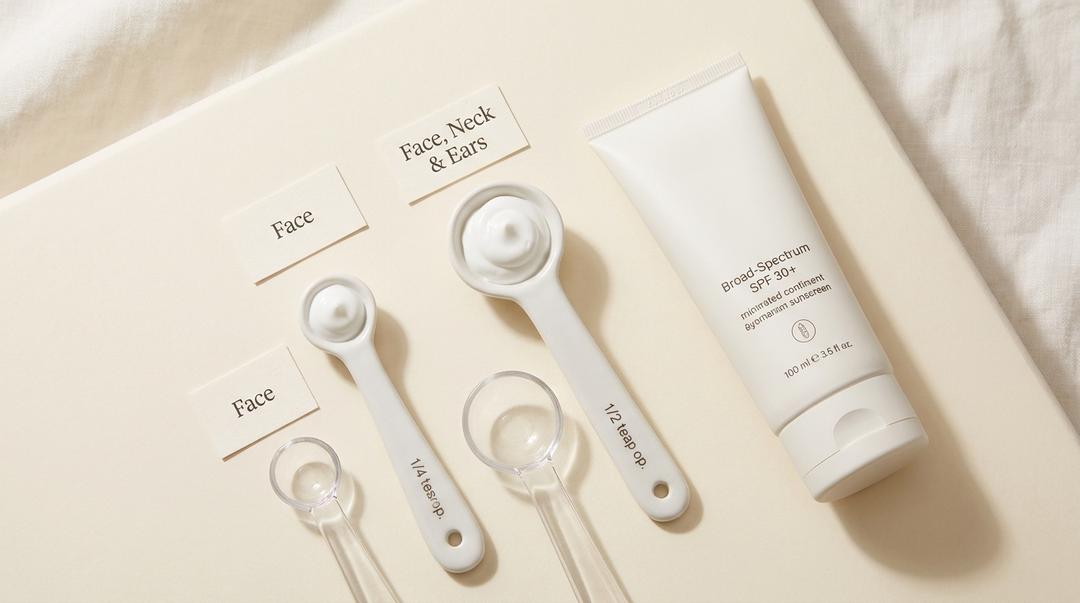
The practical answer to how much sunscreen to use on face is around 1/4 teaspoon, equal to approximately 1.2 milliliters. If you're covering your neck and ears too—and you should when they're exposed—use closer to 1/2 teaspoon in total.
These amounts aren't arbitrary. Sunscreen SPF testing generally uses 2 milligrams of product per square centimeter of skin. Most people apply far less in real life, which means an SPF 30 product may not deliver its labeled protection when spread too thinly.
Your exact needs can vary slightly based on face size, hairline, and how much of your neck is exposed. Think of 1/4 teaspoon as a useful baseline rather than a reason to stress over every drop. A little extra is generally better than leaving gaps around the temples or jaw.
Look, it may seem like a lot the first time you measure it. I've found that dividing the amount into two applications makes it much easier to wear without pilling or feeling greasy.
Also, SPF in foundation usually isn't enough on its own. You'd need to apply much more makeup than most of us realistically want to wear to reach the tested level of protection. Treat SPF makeup as a bonus layer, not your primary sunscreen.
How Do You Measure Face Sunscreen Correctly?
A measuring spoon is the clearest way to learn what the correct amount looks like. You don't have to measure forever; doing it a few times helps train your eye.
- Dispense 1/4 teaspoon of sunscreen for your face into a clean palm or dedicated measuring spoon.
- Dot it across your forehead, cheeks, nose, chin, temples, and jawline rather than placing the entire amount in one spot.
- Blend the first half into a thin, even layer.
- Apply the remaining half over the same areas to reinforce coverage and catch missed spots.
- Measure additional sunscreen for your neck, ears, and upper chest when those areas are exposed.
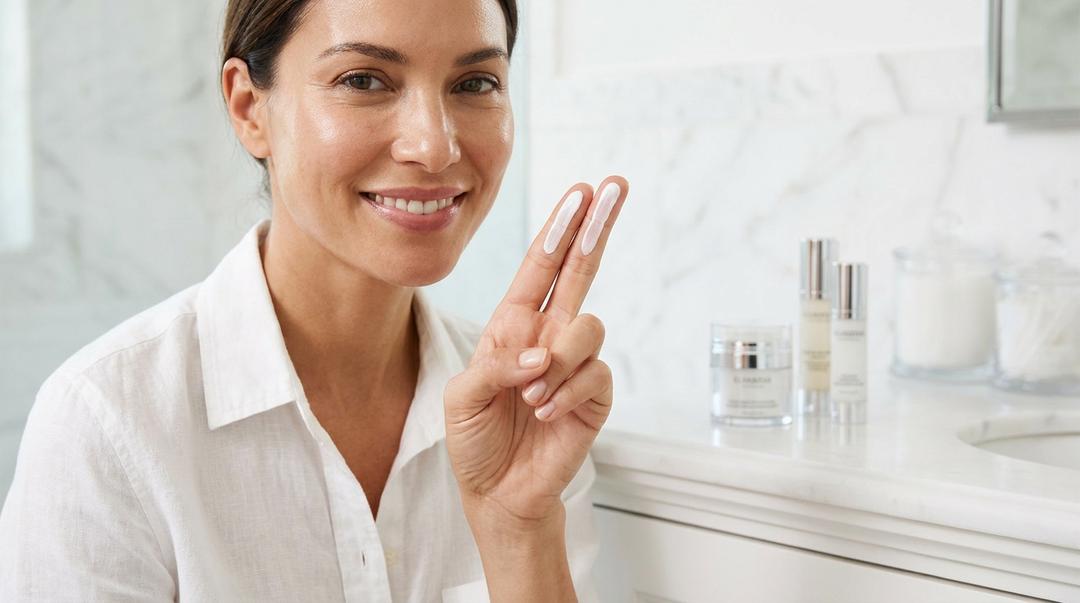
La two-finger method is a convenient alternative for lotion-like formulas. Dispense a strip of sunscreen along the length of your index finger and another along your middle finger. Because nozzle sizes and product textures vary, check this method against 1/4 teaspoon at least once. Add more separately for your neck and ears as needed.
Very runny SPF fluids can produce narrow finger strips, while thick creams may create larger ones. That's why volume is a more dependable guide than finger length alone.
Where Should You Apply Sunscreen on Your Face?
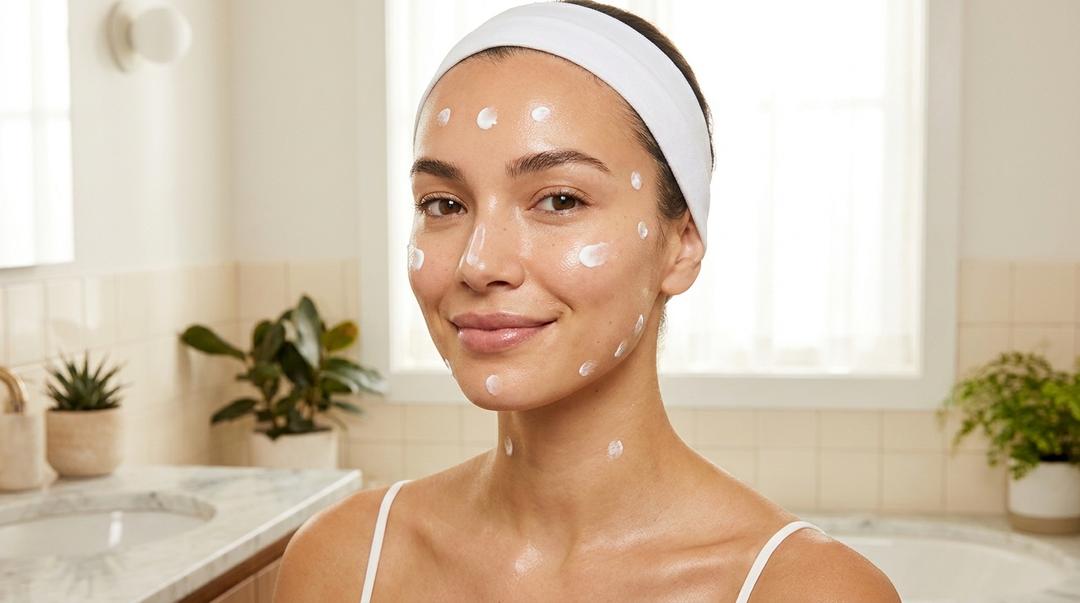
Even the correct quantity won't help much if several areas are skipped. Apply sunscreen anywhere daylight can reach, including commonly forgotten edges.
- Hairline and part: Blend carefully along the hairline, and use a hat or scalp-friendly product on an exposed part.
- Temples: This area is easy to miss when you're concentrating on the center of your face.
- Ears: Cover the tops, outer edges, lobes, and the area behind each ear.
- Around the eyes: Use a formula that doesn't sting, keeping it out of the eyes themselves.
- Nose: Cover the bridge, tip, sides, and the small creases near the nostrils.
- Lips: Apply an SPF 30 lip balm and reapply after eating or drinking.
- Jaw and neck: Blend beneath the jawline and across the front, sides, and back of the neck if exposed.
Honestly, the ears and hairline are the places I catch myself rushing. Applying sunscreen before getting dressed or putting on makeup gives you better access to those edges.
Don't mix sunscreen with moisturizer or foundation in your palm. Mixing can dilute the formula or create an uneven protective film. Instead, apply skincare in separate layers and let each one settle briefly.
When Should You Apply and Reapply Sunscreen?
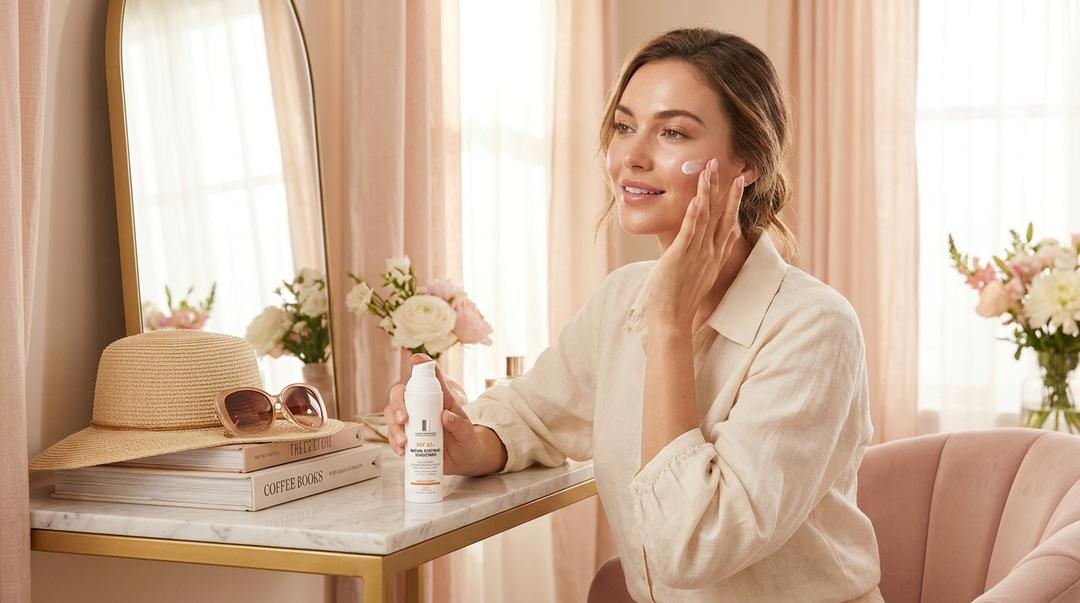
Apply sunscreen as the last step of morning skincare, after moisturizer and before makeup. Most product directions recommend applying it about 15 minutes before sun exposure.
For an ordinary day mostly indoors, a generous morning layer may be practical. Reapplication becomes more important when you're sitting beside a sunny window, commuting, spending time outdoors, or wiping your face. UVA rays can pass through window glass, although UVB is largely blocked.
Follow these reapplication rules:
- Reapply at least every two hours while outdoors.
- Reapply immediately after swimming, heavy sweating, or towel-drying.
- Follow the label's 40- or 80-minute water-resistance claim during water activities.
- Reapply after rubbing your face, wearing a tight mask, or wiping away perspiration.
No sunscreen is truly waterproof. Water-resistant formulas simply maintain their tested SPF for either 40 or 80 minutes in water, as stated on the label.
For reapplication over makeup, clean hands and a small amount of lotion or fluid SPF pressed gently onto the skin can provide more measurable coverage than a light mist or powder. Working in sections helps reduce smudging.
Does Sunscreen Texture or Ingredient Type Change the Amount?
The amount stays roughly the same whether you use a lotion or cream, lightweight fluid, or sunscreen stick. Texture changes how easily you can distribute the product, not how much skin needs protection.
A cream may suit dry skin because it adds cushioning emollients. Fluid sunscreen often feels lighter on oily or combination skin, though you should shake it when directed so the UV filters remain evenly dispersed. With a stick, make several slow, overlapping passes over each area and rub it in; one quick swipe is unlikely to create complete coverage.
Ingredient preferences matter too, but neither mineral nor organic UV filters are automatically better for everyone.
- Mineral filters: Zinc oxide and titanium dioxide sit in a film on the skin and absorb, scatter, and reflect UV radiation. They can be helpful for sensitive skin, though some formulas leave a white cast.
- Organic filters: Ingredients such as avobenzone absorb UV energy and can create lightweight, transparent formulas. People with reactive skin may need to test different combinations.
- Tinted mineral sunscreen: Iron oxides can help protect against visible light, which may be useful for people managing melasma or post-inflammatory hyperpigmentation.
If your skin is sensitive, look for fragrance-free options and patch-test around the jaw before using a new formula everywhere. The best sunscreen is ultimately one you can apply in the full amount without irritation.
So, don't get too distracted by vague clean or reef-safe claims. Reef-safe isn't a consistently regulated sunscreen term. For a more eco-conscious routine, pair sunscreen with shade, a wide-brimmed hat, sunglasses, and UPF clothing. These physical barriers reduce direct exposure and the amount of product needed on larger body areas without sacrificing protection.
Il nostro consiglio
When deciding how much sunscreen to use on face, start with 1/4 teaspoon for the face alone and approximately 1/2 teaspoon for the face, neck, and ears. Choose a broad-spectrum SPF 30 or higher, spread it evenly, and reapply at least every two hours outdoors or sooner after water, sweat, or rubbing.
I've found that measuring the amount once or twice is the easiest reality check. If it feels like too much, apply it in two thin layers rather than cutting the quantity. And remember: shade, hats, and protective clothing work alongside sunscreen, not instead of it.
For more ingredient-conscious skincare advice and discounts on SPF essentials, sign up for Insider Beauty's weekly deals.
Vuoi altri consigli e offerte beauty esclusive nella tua casella di posta? Inserisci l’e-mail qui sotto e unisciti alle migliaia di lettori che ogni settimana trovano occasioni per risparmiare.