

The best way to learn how to test hair porosity at home is to wash away product buildup, mist clean hair with water, and observe how quickly the strands absorb and release moisture. This behavior-based method is more useful than relying on the popular float test alone because porosity is about how easily water enters and leaves the hair shaft. Here's exactly how to do it.
Les points essentiels
- Start with clean hair: Oils, silicones, dry shampoo, and styling products can distort your results.
- Use several sections: Porosity may differ between your roots, ends, crown, and chemically treated areas.
- Watch how water behaves: Low-porosity hair resists water, while high-porosity hair tends to absorb it quickly.
- Don't rely only on the float test: Surface tension and product residue can make it unreliable.
- Use results as a guide: Porosity can help you choose conditioners and styling products, but it isn't a strict hair type.
How do you test hair porosity at home accurately?
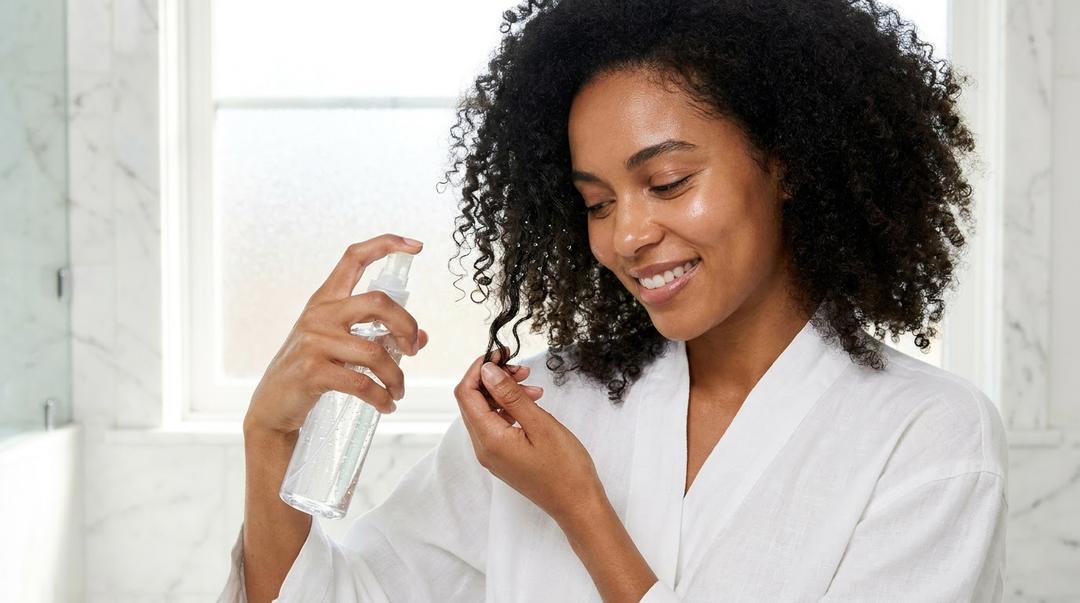
For the most useful result, combine a water mist test with observations from your normal wash routine. You'll want to notice how easily your hair becomes saturated, how long it takes to dry, and whether moisturizing products sit on the surface or disappear almost immediately.
Porosity describes the condition of the hair's outer cuticle layer. When the cuticle lies relatively flat, water has a harder time entering and exiting the strand. This is generally considered low porosity. A more raised, chipped, or damaged cuticle allows moisture to move in and out faster, which is associated with high porosity.
Genetics can influence porosity, but so can bleaching, permanent color, chemical straightening, heat styling, UV exposure, and everyday wear. Honestly, my ends nearly always behave as though they're more porous than my newer growth, especially when I'm overdue for a trim. That's why testing multiple areas matters.
What steps should you follow for a hair porosity test?
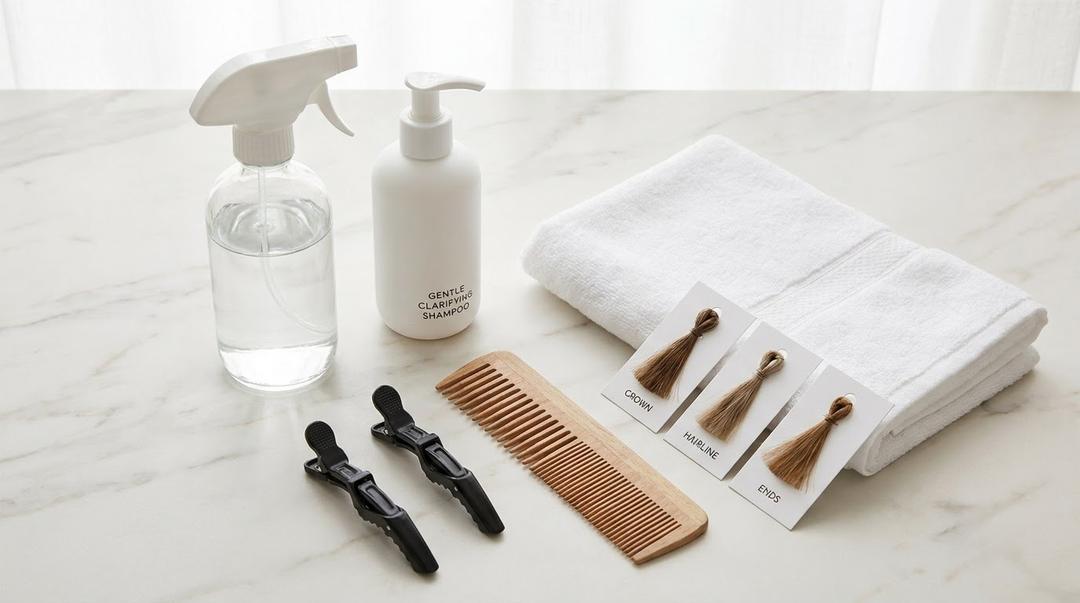
Set aside time when your hair is free from heavy products. A spray bottle filled with room-temperature water is the main tool you'll need.
- Wash your hair with a clarifying shampoo to remove oils, silicones, mineral deposits, and styling residue. If your hair is very dry or fragile, use a gentle clarifier rather than an aggressive formula.
- Skip conditioner, leave-in products, oils, and stylers for the test. These can coat the cuticle and change how water behaves.
- Let your hair dry completely without applying heat or product. Air-drying gives you the clearest starting point.
- Separate a small section from the crown, one near the hairline, and another from the ends. Testing several areas reveals differences caused by damage or weathering.
- Mist each section lightly with water from about six inches away. Don't soak it immediately.
- Watch the droplets for 30 to 60 seconds. Notice whether they bead on the surface, slowly sink in, or disappear almost at once.
- Gently smooth the damp section between your fingers. Pay attention to whether it feels slick and resistant, evenly damp, rough, or thirsty.
- During your next regular wash, note how long it takes to fully saturate your hair and how quickly it dries under your usual conditions.
Keep the room conditions in mind. Humidity, hair density, strand thickness, and whether you use a towel or diffuser can all affect drying time, so compare sections of your own hair rather than using a rigid timer.
What do low, medium, and high porosity results look like?
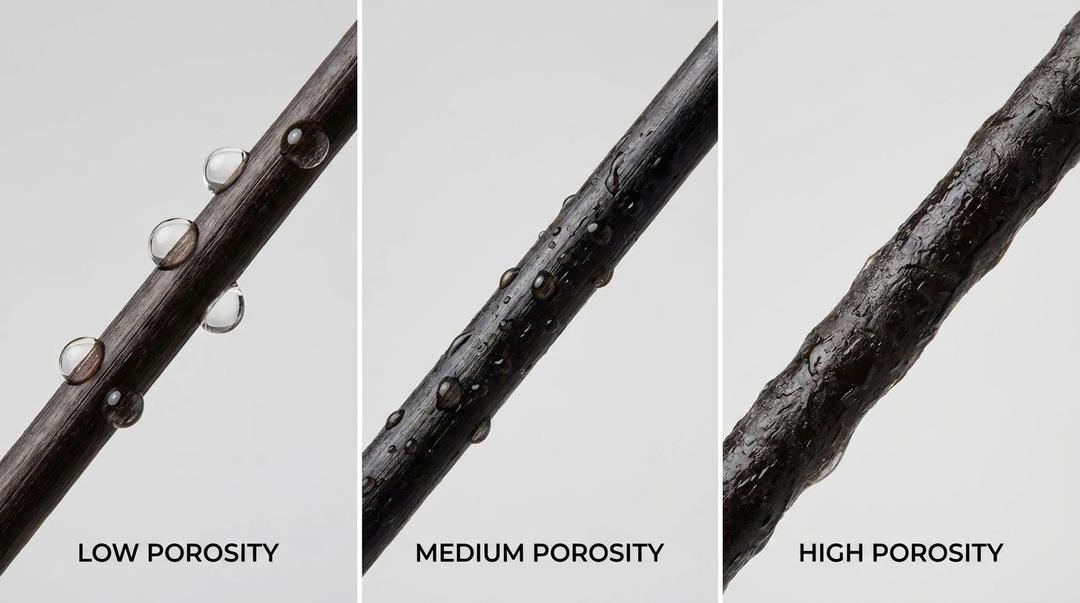
Your observations will usually point toward one of three broad categories. Hair can also fall somewhere between them, and mixed porosity is extremely common.
- Low porosity: Water beads up or sits on the surface before soaking in. Hair may take longer to become fully wet and can take a long time to dry. Rich creams and oils may leave it feeling coated, limp, or greasy.
- Medium porosity: Water absorbs at a moderate, fairly even rate. Hair becomes saturated without much effort, retains moisture reasonably well, and responds predictably to conditioner and styling products.
- High porosity: Water disappears into the strand quickly, but the hair may also lose that moisture fast. It can dry quickly, tangle easily, frizz in humid weather, or feel rough despite frequent conditioning.
Look, one sign isn't enough to label your hair. Thick low-porosity hair may take hours to dry partly because there's simply a lot of it. Fine high-porosity hair may dry fast because each strand is thin. The best result comes from considering water absorption, drying, texture, and product response together.
Is the hair float test actually accurate?
The float test involves placing a shed strand of hair in a glass of water. Hair that floats is commonly said to have low porosity, while hair that sinks is labeled high porosity. It's easy to try, but the float test isn't considered a definitive measurement.
A strand may float because of water's surface tension, trapped air, natural oil, or leftover product. It may sink because it's coated with residue that adds weight, not because the cuticle is highly porous. Even pushing the strand under the surface can change the outcome.
If you'd still like to experiment, use it only as a supporting clue:
- Collect a naturally shed strand rather than pulling one from your scalp.
- Wash it with a small amount of clarifying shampoo and rinse thoroughly.
- Allow it to dry without conditioner or styling products.
- Place it gently in room-temperature water and observe it for a few minutes.
- Compare the result with your mist test and real-life wash observations.
I've found that watching how hair behaves on your head is far more helpful than staring at one renegade strand in a glass. The float test is fun, sure, but it shouldn't dictate your entire routine.
How should you care for each hair porosity level?
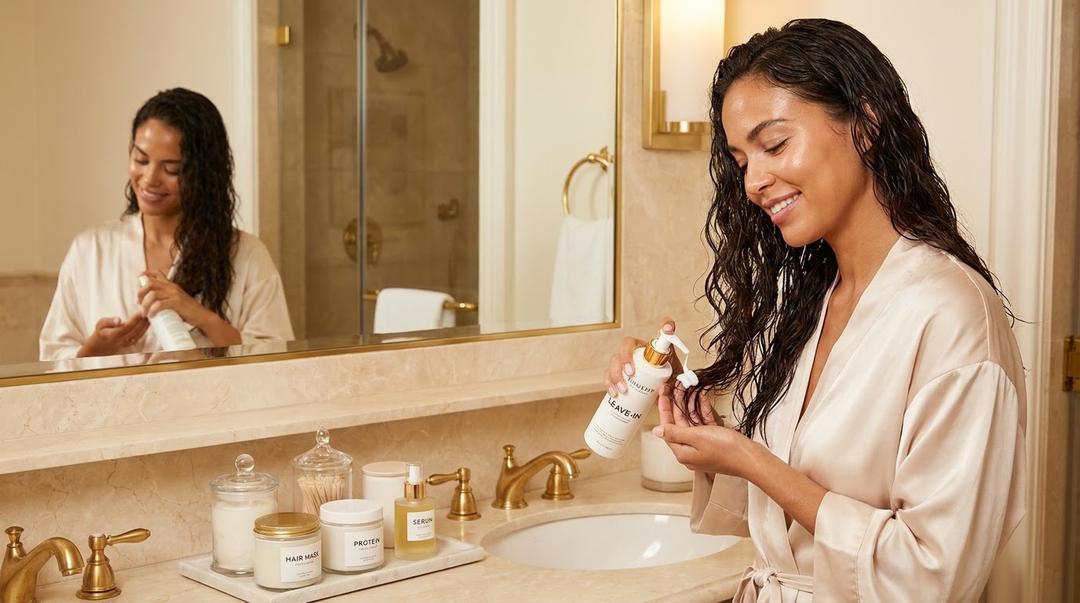
Once you know how to test hair porosity at home, use the result to adjust the amount and texture of your products. You don't need to replace everything in your bathroom.
- For low-porosity hair: Apply lightweight leave-in conditioner to thoroughly wet hair. Using warm water during cleansing may help products spread more evenly, though heat doesn't permanently open the cuticle like a door. Avoid layering too many butters, oils, or silicone-heavy stylers if buildup is an issue.
- For medium-porosity hair: Maintain a balanced routine with regular conditioning and occasional clarifying. A standard rinse-out conditioner or lightweight hair mask will often provide enough softness without excessive coating.
- For high-porosity hair: Try a richer deep conditioner and layer a cream or leave-in under a small amount of oil or sealing serum. An occasional protein treatment may temporarily improve strength and reduce breakage, particularly on bleached or damaged hair.
With protein products, start slowly. Too-frequent use can make some hair feel stiff or brittle, while other hair responds beautifully. Follow the product directions and judge by feel rather than forcing your hair into a fixed schedule.
Retest after major changes such as bleaching, frequent heat styling, growing out chemical damage, or cutting off older ends. Hair porosity isn't necessarily identical from root to tip, and it can shift as your hair accumulates damage.
Notre conclusion
The most practical way to test hair porosity is to observe clean, product-free hair during a mist test and your usual wash day. Water that beads suggests lower porosity, moderate absorption suggests medium porosity, and rapid absorption paired with fast moisture loss suggests higher porosity.
So, treat your result as a useful guide rather than a permanent label. When someone asks me how to test hair porosity at home, I always recommend checking multiple sections and paying attention to product performance over several wash days. Your hair's repeated behavior tells you much more than a single strand in a cup ever could.
Want more practical hair-care advice and genuinely good beauty buys? Sign up for Insider Beauty's weekly deals to get our favorite finds delivered to your inbox.
Vous souhaitez recevoir d’autres conseils et des offres beauté exclusives ? Saisissez votre adresse e-mail ci-dessous et rejoignez les milliers d’Insiders qui économisent chaque semaine.