
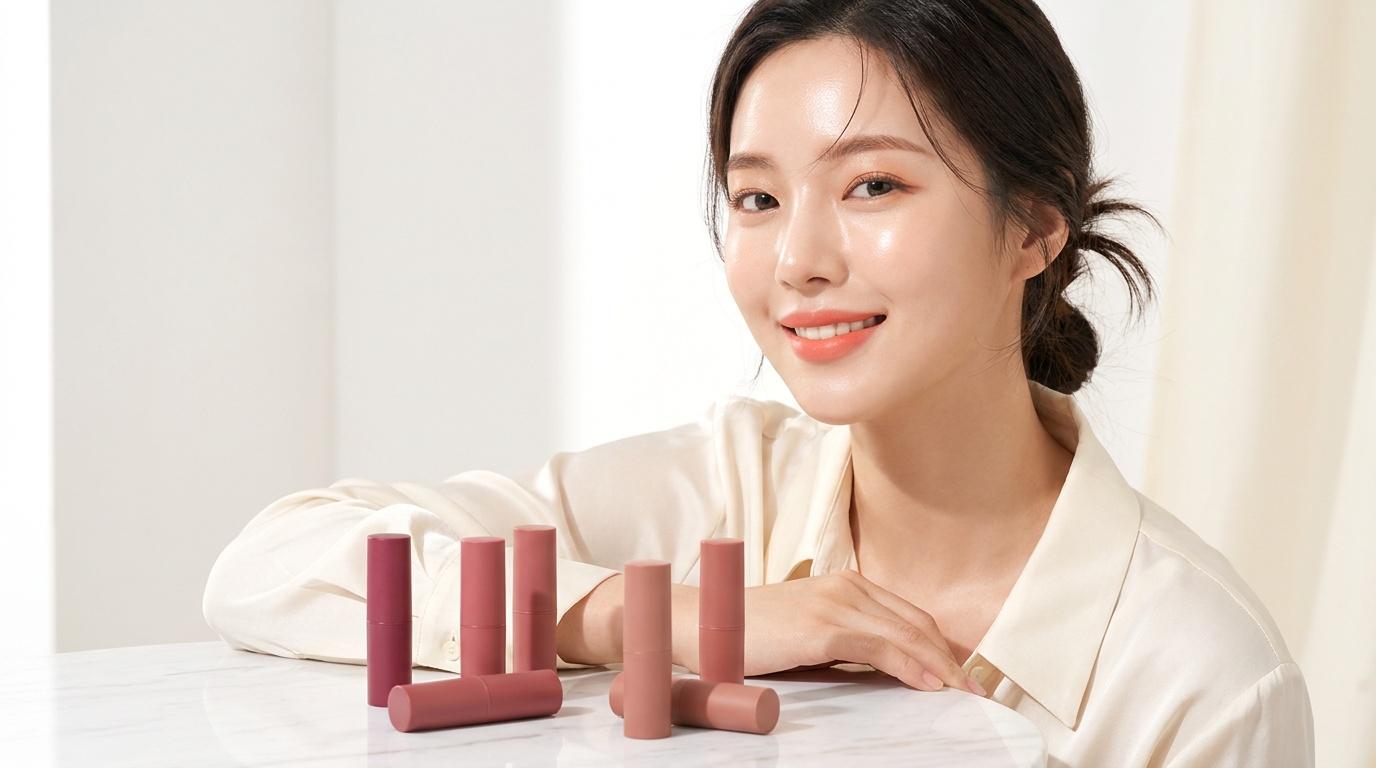
Die best lipstick shades for your skin tone complement both your skin depth and undertone: cool complexions tend to suit blue-based colors, warm complexions glow in peach and orange-based shades, and neutral tones can wear a mix of both. This works because lipstick sits next to the skin and can either balance or emphasize its underlying red, yellow, golden, or olive tones. Start with undertone, narrow your color family, and then adjust for your natural lip pigmentation and preferred finish.
Das Wichtigste auf einen Blick
- Separate depth from undertone: Fair, medium, tan, and deep describe skin depth, while cool, warm, neutral, and olive describe undertone.
- Use color families as a shortcut: Blue-reds and berries often flatter cool skin; coral, brick, and terracotta tend to flatter warm skin.
- Choose nude lipstick carefully: A flattering nude is usually slightly deeper, rosier, or warmer than your natural lip color—not identical to concealer.
- Account for your lip pigment: The same lipstick may look pink on one person and brown or purple on another.
- Test before committing: The best lipstick shades for your skin tone should look balanced in daylight as well as indoor lighting.
How Do You Identify Your Skin Undertone?
Your undertone is the subtle color beneath the surface of your skin. It usually remains fairly consistent even when you tan, develop temporary redness, or use self-tanner. Skin depth, on the other hand, can change with sun exposure.
Biologically, visible skin color comes from several factors, including melanin, hemoglobin, carotene, and the way light scatters through skin. That’s why undertone tests aren’t perfect. Rosacea, acne, hyperpigmentation, and even room lighting can throw them off.
Use several clues rather than relying only on the popular vein test:
- Check your skin in indirect daylight. Hold plain white paper near your makeup-free face. A rosy or pink cast may suggest cool undertones, while yellow, peach, or golden tones suggest warm undertones.
- Compare silver and gold jewelry. Silver often harmonizes with cool skin, while yellow gold may flatter warm skin. If both look equally natural, you may be neutral.
- Notice how foundation behaves. Foundation that turns orange may be too warm. A formula that looks pink or ashy may be too cool.
- Look for an olive cast. Olive undertones often appear green-gray or muted rather than distinctly pink or golden. They may be warm, cool, or neutral-leaning.
Honestly, I’ve found that foundation matching is often more reliable than looking at wrist veins. Veins can appear blue, green, or purple because of skin depth and light scattering—not simply because you have one particular undertone.
Which Lipstick Shades Suit Fair and Light Skin?
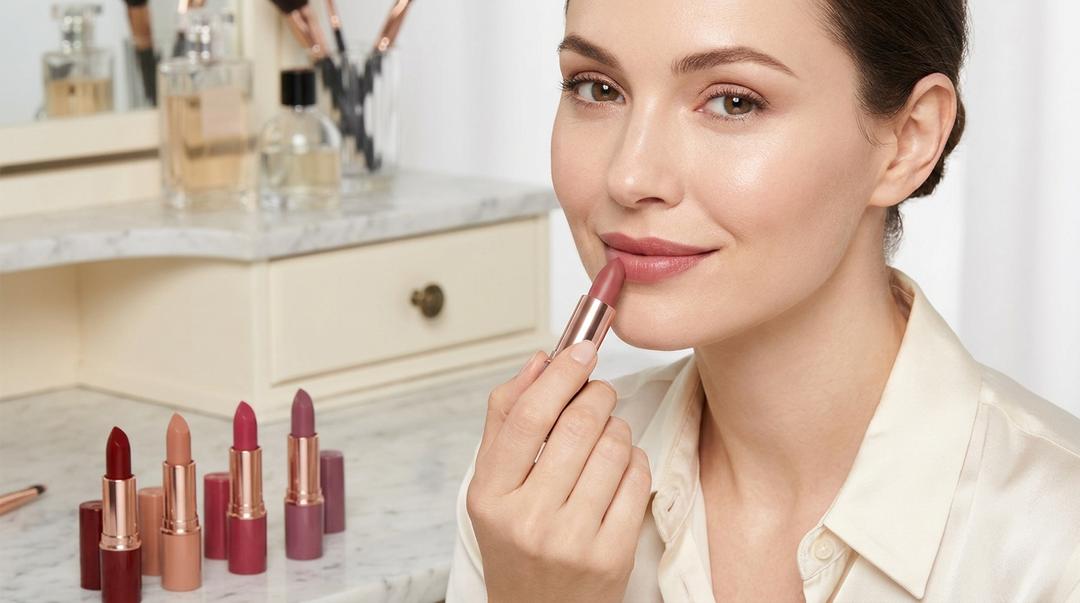
Fair and light complexions can wear bold lipstick beautifully, but very pale or chalky shades sometimes erase the lips. A little contrast usually looks fresher.
- Cool undertones: Try blue-based red, cranberry, raspberry, cool rose, soft plum, or pink-mauve.
- Warm undertones: Look for peach, apricot, warm coral, tomato red, cinnamon, or light terracotta.
- Neutral undertones: Dusty rose, balanced red, pinky beige, and soft berry are easy everyday options.
- Olive undertones: Muted rose, neutral brick, and caramel-peach can work well. Extremely icy pink may bring out a green-gray cast, though that can also be a fun editorial effect.
For a nude, choose something about one shade deeper than your skin and close to your natural lip tone. Fair skin often benefits from pink-beige, peach-beige, or muted rose rather than a very pale tan.
Look, you don’t have to avoid dark lipstick because your skin is light. A wine or deep berry creates intentional contrast. Just check the edges carefully, because uneven application is more noticeable when the color difference is dramatic.
What Lipstick Colors Flatter Medium and Olive Skin?
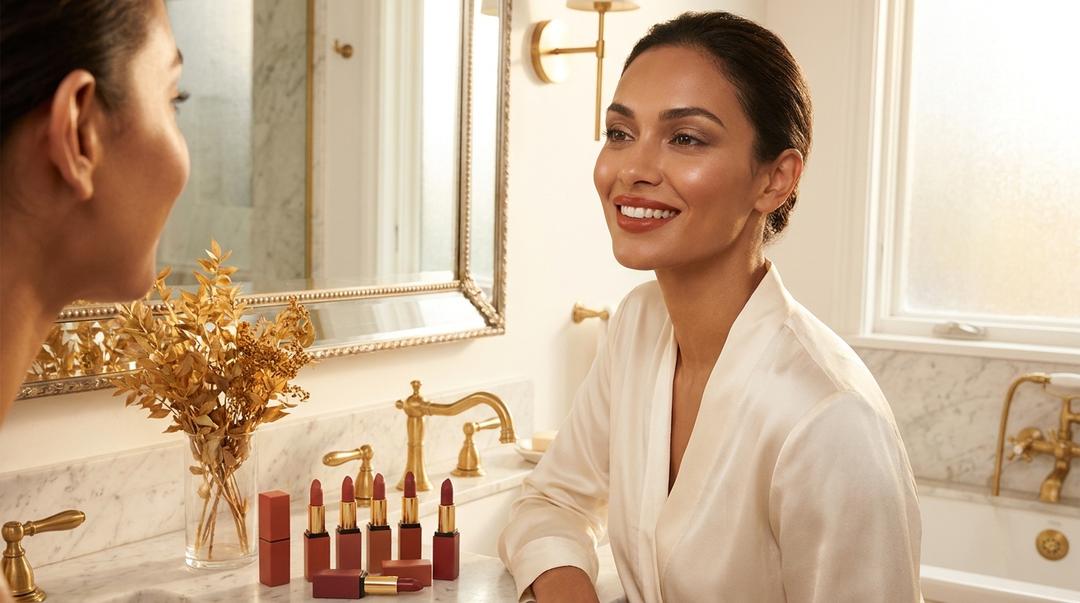
Medium skin typically has enough depth to carry both muted everyday colors and saturated brights. It also varies widely in undertone, so the shade description on the package is less useful than the actual base color.
- Cool medium skin: Consider mauve, blue-red, berry, plum, or cool rose-brown.
- Warm medium skin: Try terracotta, coral-red, burnt peach, warm brick, caramel, or cinnamon.
- Neutral medium skin: Rosewood, balanced red, medium berry, and pink-brown are dependable choices.
- Olive skin: Muted brick, brown-red, warm rose, deep peach, and earthy berry often blend especially well.
Olive skin can be tricky because some colors shift after application. A beige nude may turn gray, while a pink lipstick may look more purple than expected. This isn’t the lipstick changing chemically in a dramatic way; it’s mostly color contrast between the formula, your skin, and your natural lip pigment.
So, if a lipstick looks odd in the tube but great on your lips, trust the lip test. For olive complexions, slightly muted shades are often easier to wear than very white-based pastels. A satin bullet lipstick is especially useful here because its moderate opacity lets some natural lip color show through.
What Are the Best Shades for Tan and Deep Skin?
Die best lipstick shades for your skin tone at the tan-to-deep end of the spectrum usually have enough pigment and depth to remain visible without looking chalky. Rich reds, berries, browns, and plums tend to be especially striking, but bright coral and fuchsia can look gorgeous too.
- Cool undertones: Reach for blackberry, blue-red, wine, magenta, deep plum, or cool chocolate.
- Warm undertones: Try brick red, burnt orange, copper, warm burgundy, espresso, or deep terracotta.
- Neutral undertones: Oxblood, rich berry, rose-brown, cocoa, and balanced crimson are versatile.
- Olive undertones: Brown-red, warm wine, muted plum, and deep cinnamon can complement the skin without becoming ashy.
For nude lipstick, depth matters. Pale beige can create a gray or milky cast on richly pigmented lips, especially when the formula contains a lot of white pigment. Look for caramel, chestnut, cocoa, warm rose-brown, or deep mauve instead.
Natural lip pigmentation may also be uneven, which is completely normal. If you want the lipstick to look closer to the color in the tube, choose a highly pigmented matte liquid lipstick. If you prefer a softer effect, a tinted lip balm allows your natural lip variation to show through.
How Should You Test Lipstick Color and Finish?
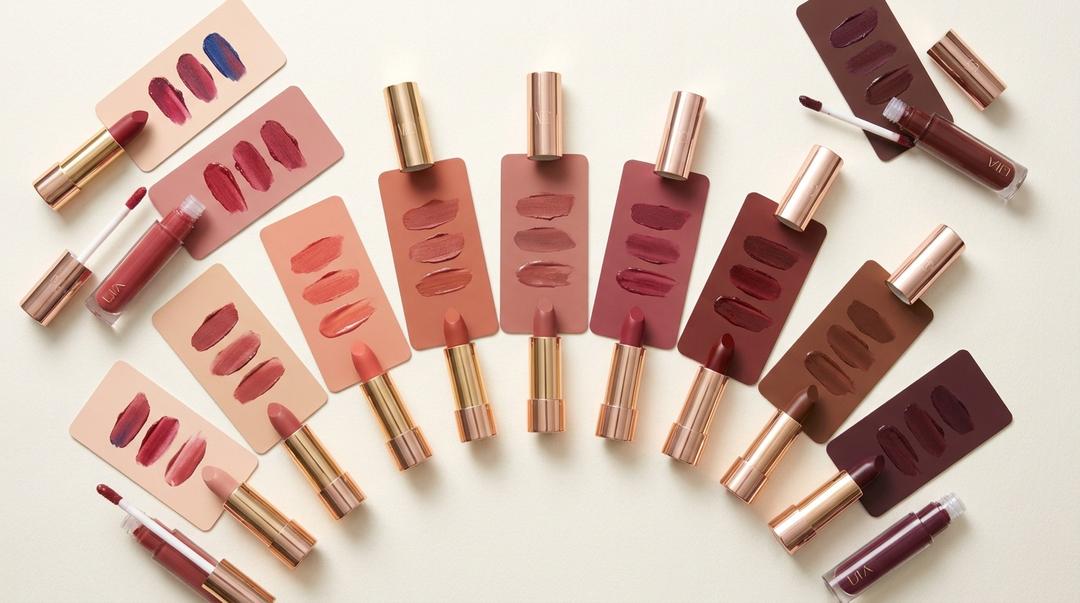
Finish changes how color reads. Matte formulas absorb more light and can appear deeper or flatter, while satin and balm finishes reflect light and may look softer. Sheer products are also strongly influenced by your existing lip color.
Here’s a practical way to test lipstick today:
- Start with bare, moisturized lips. Let balm absorb for 10 minutes, then blot away excess so it doesn’t dilute the color.
- Apply the shade to your lips when possible. A hand swatch shows opacity and texture, but your hand doesn’t match your lip pigment.
- Wait five to 10 minutes. Some long-wear formulas deepen as their volatile ingredients evaporate and the product dries down.
- Check three types of light. Look at the shade near a window, under warm indoor light, and under cooler bathroom or store lighting.
- Take a photo without a filter. Cameras aren’t perfectly color-accurate, but a photo can reveal whether a shade makes the surrounding skin appear unusually dull, red, or yellow.
- Wear it for a few hours. Watch for patchiness, feathering, dryness, or color collecting around the inner lip.
For hygiene, don’t apply an open communal tester directly to your mouth. Ask for a disposable applicator or sanitized sample.
As a dermatologist, I also pay attention to comfort. The lip vermilion has a relatively thin barrier and lacks the oil production found in much of facial skin, so matte products may feel drying. If your lips sting, peel, or crack, pause the product and switch to a fragrance-free tinted lip balm or a moisturizing satin formula. Persistent irritation can point to contact cheilitis from fragrance, flavoring, dyes, or other ingredients.
Das Fazit
Choosing the best lipstick shades for your skin tone starts with two questions: How deep is your complexion, and is your undertone cool, warm, neutral, or olive? From there, use blue-based berries and reds for many cool tones, coral and terracotta for warm tones, balanced rose and red for neutral tones, and muted earthy shades for olive complexions.
These are guidelines, not beauty rules. I’ve seen supposedly wrong colors look fantastic because the contrast was bold and intentional. If a lipstick makes you feel polished, awake, or just more like yourself, that matters more than whether it passes an undertone chart.
For more practical beauty picks and price drops, sign up for Insider Beauty’s weekly deals—we’ll keep it useful and low-pressure.
Möchtest du weitere Tipps und exklusive Beauty-Angebote per E-Mail? Trage unten deine Adresse ein und schließe dich Tausenden Insidern an, die jede Woche kräftig sparen.