

The best way to learn how to simplify your beauty routine is to focus on three essentials: cleansing, moisturizing, and sun protection. A shorter routine reduces unnecessary product overlap, saves money, and may lower the risk of irritation from using too many active ingredients at once. Here's exactly how to pare things down without neglecting your skin.
Quick Takeaways
- Start with three basics: Use a gentle cleanser, a moisturizer suited to your skin, and broad-spectrum SPF 30 or higher.
- Choose one primary goal: Target acne, discoloration, dryness, or fine lines rather than treating everything simultaneously.
- Remove duplicate ingredients: You probably don't need several formulas containing the same acids, antioxidants, or hydrating ingredients.
- Make changes gradually: Stop or add one product at a time so you can tell how your skin responds.
- Give products time: Unless irritation occurs, allow a consistent routine several weeks to show results.
What Beauty Products Do You Actually Need?
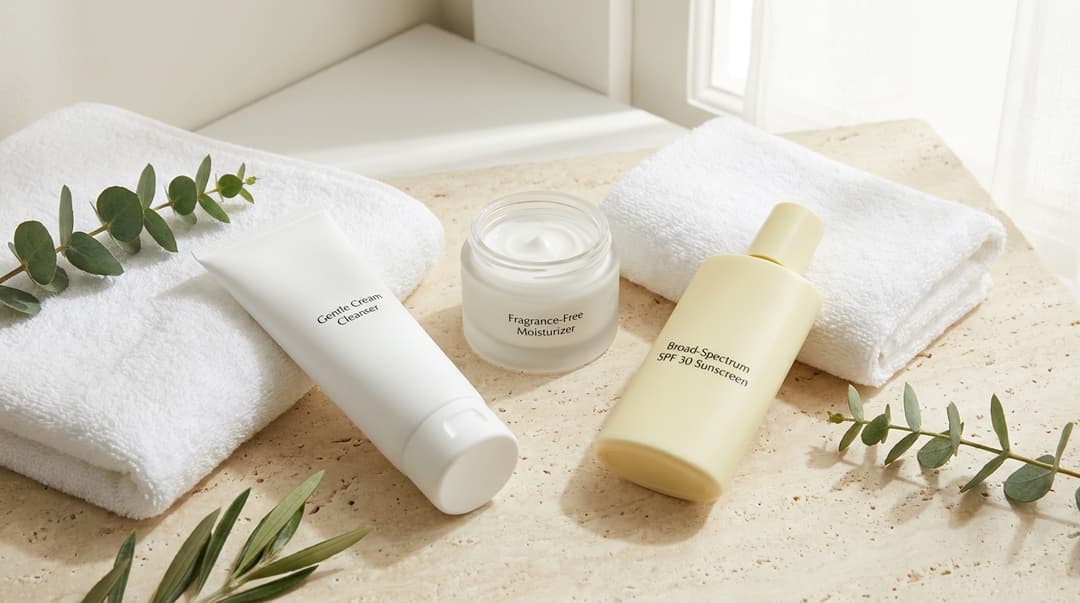
For most people, a basic skin care routine needs only a gentle cleanser, a fragrance-free moisturizer, and broad-spectrum sunscreen. These products support hygiene, the skin barrier, and protection from ultraviolet radiation—the practical foundation of healthy-looking skin.
Your cleanser should remove makeup, sunscreen, oil, and daily debris without leaving your face tight or squeaky. That stripped feeling isn't proof that a cleanser worked extra well; it can mean too much surface oil was removed. If your skin is dry or sensitive, look for a creamy, non-foaming formula. Oilier skin may feel more comfortable with a lightweight gel cleanser.
Moisturizer helps reduce water loss through the outer skin layer, known as the stratum corneum. Even oily skin can become dehydrated, so skipping moisturizer isn't always the answer. A light lotion may be enough for oily areas, while dry skin often benefits from a richer cream.
For daytime, use a broad-spectrum SPF 30 or higher. Broad-spectrum means the formula protects against both UVA and UVB radiation. Sunscreen helps prevent sunburn, premature visible aging, and skin cancer; no antioxidant serum or elaborate nighttime routine can replace it.
Look, extras aren't automatically bad. A targeted treatment may make sense if you have acne, rosacea, eczema, persistent pigmentation, or another specific concern. But the treatment should have a clear job rather than being added because it happens to be trending.
How to Simplify Your Beauty Routine in 7 Steps
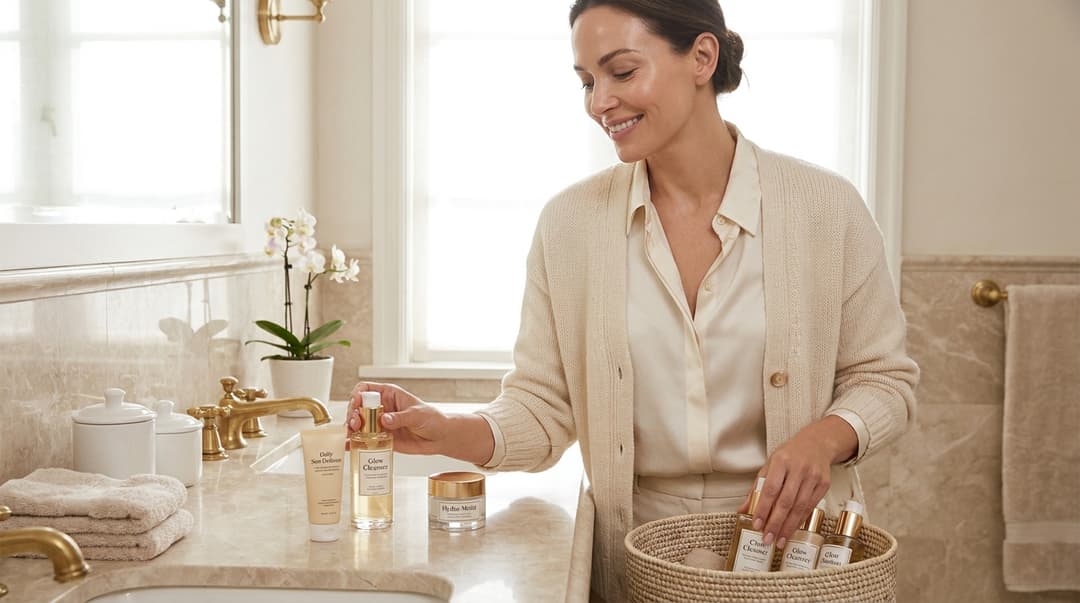
I've found that people often simplify most successfully when they edit their existing routine instead of throwing everything away and starting over. Try this practical reset:
Put every product in one place. Gather skin care from your bathroom, travel bag, nightstand, and shower. Seeing the full collection makes duplicates much easier to spot.
Check expiration dates and texture changes. Discard anything expired or noticeably altered in smell, color, or consistency. Sunscreen past its expiration date shouldn't be relied on for labeled protection.
Sort products by purpose. Group together cleansers, moisturizers, sunscreens, exfoliants, and targeted treatments. If five products perform essentially the same job, you probably don't need all five open.
Choose your three daily basics. Keep one cleanser, one moisturizer, and one sunscreen that your skin already tolerates. Consistency usually matters more than having a crowded shelf.
Pick one main skin goal. Decide whether your priority is controlling breakouts, easing dryness, reducing visible discoloration, or addressing fine lines. This helps you choose one targeted step rather than layering several strong formulas.
Pause nonessential products for two weeks. Use your basics while monitoring dryness, stinging, itching, and breakouts. A short reset can reveal which products were useful and which may have been contributing to irritation.
Add back only what earns its place. Reintroduce one optional product at a time, ideally several days to a week apart. If it doesn't address your goal or improve how your skin feels, you can leave it out.
Honestly, this process can feel oddly freeing. Fewer open products also make it easier to notice when your skin is reacting because there are fewer possible culprits.
What Is the Simplest Morning Beauty Routine?
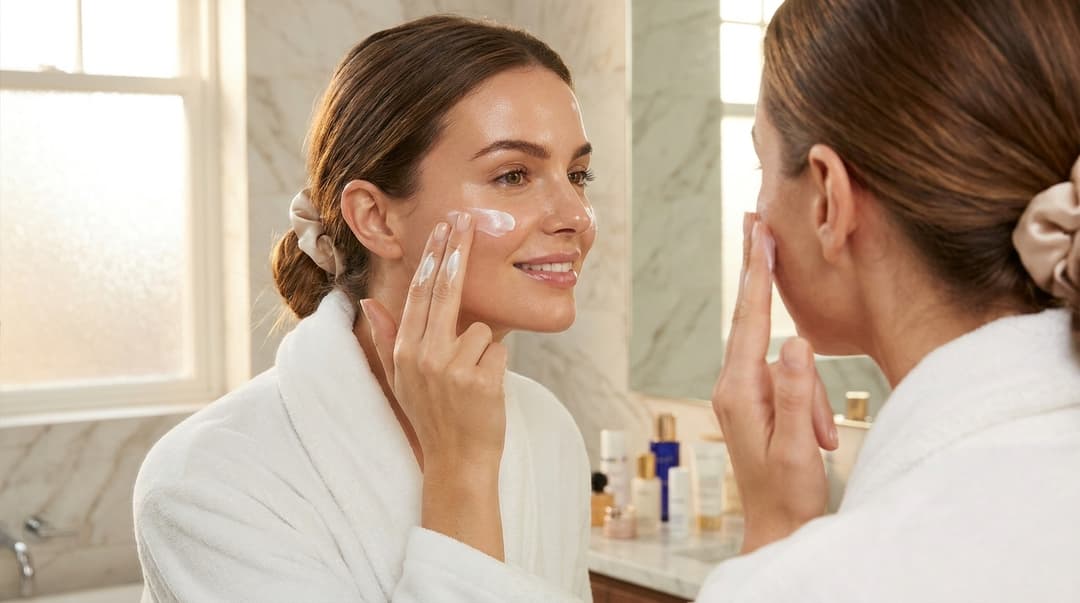
A streamlined morning routine can take just a few minutes. The goal is to prepare your skin for the day and protect it from UV exposure.
- Cleanse or rinse: Use a gentle cleanser if you wake up oily or have residue from nighttime products. If your skin is dry or sensitive, rinsing with lukewarm water may be sufficient.
- Moisturize: Apply moisturizer while the skin is slightly damp. You may skip a separate moisturizer if your sunscreen is hydrating enough and feels comfortable on your skin.
- Apply sunscreen: Use broad-spectrum SPF 30 or higher on your face, ears, neck, and other exposed areas. A common guide for the face and neck is two finger lengths of sunscreen.
Apply sunscreen about 15 minutes before going outdoors when the label directs, and reapply at least every two hours while outside, as well as after swimming or heavy sweating. If you'll be active or near water, choose a water-resistant formula and follow its label.
So, where does makeup fit? It can go on after sunscreen has formed an even layer. Makeup containing SPF is generally not a reliable substitute because most people don't apply enough of it to reach the labeled protection.
What Is the Simplest Night Beauty Routine?
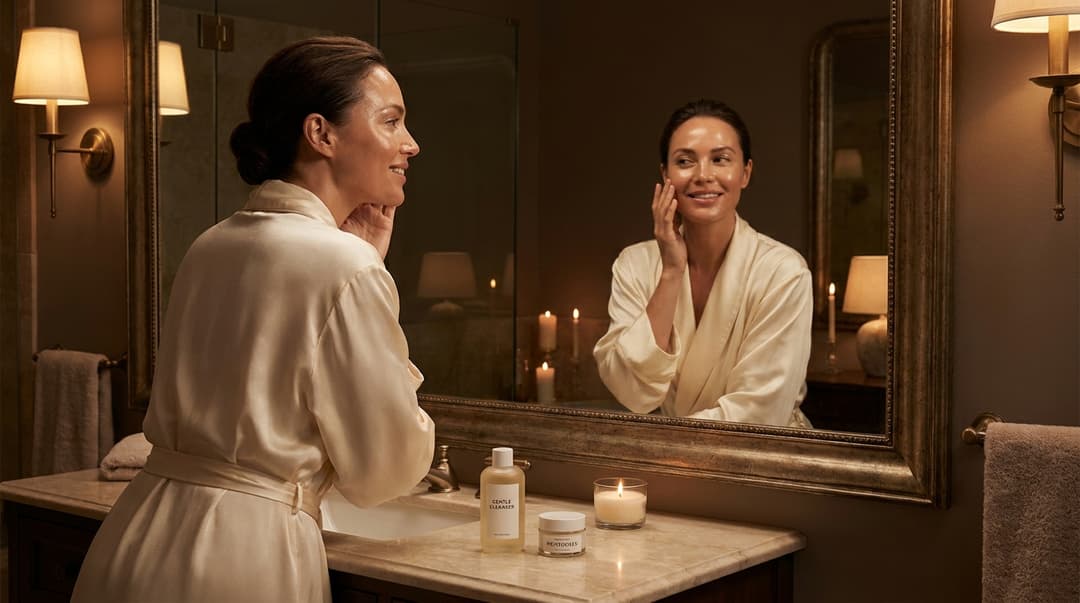
Your evening routine only needs to remove the day and support your skin overnight. For many people, that means cleansing and moisturizing.
- Remove makeup and sunscreen: A single thorough cleanse may be enough. If you're wearing heavy or water-resistant makeup, you can remove it first and then follow with your gentle cleanser.
- Use one targeted treatment if needed: Apply only the treatment that addresses your primary concern, following its directions or your dermatologist's instructions.
- Finish with moisturizer: A moisturizer can support the skin barrier and buffer some of the dryness associated with active treatments.
Avoid introducing multiple potent ingredients on the same night, especially if you're new to them. Combining several exfoliating acids or other irritating treatments can cause redness, burning, peeling, and increased sensitivity without producing faster results.
If a product causes persistent burning, swelling, a blistering rash, or worsening symptoms, stop using it. Seek medical advice for a significant reaction or a skin issue that isn't improving. A board-certified dermatologist can also help streamline prescription and over-the-counter products safely.
What Mistakes Make a Beauty Routine Too Complicated?
Buying more isn't the only reason routines become unwieldy. Small habits can quietly add extra steps and irritation.
Common mistakes include:
- Following trends instead of your skin: A popular ingredient may not suit your concerns, skin type, medications, or budget.
- Using several products with overlapping actives: Duplicate exfoliating or brightening ingredients can increase irritation.
- Changing products too quickly: Acne and discoloration treatments often need weeks of consistent use, so swapping them every few days makes results hard to judge.
- Assuming tingling means effectiveness: Stinging isn't a requirement for a product to work and may signal irritation.
- Keeping products out of guilt: If something doesn't suit your skin, you don't need to finish it just because it was expensive.
- Skipping patch testing: Testing a small area first can help identify obvious sensitivity before you apply a new formula widely.
A useful shopping rule is to ask, What exact step will this replace or improve? If the answer is unclear, wait 48 hours before purchasing. I've found that this short pause prevents a surprising number of impulse buys.
Storage matters too. Keep products away from excessive heat and direct sunlight, close lids securely, and avoid dipping unwashed fingers into jars. Write the date opened on items you tend to forget. These tiny habits help you use what you own before buying replacements.
The Bottom Line
The easiest answer to how to simplify your beauty routine is to build around a gentle cleanser, moisturizer, and broad-spectrum sunscreen, then add no more than one clearly targeted treatment at a time. A simple routine you follow consistently is more useful than a complicated one you avoid, rush through, or constantly change.
Start today by gathering your products, removing expired items, and choosing the three basics you'll use for the next two weeks. Your routine should fit your skin, schedule, and budget—not somebody else's shelfie.
Want to keep your streamlined routine affordable? Sign up for Insider Beauty's weekly deals for smart savings on skin care, makeup, and other beauty essentials.
Want more tips and exclusive beauty deals delivered to your inbox? Pop your email in the box below and join thousands of insiders who save big every week.