
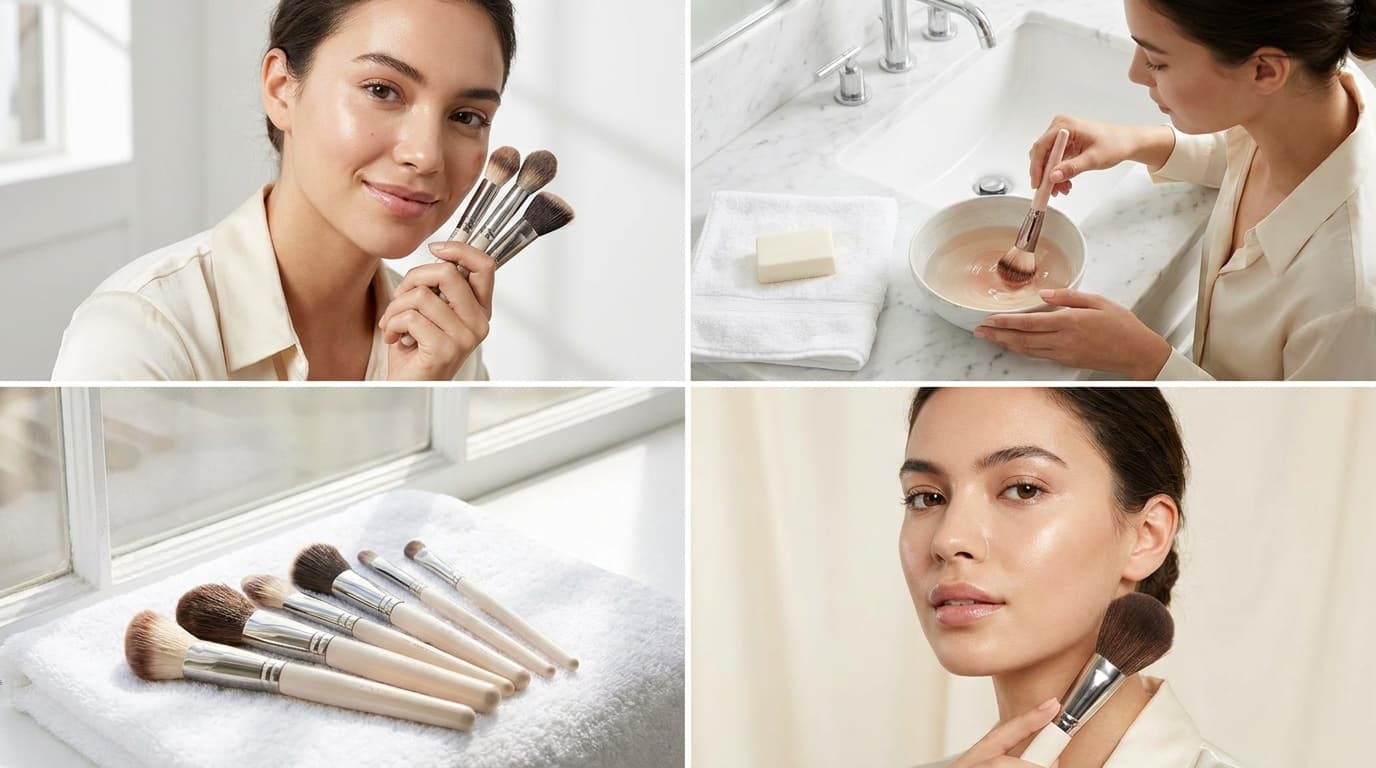
The best way to learn how to clean makeup brushes at home is to wash the bristles with lukewarm water and a gentle cleanser, rinse thoroughly, reshape, and dry the brushes flat. This removes makeup, oil, and buildup without weakening the glue inside the ferrule. Here’s exactly how to do it safely.
Quick Takeaways
- Wash frequently used brushes every 7 to 10 days, especially those used with liquid or cream makeup.
- Keep water away from the ferrule, which is the metal section connecting the bristles to the handle.
- Use a gentle liquid soap, solid brush cleanser, or mild fragrance-free shampoo.
- Rinse until the water runs clear, then press out moisture without twisting or pulling the bristles.
- Dry brushes flat with the bristles hanging over a counter edge—never upright while wet.
What Do You Need to Clean Makeup Brushes?
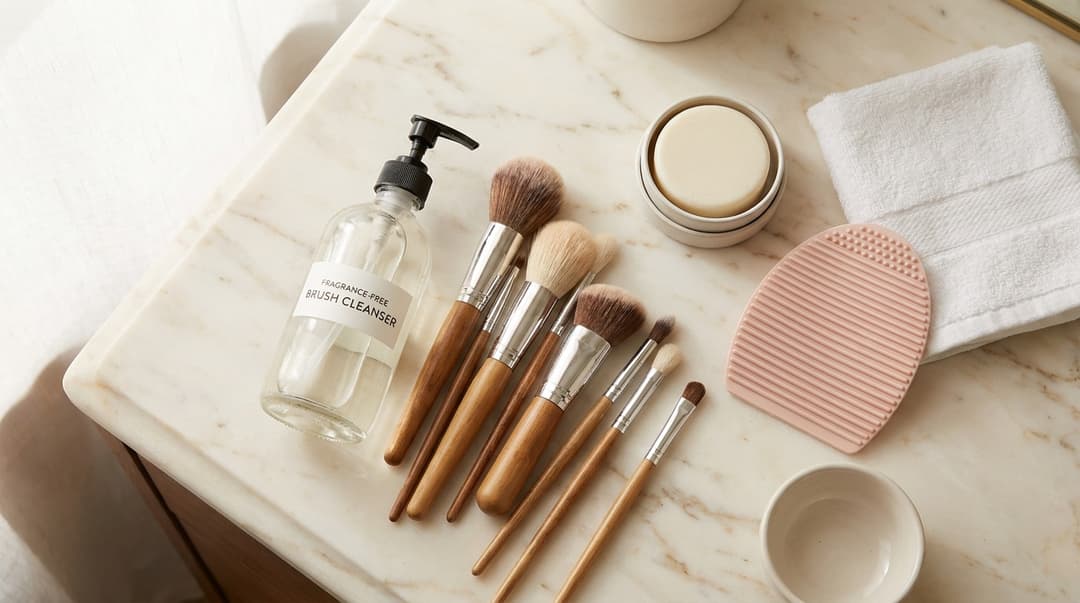
You don’t need a complicated kit. A few basic supplies will handle most synthetic makeup brushes without creating a pile of single-use waste.
Gather the following:
- A gentle cleanser: Choose a fragrance-free liquid soap, mild shampoo, or solid brush cleanser. Look for mild surfactants and avoid heavy fragrance, dyes, or gritty exfoliating particles.
- A clean bowl or sink: You can also wash each brush directly under a gently running faucet to avoid filling a full basin.
- A silicone cleaning mat: This optional tool helps loosen stubborn foundation and concealer from densely packed bristles.
- A clean towel: Use it to blot water and support the brushes while they dry.
- Lukewarm water: Hot water can soften adhesive and damage both synthetic and natural fibers over time.
I’ve found that a solid brush cleanser is especially handy for travel and low-waste routines. It usually comes with less packaging than bottled products and gives you better control over how much cleanser you use. Just let the bar dry completely before closing its container so it doesn’t turn mushy.
Look, you don’t have to buy a product labeled specifically for brushes. A simple cleanser can work beautifully. Still, concentrated castile soap may feel drying on delicate natural hair brushes, while heavily fragranced hand soap can leave residue behind. Gentle and easy to rinse is the sweet spot.
How to Clean Makeup Brushes at Home Step by Step

Set aside about 10 to 20 minutes, depending on the size of your brush collection. Washing one brush at a time gives you the most control and keeps dirty water from transferring between tools.
- Wet only the bristles. Hold the brush at a downward angle under lukewarm running water. Avoid soaking the handle or allowing water to run into the ferrule.
- Apply a small amount of cleanser. Place a drop of gentle liquid soap in your palm, or swirl the damp brush lightly over a solid cleanser.
- Massage the bristles. Gently move the brush in circular motions across your palm or a silicone cleaning mat. Don’t mash or aggressively scrub the fibers.
- Work on stubborn residue. Dense foundation brushes may need a second cleanse. Add another tiny drop of soap rather than using one large, wasteful squeeze.
- Rinse with the bristles pointing down. Continue rinsing until the water runs clear and no foam remains. Leftover cleanser can make bristles stiff and may irritate sensitive skin.
- Press out excess water. Gently squeeze from the base of the bristles toward the tips using clean fingers or a towel. Don’t wring, twist, or pull.
- Reshape the brush. Smooth the bristles back into their original shape while they’re still damp. This helps prevent splaying and uneven edges.
- Lay the brush flat to dry. Position it on a clean towel with the bristles hanging over the edge of a counter for better airflow.
Honestly, the most common mistake I see is fully submerging a brush in soapy water. It feels efficient, but water can travel into the ferrule, loosen the adhesive, and cause shedding. Keeping the brush angled downward makes a real difference in how long it lasts.
For extra-dense brushes, repeat the cleansing process rather than leaving them submerged. Makeup trapped near the base can harbor oils and microorganisms, so check the inner bristles before calling it done.
How Often Should You Wash Makeup Brushes?
A practical cleaning schedule depends on the formulas you use and where each brush goes on your face. Cream and liquid products create more damp residue than loose powders, so those tools generally need more frequent washing.
- Foundation and concealer brushes: Wash every 7 to 10 days.
- Cream blush and contour brushes: Wash weekly.
- Eye brushes: Wash weekly and between dramatically different colors.
- Powder, bronzer, and powder blush brushes: Wash every 1 to 2 weeks.
- Makeup sponges: Clean after every use when possible and allow them to dry fully.
People with acne-prone or very sensitive skin may prefer to wash face brushes more often. Washing removes residue and reduces buildup, but it doesn’t sterilize a brush. Don’t share makeup brushes, and replace tools that smell musty, remain discolored after washing, or keep shedding.
Between deep cleans, you can wipe color from an eye brush on a clean, dry reusable cloth. A quick-drying brush spray is useful for switching shades, but it shouldn’t replace regular soap-and-water washing.
How Should You Dry Makeup Brushes Safely?
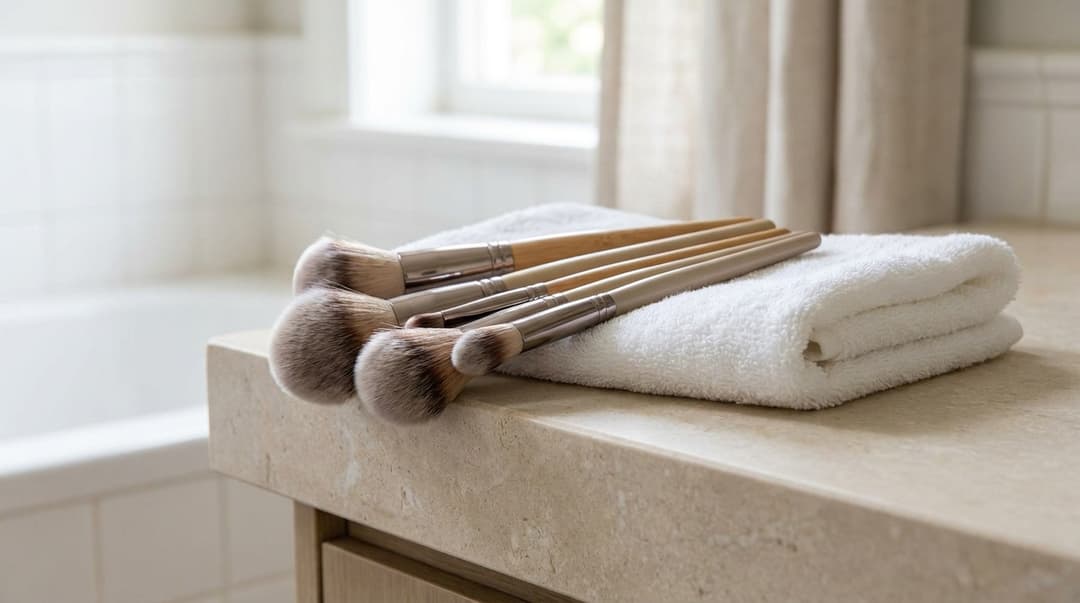
Proper drying is just as important as washing. Never place wet brushes upright in a cup, because moisture can run into the ferrule and handle. You should also skip hair dryers, radiators, and direct sunlight; concentrated heat may warp synthetic bristles or crack wooden handles.
After blotting, lay each brush flat on a towel with its bristles extending past the counter edge. This position improves airflow around the entire brush head. Most small brushes dry overnight, while dense complexion brushes may need 24 hours or longer.
So, wash your brushes after your last makeup application of the day rather than right before you need them. I usually clean mine in the evening and rotate two foundation brushes, which takes the pressure off if one is still slightly damp the next morning.
Make sure every brush is completely dry before storing it in a closed bag or drawer. Trapped moisture can encourage odors and shorten the life of the tool. Once dry, store brushes in a clean cup, breathable pouch, or covered organizer away from humid bathroom areas.
Can You Use Dish Soap, Vinegar, or Alcohol?
Dish soap can remove oily foundation, but many formulas are stronger than necessary and may contain fragrance or ingredients designed to cut heavy kitchen grease. If it’s your only option, use one small drop of a mild, fragrance-free formula, rinse very thoroughly, and avoid making it your default cleanser for delicate brushes.
Vinegar isn’t a replacement for soap. It may help with odors when properly diluted, but its acidity can affect some bristles, finishes, or adhesives. Mixing vinegar with baking soda mostly neutralizes both ingredients and creates fizz—not a more effective brush wash.
High-percentage rubbing alcohol can dry quickly and is sometimes used in professional settings for surface sanitation, but frequent saturation may dry out natural fibers and weaken brush components. Never mix cleaning chemicals, and keep alcohol away from flames and heat.
For routine how to clean makeup brushes at home care, mild soap and water remain the simplest option. They’re affordable, effective at lifting cosmetic oils, and easier on brushes when used correctly. Choosing concentrated cleansers, refillable bottles, or package-light solid bars can also reduce waste.
The Bottom Line

Knowing how to clean makeup brushes at home comes down to four basics: use a gentle cleanser, keep water out of the ferrule, rinse completely, and dry every brush flat. A weekly or biweekly routine helps prevent old makeup, facial oil, and product residue from building up while preserving the shape and softness of your tools.
Start with the brushes you use for liquid products, then work through the rest of your collection. A careful wash takes only a few minutes per brush, and you’ll usually notice cleaner application and softer-feeling bristles right away.
For more ingredient-conscious beauty tips and wallet-friendly finds, sign up for Insider Beauty’s weekly deals.
Want more tips and exclusive beauty deals delivered to your inbox? Pop your email in the box below and join thousands of insiders who save big every week.