
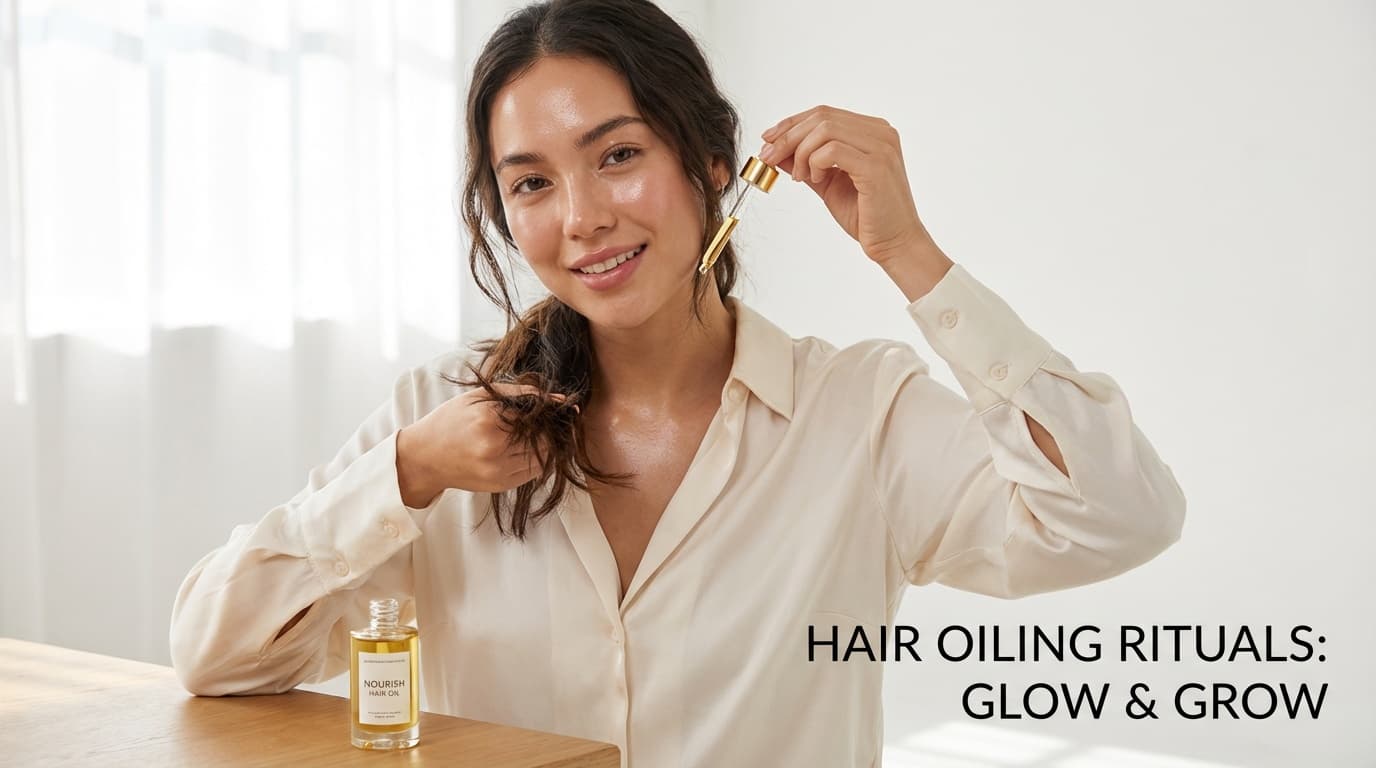
Hair oiling benefits include softer strands, less dryness, more shine, and better protection against breakage when you do it correctly. The best way to oil your hair is to use a small amount on the scalp or lengths based on your hair type, leave it on for 30 minutes to overnight, then shampoo thoroughly. Here's exactly how to do it without ending up with greasy roots.
Quick Takeaways
- Hair oiling benefits can include reduced frizz, improved softness, scalp comfort, and less breakage from dryness
- Pre-shampoo oiling is the easiest method for most hair types because it helps protect strands during washing
- Not everyone should oil the scalp; fine hair or oily scalps often do better with oil on mid-lengths and ends only
- A few drops to 1 tablespoon is usually enough, depending on hair length, density, and texture
- Consistency matters more than quantity; once or twice a week is plenty for most people
What are the benefits of hair oiling?

So, let's get right to the part most people care about: what does oiling actually do? The biggest hair oiling benefits come from helping the hair shaft hold onto moisture better, reducing friction, and adding a protective layer that can make hair feel smoother and look shinier.
Here are the main perks:
- Less dryness: Oils help seal the hair cuticle, which can reduce that rough, straw-like feeling
- Reduced breakage: Lubricated strands have less friction during detangling and washing
- More shine: Smoother cuticles reflect light better, so hair looks glossier
- Better frizz control: Oils can calm puffiness, especially on dry or textured hair
- Scalp comfort: Some oils can soften dry, tight-feeling scalp skin
- Protection before shampooing: Pre-wash oiling may reduce swelling and stress on the hair when it's wet
I've found that people often expect hair oiling to magically make hair grow faster. That's not really the point. Oiling doesn't change your genetics, but it can help hair retain length by lowering breakage, which is why your hair may seem like it's growing better over time.
How does hair oiling work?
Honestly, this is where the skincare-science part of my brain gets excited. Hair fiber gets damaged by water, heat, brushing, bleaching, and everyday friction. When hair repeatedly swells with water and then dries out again, the cuticle can lift and weaken over time.
A good oiling routine helps in a few ways:
- It adds slip: This means less tugging when you comb or style
- It slows moisture loss: Some oils act like a seal to keep hair feeling softer longer
- It protects during washing: Pre-shampoo oil can reduce something called hygral fatigue, which is repeated swelling and shrinking of the hair fiber
- It softens the feel of damaged hair: Especially if your ends are bleached, heat-styled, or super porous
That said, oils don't "moisturize" in the same way a water-based conditioner or hair mask does. Think of oil more as a sealant and lubricant, not a drink of water for your hair. That's a small difference, but it matters.
Which hair oils are best for different hair types?
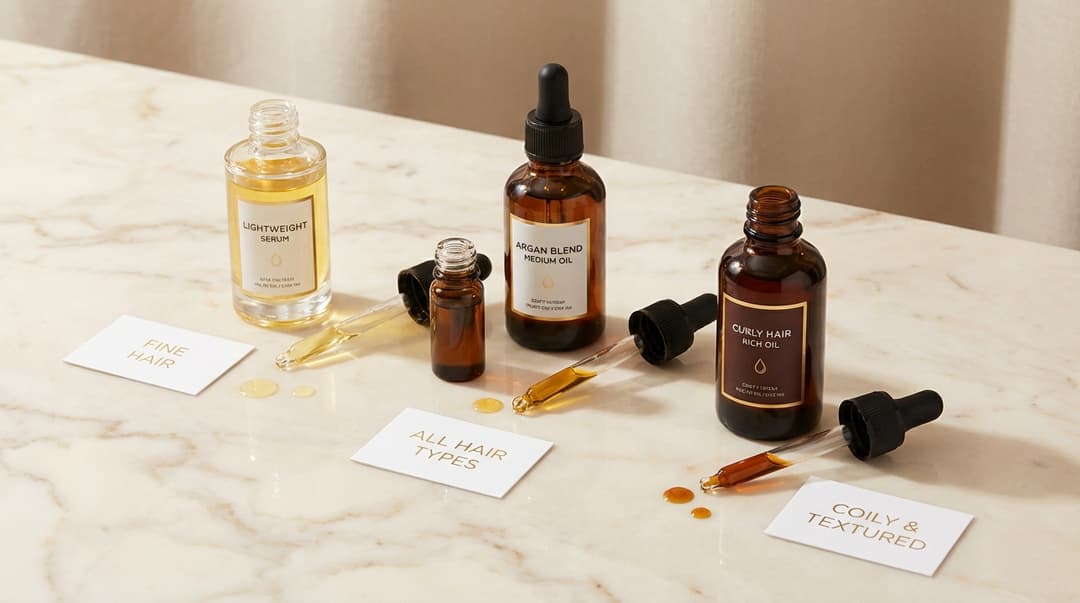
Not every oil works for every head of hair, and this is where a lot of routines go sideways. Using a heavy oil on fine hair can make it limp fast. Using too little on thick curls might do basically nothing.
Here are a few easy matches:
- Lightweight oils for fine or oily-prone hair: Look for a lightweight hair oil or serum texture. These are better if your roots get greasy quickly.
- Medium oils for most hair types: Argan-type or jojoba-like oils tend to feel balanced and smoothing without being too heavy.
- Richer oils for thick, coarse, curly, or coily hair: Heavier oils and butter-oil blends can work well on dry lengths and ends.
Specific product types that work well:
- Pre-shampoo hair oil
- Lightweight scalp oil
- Leave-in hair serum or finishing oil
Look, if you have dandruff, scalp psoriasis, seborrheic dermatitis, or a very itchy scalp, be a little careful with scalp oiling. In some cases, adding oil can make flaking worse, especially if yeast is part of the issue. If your scalp is persistently inflamed, a dermatologist is your best bet.
How to do hair oiling step by step
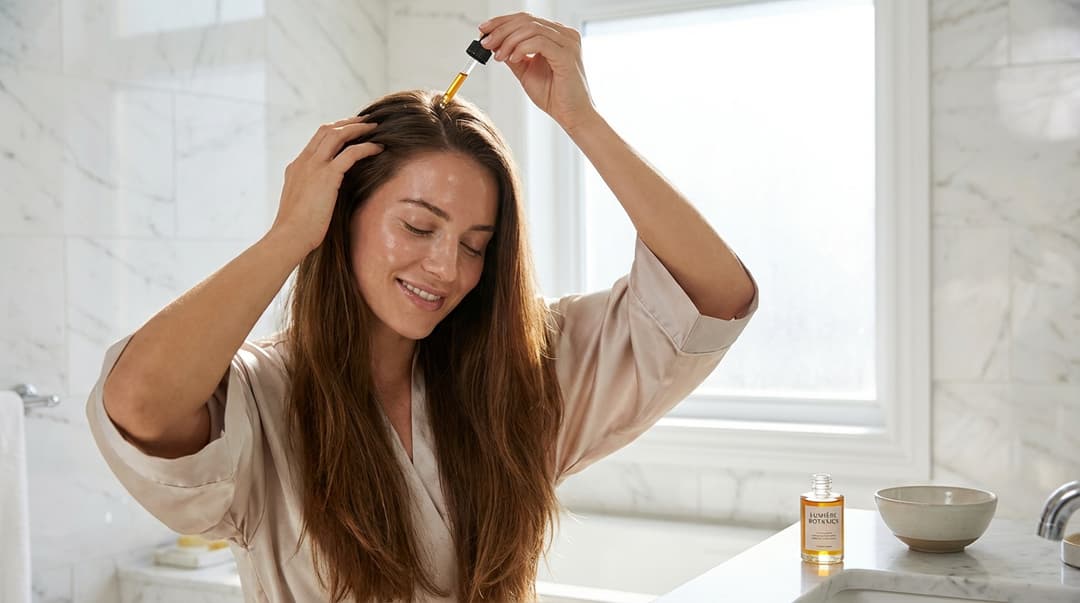
The easiest method for beginners is pre-shampoo oiling. It gives you the hair oiling benefits without leaving your hair slick for days.
- Start with dry or slightly damp hair.
- Choose your oil based on your hair type and scalp needs.
- Pour a small amount into your palm: a few drops for fine hair, up to 1 tablespoon for thick or long hair.
- If your scalp is dry, apply a little oil to the scalp in sections using fingertips.
- Massage gently for 3 to 5 minutes using light pressure, not scratching.
- Work the remaining oil through mid-lengths and ends, focusing on the driest areas.
- Leave it on for 30 minutes to 2 hours. Overnight is fine for some hair types, but use only a small amount.
- Shampoo thoroughly, and shampoo twice if needed.
- Follow with conditioner or a hair mask on the lengths.
- Style as usual, then add 1 to 2 drops of finishing oil only if your ends still feel dry.
A small tip that makes a big difference: don't drench your hair. More oil doesn't mean more results. Usually it just means more shampoo later.
Should you oil your scalp or just your hair lengths?
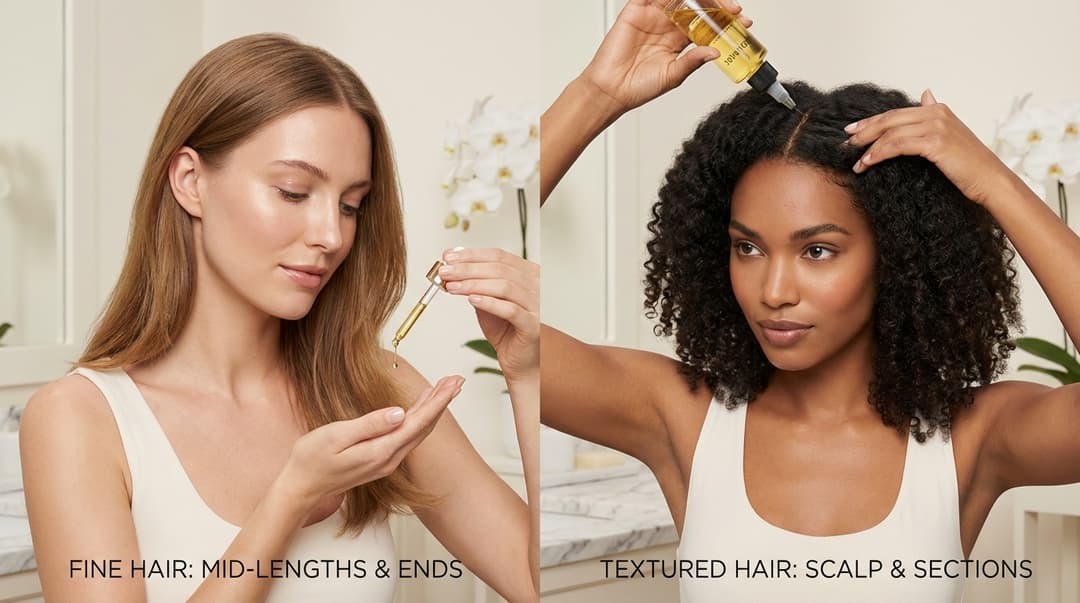
This depends on your scalp condition more than people realize.
Oil your scalp if:
- It feels dry, tight, or flaky from dryness
- You enjoy scalp massage and it doesn't make your roots greasy for days
- Your hair is thick, curly, or coily and can handle richer products
Skip the scalp and oil only the lengths if:
- Your scalp gets oily within a day or two
- You deal with dandruff or scalp buildup easily
- You have very fine or low-density hair
- You use a lot of styling products and already struggle with residue
I've found that a lot of readers do best with a middle-ground routine: oil the ends every week and the scalp only occasionally. That's often enough to get softness and shine without the heavy feeling.
How often should you oil your hair?
So, frequency really comes down to dryness, texture, and how often you wash.
A simple guide:
- Fine hair: Once a week, mostly on mid-lengths and ends
- Medium or wavy hair: Once or twice a week
- Curly or coily hair: One to three times a week, depending on dryness and wash schedule
- Bleached or heat-damaged hair: Once or twice a week as a pre-shampoo treatment
- Oily scalp: Every 1 to 2 weeks, or skip scalp oiling entirely
If your hair feels limp, coated, or harder to clean, scale back. If your ends still feel crunchy, use a little more on the lengths or leave it on a bit longer before washing.
What mistakes make hair oiling less effective?
This is usually where frustration kicks in. Hair oiling can feel amazing, but a few common mistakes can make it seem like it doesn't work.
- Using too much oil: This causes buildup and takes forever to wash out
- Applying heavy oil to fine hair: The result is often flat roots and stringy ends
- Expecting oil to replace conditioner: Oil seals; conditioner hydrates and smooths with water-based ingredients
- Scrubbing the scalp too hard: Massage should feel relaxing, not aggressive
- Leaving oil on too long when your scalp is sensitive: More time isn't always better
- Not shampooing thoroughly: Residue can make hair dull instead of shiny
- Putting oil on already greasy roots: This one sounds obvious, but, well, people do it
If you want to boost results, pair oiling with a gentle sulfate-free shampoo, a hydrating conditioner, and occasional deep-conditioning mask use. That combo tends to work better than oil alone.
Can hair oiling help with hair growth?
The honest answer: indirectly, yes, but not in the way TikTok sometimes suggests. Hair oiling benefits for growth are mostly about creating a healthier environment for the hair you already have.
It may help by:
- Reducing breakage so hair retains length
- Improving scalp comfort if dryness is an issue
- Making detangling easier, which means fewer snapped strands
- Protecting damaged ends so you don't need trims quite as often
But if you're dealing with sudden shedding, widening part lines, bald patches, or major thinning, oiling isn't a treatment. That's something to bring to a dermatologist, especially if it's new or worsening.
The Bottom Line
Hair oiling benefits are real, but the best results come from doing it in a way that fits your hair type. For most people, a small amount of oil used as a pre-shampoo treatment once or twice a week can help with softness, shine, frizz, and breakage without weighing hair down.
Start simple: use a lightweight or medium oil, focus on the driest areas, and don't overdo it. Honestly, a little goes a long way.
If you want more practical beauty tips and editor-approved picks, sign up for Insider Beauty's weekly deals newsletter for smart finds worth adding to your routine.
Want more tips and exclusive beauty deals delivered to your inbox? Pop your email in the box below and join thousands of insiders who save big every week.