Best Leave-In Conditioners for Fine, Color-Treated Hair 2026: 6 Worth Buying
 Published · Prices checked
Key takeaways
- It’s a 10 Lite is the fine-hair starting point; EverPure is the lower-cost option.
- Compare price per ounce and the exact current bottle, especially OUAI’s new 6 oz size.
- Use strand diameter, density and styling preferences together; no fixed spray count suits everyone.
Insider Beauty may earn a commission on purchases made through links in this article. See our disclosure.
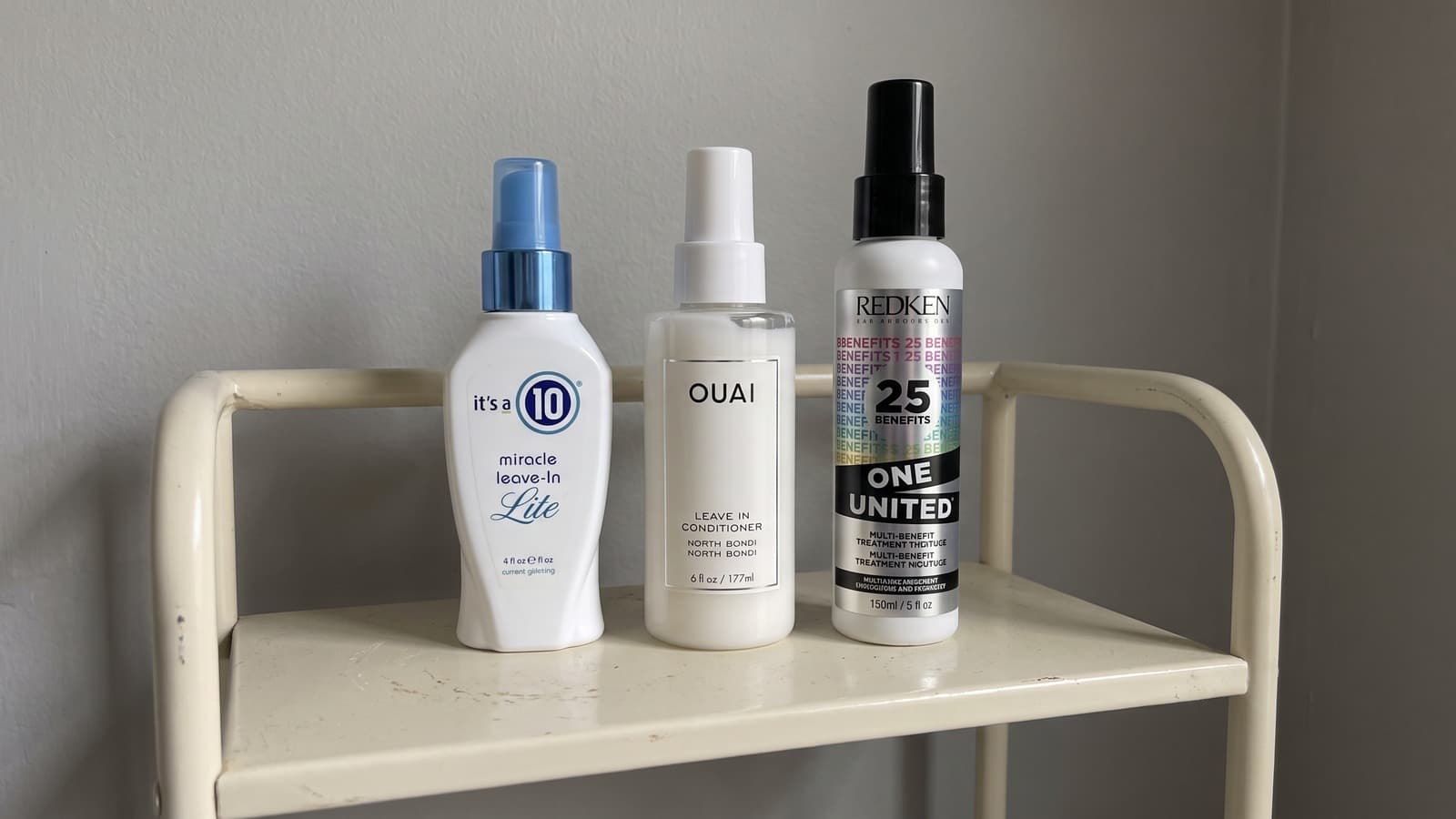
It’s a 10 Miracle Leave-In Lite is my first shortlist choice for fine, color-treated hair; L’Oréal EverPure is the lower-cost option. Pureology Color Fanatic is the premium option for someone who likes a floral-woody fragrance; Living Proof suits a firm silicone-free preference. Those are different reasons to buy, which is more useful than declaring every spray equally “weightless.”
Fine strands and colored ends can make conditioner shopping awkward: you want help with tangles without applying more product than the style needs. The answer is a suitable formula, careful placement and an honest look at what you already use.
Quick comparison
US one-time prices checked October 22, 2026, before tax and shipping. Unit prices use each bottle’s stated fluid-ounce size, rounded to the nearest cent; promotional and subscription discounts are excluded.
| Product | Price / size | Cost per fl oz |
|---|---|---|
| It’s a 10 Lite | $22 / 4 fl oz | $5.50 |
| L’Oréal EverPure | $12.99 / 6.7 fl oz | $1.94 |
| Pureology Color Fanatic | $37 / 6.7 fl oz | $5.52 |
| Redken One United | $32 / 5 fl oz | $6.40 |
| OUAI North Bondi | $32 / 6 fl oz | $5.33 |
| Living Proof Leave-In | $34 / 5 fl oz | $6.80 |
How I narrowed the list
Each pick has a specific reason to be here: a fine-hair formulation, a meaningful price advantage, clear styling directions or a useful ingredient preference. I checked the current US product and size. Older reviews can describe a different bottle, which matters particularly for OUAI’s larger new pack.
Fine describes the diameter of individual strands; density describes how many hairs you have. Aveda makes that distinction explicitly. A person with lots of fine hair can need a different amount of product from someone with a sparse, short crop. Fine hair can also be straight, wavy or curly.
These recommendations combine current labels, directions and named editorial coverage. Manufacturer heat ratings are identified as claims. I have not used product-page before-and-after photographs as proof that one bottle preserves hair color better than another.
It’s a 10 Miracle Leave-In Lite
$22 for 4 fl oz. Best for: a leave-in specifically aimed at fine hair.
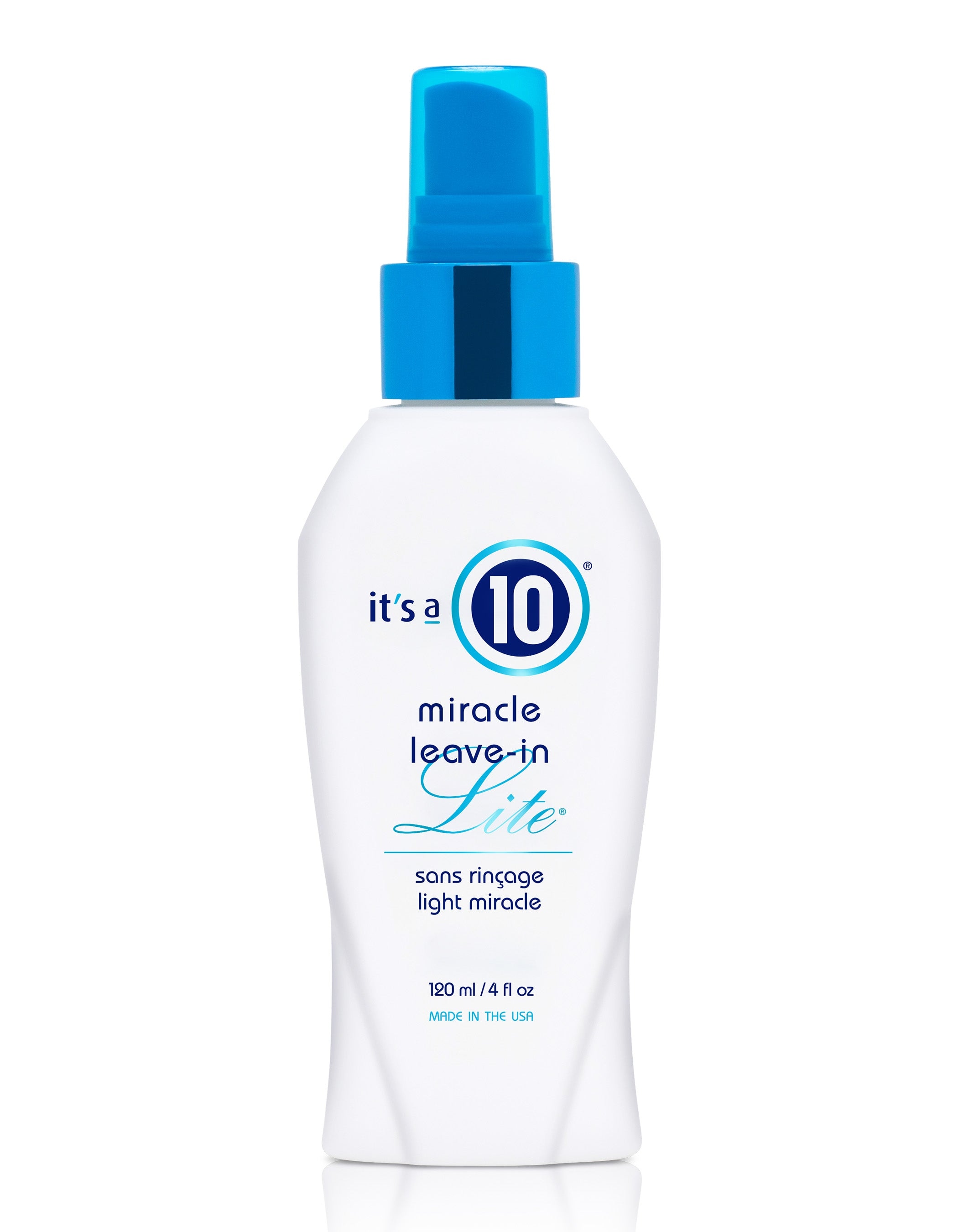
The Lite product earns this position because fine and short hair are central to its brief, rather than an afterthought in an “all hair types” description. Its directions specify towel-dried mid-lengths and ends. The listed formula contains hydrolyzed rice protein and silk amino acids, so it is not a protein-free option.
There is useful outside support for the choice: hairstylist Jae-Manuel Cardenas recommends Lite for fine hair in Who What Wear’s guide. That is an attributed recommendation, not evidence that it will beat every spray here on your hair.
I’d start with the 4 oz bottle rather than buying the largest size immediately. The smaller outlay gives you a chance to work out the amount you need. If a protein-free or fragrance-free formula is your requirement, choose by that requirement rather than the word “Lite.”
The drawback: fragrance and protein ingredients will not suit every preference.
L’Oréal Paris EverPure Moisture 21-in-1
$12.99 for 6.7 fl oz / 200 ml. Best for: trying a leave-in without a salon-price commitment.
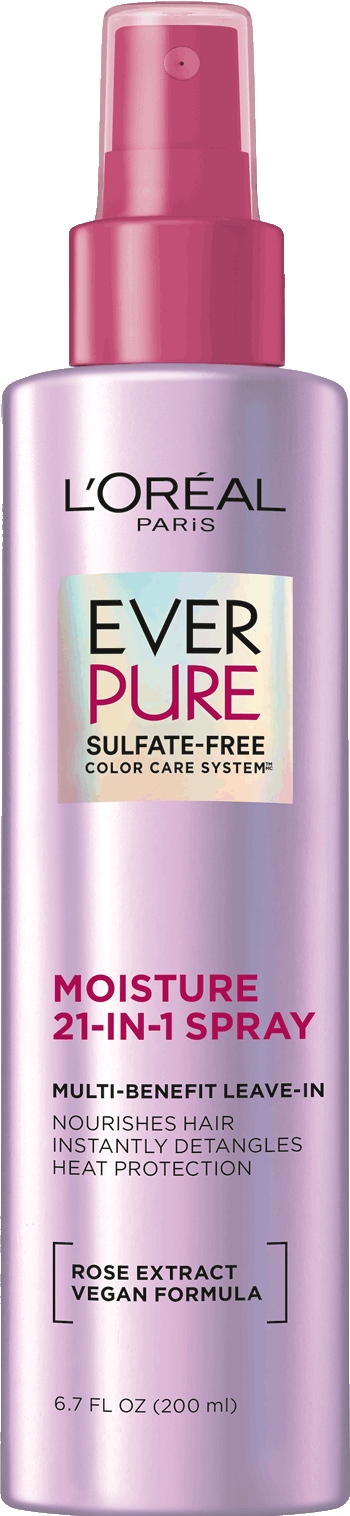
EverPure’s current Moisture spray costs less than half the price of several bottles here, while containing more product. The formula starts with water, coconut oil and amodimethicone. It is worth considering on its own terms rather than buying it solely because those opening ingredients resemble Pureology’s.
I’d put this first for someone who is unsure a leave-in deserves a permanent place in the routine. The price makes that decision less expensive. It does not mean you should use a larger amount: buying more milliliters and applying more product are separate choices.
For the formula overlap and same-size price gap, read our Pureology Color Fanatic vs L’Oréal EverPure comparison.
The current name matters when searching. L’Oréal still uses “Color Caring Spray” in the page copy, but the product title says Moisture 21-in-1. Our L’Oréal Paris guide covers the wider range if you are comparing similarly named bottles.
The drawback: it contains silicones and fragrance.
Pureology Color Fanatic
$37 for 6.7 fl oz / 200 ml. Best for: rose, ginger and cedarwood fragrance notes.
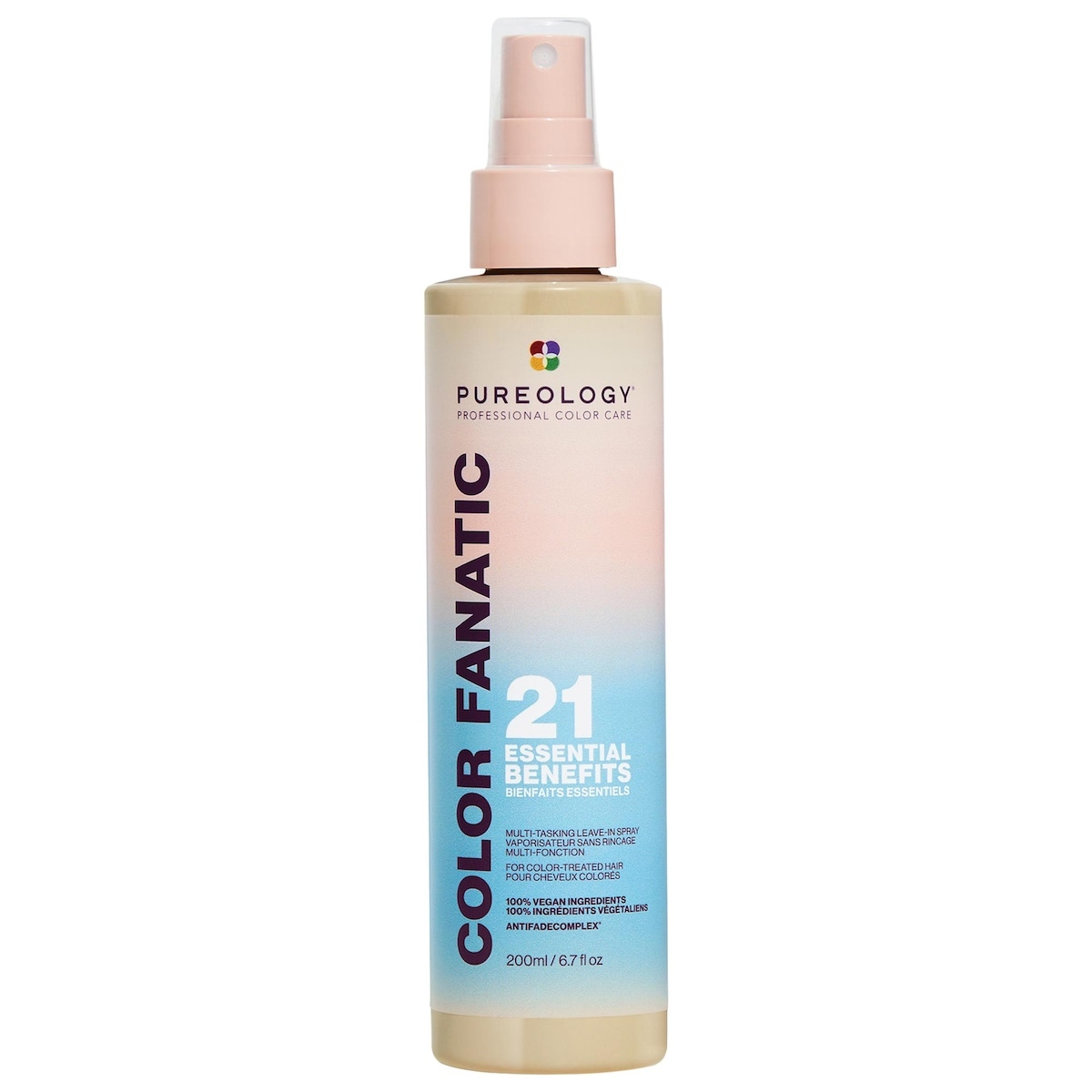
Color Fanatic’s current US listing combines a leave-in format with the brand’s heat-protection claim up to 450°F. It is a sensible shortlist choice when you want clear guidance for the product you apply before styling. Its rose, floral ginger and cedarwood notes also give you a different scent profile from EverPure. The heat rating is not unique to Pureology, and it is not an instruction to turn a tool up to 450°F.
My hesitation is the price. If you already use a separate heat protectant that suits you, Color Fanatic’s place in the routine needs a clearer justification than “21 benefits.” Consider the actual task you want the extra bottle to perform and whether it duplicates a step you like.
The Pureology range guide explains where it sits alongside Hydrate and Hydrate Sheer. For this list, I would buy the spray for its own purpose, without assuming the matching shampoo is required. A $37 purchase deserves that small pause before checkout.
The drawback: the highest upfront price here.
Redken One United: for a layered styling routine
$32 for 5 fl oz / 150 ml. Best for: a primer before a separate styling product.
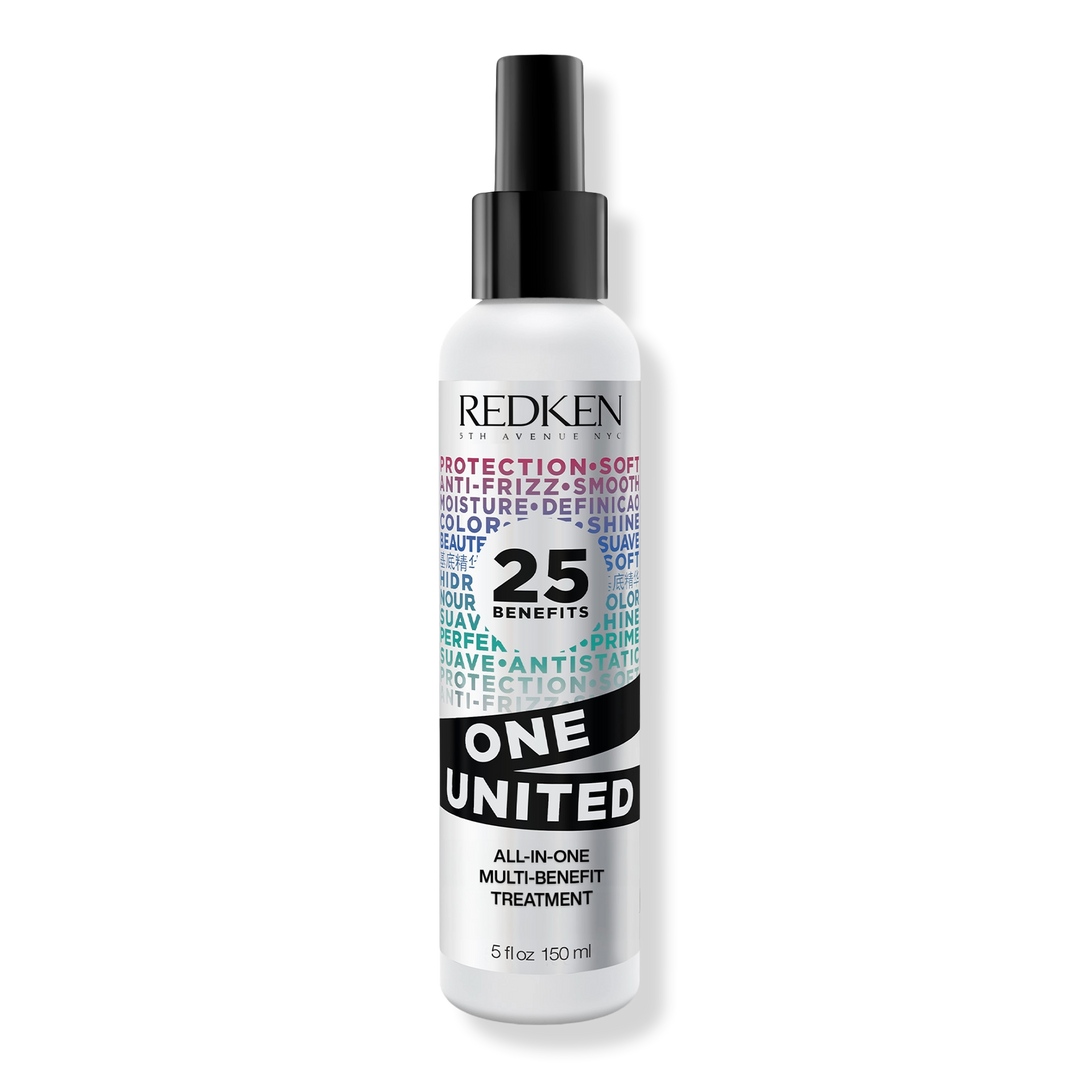
One United is sold for all hair types and explicitly described as suitable for color-treated hair. Redken’s professional application guide puts lighter treatments first when layering, with One United generally at that first step. That makes its role easy to understand if you also use a product for hold.
I’d consider it when you want to keep your existing mousse or styling cream and introduce one conditioning step underneath. Start by judging the combination you actually wear, rather than expecting the primer to supply every part of the finished style.
At $6.40 per stated fluid ounce, it is more expensive by volume than the standard Pureology bottle. “Cheaper bottle” would therefore be a misleading reason to choose it. Our Redken guide separates One United’s styling role from the brand’s richer treatment ranges.
The drawback: a small standard bottle for the price.
OUAI Leave In Conditioner, North Bondi: for fine waves and a scented routine
$32 for the current 6 fl oz / 177 ml bottle. Best for: someone who wants a noticeable fragrance choice.
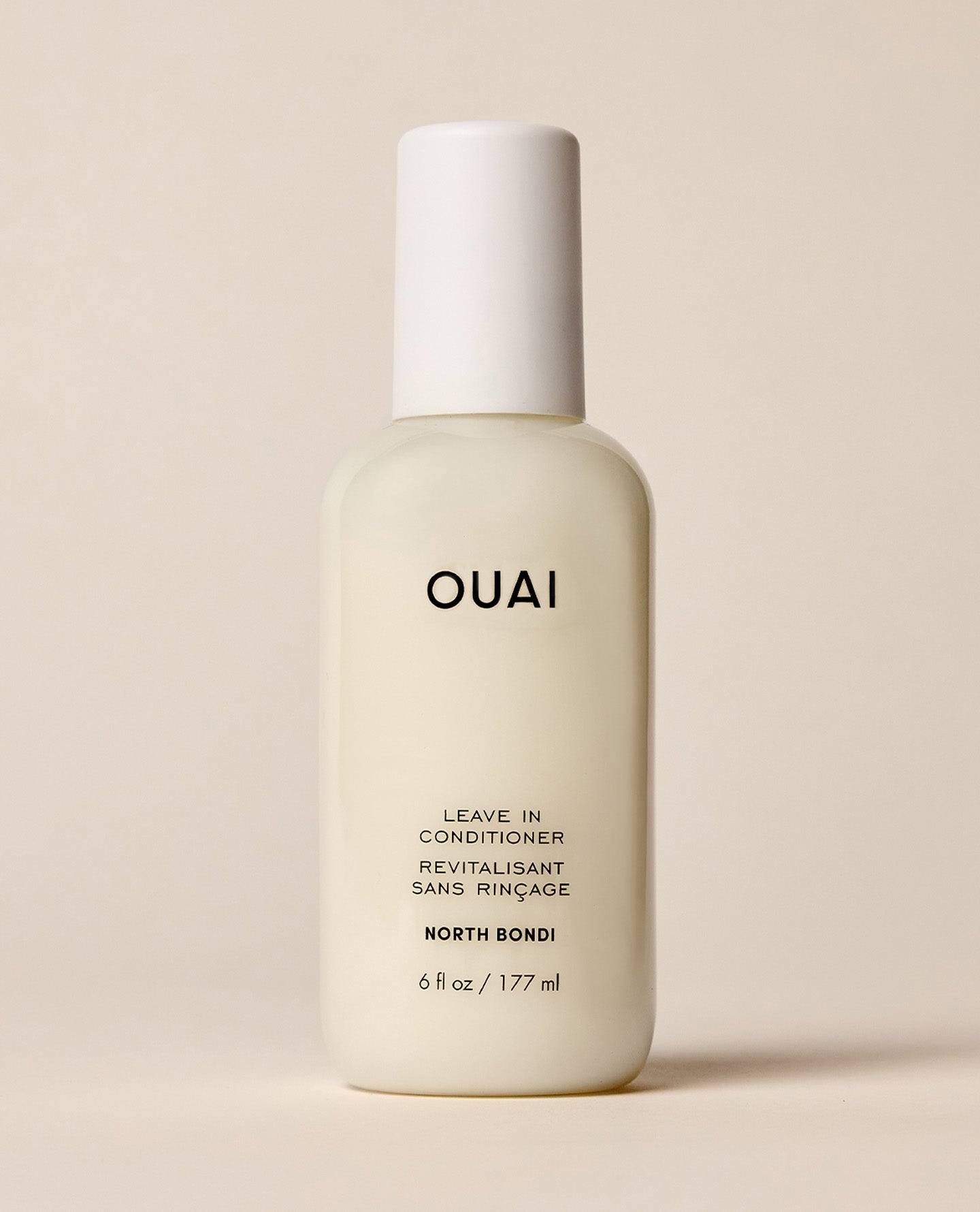
The selected North Bondi version is the current white 6 oz bottle. Its published formula includes dimethicone and fragrance. OUAI directs users to distribute it through wet hair from the eye line down; dry-hair touch-ups are specifically suggested for thicker, coarser or curlier hair.
There is a reason to consider the line for waves: Allure contributor Deanna Pai describes defined air-dried curls with the St. Barts version in the magazine’s September 2026 fine-hair guide. That is a different scent variant, not a first-person review of this North Bondi bottle.
For fine hair, I’d begin with the wet-hair instructions instead of treating the spray as something to add repeatedly throughout the day. Check the size before price-matching an older listing: the former 140 ml bottle is smaller. The current 6 oz format changes the value calculation.
The drawback: this is not a fragrance-free product.
Living Proof Leave-In Conditioning Spray
$34 for 5 fl oz. Best for: a silicone-free preference.
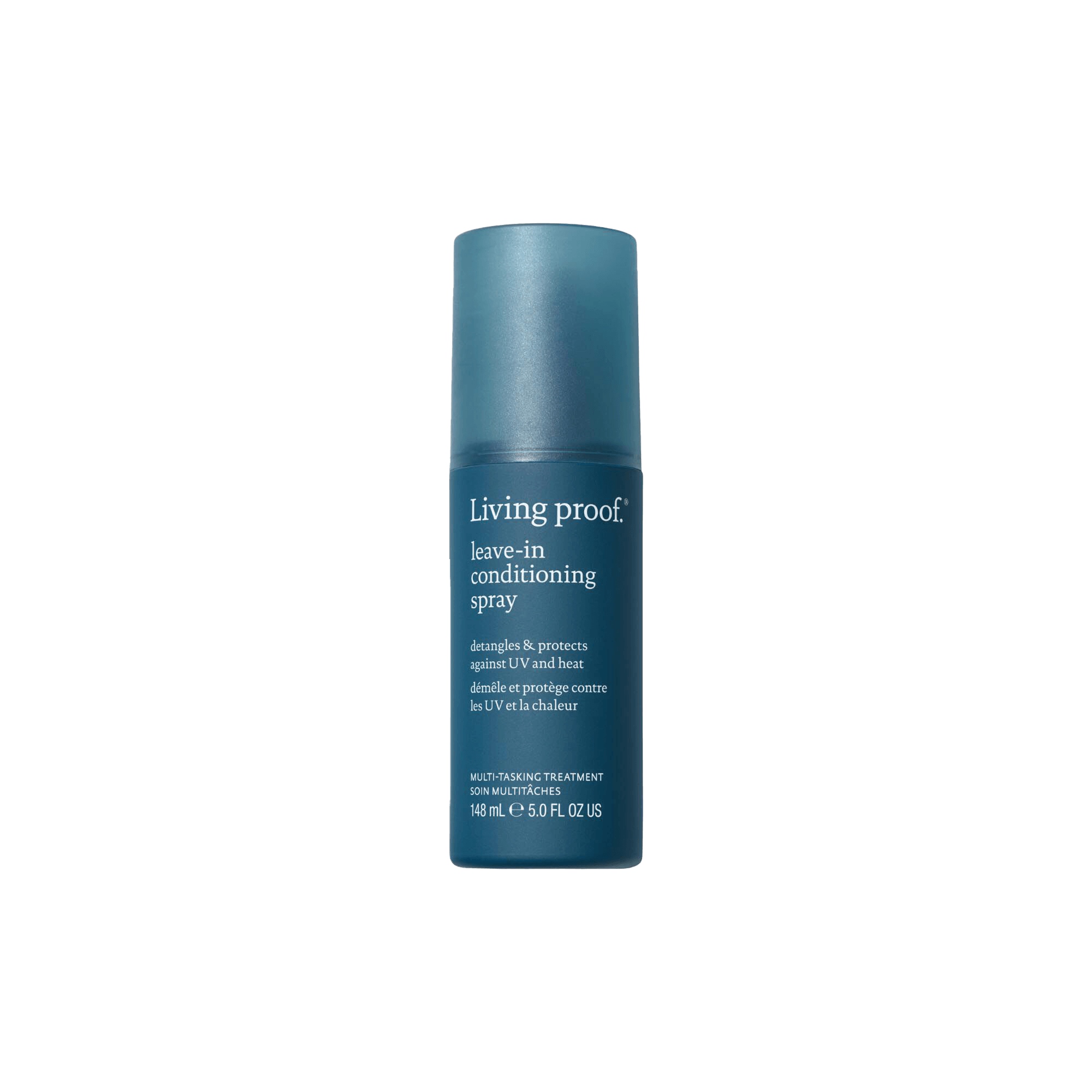
Living Proof’s current blue-bottle spray is silicone-free, suitable for color-treated hair and carries the brand’s heat-protection claim up to 450°F. Its instructions include shaking before use and applying to clean, damp hair. The ingredient list includes fragrance, so avoiding silicones does not make it an unscented alternative.
I’d choose it when you have a specific reason to exclude silicones, rather than assuming that exclusion guarantees more volume. You still need to assess the amount and finished feel in your own routine.
There is a useful detail in the brand’s application advice: although the general directions cover roots to ends, it specifically tells oily hair types to avoid the roots. That gives you a more practical starting point than copying the application of someone whose hair needs conditioning throughout.
The drawback: it still contains fragrance and has the highest unit price here.
Applying leave-in without flooding fine hair
The American Academy of Dermatology recommends beginning with a small amount, using damp hair and directing product to lengths and ends. It also distinguishes leave-in formulas from rinse-out conditioner: diluting the latter in a spray bottle is not a substitute.
My practical check would be the finished style, not the number of sprays somebody else uses. If only the ends need help, begin there. Keep the rest of your styling routine steady while assessing a new bottle, and note whether easier detangling comes with the movement you want after drying.
If you are changing the wash step too, our best shampoos for color-treated hair gives that decision its own comparison. Change one purchase at a time when possible; it makes the result easier to judge.
Frequently Asked Questions
What is the best leave-in conditioner for fine, color-treated hair?
It’s a 10 Miracle Leave-In Lite is my first shortlist choice because it specifically targets fine hair. EverPure is the lower-cost starting point. The better choice for you still depends on the amount needed, fragrance preference and how you style your hair.
Can fine hair use leave-in conditioner without looking flat?
Yes, but the amount and placement matter. Start with a small amount on damp lengths and ends, then assess the dried result. Fine strand diameter does not tell you hair density, so one fixed spray count cannot suit everyone.
Is silicone-free always better for fine hair?
No. Silicone-free is an ingredient preference, not proof that a formula will leave more volume. Living Proof is the option here for that preference; several other shortlisted sprays contain silicones. Judge the finished style as well as the ingredient list.
Does a leave-in replace heat protectant?
Only choose it for that role when the product specifically claims heat protection and its directions suit your styling. Do not assume every conditioner has the same protection, or treat a maximum heat rating as a recommended tool setting.
Will these sprays stop dyed hair fading?
No product here earns a promise that it will stop fading. Suitability for color-treated hair does not establish how much longer a particular shade will last, and this shortlist does not rank the products by a measured color-retention test.