Best foundation brushes: which shape works for your base?
 Published · Prices checked
Insider Beauty may earn a commission on purchases made through links in this article. See our disclosure.
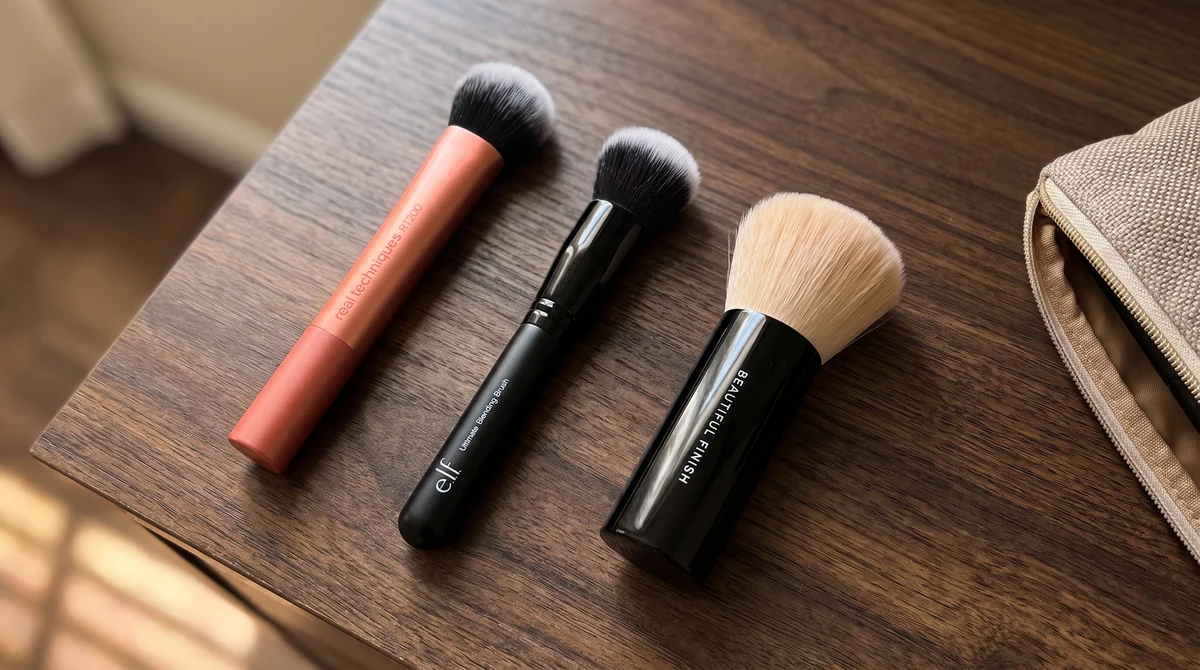
I'd start with the $10 Real Techniques Expert Face Brush for liquid or cream foundation. Its dense, rounded head makes sense as a first foundation brush, and the price leaves room to replace a base that is the wrong shade or finish. The $38 Sigma F80 is the more deliberate choice for someone who wants a broad, flat buffing surface. For bareMinerals loose foundation, I'd choose its powder-specific Beautiful Finish Brush instead.
Jump to a section
Five quick takeawaysThe brushes comparedReal Techniques Expert Face: the first one I'd buye.l.f. Ultimate Blending: spend the leastSigma F80: for a flat buffing surfaceRare Beauty Liquid Touch: an edge for contoursbareMinerals Beautiful Finish: for loose mineral foundationWhen fingers or a sponge make more senseCleaning belongs in the buying decisionThe useful upgrade is a shape that suits your foundation and the way you apply it. Buying three dense buffing brushes rarely solves three different problems. These five include two affordable alternatives, a flat top, an angled head and a specialist for loose minerals.
Five quick takeaways
- First liquid-foundation brush: Real Techniques Expert Face RT 200, $10.
- Lowest spend: e.l.f. Ultimate Blending Brush, $8. Choose this or RT 200 before buying both.
- Flat buffing head: Sigma F80, $38, for someone who already knows they prefer that shape.
- Angled edge: Rare Beauty Liquid Touch Foundation Brush, $30, for moving between broader areas and narrower contours.
- Loose mineral foundation: bareMinerals Beautiful Finish Brush, $39, designed for the brand's ORIGINAL and MATTE powders.
The brushes compared
| Brush | US price | Head shape | Where I'd use it | Main reservation |
|---|---|---|---|---|
| Real Techniques Expert Face RT 200 | $10 | Dense dome | Liquid and cream foundation | Broad head for small corrections |
| e.l.f. Ultimate Blending | $8 | Large, dense dome | An inexpensive first base brush | Similar role to RT 200 |
| Sigma F80 Flat Kabuki, original Chrome | $38 | Dense flat top | Buffing liquid or cream over larger areas | $28 more than RT 200 |
| Rare Beauty Liquid Touch Foundation | $30 | Angled, pointed oval | Base around facial contours | Shape alone cannot guarantee a smoother finish |
| bareMinerals Beautiful Finish | $39 | Raised centre and surrounding skirt | ORIGINAL or MATTE loose minerals | A specialist purchase for a specific routine |
Prices are for single brushes, checked on 30 October 2026 at the linked US brand or Ulta pages. Sets, offers and different models can change the comparison. This shortlist compares current specifications and intended use; it does not report a controlled wear, shedding or wash-durability test.
Real Techniques Expert Face: the first one I'd buy
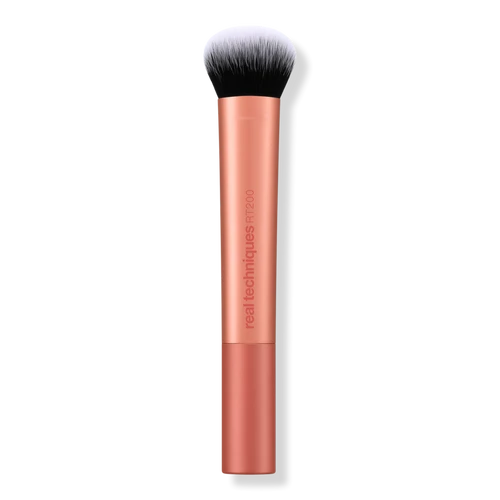
The Expert Face Brush at Ulta costs $10 and uses a dense, domed synthetic head for liquid and cream foundation. Real Techniques positions it for building medium to full coverage. That makes it a practical starting point if you want one tool for your usual base.
I'd use the rounded edge around the sides of the nose and work with a small amount of foundation at a time. Loading the entire head with product makes it harder to keep coverage local. A separate small brush still makes more sense for covering one mark than trying to steer a broad foundation head into it.
My reason to buy it is the combination of a familiar buffing shape and a modest price. I would not replace a comfortable, clean brush with this one simply because it appears on a list. Our small makeup-brush kit also includes RT 200; it can fill that same role here.
e.l.f. Ultimate Blending: spend the least
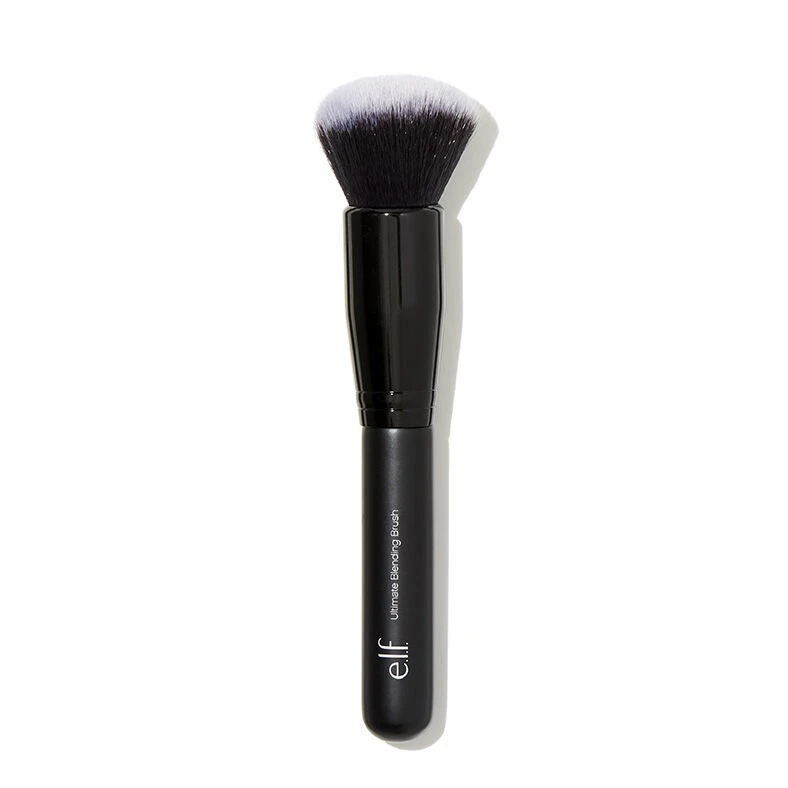
At $8, the Ultimate Blending Brush is the cheapest option in this comparison. e.l.f. describes a large, dense dome of synthetic bristles and lists powder, liquid and mousse formulas among its uses.
I'd put this beside RT 200 on the shopping list and buy one. The e.l.f. saves $2; RT 200 has a particularly clear liquid-and-cream brief. Those are small differences, so availability and the handle you prefer can reasonably decide it.
The limitation is the same broad-head trade-off. This is an all-over blending tool, and I would still keep concealer placement separate. A powder-compatible description also does not mean it is the ideal brush for every loose or pressed foundation. If you switch between wet and dry formulas, cleaning and drying the brush between them becomes part of the routine.
Sigma F80: for a flat buffing surface
The original Sigma F80 Flat Kabuki in Chrome costs $38. Its dense synthetic bristles form a flat top, which gives you a broader contact surface than a pointed head. Sigma recommends it for liquid and cream foundation with medium to full coverage.
I'd consider it if you already like pressing or buffing foundation over the cheeks and forehead with a flat brush. It is a more specific preference than simply wanting a better brush. The price is $28 above RT 200, and the product description does not establish that it will make your foundation last longer or eliminate texture.
Check the model name before ordering. This comparison covers the original F80, not F80 Air. Buying a different density because the number looks familiar defeats the point of choosing by shape and application style.
Rare Beauty Liquid Touch: an edge for contours
The $30 Liquid Touch Foundation Brush has an angled, pointed-oval head that Rare Beauty describes as fingertip-inspired. It uses synthetic bristles and is intended for liquid, cream and powder formulas.
This is the shape I'd consider if a blunt, wide brush feels awkward around the nose or along the hairline. The pointed end gives you an obvious edge to work with while the wider face handles larger areas. That is a reasoned preference based on the design, rather than a claim that I have measured a better finish.
The reservation is price. At three times the cost of RT 200, it needs to solve a handling problem you actually have. Also check that you are buying the Foundation Brush: the smaller Liquid Touch Concealer Brush is a different tool.
bareMinerals Beautiful Finish: for loose mineral foundation
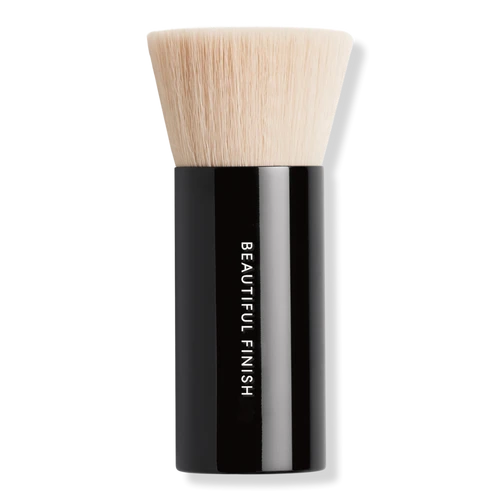
The Beautiful Finish Brush at Ulta costs $39 and is designed for bareMinerals ORIGINAL and MATTE loose mineral foundations. Its synthetic head combines a raised centre with a surrounding skirt, matching the brand's swirl, tap and buff method.
I'd shortlist it when loose mineral foundation is the base you use most days. It has a clearer specialist purpose than adding another liquid-foundation brush to the drawer. The trade-off is paying $39 for that particular routine.
I would not make it the default purchase for someone using a liquid tint. If you are still choosing your base, our powder-foundation comparison is the earlier decision. Buy the tool after you know which type of powder you want to apply.
When fingers or a sponge make more sense
I'd keep using fingers for a light base that already blends well that way. A new brush has to improve control, comfort or the finish you want enough to justify another thing to wash. The same applies if a sponge already gives you the result you like.
Before replacing your tool, try reducing the amount of foundation you apply at once. Work in small sections and stop working an area once it looks even. More brushing can become an attempt to fix a formula, shade or skincare combination that the tool cannot change. Our foundation guide covers that separate buying decision.
Cleaning belongs in the buying decision
The American Academy of Dermatology recommends washing makeup brushes every seven to ten days. Its guidance includes washing the tips with lukewarm water and gentle shampoo, rinsing thoroughly, then drying flat with the tips over a counter edge. Avoid immersing the whole brush head, where water can affect the glue.
That drying time matters if you have only one foundation brush. I would choose a simple brush I can keep clean over a larger collection that sits with old foundation in the bristles. None of the prices here includes evidence of how many wash cycles a brush will survive; that would need a longer use test.