Tatcha Dewy Milk Dupes: Anua vs. BYOMA
 October 22, 2026
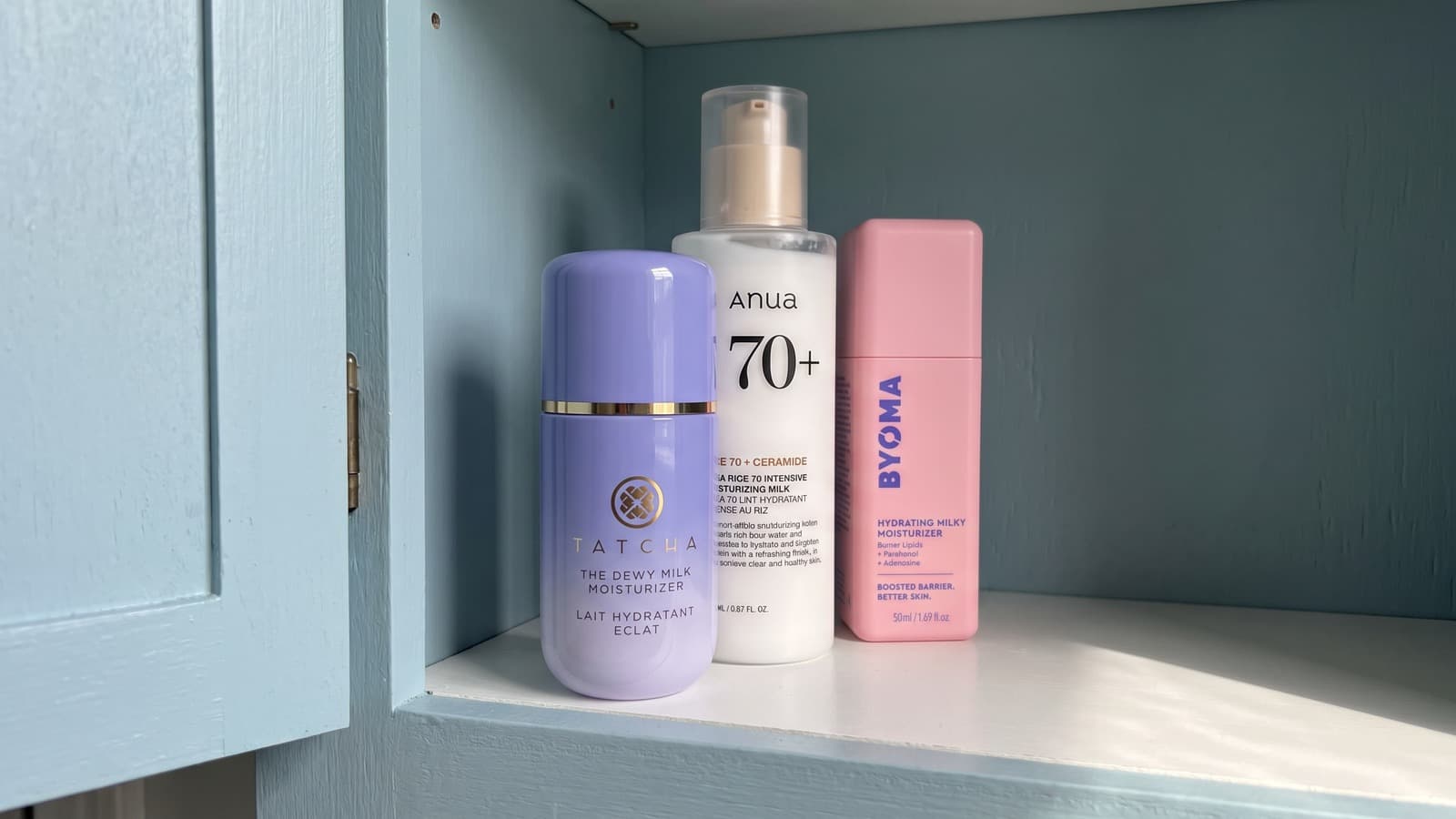
Key Takeaways
- BYOMA is my first lower-cost lightweight-lotion pick; Anua offers the better value per milliliter.
- These are different formulas. Rice ingredients and a milky texture do not establish an identical finish.
- Check which Tatcha you mean: Dewy Milk and the richer Dewy Skin Cream call for different alternatives.
Insider Beauty may earn a commission on purchases made through links in this article. See our disclosure.
I’d start with BYOMA Hydrating Milky Moisturizer if you want a cheaper, lightweight alternative to Tatcha The Dewy Milk. It costs $16.99 for 50 ml. Anua Rice 70 Intensive Moisturizing Milk makes more sense if value per bottle matters most: $20 buys 150 ml. Neither copies Tatcha’s formula, and I wouldn’t choose between them just because both have “milk” on the label.
The useful question is what you want to keep: a light moisturizer, a dewy finish, or the particular feel of Tatcha. Those are different buying decisions.
The prices, on equal terms
| Moisturizer | US price / size | Cost per 10 ml |
|---|---|---|
| Tatcha The Dewy Milk | $64 / 50 ml | $12.80 |
| BYOMA Hydrating Milky Moisturizer | $16.99 / 50 ml | $3.40 |
| Anua Rice 70 Intensive Moisturizing Milk | $20 / 150 ml | $1.33 |
Prices checked on 22 October 2026, before tax and shipping, without subscription discounts or promotional codes. Unit prices are rounded. BYOMA’s price is from Ulta US; Tatcha’s and Anua’s are from their US stores.
Anua gives you three times Tatcha’s volume for $44 less. BYOMA has the lowest bottle price. That distinction matters if you’re trying a new moisturizer: the best price per milliliter is only useful if you finish the bottle.
First, make sure you mean Dewy Milk
Tatcha positions The Dewy Milk for combination to oily skin. Its formula includes rice ferment, glycerin, dimethicone, squalane and zinc hyaluronate. It also lists fragrance and bergamot and lemon peel oils. “Without synthetic fragrances” does not mean fragrance-free.
The jar of Dewy Skin Cream is a separate, richer moisturizer aimed at dry to combination-dry skin. If that’s the product you’re replacing, use our Dewy Skin Cream alternatives instead. Starting with the wrong Tatcha product is an easy way to buy a perfectly good moisturizer that doesn’t meet your expectations.
For a sense of the original’s appeal, Sabrina Talbert’s Who What Wear review, updated in August 2026, describes soft, bouncy skin without a sticky finish. She also found that it needed a few minutes to absorb. That combination is more useful to this comparison than the promise of “glow” alone.
BYOMA: my first pick for a cheaper lightweight lotion
BYOMA costs $47.01 less than Tatcha for the same volume. Its current US ingredient list includes glycerin, panthenol, centella, beta-glucan and ceramide NP, without listed fragrance. You won’t find Tatcha’s rice ferment or zinc hyaluronate in this formula.
The texture distinction is worth paying attention to. In her December 2025 comparison of milky moisturizers, Jazzria Harris described BYOMA as almost gel-like rather than runny, with a cooling feel. She also cautioned that it might fall short for very dry skin. Her review supports considering it alongside Tatcha, rather than assuming every milk feels interchangeable.
I’d choose it for someone who wants to spend less on a light daily moisturizer and doesn’t need rice to be the headline ingredient. The smaller outlay also makes it the more sensible first purchase if you’re unsure whether you like this category.
Its main drawback as a dupe is precisely that gel-like character. If what you love is a very fluid lotion, BYOMA may take the comparison in the wrong direction. A similar job in your routine doesn’t guarantee the same movement across your skin.
Check the name before adding it to your basket: this is Hydrating Milky Moisturizer, not Hydrating Milky Toner. Our BYOMA guide sorts out the rest of the range.
Anua: the better choice for a large bottle
Anua’s 150 ml Rice 70 Intensive Moisturizing Milk is the value pick. The brand describes it as a lightweight lotion and recommends one or two pumps after serum, morning and evening. I’d consider it if you already know that a milky moisturizer suits your routine and want more product for the money.
The rice connection needs some precision. Olive Young’s US ingredient list starts with rice bran water, followed by an emollient, butylene glycol, glycerin and niacinamide. It also includes cholesterol, several ceramides, squalane, ectoin and coconut oil. No fragrance or essential oils appear on that list.
That is a different formula from Tatcha’s fermented-rice, silicone-and-squalane base. I wouldn’t translate the shared rice theme into a promise of equal shine control or an identical finish. Likewise, the presence of coconut oil doesn’t tell us whether this finished lotion will cause breakouts for a particular person.
The useful reason to skip Anua is a known dislike of one of its ingredients, including niacinamide, or a preference for a compact bottle. Its lower unit price doesn’t outweigh either. If you’re comparing several Anua products, our Anua brand guide helps distinguish the milk from its toners and serums.
What would make me keep Tatcha?
If you already have a moisturizer that feels right under your usual sunscreen and makeup, that familiarity has value. I wouldn’t replace it solely to collect a cheaper bottle that ends up unused. Equally, I wouldn’t pay the premium just to retain the word “rice” in a routine.
Before switching, decide on one thing the replacement must do. Perhaps you want less shine by lunchtime, less tightness after washing, or a moisturizer you can spread quickly before sunscreen. Keep the rest of your routine consistent while you assess that one change. Otherwise, it’s hard to know which purchase helped.
For me, BYOMA is the first lower-cost option to consider; Anua is the better buy once you know you want a larger bottle. Someone seeking a different Tatcha texture altogether should look at the separate Water Cream comparison. There’s no benefit in forcing a milk into a routine when the texture you actually want is something else.
Frequently Asked Questions
What is the best cheaper alternative to Tatcha Dewy Milk?
I’d start with BYOMA Hydrating Milky Moisturizer for its lower purchase price and lightweight format. Anua Rice 70 Intensive Moisturizing Milk is the better value per milliliter. Neither is an exact formula match.
Is Anua Rice 70 Milk the same as Tatcha Dewy Milk?
No. Anua uses rice bran water and includes niacinamide and several ceramides. Tatcha’s formula includes rice ferment and zinc hyaluronate. Shared rice ingredients don’t establish identical texture or results.
Is Tatcha Dewy Milk fragrance-free?
No. Its current ingredient list includes fragrance and citrus peel oils. BYOMA’s US listing is fragrance-free, and Anua’s published US ingredient list contains no fragrance. Check the packaging when buying in a different market or after a reformulation.
Can these replace Tatcha Dewy Skin Cream?
They are more relevant to shoppers seeking a lighter lotion. Dewy Skin Cream is Tatcha’s richer option for dry to combination-dry skin; someone who depends on that texture may find a milk insufficient.