

Rice water for hair growth can help hair look thicker, smoother, and break less, which can support length retention. It works mainly by strengthening the hair shaft with starches, amino acids, and antioxidants—not by magically speeding up your follicles. Here’s exactly how to use rice water for hair growth safely, how often, and who it’s best for.
Quick Takeaways
- Rice water for hair growth mainly helps by reducing breakage, not literally making hair grow faster
- It’s rich in starch, amino acids, and antioxidants, which can make hair feel smoother and stronger
- Overuse can lead to protein overload and dryness, especially on low-porosity or fine hair
- The safest methods are short contact times (5–20 minutes) and using it 1–2 times per week max
- You can use rice water as a rinse, spray, or mask, but always follow with moisture
How Rice Water Helps With Hair Growth

Rice water for hair growth has become a thing mostly because of its strengthening and smoothing effects, not because it’s some miracle hair fertilizer.
Here’s what’s actually going on:
- Starches (70–80%): These form a light film on the hair, which can make strands feel thicker and more protected
- Amino acids: Building blocks of protein that can help reinforce damaged areas on the cuticle
- Antioxidants & vitamins: Including ferulic acid and a bit of vitamin E, which can help with overall scalp and hair health
So, when people say rice water makes their hair “grow faster,” what’s usually happening is:
- Less breakage
- Less split ends
- Better elasticity, so hair doesn’t snap as easily
I’ve found that when clients focus on length retention—protecting the hair they already have—rice water can be a nice add-on if their hair actually likes it and they don’t overdo it.
How To Make Rice Water For Hair Growth (3 Easy Methods)
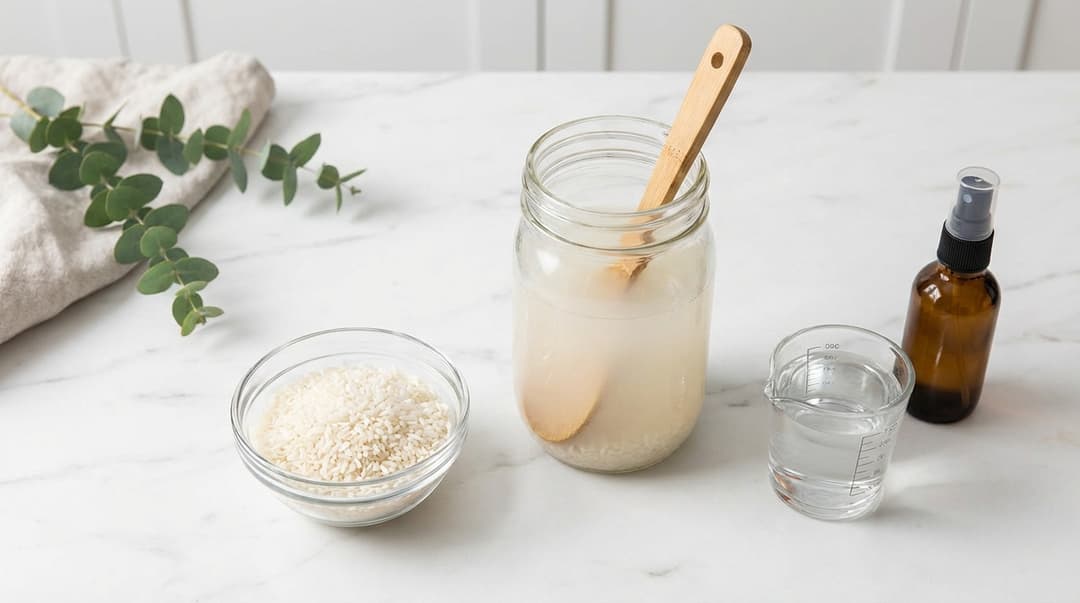
You don’t need fancy tools or products to get started. Here are three common ways to make rice water at home.
1. Basic Soaked Rice Water
This is the simplest and gentlest method.
- Rinse 1/2 cup of uncooked rice under cool water to remove dust and impurities
- Add the rice to 2–3 cups of filtered water in a clean glass jar or bowl
- Swirl it with your hand for 1–2 minutes
- Let it sit at room temperature for 30–60 minutes
- Strain out the rice and keep the liquid
- Use immediately, or refrigerate and use within 3 days
This version is best if you’re just starting with rice water for hair growth and want something mild.
2. Fermented Rice Water
Fermented rice water is more potent (and a bit smellier), with a lower pH that can help smooth the cuticle—if your hair tolerates it.
- Follow steps 1–4 from the basic method
- Instead of using it right away, leave the jar loosely covered at room temperature for 24 hours
- Once it smells slightly sour, strain the rice out
- Dilute with plain water at least 1:1 (one part rice water, one part water) before using
- Store in the fridge and use within 5–7 days
If your scalp is sensitive, I’d skip fermentation or keep contact time very short.
3. Boiled Rice Water
This one’s a bit thicker and more starchy—great if you want that slip and conditioning feel.
- Rinse 1/2 cup rice, then add to a pot with 3–4 cups water
- Boil until the water looks cloudy and starchy
- Let cool completely
- Strain out the rice
- Dilute with more water until it’s a milky liquid, not gluey
Honestly, if your hair is already prone to buildup, I’d go lighter with this one or use it only on the lengths, not the scalp.
How To Use Rice Water For Hair Growth Step-By-Step
There are a few different ways to work rice water into your routine, depending on how much effort you want to put in and how sensitive your hair is.
1. Rice Water Rinse (Most Popular)
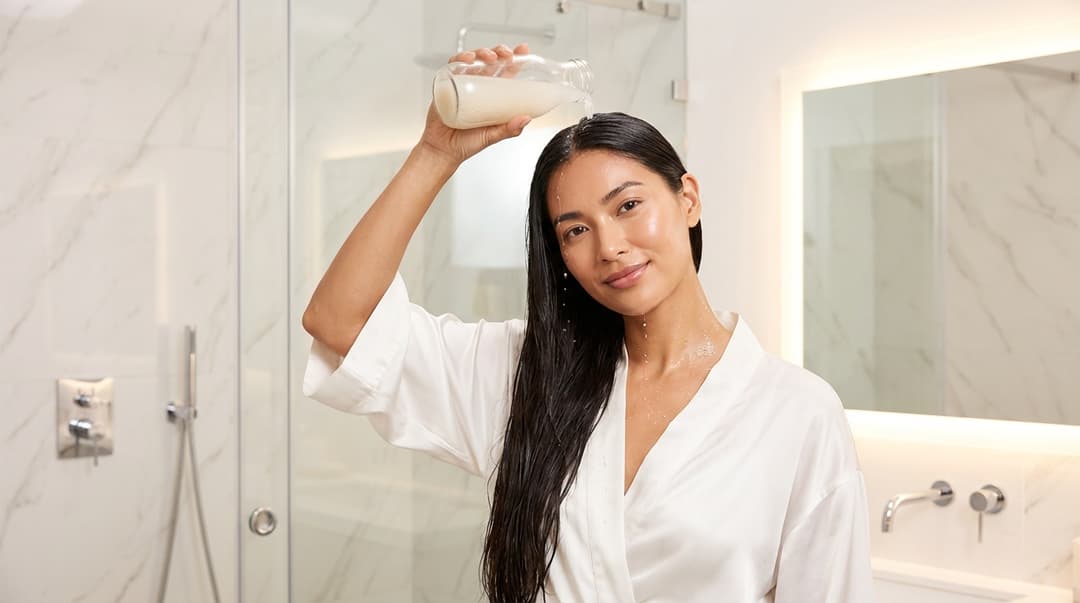
This is the easiest and usually the safest way to start.
- Shampoo your hair as usual
- Gently squeeze out excess water
- Pour rice water slowly over your scalp and lengths, or apply with an applicator bottle
- Massage into scalp for 1–2 minutes
- Let it sit for 5–15 minutes
- Rinse thoroughly with lukewarm water
- Follow with a hydrating conditioner or deep conditioner
So many people skip that last step and then wonder why their hair feels stiff. Rice water is more of a strengthening treatment, not a standalone conditioner.
2. Rice Water Leave-In Spray (Use With Caution)
You can use rice water for hair growth as a light leave-in, but this is where protein overload can sneak up on you.
- Dilute rice water heavily (at least 1:3 – one part rice water, three parts water)
- Add a few drops of a light oil (like jojoba) if your hair is dry
- Pour into a spray bottle
- Mist lightly on damp hair, focusing on mid-lengths and ends
- Don’t soak the hair—less is more
If your hair starts to feel stiff or straw-like, cut this out immediately.
3. Rice Water Hair Mask Boost
You can also add rice water to your existing hair mask.
- In a small bowl, mix:
- 2–3 tablespoons of your favorite deep conditioner or hair mask
- 1–2 tablespoons of rice water
- Apply to clean, damp hair
- Leave on for 10–20 minutes
- Rinse thoroughly
This can give you the benefits of rice water for hair growth while keeping things balanced with moisture.
How Often Should You Use Rice Water For Hair Growth?
Frequency really depends on your hair type, porosity, and how many other strengthening products (like protein treatments) you’re already using.
As a general guide:
- Fine, low-porosity, or easily tangled hair:
- Start with once every 2 weeks
- Keep contact time short (5–10 minutes)
- Medium density, normal porosity hair:
- Try once a week
- Adjust based on how your hair feels
- Thick, high-porosity, or very damaged hair:
- You may tolerate 1–2 times per week, but watch for stiffness
Signs you’re overdoing rice water:
- Hair feels dry, stiff, or like straw
- Increased tangles and knots
- Hair snaps more easily when you stretch a strand
If that happens, stop all protein-rich treatments (including rice water) and focus on:
- A rich deep conditioner (moisture-focused)
- A leave-in conditioner with humectants like glycerin or aloe
- A lightweight hair oil on ends to seal in moisture
I’ve seen so many people think rice water “ruined” their hair, when really they just used it way too often.
Who Should (And Shouldn’t) Use Rice Water On Hair
Rice water for hair growth isn’t one-size-fits-all. Some hair types love it, others hate it.
Hair Types That Usually Benefit
- High-porosity hair (often color-treated or chemically processed)
- Thick, coarse strands that can handle extra strength
- Curly or coily hair that’s prone to breakage, but paired with lots of moisture
These hair types often see:
- Less breakage and shedding from the lengths
- Smoother cuticles and easier detangling
- Better length retention over time
Hair Types That Need To Be Careful
- Low-porosity hair (water beads up on strands)
- Very fine, silky hair that gets weighed down easily
- Hair that already uses regular protein masks or bond builders
For these, rice water can quickly tip things into dryness. If you want to experiment anyway, keep it super diluted, use short contact times, and don’t do it more than once a month at first.
Scalp Considerations
If you have:
- Sensitive or reactive scalp
- Active eczema, psoriasis, or open sores
I’d skip fermented rice water, and maybe rice water entirely on the scalp. You can still use it just on the mid-lengths and ends instead.
Clean Beauty Alternatives To DIY Rice Water
If DIY isn’t your thing (or you just don’t want your bathroom smelling like sour rice), there are product options that give similar benefits in a more controlled way.
Look for:
- Strengthening shampoos and conditioners with rice protein, hydrolyzed proteins, or amino acids
- Leave-in conditioners or mists with lightweight proteins plus humectants like aloe or glycerin
- Bond-repair or damage-repair masks that focus on rebuilding and smoothing without harsh ingredients
When I’m helping someone build a routine around rice water for hair growth, I usually suggest:
- Using rice water as an occasional treatment, not the core of the routine
- Keeping the rest of the routine moisture-balanced, with:
- A gentle, sulfate-free shampoo
- A hydrating conditioner with oils and butters that don’t feel waxy
- A weekly or bi-weekly moisturizing hair mask
That way, rice water becomes a nice booster instead of the main event.
Common Mistakes With Rice Water For Hair Growth
So many TikToks skip the nuance, so let’s clear a few things up.
- Using it every wash day: This is the fastest way to protein overload for most people
- Not diluting fermented rice water: Undiluted can be way too strong and irritating
- Leaving it on for hours or overnight: More time doesn’t always mean more benefit—often it just means more dryness
- Skipping conditioner afterward: Rice water is not a replacement for a good conditioner or mask
- Expecting instant growth: You might see less breakage within a few weeks, but visible length changes take months, not days
If you avoid these, you’re already ahead of most of what’s floating around on social.
The Bottom Line
Rice water for hair growth can absolutely support stronger, smoother, less breakage-prone hair, which helps you keep the length you already grow. It’s not magic, but used thoughtfully—1–2 times a week max, short contact times, always followed by moisture—it can be a nice, low-cost addition to a healthy hair routine.
Start slowly, listen to how your hair responds, and remember: real growth comes from consistent, gentle care, not just one trendy treatment.
If you love practical, ingredient-focused tips like this, you’ll probably enjoy Insider Beauty’s weekly deals and clean-beauty picks. You can sign up to get curated product recs, exclusive discounts, and routine tips straight to your inbox.
Want more tips and exclusive beauty deals delivered to your inbox? Pop your email in the box below and join thousands of insiders who save big every week.