

A pregnancy-safe skincare routine: what to avoid starts with skipping retinoids and hydroquinone, limiting high-strength acids, and using a gentle cleanser, moisturizer, and broad-spectrum SPF 30 or higher. Ingredients such as azelaic acid, niacinamide, vitamin C, hyaluronic acid, and ceramides are generally considered compatible with pregnancy, but run medicated products past your OB-GYN or dermatologist.
Quick Takeaways
- Avoid all retinoids: This includes prescription tretinoin and tazarotene as well as over-the-counter retinol and retinal products.
- Skip hydroquinone: It has relatively high systemic absorption and limited pregnancy safety data.
- Keep exfoliation gentle: Avoid professional-strength acid peels and using salicylic acid over large areas unless your doctor approves it.
- Choose proven basics: A gentle cleanser, fragrance-free moisturizer, and broad-spectrum SPF 30 or higher can carry most of your routine.
- Treat common concerns simply: Azelaic acid can help with acne and discoloration, while niacinamide and ceramides support the skin barrier.
What skincare ingredients should you avoid during pregnancy?
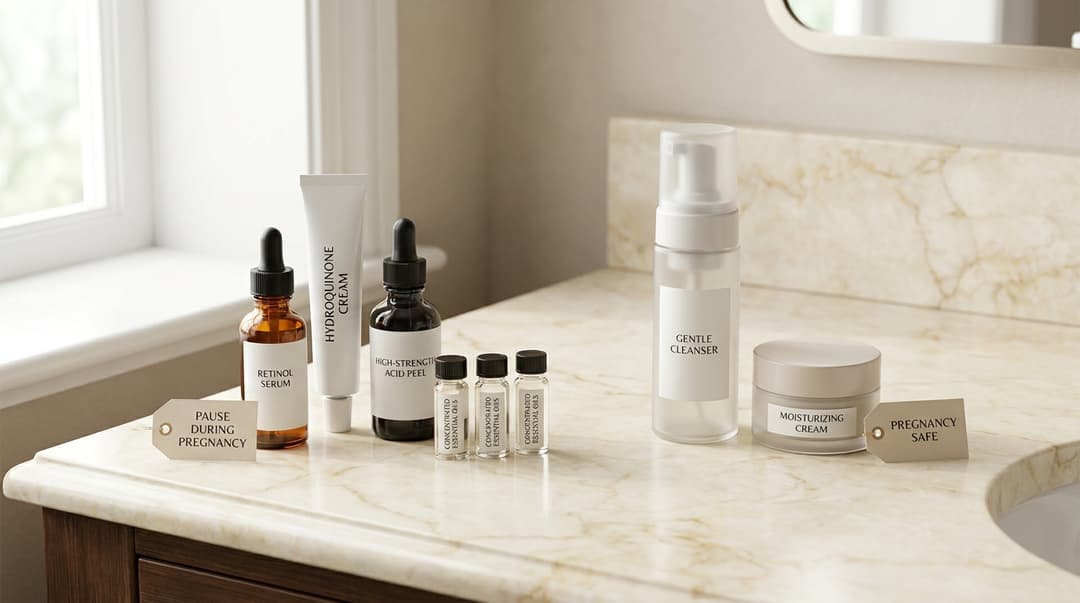
When reviewing a pregnancy-safe skincare routine: what to avoid matters just as much as what you add. You don't need to throw away your entire bathroom cabinet, but a few ingredients deserve a pause.
- Prescription and over-the-counter retinoids: Avoid oral isotretinoin and topical forms such as tretinoin, adapalene, tazarotene, retinol, retinal, and retinyl esters. Oral isotretinoin is known to cause severe birth defects. Although topical absorption is much lower, major medical organizations recommend avoiding topical retinoids during pregnancy as a precaution.
- Hydroquinone: This pigment-lightening ingredient has been reported to have substantial absorption through the skin. There isn't enough pregnancy-specific safety research, so most dermatologists recommend skipping it.
- High-dose salicylic acid: Small amounts of low-strength topical salicylic acid are often considered acceptable, but avoid strong peels, leave-on products used across large areas, or frequent full-body application without medical guidance.
- Spironolactone: Oral spironolactone, sometimes prescribed for hormonal acne, isn't recommended during pregnancy because of potential effects on fetal hormone development. Ask your prescriber about an alternative before trying to conceive.
- Unverified essential-oil blends: Natural doesn't automatically mean pregnancy-safe. Concentrated essential oils can irritate skin, and safety data for many oils are limited. Check each ingredient rather than trusting a broad natural or clean label.
Also look at products you don't think of as skincare, including lash serums, medicated scalp treatments, and body acne sprays. Retinoids and high-strength acids can turn up in surprising places.
Which skincare ingredients are pregnancy-safe?
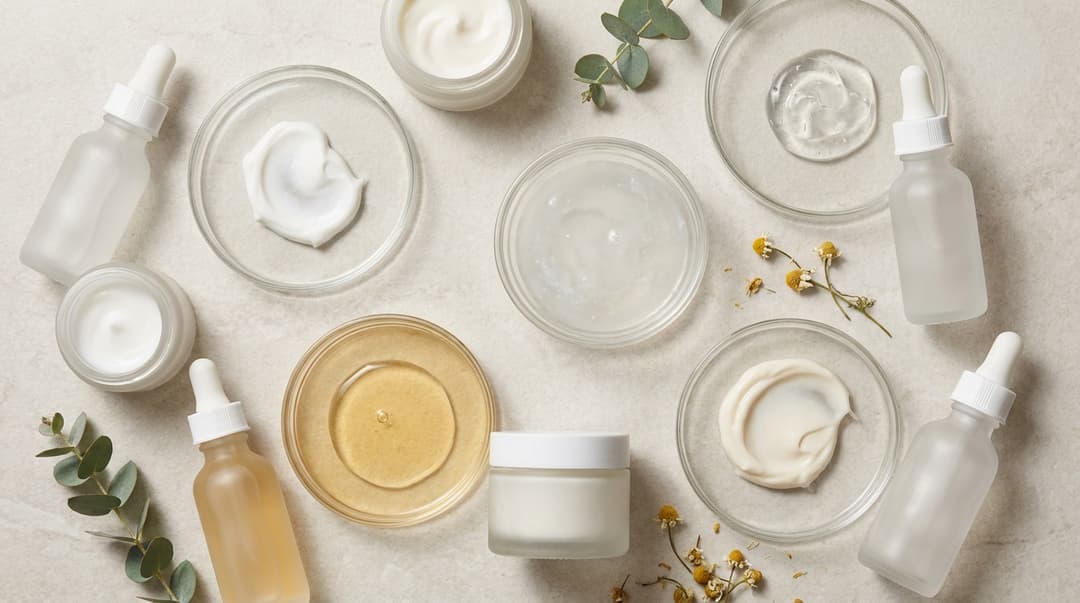
The good news: plenty of well-studied, useful ingredients can stay on your shelf. According to guidance commonly referenced by the American College of Obstetricians and Gynecologists and the American Academy of Dermatology, several over-the-counter options may be used during pregnancy with appropriate medical guidance.
- Azelaic acid: Helps unclog pores, calm inflammation, and fade post-acne marks. It's one of my favorite multitaskers when retinoids and hydroquinone are off the table.
- Niacinamide: Supports the skin barrier, helps regulate excess oil, and may soften the appearance of redness and uneven tone.
- Vitamin C: An antioxidant that can help with dullness and discoloration while supporting your sunscreen.
- Hyaluronic acid and glycerin: Humectants that pull water into the upper layers of skin, making them helpful for pregnancy-related dryness.
- Ceramides and squalane: Moisturizing ingredients that reinforce the skin barrier and reduce water loss.
- Glycolic and lactic acids: Low-strength, limited use is generally considered acceptable. Start slowly because pregnancy can make previously tolerant skin surprisingly reactive.
- Benzoyl peroxide: Often used in limited amounts for inflammatory acne. The body rapidly converts it to benzoic acid, but it's still smart to confirm the strength and frequency with your doctor.
Honestly, I've found that a shorter ingredient list is easier on sensitized skin. Even a generally pregnancy-compatible ingredient can cause stinging, dryness, or a rash, so patch-test new products for several days before applying them widely.
How do you build a pregnancy-safe skincare routine?
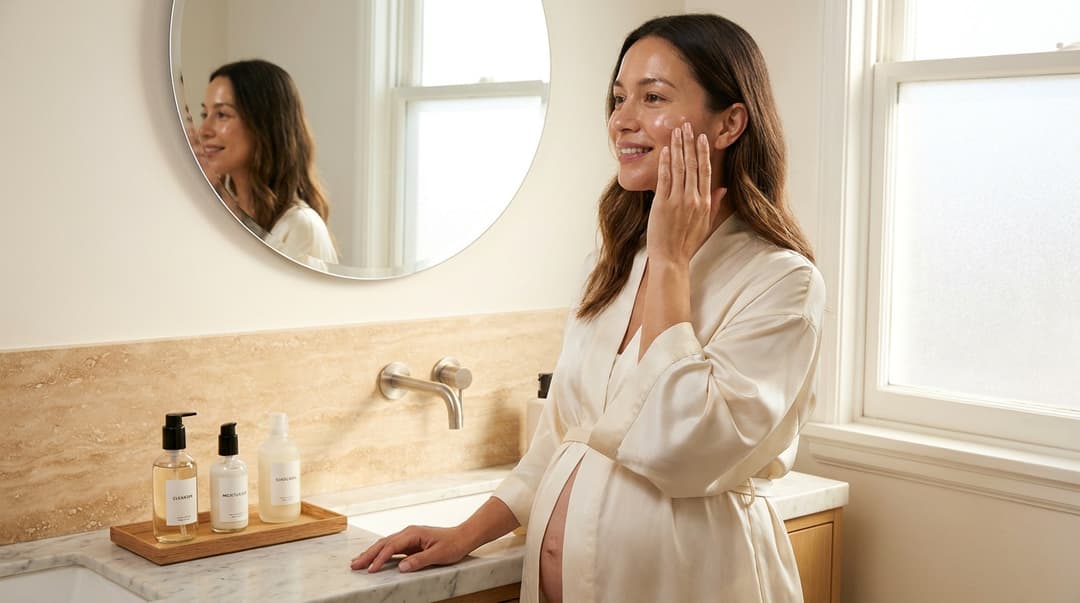
A practical pregnancy-safe skincare routine: what to avoid plan doesn't need ten steps. Start with these five, introducing only one new product at a time so you'll know what caused irritation if your skin acts up.
- Cleanse gently in the morning. Use a fragrance-free cream or gel cleanser and lukewarm water. If your skin is very dry, simply rinsing with water may be enough.
- Apply a targeted serum. Choose vitamin C or niacinamide for antioxidant support and uneven tone. For acne or stubborn marks, consider azelaic acid instead.
- Moisturize. Look for a simple moisturizer containing ceramides, glycerin, hyaluronic acid, or squalane. Apply it while your skin is slightly damp.
- Use broad-spectrum sunscreen. Apply SPF 30 or higher every morning to your face, neck, ears, and other exposed areas. Reapply about every two hours outdoors, as well as after sweating or swimming.
- Repeat a simplified evening routine. Cleanse, use your doctor-approved acne or pigment treatment, and finish with moisturizer. Skip sunscreen at night, obviously, but don't skip barrier support.
Look, consistency will usually do more than piling on extra actives. Hormonal skin can change by trimester, too, so reassess if a product suddenly feels too drying or irritating.
How can you treat acne and dark spots while pregnant?
For mild pregnancy acne, try azelaic acid once daily, then increase to twice daily only if the product directions and your doctor support it. A low-strength benzoyl peroxide wash can be another option for inflamed pimples, especially when it's rinsed off rather than left on all day.
For dark spots or melasma, focus on prevention first. Daily sunscreen helps stop existing patches from deepening, and tinted mineral formulas containing iron oxides may offer extra protection against visible light, which can worsen melasma in some skin tones. Vitamin C, niacinamide, and azelaic acid can gradually improve uneven tone without hydroquinone.
A few practical tips:
- Don't pick blemishes: Picking increases inflammation and the risk of lingering marks.
- Use one acne active at a time: Combining benzoyl peroxide, acids, and exfoliating scrubs can damage your skin barrier.
- Give products time: Acne treatments may need six to eight weeks of consistent use before you can judge the result.
- See a dermatologist for painful acne: Deep cysts, scarring, or rapidly worsening breakouts often need prescription care rather than a stronger DIY routine.
Are sunscreen, treatments, and procedures safe?
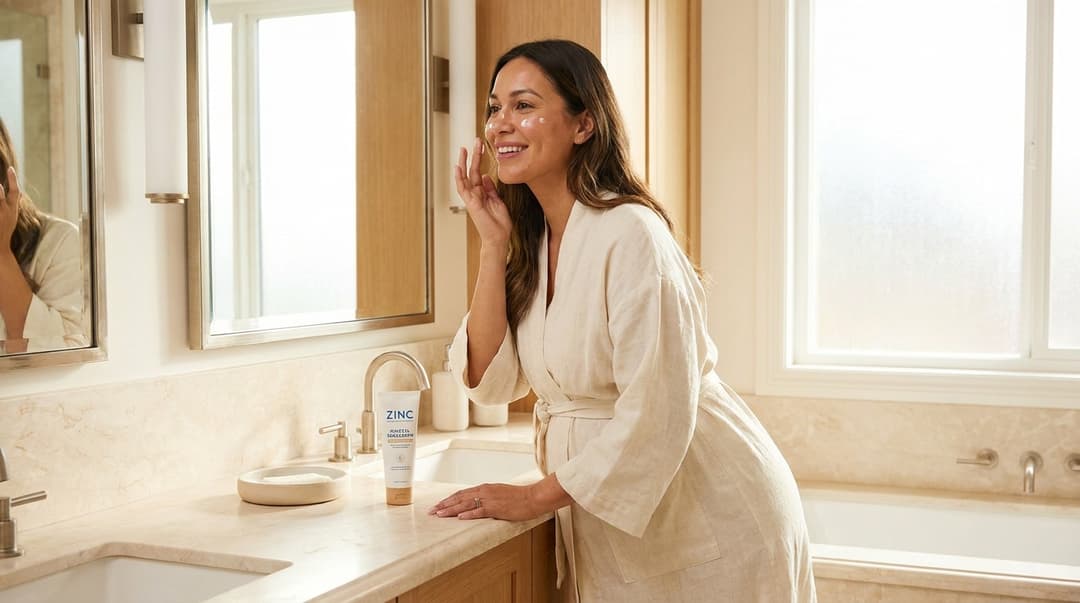
Sunscreen is strongly recommended during pregnancy because hormonal shifts can increase melasma risk. If you want the most conservative option, choose a mineral sunscreen with zinc oxide or titanium dioxide. These filters sit primarily on the skin's surface and are also helpful for sensitive skin.
Chemical sunscreen filters aren't automatically unsafe. Research showing that some filters can be absorbed doesn't prove that they cause harm, but pregnancy-specific data remain limited. Your dermatologist can help if mineral formulas trigger dryness, leave an unwanted cast, or simply don't work for you. The sunscreen you'll apply generously is usually the practical winner.
So, what about in-office treatments? Many clinicians recommend postponing medium or deep chemical peels, laser treatments, microneedling, and cosmetic injectables because pregnancy safety data are limited and skin may heal or pigment differently. A basic hydrating facial may be fine, but tell the provider you're pregnant and request the complete product list first.
Contact your healthcare professional before using any prescription product, treating a large body area, or combining multiple medicated ingredients. Get prompt medical advice for blistering, facial swelling, breathing trouble, a widespread rash, or signs of infection.
The Bottom Line
The easiest pregnancy-safe skincare routine: what to avoid strategy is to remove retinoids and hydroquinone, be cautious with high-strength acids, and build around gentle cleansing, moisturizing, and daily SPF 30 or higher. Azelaic acid, niacinamide, vitamin C, hyaluronic acid, and ceramides can address many common concerns without making your routine complicated.
Product formulas and personal medical needs vary, so bring photos or ingredient lists to your OB-GYN or dermatologist if you're unsure. And remember, pausing an active for several months won't erase years of good skincare—I promise your routine can still be effective without being aggressive.
Want pregnancy-friendly beauty finds without spending hours comparing labels? Sign up for Insider Beauty's weekly deals for editor-picked offers and smart shopping tips delivered to your inbox.
Want more tips and exclusive beauty deals delivered to your inbox? Pop your email in the box below and join thousands of insiders who save big every week.