
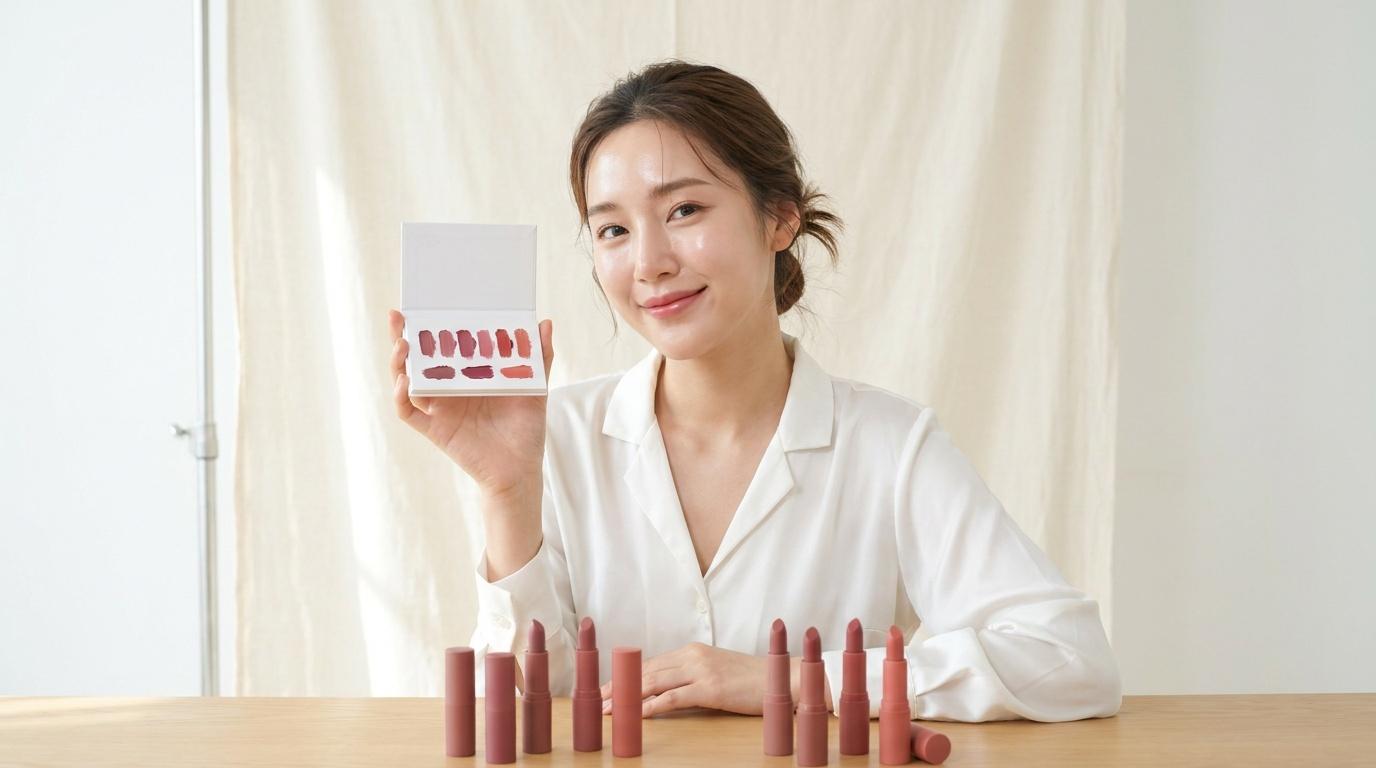
La best lipstick shades for your skin tone complement both your skin depth and undertone: cool undertones tend to suit blue-based colors, warm undertones glow in orange- or golden-based shades, and neutral undertones can wear a mix of both. Your natural lip pigmentation and the lipstick's opacity also affect the final result, so testing the shade on your lips is always more accurate than swatching it on your hand.
I punti essenziali
- Check depth and undertone: Skin depth ranges from fair to deep, while undertones are usually cool, warm, neutral, or olive.
- Match the color base: Blue-reds and rosy pinks flatter many cool undertones; brick reds and peachy corals complement warm undertones.
- Adjust for lip pigmentation: A lipstick may look lighter, darker, cooler, or more muted once applied to naturally pigmented lips.
- Choose a wearable finish: A satin bullet lipstick is forgiving, liquid lipstick offers stronger color payoff, and tinted balm creates a softer effect.
- Treat these as guidelines: The shade that makes you feel good is ultimately the right one, even if it breaks every traditional color rule.
How Do You Identify Your Skin Tone and Undertone?
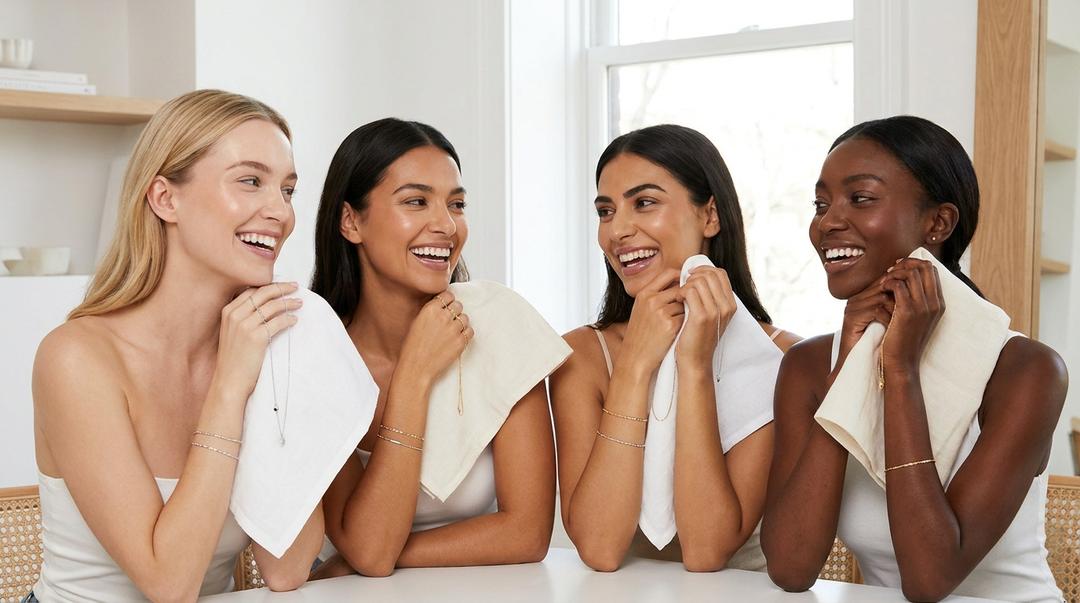
Your skin tone describes the visible depth of your complexion, such as fair, light, medium, tan, or deep. Your undertone is the subtle color beneath the surface, and it generally stays consistent even if you tan or your complexion changes seasonally.
Surface redness, acne, hyperpigmentation, and self-tanner can make undertones tricky to read. I've found that using two or three tests together is much more reliable than trusting the color of your wrist veins alone.
- Look at your neck and chest in daylight. These areas may reveal your undertone more clearly than your face, especially if you wear foundation or have facial redness.
- Hold pure white and cream fabric near your face. Cool skin may look brighter beside crisp white, while warm skin often comes alive next to cream. If both work, you may be neutral.
- Compare silver and gold jewelry. Silver often harmonizes with cool undertones, while yellow gold tends to flatter warm ones. Loving both can point to a neutral undertone.
- Check for olive tones. Olive skin can have a subtle green, gray, or muted golden cast and may look neutral in some lighting. Lip colors that are too pale or chalky can turn ashy on olive complexions.
Look, none of these tests is a lab result. If your undertone still seems unclear, compare one blue-based pink and one peach-based pink directly on your lips. The more flattering one will usually make your complexion look even and your eyes appear brighter.
What Lipstick Shades Suit Cool, Warm, and Neutral Undertones?
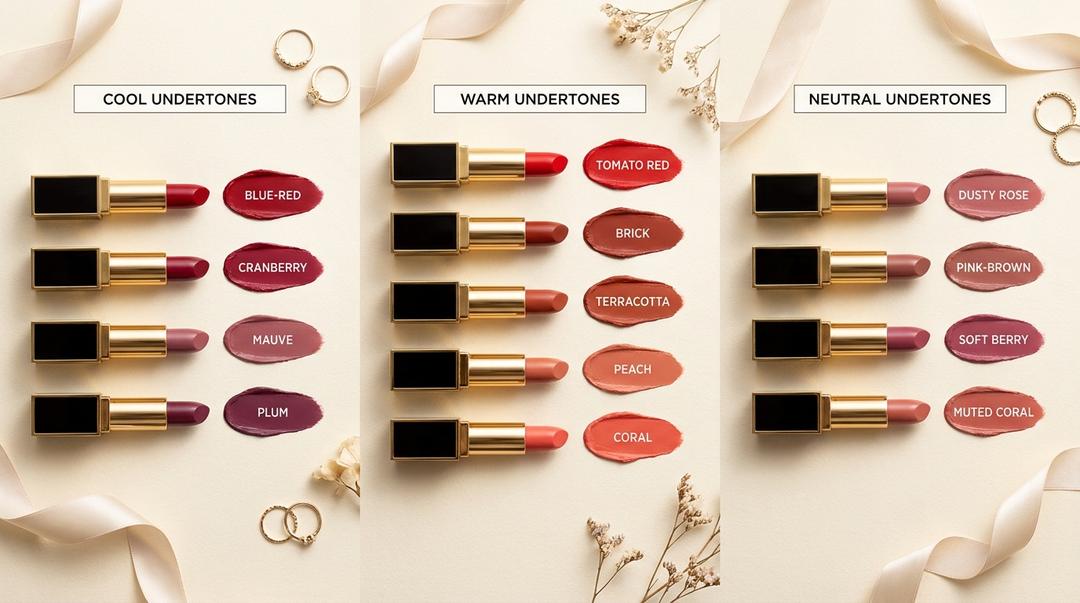
Once you know your undertone, focus on the base of the lipstick rather than the broad color name. Two lipsticks labeled red can look completely different because one leans blue and the other leans orange.
- Cool undertones: Try blue-red, cranberry, raspberry, mauve, plum, wine, rosy pink, and cool berry. These shades can also make teeth look visually brighter because blue tones counteract yellow.
- Warm undertones: Look for tomato red, brick, terracotta, cinnamon, caramel, peach, coral, apricot, and warm rose. Golden or orange tones tend to echo the warmth in the skin.
- Neutral undertones: Experiment with balanced reds, dusty rose, pinky brown, soft berry, and muted coral. Neutral complexions can often move between warm and cool colors depending on makeup and clothing.
- Olive undertones: Consider rich brick, warm berry, deep rose, terracotta, caramel nude, and brown-red. Very pale beige or strongly blue lavender shades may look gray, though a deeper lip liner effect can make them easier to wear.
Honestly, undertone matching isn't about avoiding certain colors forever. It's about knowing why a shade behaves the way it does. If you love a cool pink on warm skin, pairing it with warmer blush or applying it as a soft stain can create balance.
Which Lipstick Colors Work Best for Fair, Medium, Olive, and Deep Skin?
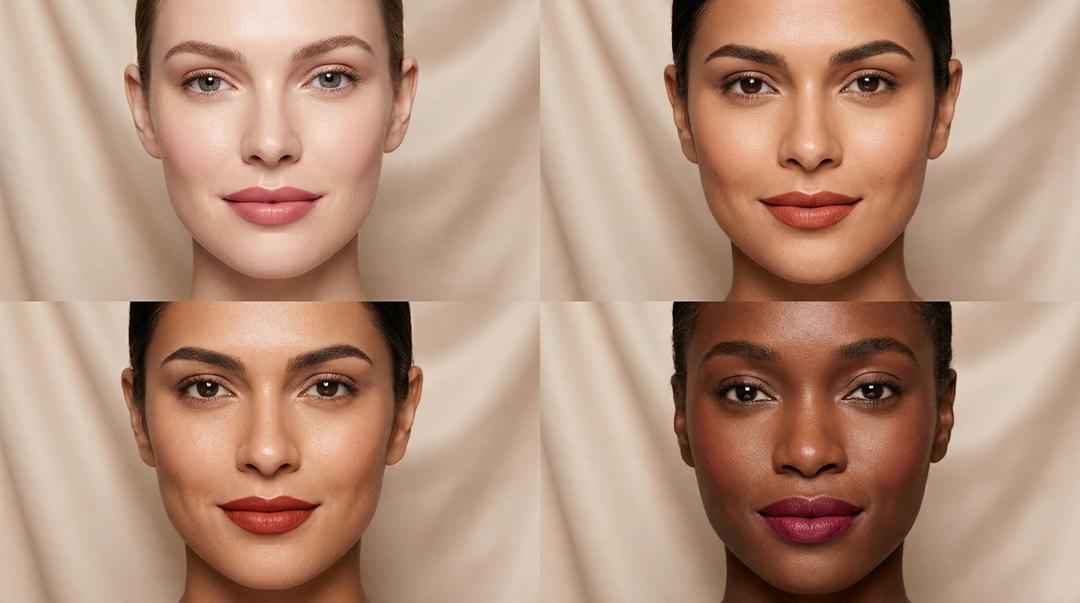
Skin depth affects how much contrast a lipstick creates. The best lipstick shades for your skin tone should remain visible without looking unintentionally chalky or disappearing into your natural lip color.
- Fair to light skin: Soft pink, peach, rose, mauve, coral, blue-red, and light berry provide definition without overwhelming the complexion. For extra drama, try cherry red or deep plum.
- Medium skin: Warm rose, caramel, terracotta, coral, berry, brick red, and pink-brown tend to look especially balanced. Medium complexions can often support both soft nudes and saturated brights.
- Tan and olive skin: Cinnamon, toasted rose, brown-pink, rust, deep coral, wine, and warm red complement golden or green undertones. Avoid nudes that closely match your foundation unless you want a deliberately muted look.
- Deep skin: Rich berry, burgundy, chocolate brown, deep plum, vivid fuchsia, copper, oxblood, and saturated red create gorgeous contrast. Highly pigmented formulas are helpful because sheer pale shades can appear uneven over naturally deeper lip pigmentation.
Depth changes intensity, too. A medium berry may look dramatic on fair skin but read as a soft everyday shade on deep skin. That's why online swatches are most useful when the model has a complexion and natural lip color similar to yours.
How Do You Find the Right Nude and Red Lipstick?
The easiest nude lipstick isn't necessarily the same color as your foundation. A flattering nude usually has enough pink, peach, rose, caramel, or brown to keep the face from looking washed out.
For a practical starting point, choose a nude that's one to two shades deeper than your natural lip color. Fair skin may suit pink-beige or peach; medium skin often works with rose-brown or caramel; olive skin tends to flatter terracotta nude; and deep skin looks beautiful in cocoa, chestnut, or deep berry-brown.
Red lipstick follows a similar undertone logic:
- Blue-red: Crisp, classic, and often flattering on cool or neutral skin.
- Orange-red: Bright and energetic on warm, golden, and olive complexions.
- Brick red: A muted, earthy option that works across many skin tones.
- Brown-red: Rich and dimensional, particularly on tan and deep complexions.
So, if a nude looks too pale, add depth by tapping a warmer or deeper lipstick around the edges. If a red feels intense, press it onto the lips with a fingertip rather than applying it straight from the tube. You get the same flattering color family with a softer finish.
How Should You Test Lipstick Before Buying?
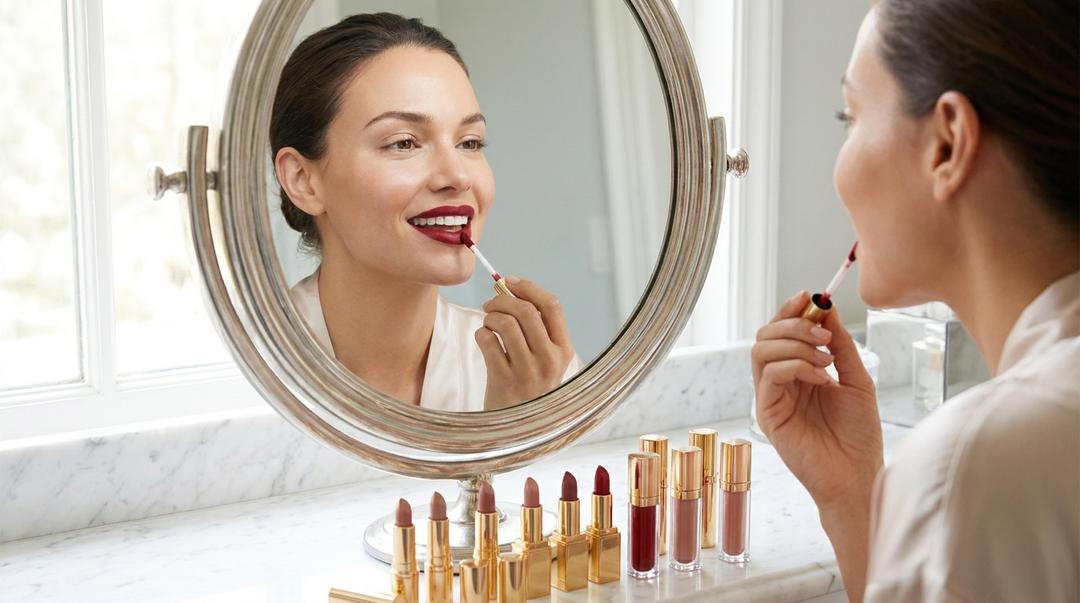
Lighting and formula can change a shade almost as much as undertone does. A glossy tinted balm allows your natural lip color to show through, while an opaque liquid lipstick can cover pigmentation and display a truer tube color. A satin bullet lipstick sits comfortably between those two.
Use this quick testing method to find the best lipstick shades for your skin tone:
- Start with bare lips. Remove leftover balm, foundation, or another lip color so you're seeing an accurate result.
- Apply the shade to your lips when possible. For hygiene, use a disposable applicator or request a freshly sanitized tester.
- Check it in natural daylight. Store lighting can make warm colors look cooler or soften shades that are actually very bright.
- Look at your whole face. A good match should make your complexion look lively rather than emphasizing dullness, redness, or shadows.
- Wait several minutes. Some long-wear formulas deepen or shift after drying, and this can be especially noticeable with liquid lipstick.
- Take a phone photo without a filter. This gives you another view and helps you compare shades after leaving the store.
I've also learned not to judge a lipstick immediately after swatching five other colors. Staining and visual fatigue are real. Clean your lips fully, wait a minute, then test the final contender again.
Il nostro consiglio
La best lipstick shades for your skin tone balance skin depth, undertone, natural lip pigmentation, and formula. Cool undertones often suit blue-reds and berries, warm undertones shine in coral and brick, neutral undertones have plenty of flexibility, and olive skin tends to love earthy, saturated shades.
Still, color analysis should make shopping easier, not box you in. Start with these recommendations, test in daylight, and pay attention to the shade that makes your face look brighter—and makes you want to keep checking the mirror. That's usually the winner.
For more practical beauty picks and price drops worth knowing about, sign up for Insider Beauty's weekly deals.
Vuoi altri consigli e offerte beauty esclusive nella tua casella di posta? Inserisci l’e-mail qui sotto e unisciti alle migliaia di lettori che ogni settimana trovano occasioni per risparmiare.