
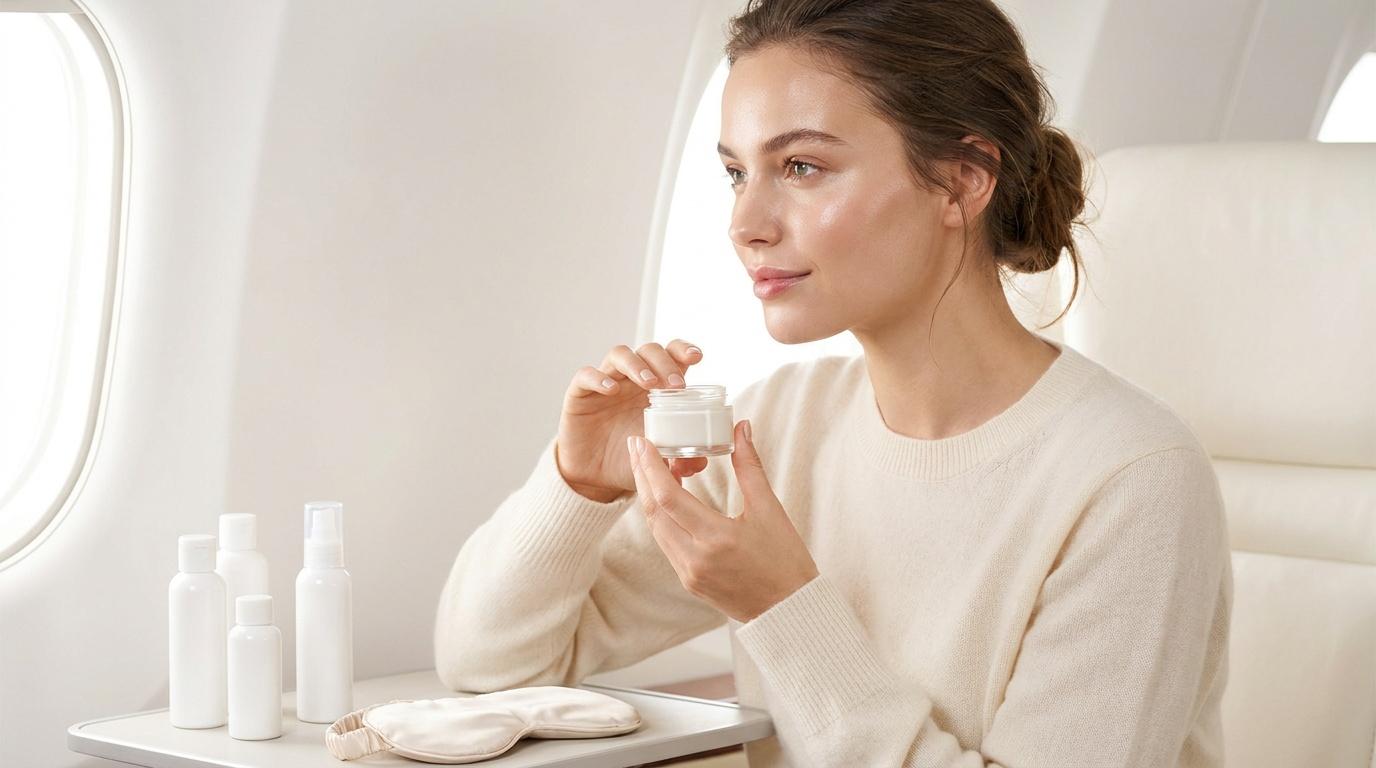
The best in-flight skincare routine for long flights is simple: cleanse gently, add a hydrating layer, seal it with a barrier-supporting moisturizer, and use sunscreen when exposed to daylight. Airplane cabins commonly have humidity levels around 10% to 20%, so reducing water loss—not applying a dozen products—is the smartest way to keep skin comfortable.
Les points essentiels
- Prep before boarding: Start with clean skin, moisturizer, and broad-spectrum SPF 30 or higher.
- Keep your routine short: A hydrating serum, rich moisturizer, and lip balm are usually enough in the air.
- Prioritize your skin barrier: Look for ingredients such as glycerin, hyaluronic acid, ceramides, squalane, and petrolatum.
- Skip irritating treatments: Retinoids, exfoliating acids, scrubs, and strong acne treatments can worsen dryness.
- Use clean hands: Wash or sanitize your hands before touching your face, and choose travel-size products instead of open jars.
Why Does Flying Make Your Skin So Dry?
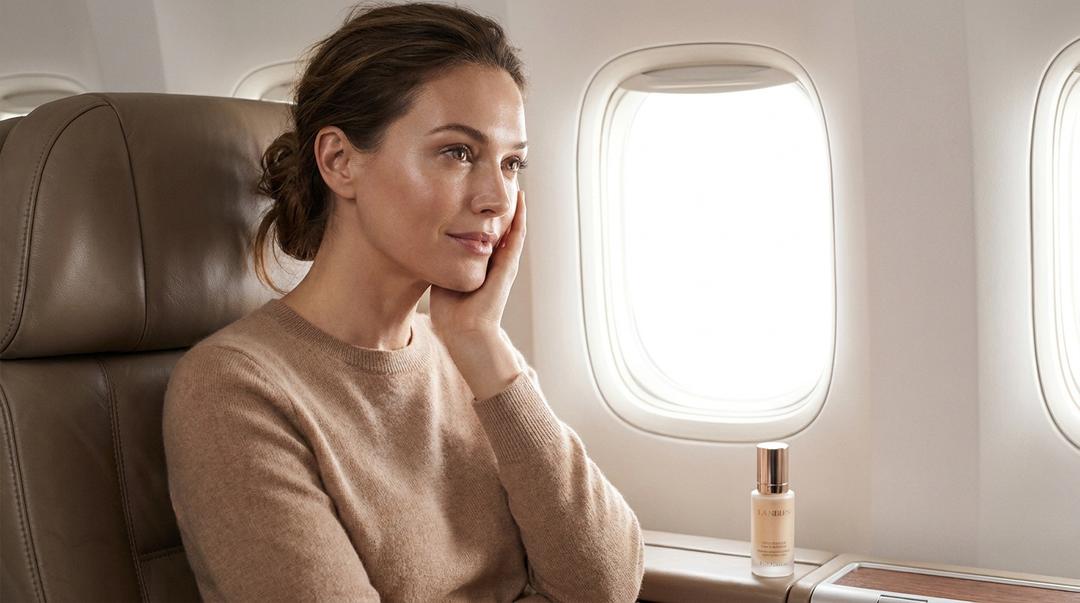
Airplane cabins are much drier than most homes and offices. While comfortable indoor humidity often falls between 30% and 50%, cabin humidity may hover around 10% to 20% during a long flight. That dry environment increases evaporation from the skin's surface, which can leave it feeling tight, flaky, itchy, or temporarily more sensitive.
The outer layer of skin, called the stratum corneum, works like a brick wall. Skin cells are the bricks, while lipids—including ceramides, cholesterol, and fatty acids—act as the mortar. When that barrier is stressed, water escapes more easily through a process called transepidermal water loss.
Flying doesn't automatically dehydrate your skin from the inside out, and drinking extra water alone won't replace a moisturizer. Staying normally hydrated is good for your overall health, of course, but topical products are what directly reduce water loss from the skin's surface.
Look, I've found that the people who feel driest after flying are often the ones who exfoliate beforehand or repeatedly mist their faces without sealing that water in. A mist may feel refreshing, but as it evaporates, skin can feel just as dry—or even tighter—unless you follow it with moisturizer.
How Should You Prep Your Skin Before Boarding?
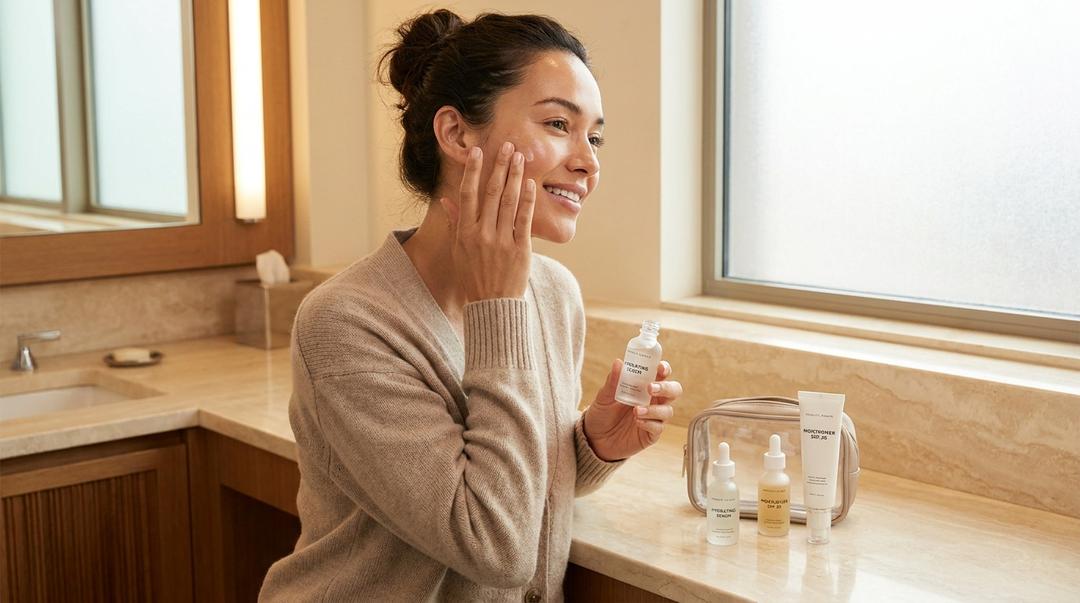
Your best work happens before the cabin door closes. Do your full routine at home or in the airport restroom so you don't have to cleanse extensively at your seat.
- Wash with a gentle cleanser. Choose a fragrance-free cream or low-foaming cleanser that removes sunscreen and makeup without leaving skin squeaky-clean. That tight feeling after washing usually means the formula is stripping more oil than your skin likes.
- Apply a hydrating serum. Look for humectants such as glycerin, hyaluronic acid, panthenol, or beta-glucan. Apply the serum to slightly damp skin, then move quickly to moisturizer.
- Seal with a barrier-supporting moisturizer. A cream containing ceramides, squalane, dimethicone, or shea butter can slow moisture loss. Dry skin may benefit from a richer cream, while oily or acne-prone skin can use a lightweight, noncomedogenic lotion.
- Protect your lips. Use a bland lip balm or ointment with petrolatum, lanolin, or dimethicone. Avoid strongly flavored or plumping formulas, which may sting already-dry lips.
- Finish with sunscreen. Apply broad-spectrum SPF 30 or higher if you'll travel during daylight. UVA rays pass through aircraft windows, and exposure may be greater at cruising altitude, especially in a window seat.
If you have eczema, rosacea, or very reactive skin, this isn't the time to test a new product. Use formulas your skin already knows and tolerates.
What Is the Best In-Flight Skincare Routine?
A practical in-flight skincare routine for long flights should take less than five minutes. For most people, reapplying a moisturizer once or twice is plenty; constant layering can feel sticky and may irritate sensitive skin.
- Clean your hands first: Use soap and water when available. Hand sanitizer is fine when you're seated, but let it dry completely before touching your face.
- Remove makeup only if needed: A travel-size gentle cleanser is ideal in the restroom. At your seat, micellar water on a clean cotton pad can work, but you don't have to remove comfortable, nonirritating makeup just because you're flying.
- Add hydration: Press a small amount of hydrating serum onto tight or dry areas. Avoid dripping products or spraying nearby passengers.
- Apply moisturizer: Smooth a fragrance-free cream over your face and neck. Focus on the cheeks, around the mouth, and other areas that tend to flake.
- Spot-treat very dry patches: Dab a thin layer of petrolatum-based ointment around the nostrils, on the lips, or over eczema-prone spots. If you're acne-prone, reserve heavy ointment for areas that truly need it.
- Reapply sunscreen during daylight: Reapply about every two hours when you're getting meaningful window exposure. Closing the shade also reduces exposure and doesn't require another product.
For an overnight flight, you can use a slightly richer moisturizer in place of your usual night cream. A sheet mask is optional, not essential. Honestly, it can be messy, and applying one with less-than-clean hands may undo the benefit. A well-formulated cream is quieter, easier, and usually just as useful for preventing that parched feeling.
Contact lens wearers may notice dry eyes too, but facial skincare products shouldn't be placed in or very close to the eyes. Use eye drops only as directed by your eye-care professional, and consider glasses if contacts become uncomfortable.
Which Skincare Ingredients Work Best on a Plane?
Think in three categories: ingredients that attract water, ingredients that support the barrier, and ingredients that reduce evaporation.
- Humectants: Glycerin, hyaluronic acid, urea, panthenol, and beta-glucan attract and hold water in the outer skin layers.
- Emollients: Squalane, shea butter, and fatty alcohols smooth rough spaces between skin cells and make flaky skin feel softer.
- Occlusives: Petrolatum, dimethicone, and mineral oil create a surface film that slows water loss.
- Barrier lipids: Ceramides, cholesterol, and fatty acids help replenish components naturally found in the skin barrier.
- Soothing ingredients: Colloidal oatmeal, allantoin, and centella compounds may help calm temporary discomfort, provided you tolerate the formula.
A moisturizer that combines humectants, emollients, and occlusives is often more useful than a hydrating serum by itself. Hyaluronic acid isn't bad in dry air, despite what you may have heard. It simply works best when covered with a moisturizer that helps keep water from evaporating.
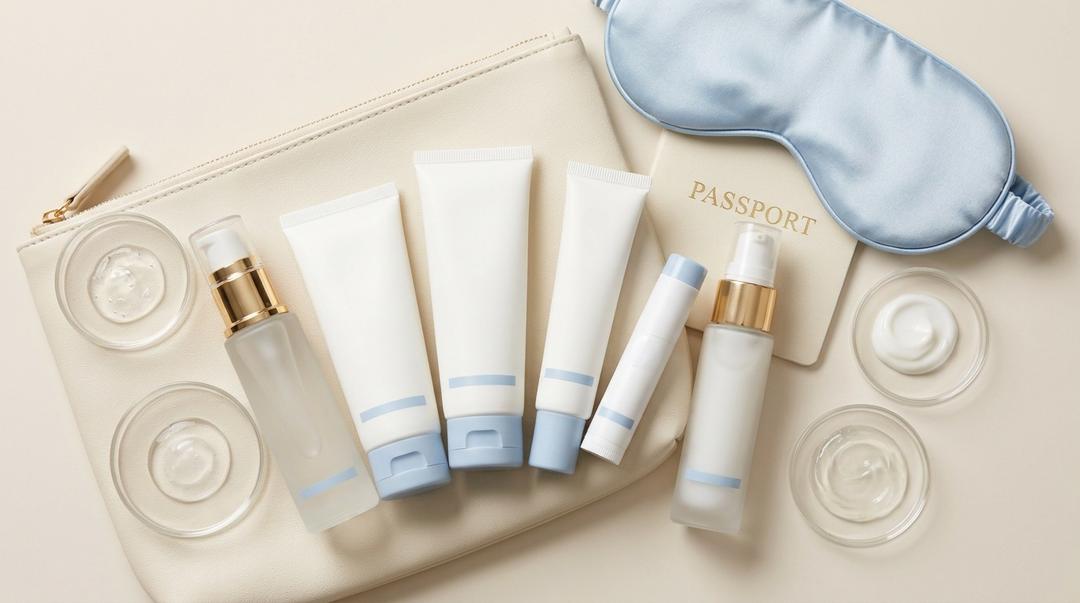
Choose small tubes or pump bottles when possible. They're easier to handle hygienically than jars and must follow your airport's current carry-on liquid rules. Keep prescription medicines in their labeled packaging and within reach rather than in checked luggage.
What Skincare Should You Avoid During a Long Flight?
So, a flight isn't the place for your most ambitious skin treatment. Low humidity plus an unfamiliar routine is a pretty reliable recipe for irritation.
Avoid these common troublemakers:
- Retinoids and exfoliating acids: Retinol, tretinoin, glycolic acid, and salicylic acid can contribute to dryness or stinging, especially if your skin is already sensitive.
- Physical scrubs: Abrasive particles won't fix dehydration and may disrupt the skin barrier.
- Clay masks: These absorb oil and can make dry, tight skin feel worse.
- Fragranced sprays and essential oils: Fragrance can irritate sensitive skin, and spraying products in a shared cabin may bother other passengers.
- Picking at blemishes: Hands, tray tables, and seat controls aren't exactly a sterile setup. Cover an inflamed spot with a hydrocolloid patch before boarding instead.
- Trying several new products: If a reaction occurs at 35,000 feet, your options for washing everything off are limited.
You also don't need to cleanse repeatedly. Overwashing removes protective surface lipids and can make oily skin rebound with more noticeable shine. One gentle cleanse before or during the flight is enough for most travelers.
How Should You Care for Your Skin After Landing?
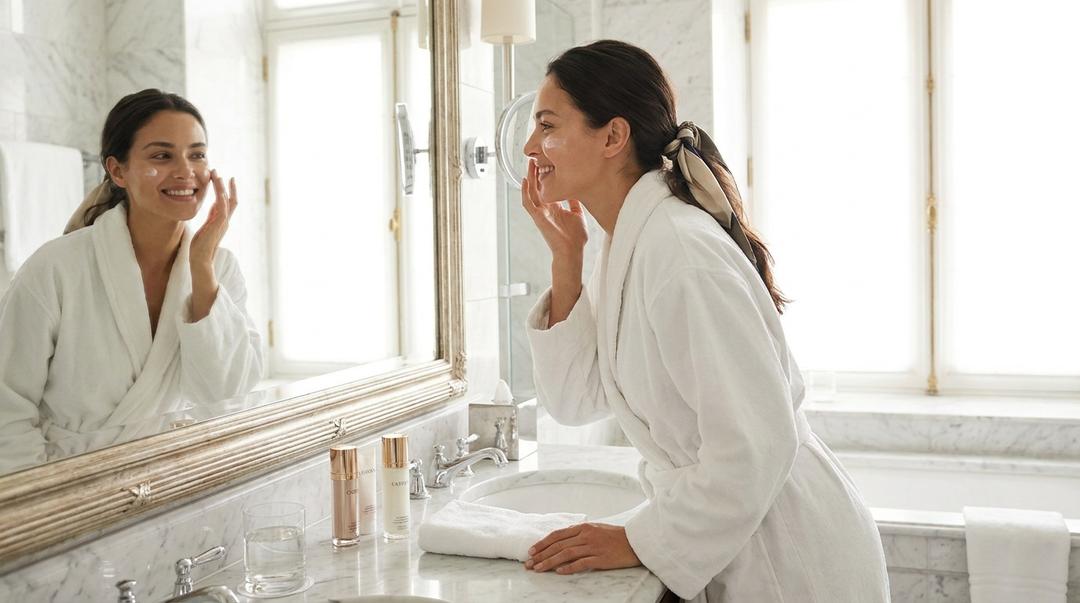
Once you arrive, cleanse gently to remove sunscreen, makeup, and the general grime of travel. Follow with your normal hydrating serum and moisturizer. If your skin feels irritated, skip retinoids, acids, benzoyl peroxide, and scrubs that night.
For morning arrivals, finish with broad-spectrum sunscreen before heading outside. For evening arrivals, a richer cream can help relieve tightness overnight. Temporary puffiness is also common after sitting for hours; cool water, light movement, and normal sleep usually help more than aggressive facial massage.
I've found that getting back to a familiar routine works better than trying to “detox” the skin. There are no toxins that need to be scrubbed or peeled away after a flight. If redness, swelling, cracking, or an eczema flare persists, check in with a board-certified dermatologist.
Notre conclusion
The most effective in-flight skincare routine for long flights focuses on protecting the skin barrier: begin with clean skin, layer a humectant under a moisturizer, treat dry spots with ointment, and wear SPF during daylight exposure. Keep it gentle and hygienic, and leave strong active ingredients at home for the night.
A few well-chosen travel sizes beat an overstuffed beauty bag every time. For more dermatologist-backed tips and smart product savings, sign up for Insider Beauty's weekly deals.
Vous souhaitez recevoir d’autres conseils et des offres beauté exclusives ? Saisissez votre adresse e-mail ci-dessous et rejoignez les milliers d’Insiders qui économisent chaque semaine.