
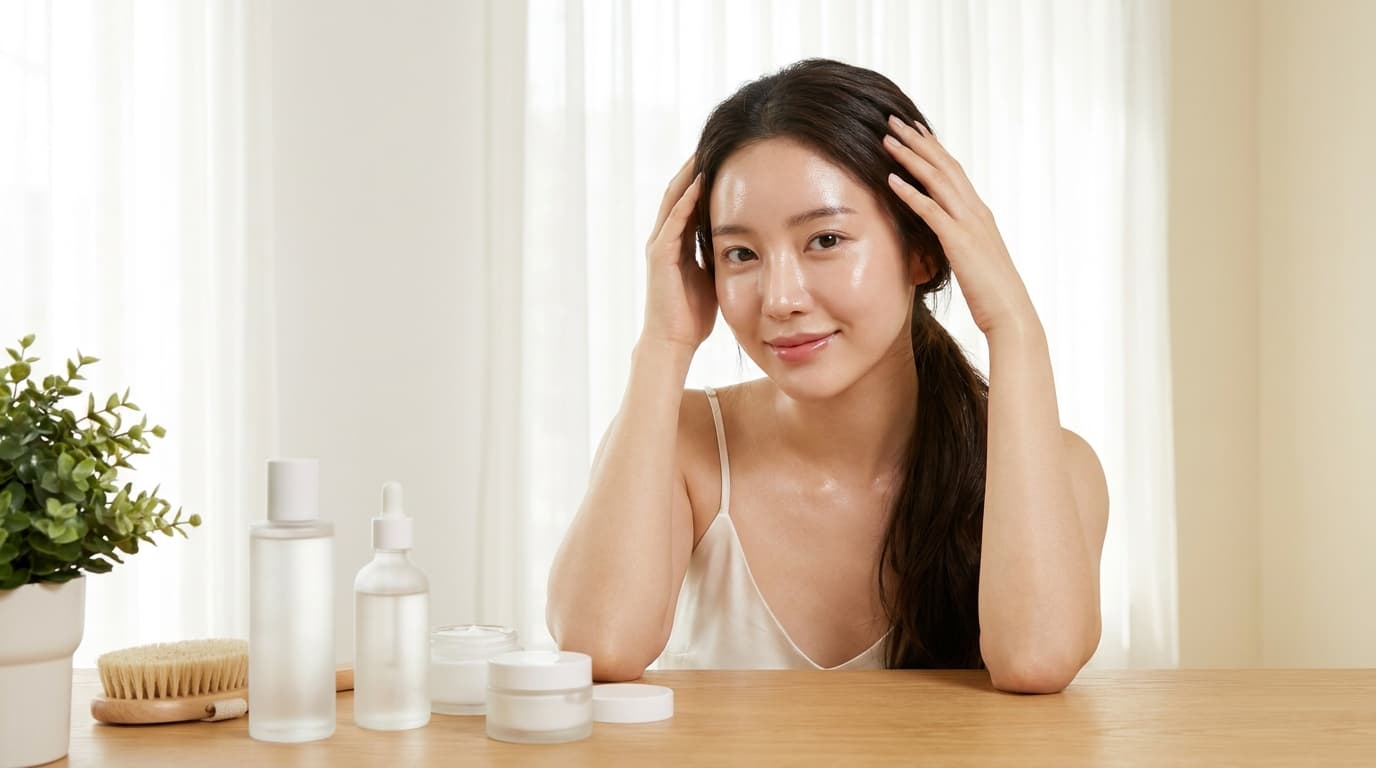
A scalp care routine for healthy hair should focus on cleansing buildup, protecting the skin barrier, and supporting a balanced scalp microbiome. When your scalp is less inflamed, less oily, and better hydrated, hair tends to look fuller, shinier, and easier to manage. Here's exactly how to build a routine that works.
Quick Takeaways
- Cleanse your scalp regularly: Most people do well washing every 2 to 3 days, but oily scalps may need more frequent cleansing.
- Exfoliate gently, not aggressively: A scalp scrub or chemical exfoliant 1 time a week can help lift dead skin and product residue.
- Treat your scalp like skin: If it's dry, itchy, or flaky, use targeted ingredients such as salicylic acid, niacinamide, or lightweight moisturizing serums.
- Protect the roots from damage: Tight styles, heavy oils, and hot tools can irritate the scalp and weaken hair over time.
- Consistency matters more than complexity: A simple scalp care routine for healthy hair usually works better than a 10-step routine you'll never keep up.
What is the best scalp care routine for healthy hair?
The best scalp care routine for healthy hair is one that keeps the scalp clean, calm, and balanced. I usually tell patients to think of the scalp as an extension of facial skin, just with more oil glands and a lot more hair in the way.
A basic routine looks like this:
- Cleanse with a shampoo suited to your scalp type.
- Massage gently to lift oil, sweat, and flakes.
- Exfoliate 1 time weekly if you get buildup.
- Apply a scalp treatment if you deal with itch, dryness, or excess oil.
- Protect the scalp from heat, tension, and leftover styling residue.
So, yes, hair health really does start at the scalp. I've found that when people stop chasing random hair masks and start caring for the scalp first, they usually notice better hair days pretty fast.
How often should you wash your scalp?
This depends on oil production, exercise, hair texture, and product use. There isn't one perfect schedule for everyone.
Here are some practical guidelines:
- Oily scalp: Wash daily or every other day if needed.
- Normal scalp: Wash every 2 to 3 days.
- Dry or curly hair: Wash every 4 to 7 days, depending on comfort and buildup.
- Heavy styling product use: Wash more often to prevent residue from sitting on the scalp.
- Frequent workouts: Cleanse after sweaty sessions when possible, especially if sweat triggers itch or odor.
Honestly, waiting too long between washes can backfire. Excess oil, dead skin, and styling product can trap yeast and irritants on the scalp, which may worsen dandruff or follicle inflammation. On the flip side, overwashing with a harsh shampoo can strip the barrier and leave the scalp tight and irritated.
A good middle ground is using a gentle shampoo most wash days and rotating in a clarifying shampoo once every 1 to 2 weeks if you use dry shampoo, hairspray, leave-ins, or heavy creams.
Which scalp ingredients actually help hair look healthier?
If you're building a scalp care routine for healthy hair, ingredients matter. You don't need a cabinet full of products, but a few proven ones can make a real difference.
Look for these:
- Salicylic acid: Helps loosen flakes, reduce oil, and clear product buildup.
- Niacinamide: Supports the skin barrier and may help calm irritation.
- Zinc pyrithione or ketoconazole: Helpful for dandruff-prone scalps and yeast overgrowth.
- Hyaluronic acid or glycerin: Adds lightweight hydration for dry, tight scalps.
- Tea tree oil: Can feel soothing, though it should be well-formulated and not overly concentrated.
Look, more oil isn't always the answer. A lot of people with itchy or flaky scalps assume they need thick oils, but sometimes that just sits on the skin and makes buildup worse. I've seen patients do much better with a lightweight scalp serum than with straight oils.
Useful product types include:
- Gentle sulfate-free shampoo for regular cleansing
- Scalp scrub or chemical exfoliating treatment for weekly buildup control
- Lightweight scalp serum for hydration or soothing support
How do you exfoliate your scalp without causing irritation?
Scalp exfoliation can help, but more isn't better. Too much friction can trigger redness, tenderness, and even more flaking.
Here's the safest way to do it:
- Start with once a week, max twice if your scalp tolerates it.
- Choose either a physical scrub or a chemical exfoliant, not both on the same day.
- Apply to a damp scalp before or during shampooing, following the product directions.
- Use your fingertips, not nails, and massage for about 30 to 60 seconds.
- Rinse thoroughly so residue doesn't stay trapped at the roots.
- Follow with a gentle shampoo and conditioner on the lengths.
If you have eczema, psoriasis, open sores, or a very sensitive scalp, skip exfoliation until you've checked in with a dermatologist. So many people scrub harder when the scalp feels flaky, but that can make things angrier. A little restraint goes a long way here.
What habits damage your scalp and hair roots?
A healthy scalp routine isn't just about what you apply. Daily habits matter too, maybe more than people think.
Common scalp stressors include:
- Tight hairstyles: High ponytails, braids, and extensions can create tension around the follicles.
- Hot tools near the roots: Repeated heat can irritate the scalp and dry the hair shaft.
- Heavy product layering: Dry shampoo, waxes, and thick oils can build up fast.
- Scratching with nails: This can cause tiny breaks in the skin and worsen inflammation.
- Sleeping on a dirty scalp: Not a moral issue, just a buildup issue. Sweat and product sitting overnight can be irritating for some people.
I've found that one of the easiest upgrades is doing a 60-second scalp massage during shampoo. Not an aggressive scrub, just a gentle circular motion. It helps distribute cleanser more evenly and encourages you to actually clean the scalp instead of just washing the hair on top.
What should a weekly scalp care routine look like?
If you want a realistic scalp care routine for healthy hair, keep it simple enough to repeat. Here's a sample weekly plan:
1. Wash Day
Use a gentle shampoo and focus on the scalp first. Let the lather run through the lengths instead of roughing up the ends.
2. Midweek Reset
If you feel greasy or sweaty, do a quick wash or scalp rinse. If your scalp runs dry, use a lightweight serum instead.
3. Weekly Exfoliation
Use a scalp scrub or chemical exfoliant once a week to help remove dead skin and styling residue.
4. Targeted Treatment
Use an anti-dandruff shampoo, soothing scalp serum, or oil-control treatment based on your scalp's needs.
5. Style Smarter
Loosen up tight hairstyles, reduce heat at the roots, and clean brushes regularly so you're not putting old residue back onto the scalp.
That said, if you have persistent flakes, pain, burning, or sudden shedding, don't just keep switching shampoos and hoping for the best. Dandruff, seborrheic dermatitis, psoriasis, and contact dermatitis can overlap, and they don't all need the same treatment.
When should you see a dermatologist for scalp issues?
Sometimes scalp problems are more than simple dryness or buildup. See a dermatologist if you notice any of the following:
- Flaking that doesn't improve after 4 to 6 weeks of over-the-counter care
- Redness, burning, or soreness on the scalp
- Patches of hair loss or increased shedding
- Thick scale or crusting
- Painful bumps or pustules
This matters because inflammation around follicles can affect hair growth over time. Getting the diagnosis right early is usually a lot easier than trying to undo months of irritation later.
The Bottom Line
A good scalp care routine for healthy hair doesn't need to be complicated. Cleanse on a schedule that matches your scalp type, exfoliate gently when needed, use targeted treatments for flakes or dryness, and avoid habits that irritate the roots. When the scalp is healthy, hair usually looks better too, and that's not just cosmetic hype, it's basic skin biology.
If you want more practical beauty advice and smart product picks, sign up for Insider Beauty's weekly deals and get the good stuff sent straight to your inbox.
Want more tips and exclusive beauty deals delivered to your inbox? Pop your email in the box below and join thousands of insiders who save big every week.