
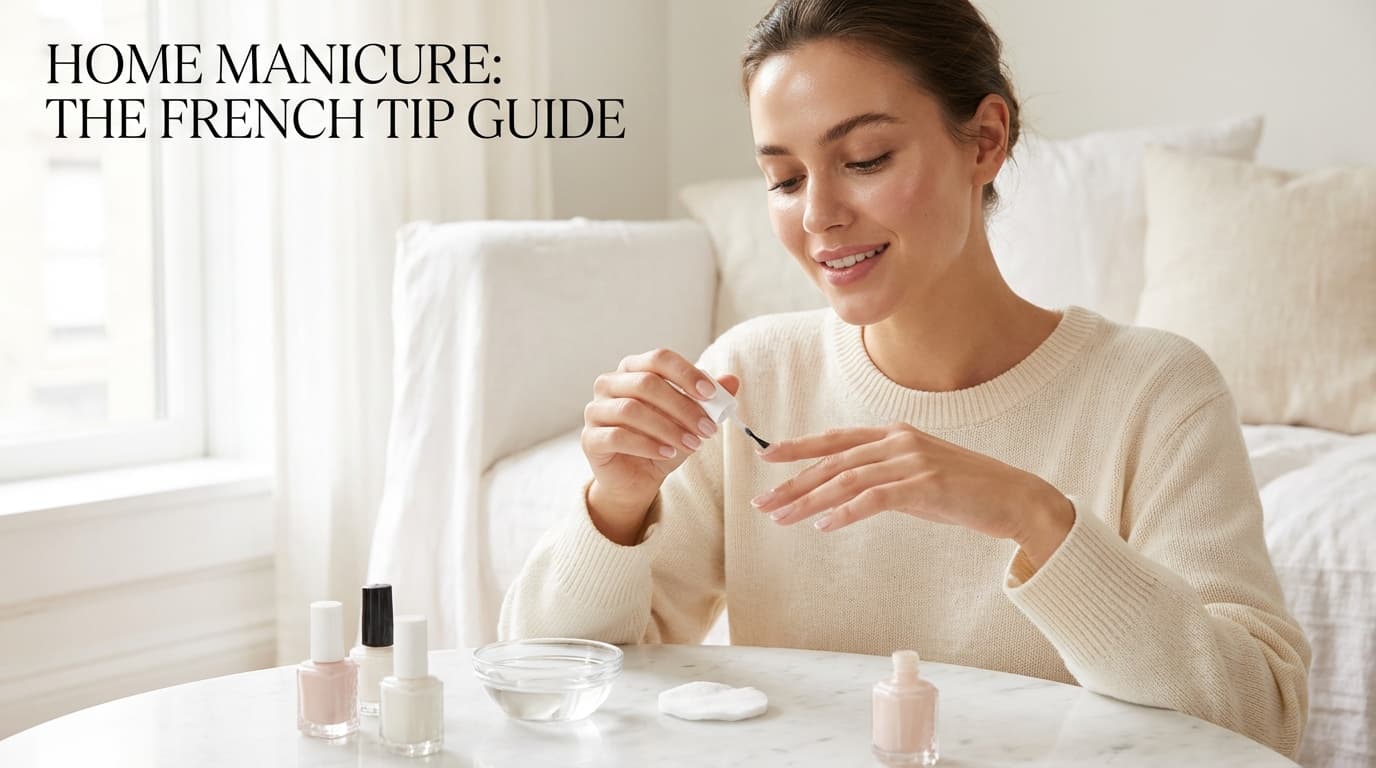
A french manicure at home tutorial is actually pretty simple: prep the nail well, use a sheer nude or pink base, paint thin white tips, and seal everything with a glossy top coat. This works because clean edges, thin layers, and good prep do most of the heavy lifting. Here's exactly how to do it so your manicure looks neat, polished, and not weirdly chunky.
Quick Takeaways
- Prep matters most: Clean, shaped, oil-free nails help polish stick and keep tips looking crisp.
- Use thin coats: Thick polish floods the edges and makes white tips harder to control.
- A guide helps beginners: French tip stickers, tape, or a detail brush can make the smile line much easier.
- Let each layer dry: Waiting even 1 to 2 minutes between thin coats cuts down on smudges.
- Top coat is non-negotiable: It smooths the surface, boosts shine, and helps your french manicure last longer.
What do you need for a french manicure at home?
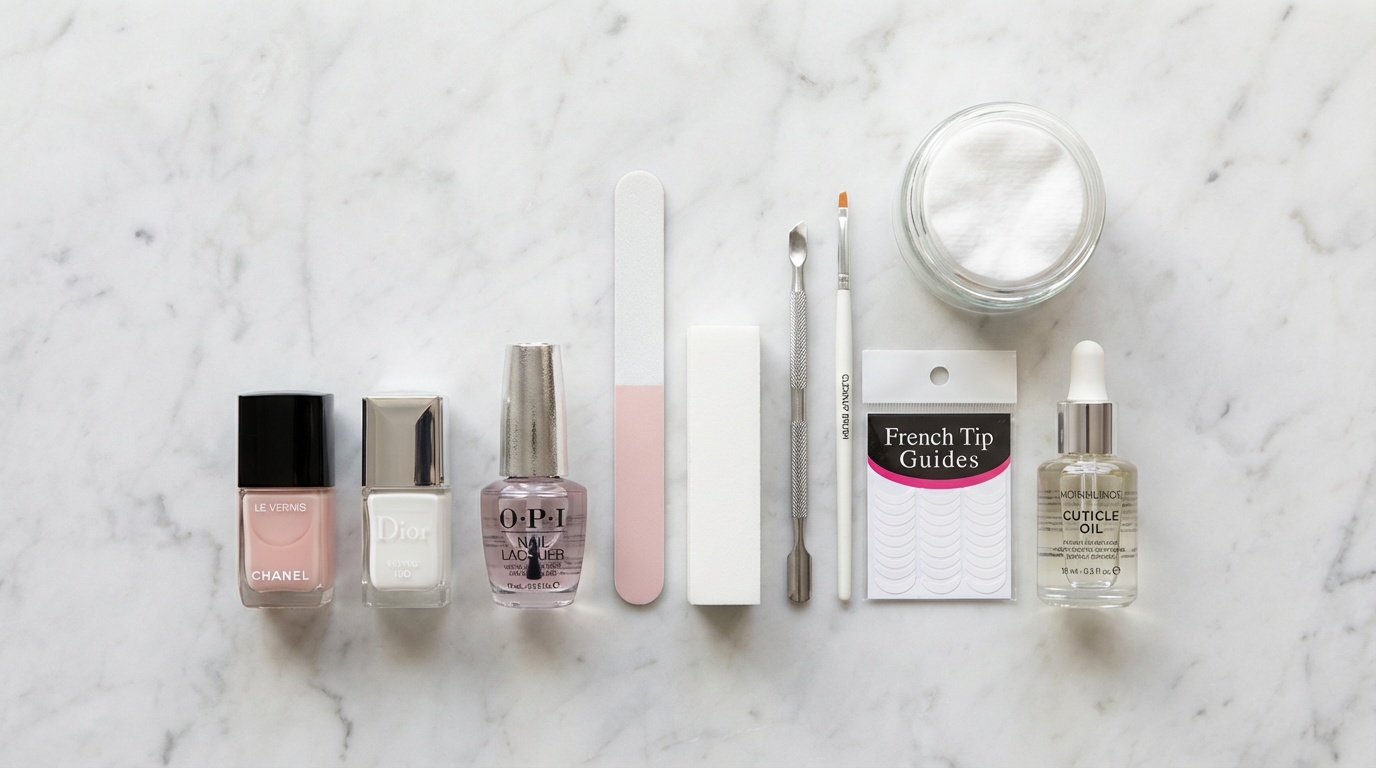
For a clean french manicure at home tutorial, you don't need a giant nail kit. You just need the right basics and a little patience.
Here are the most useful product types:
- Nail polish remover or acetone
- Cotton pads or lint-free wipes
- A nail file and buffer
- Cuticle pusher
- A sheer pink or nude polish
- An opaque white nail polish
- A glossy top coat
- Optional: french tip guides, striping brush, cleanup brush, quick-dry drops
I've found that beginners usually do better with a slightly sheer white rather than a super thick, correction-fluid kind of white. It gives you a little more room for error. A small angled or detail brush also helps if your regular polish brush is too wide.
How do you prep nails for a French manicure?
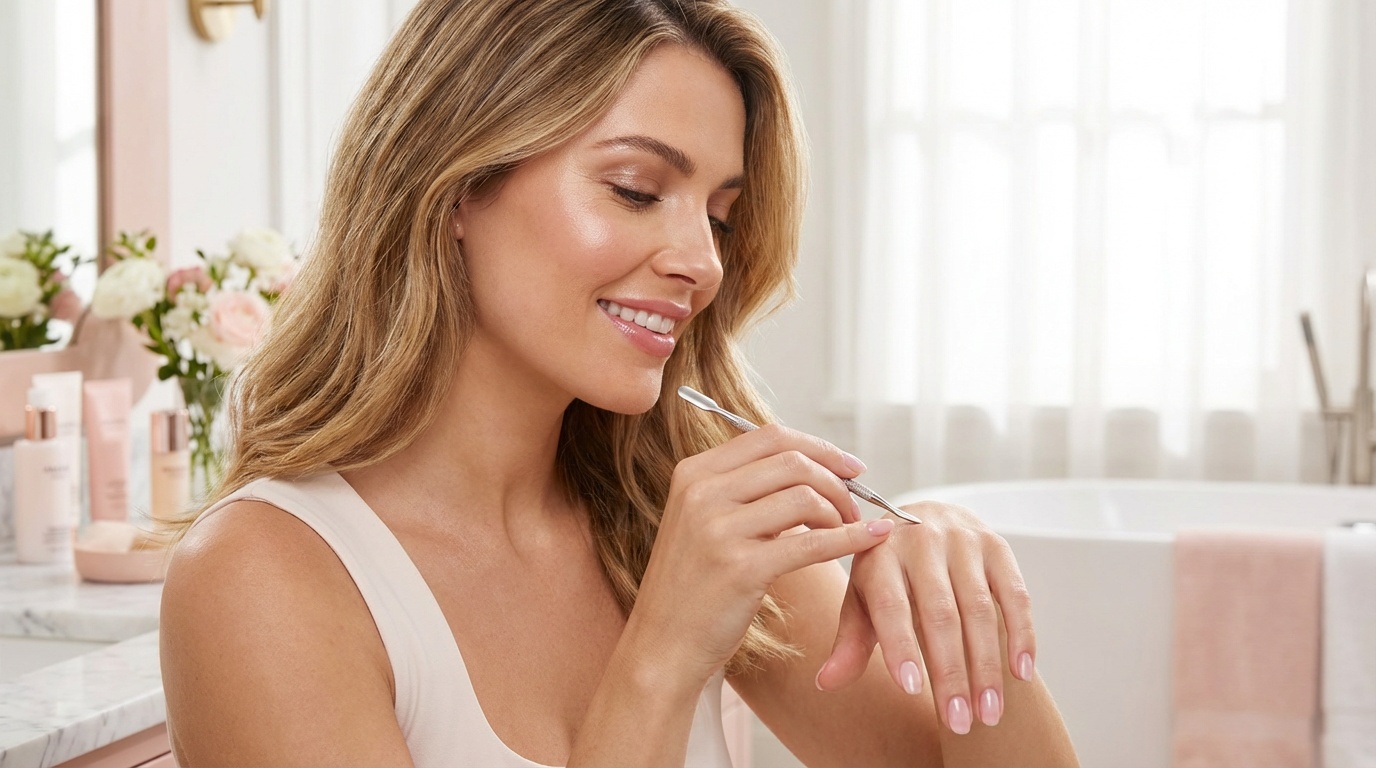
Honestly, this is the step people rush, then they wonder why the polish chips by day two. Nail prep matters because polish grips best to a smooth, dry, oil-free surface.
- Remove old polish completely.
- Wash hands and dry them well.
- File nails into your preferred shape. Squoval, soft square, and almond all work nicely for French tips.
- Gently push back cuticles with a cuticle pusher.
- Buff only if needed to smooth ridges.
- Wipe nails with remover or alcohol to remove dust and oil.
- Apply a thin base coat if you use one.
A quick dermatology note: don't cut your cuticles aggressively. The cuticle acts like a seal that helps protect the nail fold from irritation and infection. Pushing it back gently is plenty for most people.
How do you paint French tips neatly at home?
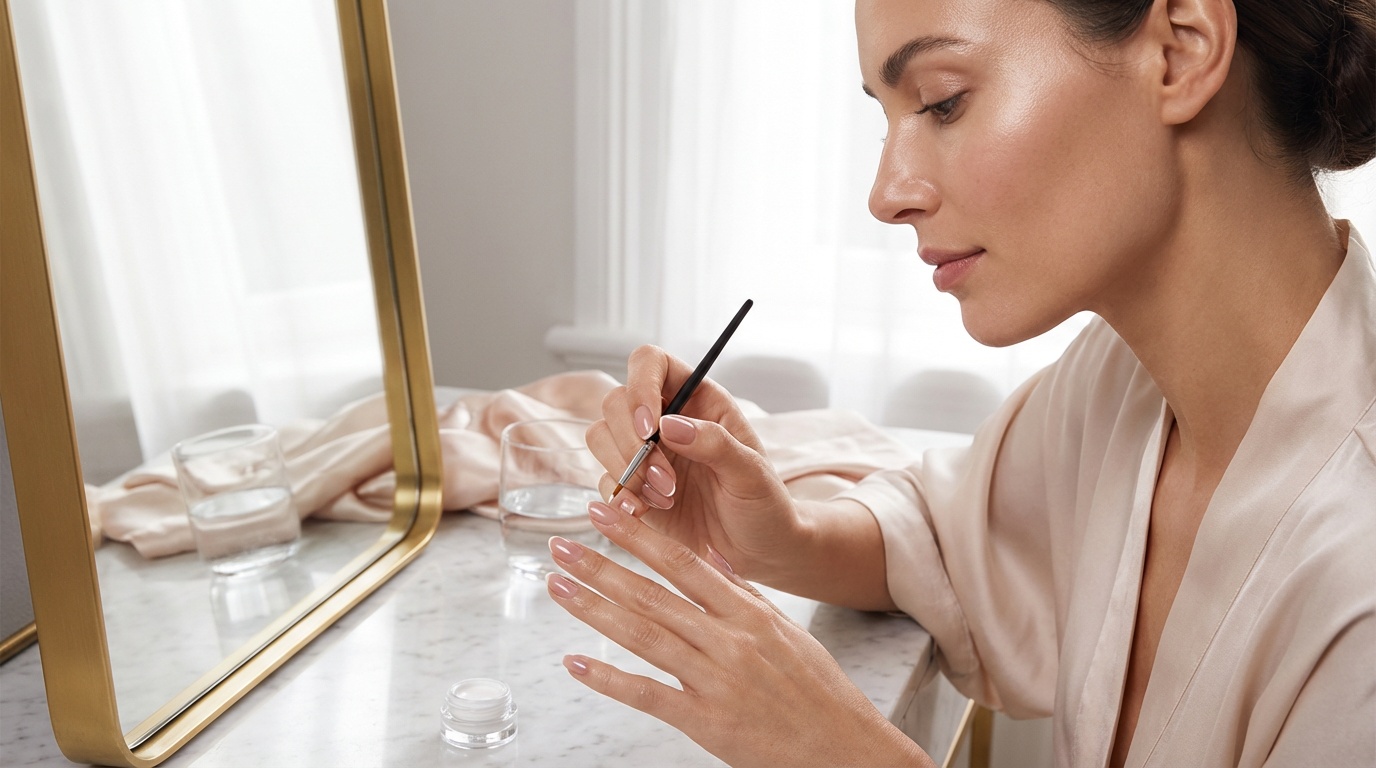
The easiest way to follow a french manicure at home tutorial is to break it into layers and let each one set before moving on. So, don't try to rush all ten nails at once if you're still getting the hang of it.
- Apply one thin coat of sheer nude or pink polish.
- Let it dry for 1 to 2 minutes, then add a second thin coat if needed.
- Create the white tip using either the polish brush, a detail brush, or tip guides.
- Start at one side of the nail and sweep toward the center.
- Repeat from the other side to connect the smile line.
- Fill in the tip with thin, even strokes.
- Let the white polish dry before applying top coat.
- Seal with one layer of glossy top coat, capping the free edge.
If you're using nail guides, place them only after the base color feels dry to the touch. Peel them off while the white tip is still slightly wet. That usually gives the sharpest line.
Look, your smile line doesn't need to be mathematically perfect. On real hands, a soft, slightly curved line usually looks more elegant than a super thick stripe.
What is the easiest French manicure method for beginners?
If freehand painting feels intimidating, start with one of these easier methods:
- French tip stickers: Best for crisp, even lines with minimal skill.
- Detail brush method: Great if you want more control over the curve.
- Stamp or sponge touch-up: Helpful for softening uneven edges.
- Use your nail shape as a guide: On longer nails, following the natural free edge can make the tip placement easier.
I've found that tip stickers are the fastest for short nails, while a detail brush works better once you've practiced a few times. Tape can work too, but only if the base is fully dry. Otherwise, it can lift the polish and make you want to throw the whole manicure across the room.
How do you fix mistakes without starting over?
This is where at-home manicures go from frustrating to manageable. Most mistakes are fixable in under a minute.
Try these cleanup tricks:
- Dip a small cleanup brush in remover and trace around the edges of the tip.
- Use a wooden manicure stick wrapped in a tiny bit of cotton for precise corrections.
- If the white tip looks too thick, clean the lower edge to refine the smile line.
- If you smudge a nail, let it dry slightly, smooth it with top coat, and reassess before removing everything.
- If the base looks streaky, add one more very thin layer instead of one heavy coat.
So, if one nail is a little off, don't redo all ten. Usually only the problem nail needs a quick fix. That's the beauty of this french manicure at home tutorial approach: small corrections make a big difference.
How do you make a French manicure last longer?
A classic French mani tends to show tip wear pretty quickly, especially if you type a lot, wash dishes, or use your nails as tools. A few habits can really extend wear time.
- Cap the edge: Swipe top coat across the tip of the nail to reduce chipping.
- Reapply top coat every 2 to 3 days: This keeps the shine and reinforces the polish film.
- Wear gloves for cleaning: Water and detergents can weaken polish and dry out skin.
- Use cuticle oil daily: Hydrated nails are less brittle and less likely to peel.
- Avoid thick layers: Thick polish takes longer to cure and dents more easily.
From a skin and nail health standpoint, frequent handwashing and sanitizers can dry the surrounding skin, which makes any manicure look rougher faster. A basic hand cream and cuticle oil help more than people think.
What are the most common French manicure mistakes?
A lot of DIY issues come down to technique, not talent. If your results look messy, one of these is usually the culprit.
- Tips are too wide: Thick white bands can make nails look shorter and less natural.
- Base color is too opaque: French manicures usually look better with a sheer wash, not a heavy beige block.
- Polish floods the cuticle: This happens when the brush is overloaded.
- Layers aren't dry enough: Smudging and dragging are almost always a timing issue.
- Nails weren't cleaned first: Oil and lotion residue can cause lifting and chipping.
For most nail lengths, keeping the white tip to roughly 1/8 inch or less looks balanced. On very short nails, even thinner is usually prettier. I've found that a subtle tip often reads more expensive, weirdly enough.
Can you do a French manicure on short nails?
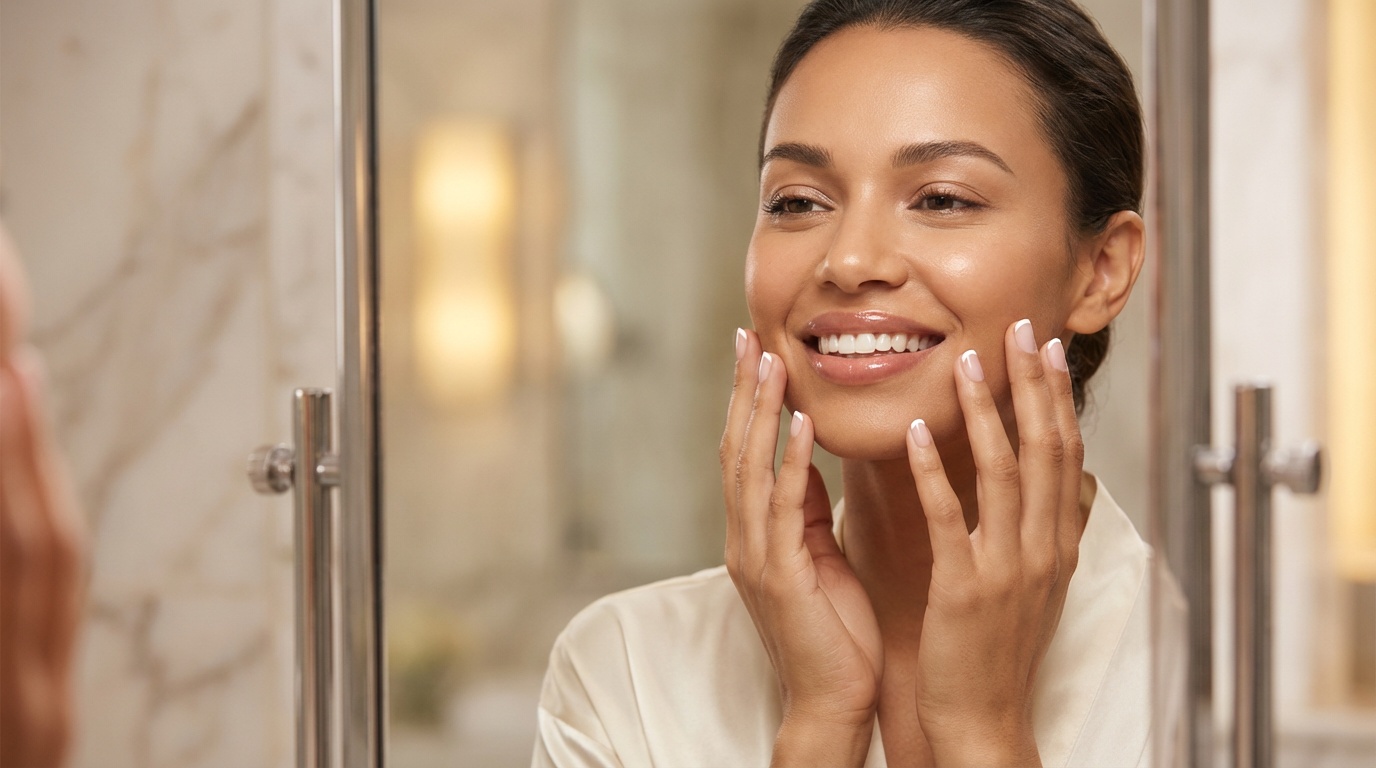
Yes, absolutely. In fact, a french manicure at home tutorial can work really well on short nails if you scale the tip correctly. The key is to keep the white line thin and follow the natural shape of the nail.
A few short-nail tips:
- Choose a soft square or rounded shape for a tidy look.
- Keep the white edge very slim.
- Use a sheer pink base to brighten the nail bed.
- Skip overly dramatic curves if you don't have much free edge.
Short nails can actually make a French manicure look fresh and modern. You don't need long acrylics to pull it off.
The Bottom Line
A polished French manicure at home comes down to good prep, thin layers, a controlled white tip, and a shiny top coat. If you're new to it, start with tip guides or a detail brush, keep the smile line subtle, and fix little mistakes as you go instead of starting from scratch.
Honestly, the best french manicure at home tutorial is the one you can repeat without stress. Practice on one hand first, give yourself extra drying time, and don't aim for salon perfection on try one.
If you want more smart beauty tips and editor-approved picks, sign up for Insider Beauty's weekly deals.
Want more tips and exclusive beauty deals delivered to your inbox? Pop your email in the box below and join thousands of insiders who save big every week.