
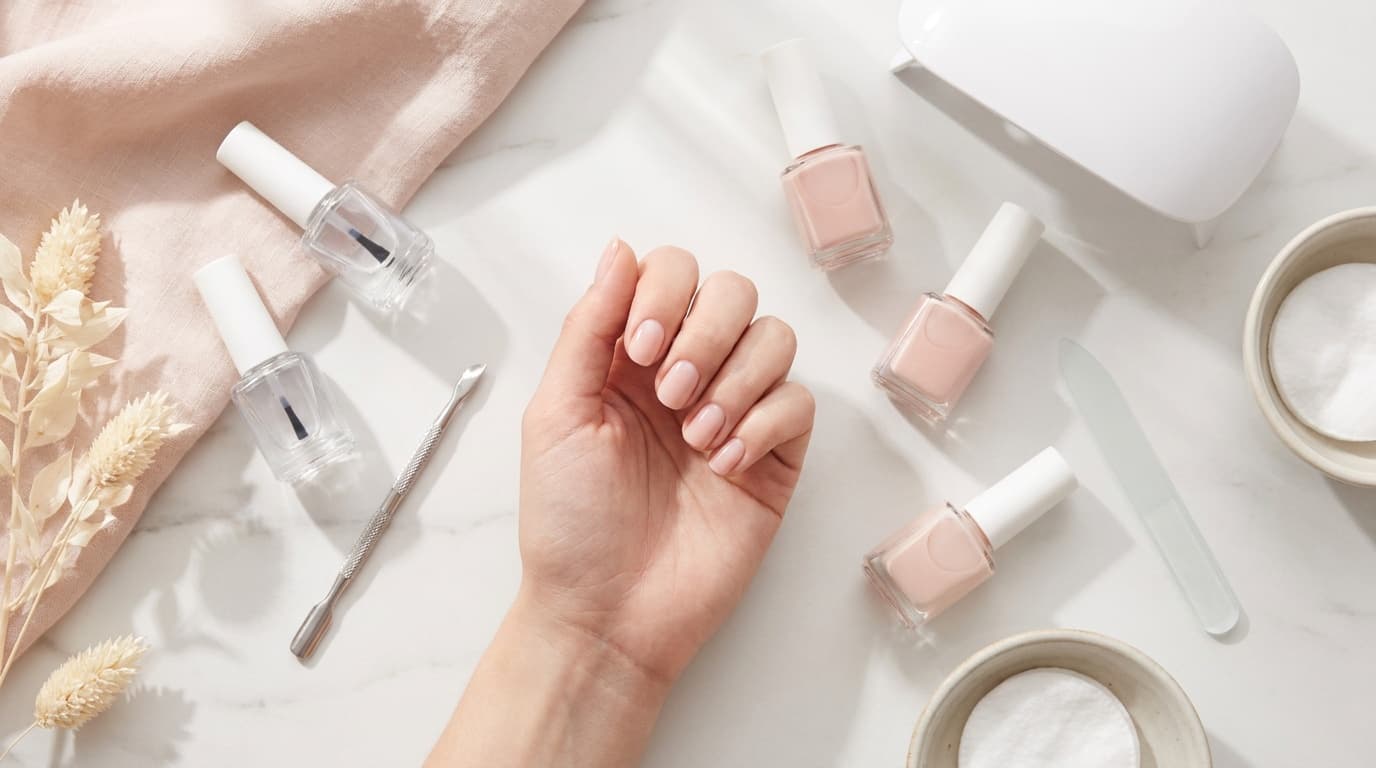
BIAB nails explained for beginners: BIAB is a brush-on builder gel that creates a thicker, more supportive overlay than standard gel polish. It can help protect flexible natural nails while they grow, but it must be correctly cured, maintained, and removed to reduce lifting, damage, and acrylate allergy risks.
Quick Takeaways
- BIAB means Builder in a Bottle, although the term is often used loosely for bottled builder gels from different manufacturers.
- It’s thicker and more structured than regular gel polish but usually more flexible than traditional hard gel or acrylic.
- A BIAB manicure typically lasts two to four weeks, depending on nail growth, preparation, and daily wear.
- Some formulas soak off with acetone, while others must be filed down, so always check the product instructions.
- Uncured gel shouldn’t touch your skin because repeated exposure can increase the risk of an acrylate allergy.
What Are BIAB Nails?
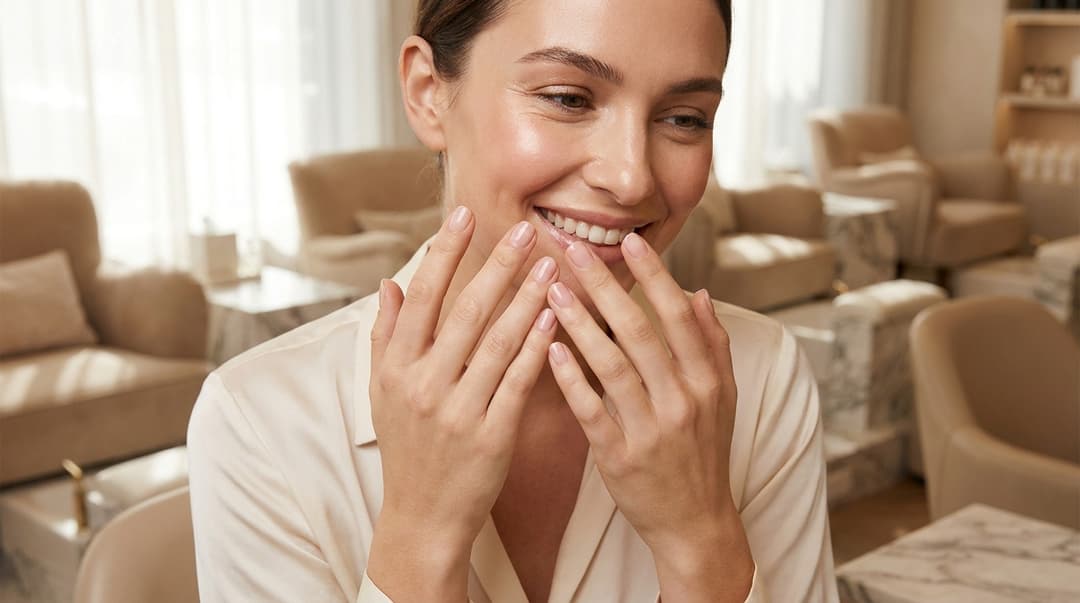
BIAB nails are manicures created with a builder gel packaged in a polish-style bottle. The product is brushed over the natural nail and cured under a compatible LED or UV nail lamp. Unlike ordinary gel polish, builder gel has enough body to create a small apex—the gently raised area that gives the nail extra support.
The name BIAB originally referred to a specific builder-in-a-bottle system, but salons and shoppers now commonly use it as a general term. Formulas aren’t identical, though. One bottled builder gel may be flexible and soakable, while another may be firmer or require filing for removal.
BIAB doesn’t biologically strengthen or feed the nail. Nails are made from keratin, and cured gel can’t change how new nail cells grow. What it can do is form a protective overlay that reduces bending and helps prevent everyday snags or splits.
I’ve found that BIAB is especially appealing to people whose nails reach a certain length and then break at the sidewalls. It can also create a smooth, natural-looking finish without the bulk sometimes associated with enhancements.
Good candidates may include people with:
- Flexible natural nails that bend easily
- Short nails they’d like to grow under a protective coating
- Minor surface ridges that need smoothing
- A preference for sheer pink, nude, or clear manicures
- Time for professional maintenance every few weeks
It isn’t a treatment for fungal infections, severe splitting, pain, or nail separation. Those concerns should be assessed by a healthcare professional before any enhancement is applied.
How Is BIAB Different From Gel, Acrylic, and Hard Gel?
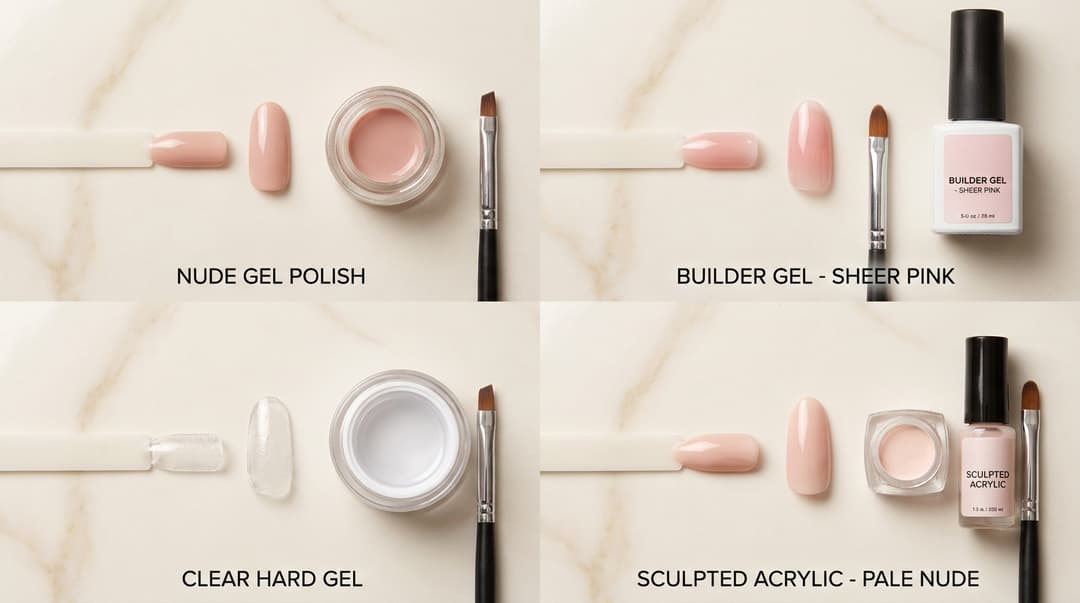
The biggest difference is structure. Regular gel polish mainly adds color and shine, while bottled builder gel adds thickness and reinforcement.
- Gel polish: Thin and flexible, with limited ability to correct the nail’s shape. It’s usually soaked off and works well on naturally strong nails.
- Bottled builder gel: Thicker and self-leveling, allowing a nail tech to build an apex. Many formulas can be soaked off, although this isn’t universal.
- Hard gel: A firm enhancement gel generally removed by filing rather than acetone. It can support longer extensions but needs skilled application and removal.
- Acrylic: Created by combining liquid monomer and polymer powder. It air-dries rather than curing in a lamp and is often chosen for substantial length or strength.
A rubber base coat sits somewhere between standard gel base and builder gel. It may add flexibility and light reinforcement, but it usually doesn’t provide the same architecture as a true builder product.
Look, thicker doesn’t automatically mean healthier. A poorly balanced overlay can put extra pressure on the natural nail, and an overly aggressive prep can thin it before the gel is even applied. Technique matters as much as the product type.
How Is a BIAB Manicure Applied?
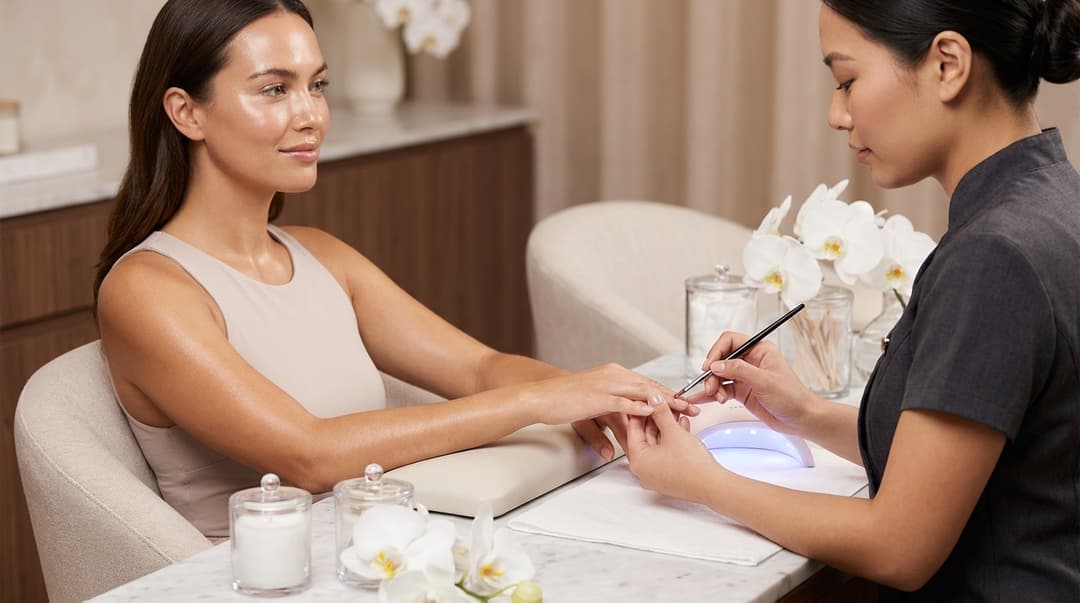
A professional appointment usually takes around 45 to 90 minutes, depending on whether you’re having removal, nail art, or a detailed rebalance. Exact curing times vary, so the lamp and gel should be compatible and used according to the manufacturer’s directions.
Here’s the typical process:
- Assess the nails. The nail tech checks for lifting, discoloration, soreness, or signs that the service should be postponed.
- Shape the free edge. Length is refined with a file before product application.
- Prepare the cuticle area. Nonliving tissue is gently removed from the nail plate without cutting or over-filing healthy skin.
- Clean the nail plate. Dust and surface oils are removed, sometimes with a nail dehydrator recommended for the gel system.
- Apply the base layer. Some builder gels need a separate base coat, while others are designed as all-in-one products.
- Build the structure. A thin slip layer and a controlled bead of builder gel create the apex. Each required layer is fully cured.
- Refine if needed. The cured surface may be lightly filed to correct unevenness or bulk.
- Finish the manicure. Color can be added before a gel top coat seals the surface.
For a first appointment, ask for a short, softly rounded shape. Shorter nails place less leverage on the enhancement while you learn how the product behaves. You can also request a clear or sheer shade, which makes early lifting and changes in the natural nail easier to spot.
Honestly, DIY builder gel looks deceptively simple on social media. Flooding the cuticle, using thick layers, or curing with the wrong lamp can leave partially cured material behind. Beginners are generally safer learning from a qualified nail professional before attempting home application.
How Long Do BIAB Nails Last and How Are They Removed?
Most BIAB manicures need attention after two to four weeks. Fast nail growth, frequent water exposure, cleaning chemicals, picking, and using nails as tools can shorten that window. Waiting until large sections lift isn’t worth it—moisture and debris can collect beneath loose product.
At a maintenance appointment, a nail tech may infill the grown-out area rather than removing everything. The existing product should first be checked for lifting, cracks, or trapped discoloration. Any compromised material needs to be removed before fresh gel is added.
To help your manicure last:
- Wear gloves for washing dishes, gardening, and household cleaning
- Don’t use your nails to open cans, scrape labels, or pry objects
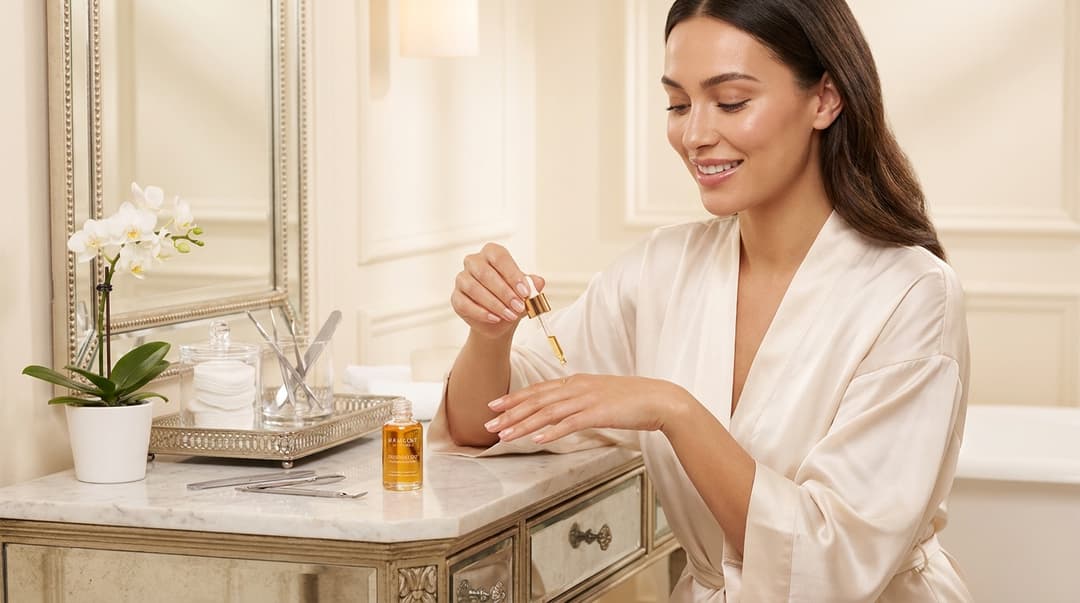
- Apply nail oil around the cuticle area daily without pushing it under lifted gel
- Book maintenance when growth becomes noticeable rather than waiting for breakage
- Contact your salon if a nail cracks, lifts, feels hot, or becomes painful
Removal depends on the chemistry. A soak-off builder is typically reduced with a file, wrapped in acetone for roughly 10 to 15 minutes, and gently removed as it softens. Extra soaking may be needed. File-off formulas should be reduced professionally, often leaving a very thin layer to protect the natural nail.
Never peel or force off builder gel. Peeling can take layers of the nail plate with it, leaving nails temporarily thin and sensitive. If the material remains hard after acetone soaking, stop scraping—it may be a file-off formula.
From a lower-waste perspective, infills can use less product and fewer acetone wraps than complete removal. Still, gel residue is plastic-based and shouldn’t be washed down the sink. Used wipes, dust, and cured scraps belong in the appropriate salon waste stream.
Are BIAB Nails Safe for Beginners?
BIAB can be worn safely by many people, but gel nail products contain reactive acrylates or methacrylates before curing. Repeated skin contact with uncured or under-cured gel may cause sensitization, leading to itching, redness, swelling, blisters, or nail separation.
To reduce avoidable risks:
- Choose a trained nail professional who keeps gel off the surrounding skin
- Confirm that the lamp is recommended for the specific gel system
- Avoid services on cut, inflamed, infected, or visibly damaged skin
- Don’t continue wearing lifted product or glue it back down
- Stop use and seek medical advice if you develop persistent itching, swelling, or blistering
HEMA-free formulas may be useful for some clients, but HEMA-free doesn’t mean allergy-proof. Other acrylates can still trigger reactions. And please don’t perform a DIY skin patch test with uncured gel; intentional skin exposure can create the problem you’re trying to avoid. A dermatologist can arrange proper patch testing if an allergy is suspected.
Nail lamps primarily emit UVA light. Exposure during a manicure is brief, but people who want an extra precaution can apply broad-spectrum SPF 30 or higher to the backs of their hands about 20 minutes beforehand. UV-protective fingerless gloves are another practical option, leaving only the nails exposed.
So, pay attention to sanitation too. Tools should be properly cleaned and disinfected between clients, and single-use files shouldn’t travel from one client to another. A clean-looking salon isn’t enough—feel free to ask about its hygiene process.
The Bottom Line
BIAB is a bottled builder gel that adds supportive structure to natural nails, usually with a slimmer, more flexible feel than traditional enhancements. For beginners, the best approach is to keep the nails short, choose a trained professional, maintain them every two to four weeks, and never peel off the product.
The prettiest manicure is still one that respects your skin and natural nails. I’d prioritize careful application, full curing, and a formula with transparent ingredient and removal instructions over trendy claims like non-toxic or chemical-free—because, well, all nail gels rely on chemistry.
Want more ingredient-conscious beauty tips and genuinely useful savings? Sign up for Insider Beauty’s weekly deals for curated offers delivered straight to your inbox.
Want more tips and exclusive beauty deals delivered to your inbox? Pop your email in the box below and join thousands of insiders who save big every week.