
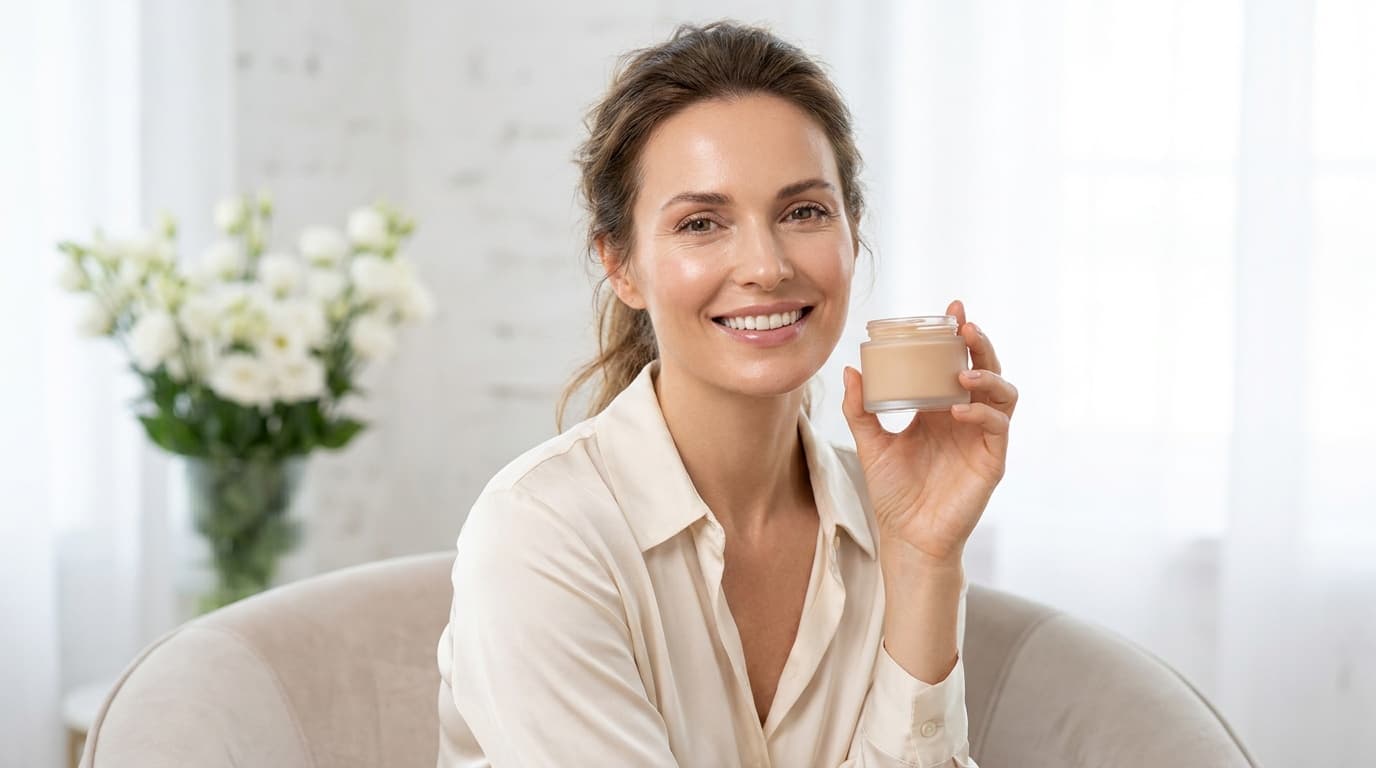
The best foundation for mature skin is usually a lightweight, hydrating liquid or serum formula with a natural or satin finish. These foundations smooth uneven texture, add glow without looking greasy, and are less likely to settle into fine lines than heavy matte formulas. Here's how to pick one that actually flatters your skin and makes makeup look fresher.
Quick Takeaways
- Choose hydrating formulas: Liquid, serum, and cream foundations tend to sit better on mature skin than dry, full-matte powders.
- Look for a natural or satin finish: It helps skin look smooth and luminous without emphasizing texture.
- Skip overly heavy coverage: Medium, buildable coverage usually looks more skin-like and less likely to crease.
- Prep matters as much as foundation: Moisturizer and a well-chosen primer can make a huge difference in how foundation wears.
- Apply less product than you think: A thin layer, pressed in strategically, often looks better than a full mask of makeup.
What is the best foundation for mature skin?
The best foundation for mature skin is one that gives hydration, flexible coverage, and a natural-looking finish. In real life, that usually means a liquid foundation, serum foundation, or a creamy tint rather than a thick matte formula.
As a dermatologist, I've found that mature skin doesn't necessarily need "anti-aging makeup" as much as it needs makeup that works with the skin barrier. As skin matures, it often becomes drier, a little thinner, and more textured. Collagen and oil production drop over time, which can make foundation cling to dry patches or settle around the eyes and mouth.
So, when people ask me for the best foundation for mature skin, I usually tell them to look for these features:
- Hydrating ingredients: Think hyaluronic acid, glycerin, squalane, or ceramides
- Light to medium buildable coverage: Enough to even tone without looking flat
- Natural, radiant, or satin finish: More forgiving than a flat matte finish
- Flexible texture: Something that moves with facial expressions instead of cracking
- Non-cakey wear: A formula that layers well in thin coats
How does mature skin change the way foundation looks?
Mature skin changes foundation wear because the surface of the skin often becomes drier, less elastic, and more uneven in texture. That doesn't mean you can't wear foundation. It just means formula and application matter more.
Honestly, one of the biggest mistakes I see is using the same foundation style you wore at 25. At that age, a super matte, high-coverage base may have looked polished. Later on, that same formula can suddenly make skin look dull or accentuate creases.
Common changes that affect foundation include:
- Dryness: Foundation can grab onto flaky areas
- Fine lines: Product may settle around the eyes, smile lines, or forehead
- Loss of firmness: Heavier formulas can look less smooth on moving skin
- Pigmentation changes: Age spots or redness may make spot-concealing more useful than full heavy coverage
Look, this is why less is often more. A lighter layer in the right places usually beats a thick layer all over.
Which foundation finish looks best on mature skin?
For most people, the most flattering finish is natural, radiant, or satin. These finishes reflect a bit of light, which helps skin look smoother and healthier.
A very matte finish can make skin look dry or chalky, while an overly dewy finish can slide around or collect in lines. The sweet spot is usually somewhere in the middle.
Here are the main finish types and how they tend to perform:
- Satin finish foundation: Usually the safest bet. It gives soft glow without too much shine.
- Natural finish foundation: Great for everyday wear and often the most skin-like.
- Radiant foundation: Nice for dry or dull skin, especially if applied sparingly.
- Matte foundation: Better reserved for very oily areas, not usually the whole face on mature skin.
- Powder foundation: Can work in small amounts, but often emphasizes texture if overapplied.
I've found that satin formulas are the easiest recommendation because they tend to be forgiving in daylight, photos, and long wear.
What ingredients should you look for in foundation?
The best foundation for mature skin often includes skincare-style ingredients that help support moisture and comfort throughout the day.
Ingredients worth looking for:
- Hyaluronic acid: Helps attract water and gives a plumper look
- Glycerin: A reliable humectant that reduces that tight, dry makeup feel
- Squalane: Adds lightweight nourishment and slip
- Ceramides: Support the skin barrier, which matters more as skin matures
- Peptides: Sometimes included for added skin-conditioning benefits
- Light-diffusing pigments: Not an ingredient exactly, but helpful for softening the look of lines
A quick note on SPF: foundation with sunscreen is fine as a bonus, but it shouldn't be your only sun protection. Most people don't apply enough foundation to reach the labeled SPF. I always tell patients to use a separate broad-spectrum sunscreen underneath.
How should you apply foundation on mature skin?
Application can make or break the best foundation for mature skin. Even a beautiful formula can look off if it's layered too heavily or placed everywhere.
Try this simple approach:
- Prep with moisturizer: Let it sink in for a few minutes so foundation doesn't pill.
- Use primer only where needed: A hydrating primer works well on dry areas, while a smoothing primer can help around pores.
- Start in the center of the face: Apply the most coverage where redness or discoloration tends to show.
- Use a small amount: One thin layer is usually enough to begin with.
- Press, don't drag: A damp sponge or soft brush can press product into the skin for a smoother finish.
- Build only where needed: Add a little extra around pigmentation instead of layering the entire face.
- Set strategically: Use a tiny amount of powder only on areas that crease or get shiny.
So, if your foundation keeps settling into lines, try using less product and less powder before you buy a whole new bottle. That tweak alone helps a lot.
What foundation types work best for mature skin?
Not every format performs the same way. The best options are usually formulas that offer comfort and flexibility.
- Liquid foundation: A top choice for most mature skin types because it blends easily and comes in many finishes.
- Serum foundation: Great if you want sheer to light coverage with hydration and a very skin-like look.
- Cream foundation: Helpful for drier skin, though it's best used sparingly to avoid heaviness.
- Tinted moisturizer or skin tint: A smart option if your main goal is evening out tone while keeping a fresh finish.
- Powder foundation: Usually best used lightly, or only in targeted areas, if texture is a concern.
If your skin is very dry, a serum foundation or hydrating liquid foundation is often the safest place to start. If you want more coverage for discoloration, a creamy liquid plus targeted concealer tends to look better than a thick full-coverage mask.
And if you're eyeing a prestige long-wear formula, we've also ranked cheaper Double Wear alternatives and Teint Idole alternatives worth a look first.
What mistakes make foundation look older?
Sometimes it's not the foundation itself. It's the habits around it.
The most common mistakes I see are:
- Using too much product: Thick layers settle faster and look less natural
- Choosing a flat matte formula: This can exaggerate dryness and fine lines
- Skipping skin prep: Makeup sits better on moisturized skin, period
- Over-powdering: Too much powder can make the face look dry and stiff
- Using the wrong shade: A shade that's too light can look ashy or chalky
- Applying coverage everywhere: Spot-correcting is often more flattering than full masking
Honestly, one of the easiest fixes is to keep the finish more dimensional. Skin has natural variation, and foundation looks better when it doesn't erase every bit of it.
How can you make foundation last without looking dry?
Long wear and a fresh finish can absolutely coexist. You just need to lock makeup in without sucking the life out of the skin.
Try these practical tips:
- Use lightweight layers: Thin layers adhere better than one heavy coat
- Let skincare absorb first: This helps prevent slipping and patchiness
- Blot before powdering: If you get shine, remove excess oil first
- Set only where needed: Around the nose, chin, or smile lines is often enough
- Finish with a setting spray: A hydrating mist can help makeup melt together and look less powdery
I've found that mature skin usually looks best by midday when makeup has had a chance to settle a little, as long as it wasn't overloaded at the start.
The Bottom Line
The best foundation for mature skin is usually a hydrating liquid, serum foundation, or lightweight cream with buildable coverage and a natural or satin finish. The goal isn't to cover every line. It's to make skin look smooth, healthy, and like itself.
If you're shopping today, start with a formula that hydrates, use less than you think you need, and set only the areas that truly need it. Small changes in prep and application can make a bigger difference than chasing the next trendy formula.
For more expert beauty advice and smart finds, sign up for Insider Beauty's weekly deals and get the best picks sent straight to your inbox.
Want more tips and exclusive beauty deals delivered to your inbox? Pop your email in the box below and join thousands of insiders who save big every week.