

Chrome nails are easiest to achieve by applying chrome powder over a fully cured no-wipe gel top coat, then sealing it with another top coat. That method works because the powder grips to a smooth, slightly slick surface and creates that reflective, mirror-like finish. Here's exactly how to do chrome nails how to achieve the look at home without wasting time or product.
Quick Takeaways
- The best base for chrome nails is a smooth gel manicure with a no-wipe top coat.
- Chrome powder works best when you rub it in with a silicone tool or eyeshadow applicator over fully cured gel.
- Prep matters a lot because ridges, peeling, or leftover dust will show through the metallic finish.
- You can do chrome nails at home with a gel lamp, chrome powder, base coat, gel color, and top coat.
- Thin layers and capped edges help your chrome manicure last longer without chipping.
What are chrome nails?
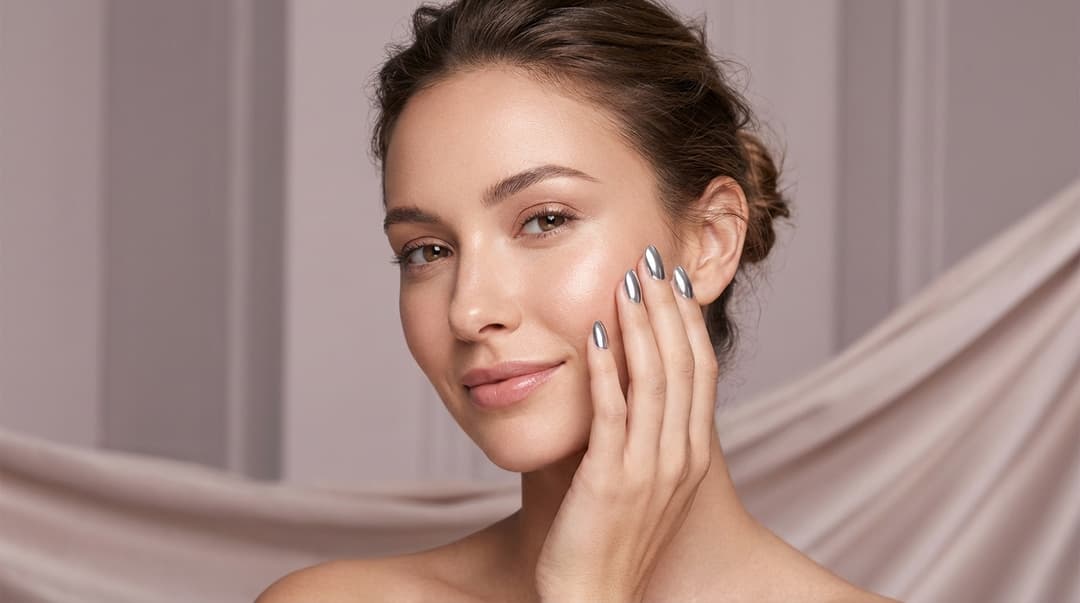
Chrome nails are manicures with a reflective, almost liquid-metal finish. Depending on the powder and base color, they can look silver, pearl, glazed, rose gold, or even have that cool oil-slick shift.
Honestly, the reason they look so expensive is simple: light bounces off the ultra-fine pigment instead of getting absorbed like it does with a regular cream polish. I've found that chrome shows every little bump, though, so smooth prep is half the battle.
If you're searching chrome nails how to achieve the look, the short answer is this: you need a polished nail surface, a gel system, and a very fine chrome pigment.
What do you need for chrome nails at home?
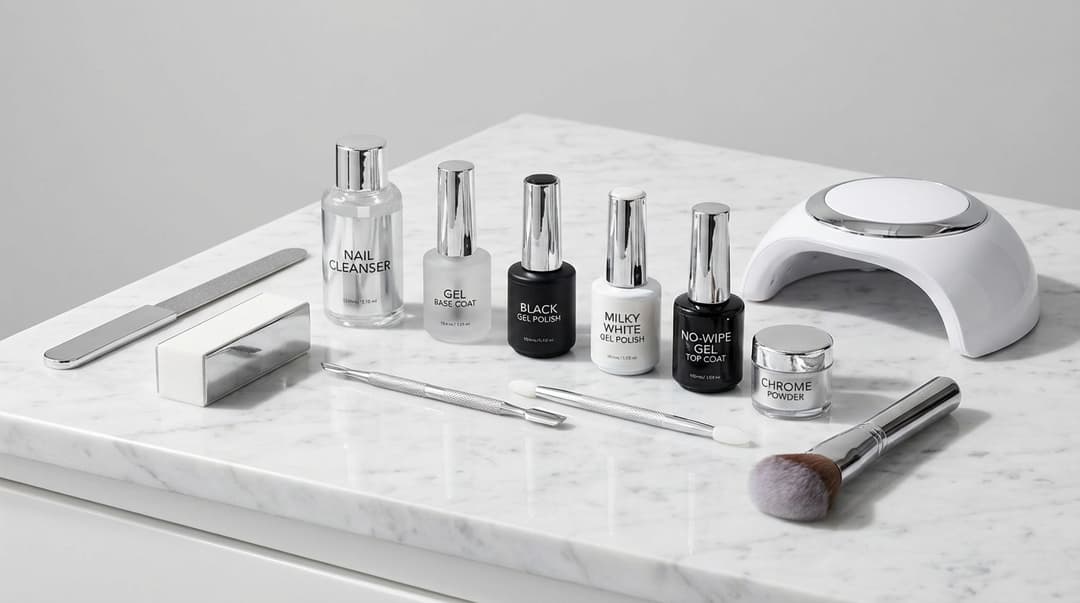
You don't need a salon visit, but you do need the right product types. The basics are pretty straightforward:
- Nail file and buffer: To shape the nail and smooth the surface.
- Cuticle pusher and nail cleanser: To prep the nail plate and remove oils.
- Gel base coat: Helps polish adhere and last.
- Gel color polish: Black gives a classic mirror chrome, while sheer pink or milky white gives a glazed effect.
- No-wipe gel top coat: This is the key layer that chrome powder sticks to best.
- Chrome powder: The fine pigment that creates the reflective finish.
- Silicone tool or sponge applicator: Helps buff the powder evenly onto the nail.
- UV or LED lamp: Needed to cure gel layers.
Look, regular polish versions do exist, but they rarely give that true mirror effect. If you want actual chrome nails and not just metallic nails, a gel setup is usually worth it.
How to achieve chrome nails step by step
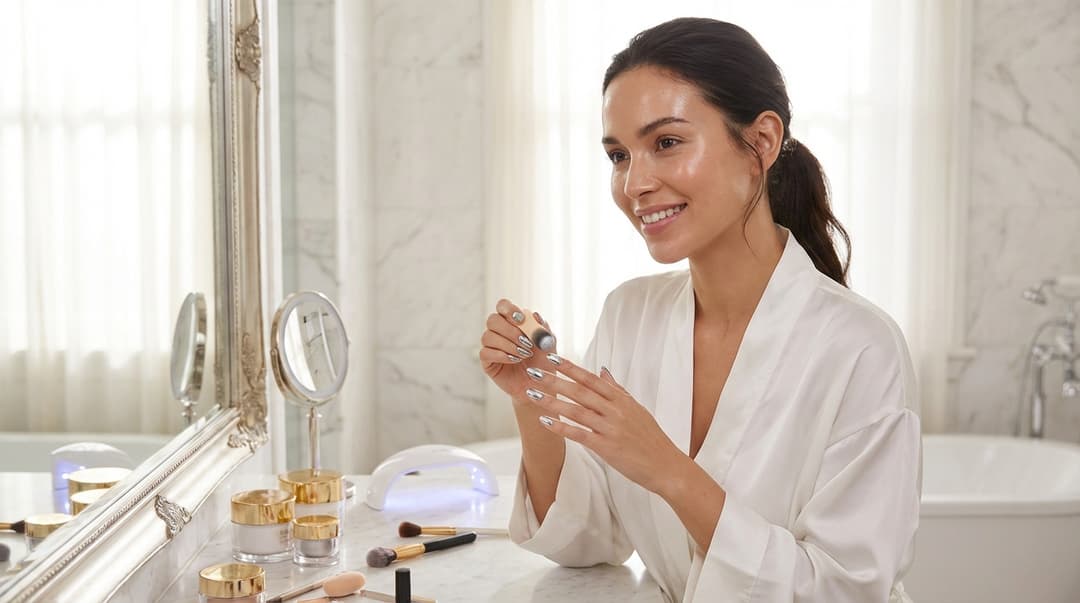
Here is the easiest method for chrome nails how to achieve the look with the smoothest finish.
- Prep your nails by removing old polish, pushing back cuticles, shaping the free edge, and lightly buffing the surface.
- Clean the nail plate with nail cleanser or alcohol so there's no oil or dust left behind.
- Apply a thin layer of gel base coat and cure it according to the lamp instructions.
- Apply 1 to 2 thin coats of gel color polish, curing each layer fully.
- Add a thin layer of no-wipe gel top coat and cure it fully.
- Use a sponge applicator or silicone tool to rub chrome powder onto the nail in small motions until it looks smooth and reflective.
- Dust off excess powder with a soft brush.
- Seal everything with another thin layer of top coat, making sure to cap the edges.
- Cure again, then wipe only if your final top coat requires it.
A couple tiny tricks make a huge difference. Let the cured no-wipe top coat cool for a few seconds before rubbing in the powder, and don't overload the applicator. Too much powder can make the finish look grainy instead of glassy.
What base color works best under chrome powder?
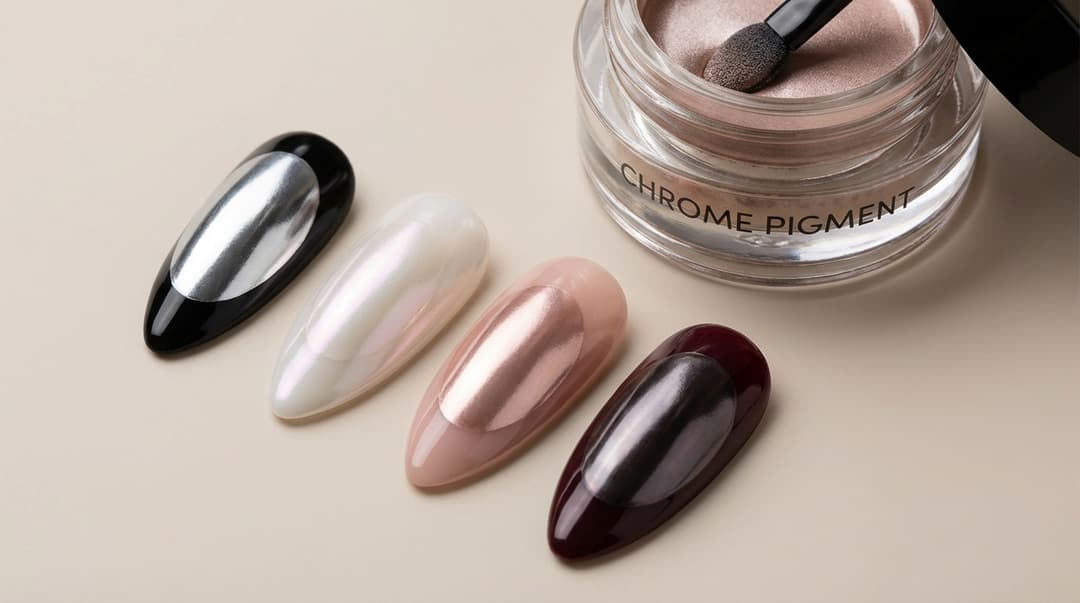
The base color changes the final effect more than most people expect. So if your manicure doesn't look quite like the inspo pic, this is usually why.
- Black base: Gives the strongest mirror-chrome effect, especially with silver powder.
- White or milky base: Creates a softer pearl or glazed finish.
- Nude or pink base: Makes chrome look more wearable and a little less dramatic.
- Dark navy, burgundy, or brown base: Gives a deeper, moodier metallic look.
I've found that black is best if you want that classic futuristic chrome. But if you're after the glazed donut vibe, a sheer pink or milky white base is way prettier and less intense in daylight.
Why do chrome nails look streaky or dull?
Chrome can be weirdly picky. When it turns out patchy, dull, or uneven, there's usually a specific reason.
Here are the most common problems and fixes:
- The nail surface wasn't smooth: Buff gently before polish so ridges don't show through.
- The top coat wasn't no-wipe: Chrome powder usually won't grip properly to a tacky or wrong-finish surface.
- The gel was under-cured or over-cured: Follow cure times closely because the powder needs the right surface texture.
- Too much powder was applied: Use a small amount and buff it in gradually.
- The final seal wasn't thin and even: Thick top coat can dull the shine.
- Edges weren't capped: This leads to early lifting and tip wear.
Honestly, chrome nails are one of those looks where precision matters. Not in a scary way, but in a "every tiny shortcut shows" way.
How long do chrome nails last?
When done over gel, chrome nails usually last 10 days to 3 weeks, depending on your prep, top coat, and how rough you are with your hands. On natural nails, I usually see tip wear first, especially if you're opening cans, typing all day, or skipping cuticle oil.
To make them last longer:
- Apply thin, even coats instead of thick ones.
- Cap the free edge with base coat, color, and top coat.
- Wear gloves when cleaning or washing dishes.
- Use cuticle oil daily to keep the manicure flexible.
- Avoid peeling or picking at lifted edges.
If you're doing chrome over press-ons or gel extensions, you may get even more wear time because the nail surface is often smoother and more uniform.
Can you do chrome nails without gel?
Yes, but the results are usually less reflective. If you want chrome nails how to achieve the look without gel, your best bet is using a metallic nail polish or a chrome-effect powder designed for regular polish. The finish tends to be more shimmery than mirror-like, and it chips faster.
A non-gel method can still work if you just want the vibe:
- Prep and buff the nails well.
- Apply a regular base coat.
- Paint on a dark or sheer base color, depending on the effect you want.
- Add a fast-drying top coat and wait until it's almost dry but still slightly grabby.
- Rub in chrome-effect powder gently.
- Seal with a water-based top coat first if needed, then a regular top coat.
That said, if you're chasing the super reflective salon finish, gel is still the better route. It's just more reliable.
What are the best chrome nail tips for beginners?
If this is your first try, keep it simple. You do not need nail art, multiple pigments, and ten tools all at once.
- Start with one chrome shade: Silver or pearl is easiest.
- Choose short or medium nails first: They're easier to control while buffing in powder.
- Use a smooth gel color underneath: Streaky color polish will show through.
- Work one nail at a time if needed: Especially while learning cure timing.
- Keep powder away from skin and cuticles: It can make the final top coat lift.
- Seal the tip carefully: This really helps with wear.
So, yes, chrome nails can be beginner-friendly, but they're not the manicure to rush through while half-watching TV. I've made that mistake, and the patchy thumb nail always humbles me.
The Bottom Line
Chrome nails are all about layering the right products in the right order: smooth prep, gel base, color, no-wipe top coat, chrome powder, and a final seal. If you're wondering chrome nails how to achieve the look, the biggest difference-maker is using chrome powder over a fully cured gel surface and keeping every layer thin and even.
Once you get the hang of it, it's actually pretty satisfying. And if you want more beauty tips, trend breakdowns, and smart product picks, sign up for Insider Beauty's weekly deals newsletter.
Want more tips and exclusive beauty deals delivered to your inbox? Pop your email in the box below and join thousands of insiders who save big every week.